Why 'Camry Supercharger TRD' Is a Contradiction — And What You Actually Need to Know
If you've been searching for Camry Supercharger TRD, let's clear the air immediately: the Toyota Camry TRD (and every Camry variant sold through the 2024 model year, after which Toyota discontinued the TRD trim) is a gasoline-powered sedan. It has no traction battery, no charge port, and zero compatibility with Tesla Superchargers, Electrify America, or any DC fast-charging network. The Camry TRD's 3.5-liter V6 runs exclusively on gasoline, achieving an EPA-estimated 22 city / 31 highway / 25 combined MPG per fueleconomy.gov.
However, if you're cross-shopping a Camry against a battery-electric vehicle (BEV), or you own a Camry and are considering the jump to electric, you need a clear understanding of how EV charging actually works — from home Level 2 setups to public DC fast charging. That's what this guide delivers: a no-fluff, numbers-first breakdown of EV charging speeds, costs, installation, and equipment, written for buyers transitioning from gas cars like the Camry TRD.
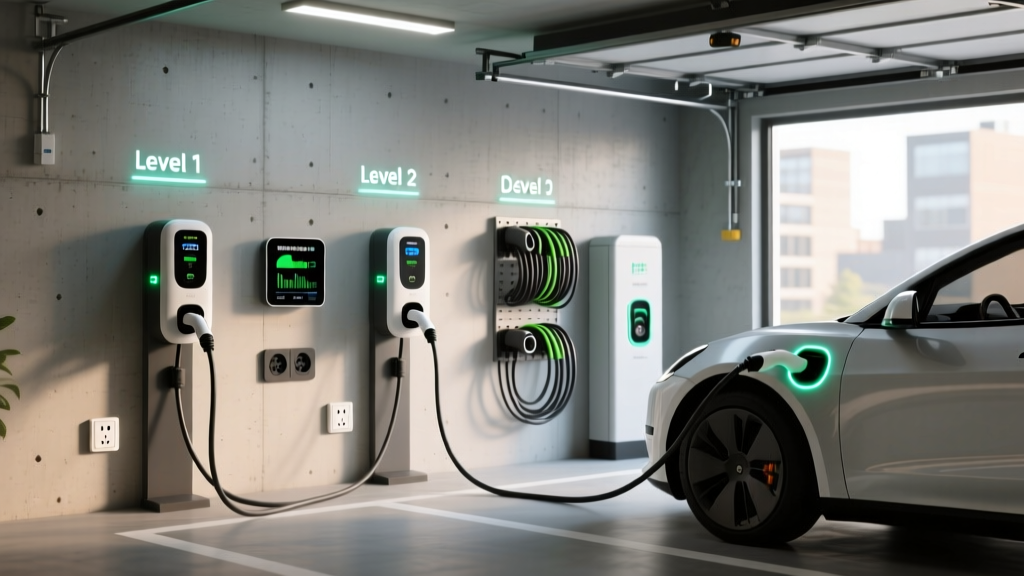
EV Charging Levels Explained: Speeds, kW, and Miles Per Hour
Understanding EV charging starts with one critical distinction: kW (kilowatts) measures power — the rate at which energy flows into the battery. kWh (kilowatt-hours) measures energy — the total capacity of the battery. Think of kW as the width of a pipe and kWh as the size of the tank. A wider pipe (higher kW) fills the tank faster.
| Level | Voltage / Power | Miles of Range Added Per Hour | Best For |
|---|---|---|---|
| Level 1 | 120V AC / 1.4–1.9 kW | 3–5 miles | Overnight top-offs, emergencies |
| Level 2 | 240V AC / 7.2–19.2 kW | 20–60 miles | Daily home charging, workplace |
| DC Fast Charging | 400–800V DC / 50–350 kW | 150–1,000+ miles (equivalent rate) | Road trips, rapid top-ups |
Real-world context: A Level 2 home charger at 11.5 kW (48A on a 60A circuit) will fully replenish a Hyundai Ioniq 5's 77.4 kWh battery in roughly 7–8 hours. On a 350 kW DC fast charger, that same vehicle peaks at ~235 kW and charges from 10–80% in approximately 18 minutes — though the charge curve tapers significantly above 80%, so staying longer yields diminishing returns.
Home EV Charger Installation: Electrical Requirements and Cost Breakdown
Installing a Level 2 home charger is the single most impactful upgrade an EV owner can make. Here's what's involved electrically and financially.
Electrical Requirements
A typical Level 2 charger requires a dedicated 240V circuit, similar to what powers an electric dryer or oven. Common configurations:
- 40A circuit → delivers up to 32A continuous (7.7 kW at 240V) — adequate for most EVs
- 60A circuit → delivers up to 48A continuous (11.5 kW) — ideal for larger batteries (100+ kWh)
- Hardwired vs. plug: Chargers rated above 40A typically require hardwiring; NEMA 14-50 outlets suffice for 40A or lower units
Panel Upgrade Considerations
Homes with 100A electrical service may lack capacity for a 60A EV circuit, especially if you already run electric heat, a dryer, and an oven. A panel upgrade to 200A service typically costs $1,500–$3,500 depending on your utility and region. This is the single biggest variable in home charging installation — and one many buyers overlook until the electrician's quote arrives.
| Component | Low Estimate | High Estimate | Notes |
|---|---|---|---|
| Level 2 charger (equipment) | $350 | $750 | Smart Wi-Fi models at the high end |
| Electrician labor (standard install) | $500 | $1,500 | Varies by run length from panel to garage |
| Electrical permit | $50 | $200 | Required in most jurisdictions |
| Panel upgrade (if needed) | $1,500 | $3,500 | 100A → 200A; not always required |
| Total (without panel upgrade) | $900 | $2,450 | Most common scenario |
| Total (with panel upgrade) | $2,400 | $5,950 | Older homes with 100A service |
Always get a quote from a licensed electrician before purchasing equipment. Some utilities offer rebates of $250–$1,000 for Level 2 installation — check with your local provider. The IRS §30C Alternative Fuel Vehicle Refueling Property Credit may cover up to 30% of home charging equipment and installation costs (capped at $1,000), subject to income and census-tract eligibility.
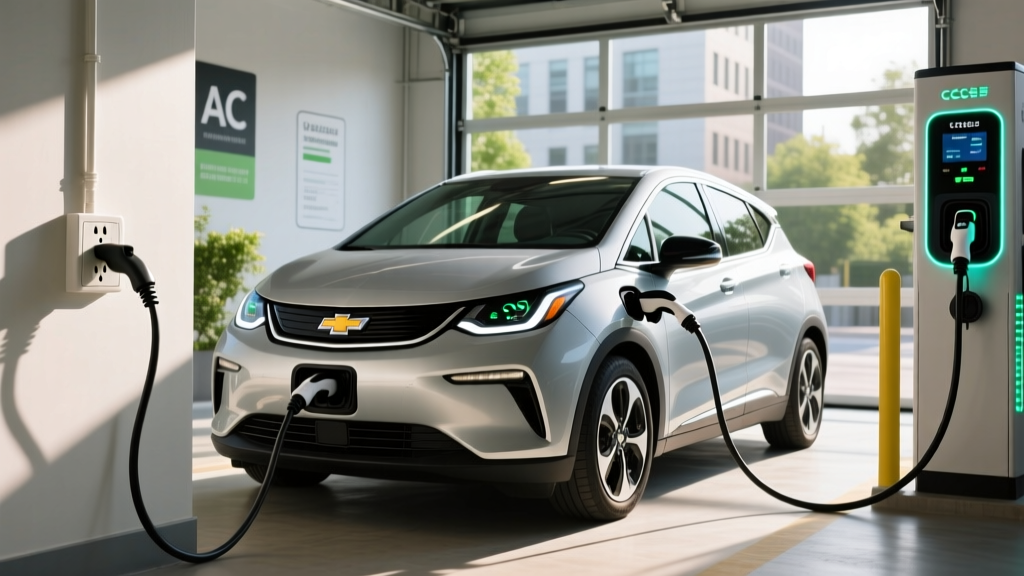
Connector Compatibility: NACS, CCS1, CHAdeMO, and Adapters
Unlike the Camry TRD's single fuel-filler door, EVs use different charge connectors depending on brand and model year. Here's the landscape as of 2026:
| Connector | Brands Using It | DC Fast Charge Standard | Adapter Needed? |
|---|---|---|---|
| NACS (North American Charging Standard) | Tesla, Ford (2025+), GM (2025+), Rivian, Volvo, Polestar, Toyota bZ4X (2026+), Hyundai/Kia (2026+) | Native Tesla Supercharger access | No — direct Supercharger access for NACS-equipped vehicles |
| CCS1 (Combined Charging System) | VW, BMW, Mercedes, Honda, Hyundai/Kia (pre-2026), older Ford/GM | Electrify America, EVgo, ChargePoint | CCS-to-NACS adapter (~$200–$250) for Supercharger access |
| CHAdeMO | Nissan Leaf (legacy), Mitsubishi Outlander PHEV | Declining network support | No reliable CHAdeMO-to-NACS adapter available |
Key takeaway for former gas-car buyers: NACS has won the North American connector war. If you're buying a new EV in 2026, prioritize a NACS-equipped vehicle for the widest fast-charging network access (17,000+ Tesla Supercharger stalls). CCS1 vehicles can access Superchargers via adapter, but CHAdeMO owners face increasingly limited public DC fast-charging options.
Charging Cost Per Mile vs. Gasoline: The Real Math
The Camry TRD's V6 gets roughly 25 MPG combined. At $3.50/gallon, that's $0.14 per mile in fuel. How does EV charging compare?
| Scenario | Rate | Cost Per Mile (at 3.5 mi/kWh) | Annual Cost (12,000 mi) |
|---|---|---|---|
| Home Level 2 (national avg. off-peak) | $0.13/kWh | $0.037 | $444 |
| Home Level 2 (California TOU off-peak) | $0.10/kWh | $0.029 | $348 |
| Public Level 2 (ChargePoint, avg.) | $0.25/kWh | $0.071 | $852 |
| DC Fast Charging (Electrify America, avg.) | $0.48/kWh | $0.137 | $1,644 |
| Camry TRD (gasoline, 25 MPG) | $3.50/gallon | $0.140 | $1,680 |
The bottom line: Home charging is dramatically cheaper than gasoline — roughly 75% less per mile. However, if you rely exclusively on public DC fast charging, costs approach gasoline parity. This is why home Level 2 installation isn't optional for most EV owners; it's the economic foundation of EV ownership.
Charging Time Examples: What to Expect With Common Battery Sizes
EV batteries range from ~40 kWh (compact commuter cars) to ~130 kWh (full-size trucks). Here's how long typical charges take at each level:
- 77 kWh battery (e.g., Hyundai Ioniq 5, Tesla Model Y):
- Level 1 (1.4 kW): ~55 hours for a full charge — impractical except for emergencies
- Level 2, 11.5 kW: ~7 hours (overnight, 0–100%)
- DC Fast, peak 235 kW: ~18 minutes (10–80%), tapering to ~35 minutes (10–90%)
- 100 kWh battery (e.g., Tesla Model S, Ford F-150 Lightning Extended Range):
- Level 2, 11.5 kW: ~9 hours (overnight)
- DC Fast, peak 250 kW: ~22 minutes (10–80%)
- 60 kWh battery (e.g., Chevrolet Equinox EV base):
- Level 2, 7.7 kW: ~8 hours
- DC Fast, peak 150 kW: ~20 minutes (10–80%)
Recommended Home Level 2 Chargers: Equipment Picks for 2026
Here are three proven Level 2 chargers suited for different needs and budgets:
Emporia Level 2 EV Charger
- Power: 11.5 kW (48A) hardwired or 9.6 kW (40A) NEMA 14-50
- Connector: J1772 (NACS adapter included)
- Cable length: 24 ft
- Smart features: Wi-Fi, app scheduling, solar integration, energy monitoring
- Price: ~$399
- Best for: Budget-conscious buyers who want smart features and solar pairing
ChargePoint Home Flex
- Power: Up to 12 kW (50A) — configurable from 16A to 50A
- Connector: J1772 or NACS (select at purchase)
- Cable length: 23 ft
- Smart features: Wi-Fi, Alexa integration, ChargePoint network access, detailed session data
- Price: ~$549–$649
- Best for: Flexibility across circuit sizes and robust app ecosystem
Tesla Wall Connector
- Power: 11.5 kW (48A) hardwired
- Connector: NACS native (J1772 adapter available separately)
- Cable length: 24 ft
- Smart features: Wi-Fi, over-the-air updates, power sharing (multiple units on one circuit), Tesla app integration
- Price: ~$475
- Best for: Tesla owners or households with NACS-equipped vehicles
Safety, Code, and Installation Best Practices
EV charging equipment operates at high amperage for extended periods — far longer than a dryer cycle. This demands proper installation:
- Dedicated circuit: Your Level 2 charger must have its own breaker — never share a circuit with other appliances. The National Electrical Code (NEC) requires that continuous loads (3+ hours) use only 80% of the circuit's rated capacity. A 60A breaker supports 48A continuous charging.
- GFCI protection: The 2020 NEC update (Article 625) requires GFCI protection for all EV charging outlets. Hardwired units with built-in GFCI meet this requirement. If your electrician installs a NEMA 14-50 outlet, ensure a GFCI breaker is used.
- Outdoor rating: If your charger is installed outside (carport, driveway), it must carry a NEMA 4 or NEMA 4X rating for weather resistance. All three chargers recommended above meet this standard.
- Permit and inspection: Most municipalities require an electrical permit and post-installation inspection. Skipping this risks voiding homeowner's insurance coverage for electrical fires. Budget $50–$200 for the permit and 2–4 weeks for inspection scheduling.
- Cable management: A 24-foot cable draped across a garage floor is a tripping hazard. Consider wall-mounted cable organizers or retractable reel systems ($30–$80).
Camry TRD Owners Considering an EV: Your Transition Checklist
If you love the Camry TRD's sporty dynamics but are eyeing an electric future, here's a practical framework:
- You can install a Level 2 charger at home (garage or driveway with 240V access)
- Your daily driving is under 250 miles and you road-trip fewer than 6 times per year
- You want to cut fuel costs by 60–75% and eliminate oil changes
- You're drawn to instant torque — most EVs in the $40K–$55K range hit 0–60 mph in 4.5–5.5 seconds, matching or beating the Camry TRD's 5.8-second run
- You live in an apartment or lack access to home/workplace charging
- You regularly tow or drive 400+ miles between stops
- Your local public charging infrastructure is sparse (check AFDC's station locator)
- You want zero upfront infrastructure investment — a hybrid needs nothing but a gas station
Frequently Asked Questions
How much does it cost to install a home EV charger?
A standard Level 2 home installation (equipment + electrician + permit) typically costs $900–$2,450 if your electrical panel has sufficient capacity. If you need a panel upgrade from 100A to 200A service, add $1,500–$3,500. Federal tax credit §30C may reimburse up to 30% of equipment and installation (max $1,000), subject to income limits and census-tract eligibility per IRS guidelines.
How fast will each charging level add range?
Level 1 (120V) adds 3–5 miles of range per hour. Level 2 (240V, 11.5 kW) adds roughly 30–40 miles per hour for most EVs. DC fast charging at 150–250 kW can add 150–300 miles in 20–25 minutes, though the rate tapers significantly above 80% State of Charge.
Which connector/charger is compatible with my EV?
For 2026 model-year EVs: Tesla, Ford, GM, Rivian, and an expanding list of brands use NACS. Most non-Tesla EVs from 2020–2025 use CCS1 (with adapters available for Supercharger access). The Nissan Leaf uses CHAdeMO, which has declining public network support. Check your vehicle's charge port or owner's manual — and note that Level 2 home charging universally uses the J1772 standard (or NACS for Teslas), with adapters widely available.
How much does charging cost per mile vs. gas?
Home Level 2 charging at the national average of $0.13/kWh costs roughly $0.037 per mile for an EV averaging 3.5 miles per kWh. A Camry TRD at 25 MPG and $3.50/gallon costs $0.14 per mile. That's a 74% savings per mile when charging at home. Public DC fast charging at $0.48/kWh narrows the gap to roughly $0.137/mile — near gas parity.
What electrical upgrades might I need?
The most common upgrade is a panel capacity increase from 100A to 200A service, needed when your home's existing loads (HVAC, dryer, oven) already consume most of the panel's capacity. Other potential needs: running a new 240V circuit from the panel to your garage or parking spot (longer runs = higher labor costs), upgrading from a fuse box to a modern breaker panel, or adding a sub-panel in a detached garage. Your electrician will perform a load calculation during the initial assessment to determine what's required.