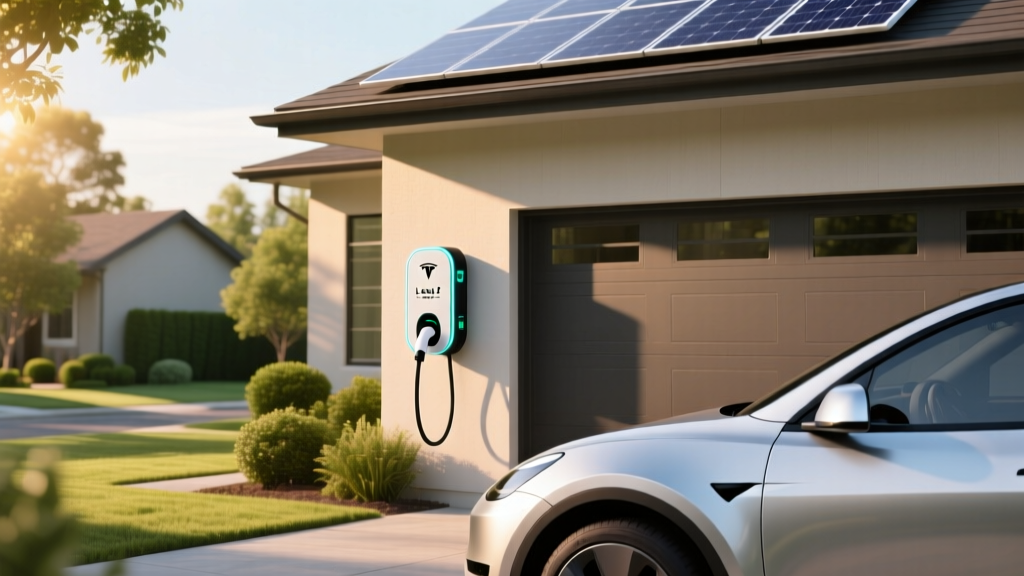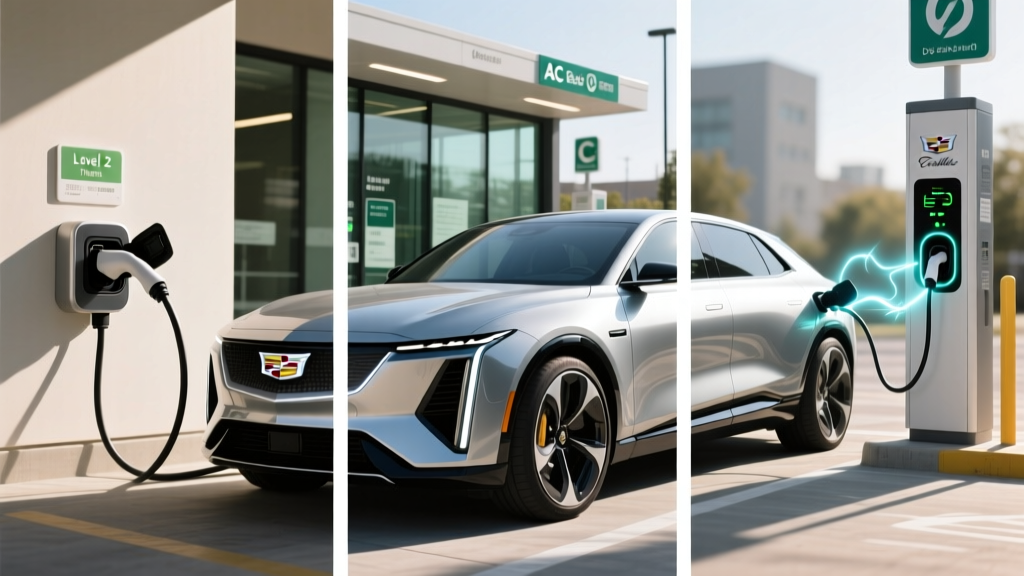
The 2026 Cadillac Vistiq enters the luxury three-row EV segment with a large Ultium-based battery and GM's latest charging architecture. But with a curb weight exceeding 5,800 pounds and a battery pack exceeding 100 kWh, charging speed isn't just a spec-sheet footnote — it defines your daily ownership experience. This guide breaks down exactly what to expect from the Vistiq at every charging level, what you need to install at home, and what it actually costs to keep this big Cadillac powered up.
Vistiq Charging Hardware at a Glance
Before we get into times and costs, here are the critical numbers. The Cadillac Vistiq is built on GM's BTX platform with a usable battery capacity of approximately 102 kWh (NMC chemistry). For 2026, GM has transitioned to the NACS (North American Charging Standard) connector as the native port on all new Ultium vehicles, meaning the Vistiq plugs directly into Tesla Superchargers without an adapter.
| Specification | Value |
|---|---|
| Battery Capacity (Usable) | ~102 kWh (NMC) |
| Max DC Fast Charge Rate | 200 kW (peak) |
| DC Fast 10–80% Time | ~27 minutes (estimated) |
| Onboard Charger (Level 2) | 11.5 kW (48A at 240V) |
| Level 2 Rate (mph) | ~34 miles per hour of charging |
| Native Connector | NACS (J3400) |
| EPA Range (est.) | ~300 miles |
| Efficiency | ~2.0–2.2 kWh/mile (real-world) |
kW (kilowatts) measures power — how fast energy flows into the battery, like water pressure from a hose. kWh (kilowatt-hours) measures energy capacity — how much total energy the battery holds, like the size of a bucket. A 200 kW charger delivers energy fast, but the Vistiq's 102 kWh battery determines how long the fill takes. Never confuse the two.
Charging Levels: How Fast Each One Adds Range
With a 102 kWh battery, the Vistiq is one of the largest packs on the market. That means Level 1 charging is essentially useless for anything beyond maintaining charge overnight, and Level 2 is your daily workhorse. Here's what each level actually delivers:
| Level | Power (kW) | Voltage / Amps | Miles Added per Hour | 0–100% Full Charge Time | Best Use Case |
|---|---|---|---|---|---|
| Level 1 (120V outlet) | 1.2–1.4 kW | 120V / 12A | ~2–3 miles | ~72+ hours | Emergency trickle only |
| Level 2 (240V home/public) | 11.5 kW | 240V / 48A | ~34 miles | ~9–10 hours | Daily home charging |
| DC Fast Charging | Up to 200 kW (peak) | 400V+ DC | ~180+ miles in 15 min (peak) | 10–80% in ~27 min | Road trips, quick top-ups |
The Vistiq's 200 kW peak rate is only sustained between roughly 10–40% state of charge. Above 50%, the rate tapers to ~120 kW, and above 80% it drops below 50 kW to protect battery health. This is why manufacturers quote 10–80% times — the final 20% can take nearly as long as the first 70%. On a road trip, plan your stops around 10–80% fills for maximum efficiency.
Home Charger Installation: Requirements, Costs, and Upgrades
To unlock the Vistiq's full 11.5 kW Level 2 charging capability, you need a 240V circuit rated for at least 60 amps (the charger draws 48A continuous, and electrical code requires circuits rated at 125% of continuous load: 48 × 1.25 = 60A). Here's what that involves and what it costs.
Electrical Requirements
- Circuit: Dedicated 60-amp, 240V breaker
- Wire: 6 AWG copper (or 4 AWG aluminum) run from panel to charger location
- Connector: NACS (hardwired) or NEMA 14-50 receptacle (50A circuit max, limiting you to ~9.6 kW / 38A continuous)
- Panel capacity: Your main panel must have sufficient spare amperage. A 200A panel with existing loads near capacity may require a panel upgrade to 300–400A or a smart load-management device
Installation Cost Breakdown
| Component | Simple Install (panel nearby) | Complex Install (long run, panel upgrade) |
|---|---|---|
| Level 2 Charger Equipment | $500–$750 | $500–$750 |
| Electrician Labor | $500–$1,200 | $1,500–$3,500 |
| Permit & Inspection | $50–$150 | $100–$300 |
| Panel Upgrade (if needed) | $0 | $2,000–$5,000 |
| Conduit, Wire, Misc. | $100–$300 | $400–$1,200 |
| Total Estimated Cost | $1,150–$2,400 | $4,500–$10,750 |
The wide range reflects real-world variability. If your electrical panel is in the garage next to where you park, expect the lower end. If you need a 60-foot wire run through finished walls, a sub-panel, or a full service upgrade, costs climb quickly. Always get 2–3 quotes from licensed electricians and confirm they pull a permit — unpermitted work can void home insurance claims and cause issues at resale.
Homes built before 2000 often have 100A or 150A main panels. Adding a 60A EV circuit to an already-loaded panel is a code violation and a fire risk. A licensed electrician will perform a load calculation (per NEC Article 220) to determine if your panel can handle the additional draw. If not, budget $2,000–$5,000 for a service upgrade — or consider a smart panel / load-management device like the Span smart panel or Emporia load manager that dynamically limits charger draw to stay within panel capacity.
Safety and Code Considerations
- Dedicated circuit: EV chargers must be on their own breaker — never share with other appliances
- GFCI protection: NEC 2020+ requires GFCI protection for outdoor receptacles; hardwired chargers often avoid nuisance tripping issues that NEMA 14-50 outlets can cause
- Outdoor rating: If installing outside, ensure the charger carries a NEMA 4 (weatherproof) rating — most quality units do
- Hardwired vs. plug: Hardwired installations are generally safer and allow full 48A/11.5 kW; NEMA 14-50 outlets limit you to 40A continuous (9.6 kW) and require a GFCI breaker for outdoor use
Connector Compatibility: NACS, CCS, and Adapters
The 2026 Vistiq ships with a native NACS charge port. This is a significant shift from earlier GM EVs that used CCS1. Here's what that means for your charging options:
| Connector Type | Native / Adapter Needed | Network Access |
|---|---|---|
| NACS (J3400) | Native — built in | Tesla Supercharger, Electrify America (NACS stalls), EVgo, Rivian Adventure Network |
| CCS1 | NACS-to-CCS adapter required (~$200–$250) | Legacy Electrify America, ChargePoint, older public DC stations |
| CHAdeMO | No adapter available — not compatible | Nissan Leaf-era stations (increasingly rare) |
| J1772 (Level 2 public) | NACS-to-J1772 adapter (often included with vehicle) | Public Level 2 stations, older workplace chargers |
The practical upshot: the Vistiq gains access to the Tesla Supercharger network natively — over 25,000 stalls across North America as of 2026. For legacy CCS-only public chargers, keep a NACS-to-CCS adapter in the frunk. GM typically includes a J1772 adapter in the vehicle for public Level 2 compatibility.
Recommended Home Chargers for the Vistiq
To maximize the Vistiq's 11.5 kW onboard charger, you need a Level 2 unit capable of delivering at least 48 amps. Here are top picks across budgets, all NACS-native or NACS-compatible:
Tesla Wall Connector (NACS) — Best Overall Value
- Power Output: Up to 11.5 kW (48A at 240V)
- Cable Length: 24 feet
- Smart Features: Wi-Fi, OTA updates, power sharing between two units, load management
- Connector: Native NACS — no adapter needed for Vistiq
- Price: ~$475
- Notes: Works with all NACS-equipped EVs. Clean design, reliable track record. No energy metering display on unit itself.
ChargePoint Home Flex (NACS) — Best Smart Features
- Power Output: Up to 12 kW (50A at 240V) — Vistiq will draw max 11.5 kW
- Cable Length: 23 feet
- Smart Features: Wi-Fi, app scheduling, energy tracking, Alexa integration, utility demand-response programs
- Connector: Available in NACS configuration for 2026
- Price: ~$650
- Notes: Excellent app, detailed charging history. Slightly pricier but worth it for data-minded owners.
Emporia Level 2 EV Charger — Best Budget Smart Charger
- Power Output: Up to 11.5 kW (48A at 240V)
- Cable Length: 24 feet
- Smart Features: Wi-Fi, real-time energy monitoring, solar integration, scheduling, works with Emporia Vue home energy monitor
- Connector: J1772 (use included NACS adapter) or NACS variant
- Price: ~$400
- Notes: Outstanding value. Energy monitoring is a standout. Build quality slightly below Tesla/ChargePoint but solid for the price.
Charging Cost: Vistiq vs. Gas Three-Row SUVs
The Vistiq competes against the Cadillac Escalade, BMW X7, and Mercedes GLS — all gas-burning three-row heavyweights. Here's what it costs to charge the Vistiq across different scenarios, and how that compares to filling up a comparable gas SUV.
| Scenario | Rate ($/kWh) | Cost for 10–80% Fill (~72 kWh) | Cost per Mile |
|---|---|---|---|
| Home — Off-Peak Utility Rate | $0.08–$0.12 | $5.76–$8.64 | $0.03–$0.04 |
| Home — Standard Residential Rate | $0.14–$0.18 | $10.08–$12.96 | $0.05–$0.06 |
| Public Level 2 (ChargePoint, etc.) | $0.25–$0.40 | $18.00–$28.80 | $0.08–$0.13 |
| DC Fast Charging (Electrify America, Tesla) | $0.35–$0.55 | $25.20–$39.60 | $0.12–$0.18 |
Gas comparison: A 2026 Cadillac Escalade averaging 16 MPG combined with gas at $3.50/gallon costs $0.22 per mile. Even at the most expensive DC fast-charging rates, the Vistiq undercuts that by a meaningful margin. For home charging on off-peak rates, the Vistiq costs roughly 85% less per mile than its gas counterpart.
Over 15,000 miles of annual driving, that translates to:
- Vistiq (home charging, $0.15/kWh avg): ~$750/year in electricity
- Escalade (16 MPG, $3.50/gal): ~$3,280/year in gasoline
- Annual fuel savings: ~$2,530
Road Trip Charging: What to Expect
The Vistiq's ~300-mile EPA range (expect 250–270 miles in real-world highway driving at 70+ mph, and 20–30% less in sub-freezing temperatures) means road trips require planning. Here's a realistic scenario for a 500-mile journey:
- Depart at 100% SoC: ~300 miles of range
- First stop at ~220 miles: Arrive at ~25% SoC. Plug into a 250 kW-capable Supercharger or Electrify America station. Charge from 15–80% in approximately 28–32 minutes (the Vistiq's 200 kW peak means it won't fully saturate a 250+ kW stall).
- Second stop at ~440 miles: Quick 15-minute top-up from 30–60% to add ~90 miles of range for the final stretch.
- Total charging time: ~45 minutes added to a trip that takes about 7.5 hours of driving.
Preconditioning the battery (navigating to a charge station in the Vistiq's infotainment system triggers automatic battery preheating) is essential for achieving advertised charge speeds, especially in cold weather. Without preconditioning, expect 10–80% times to stretch 30–50% longer in freezing conditions.
Frequently Asked Questions
How much does it cost to install a home EV charger for the Cadillac Vistiq?
For a straightforward installation with the panel nearby and sufficient capacity, expect $1,150–$2,400 total (charger + electrician + permit). If your home needs a panel upgrade, long wire runs, or trenching, costs can reach $4,500–$10,750. Always get multiple quotes from licensed electricians and ensure permits are pulled.
How fast will each charging level add range to the Vistiq?
Level 1 (120V) adds roughly 2–3 miles per hour — essentially useless for a 102 kWh battery. Level 2 (240V at 48A) adds about 34 miles per hour, fully recharging overnight in ~9–10 hours. DC fast charging at peak 200 kW can add approximately 180 miles in 15 minutes during the optimal SoC window, with 10–80% taking about 27 minutes.
Which connector does the Cadillac Vistiq use?
The 2026 Vistiq uses the NACS (J3400) connector natively. This gives direct access to Tesla Superchargers and an expanding number of NACS-equipped public stations. For legacy CCS1 stations, a NACS-to-CCS adapter (~$200–$250) is needed. CHAdeMO is not compatible.
How much does charging the Vistiq cost per mile compared to gas?
Home charging at average residential rates ($0.15/kWh) costs roughly $0.05–$0.06 per mile. A comparable gas three-row SUV like the Escalade at 16 MPG and $3.50/gallon costs about $0.22 per mile. Home charging saves roughly 75–85% on fuel costs per mile.
What electrical upgrades might I need for a Vistiq home charger?
You need a dedicated 60-amp, 240V circuit. If your main electrical panel is 100A or 150A and already heavily loaded, a panel upgrade to 200A or higher ($2,000–$5,000) may be required. A licensed electrician will perform a NEC Article 220 load calculation to determine this. Smart load-management devices can sometimes avoid a full panel upgrade.
Does the Vistiq qualify for the federal EV tax credit?
The IRS §30D Clean Vehicle Credit offers up to $7,500, but eligibility depends on MSRP caps (vans/SUVs: $80,000), buyer income limits ($300K joint / $150K single), battery component sourcing, and critical mineral requirements. The Vistiq's starting MSRP and GM's North American assembly are favorable, but battery-sourcing rules are complex and change annually. Consult a tax professional and check the fueleconomy.gov tax credit tracker for current eligibility.
The Cadillac Vistiq's 200 kW peak DC fast-charging rate and 11.5 kW Level 2 capability are competitive within the luxury three-row EV class. The key ownership advantage is NACS native compatibility, unlocking the largest fast-charging network in North America without adapters. Budget realistically for home installation — especially if your electrical panel needs upgrading — and prioritize off-peak home charging to keep per-mile costs a fraction of what a gas Escalade demands.