The 2026 Cadillac Escalade IQ is a three-row luxury flagship with a massive 200+ kWh Ultium battery pack and a curb weight pushing 9,000 pounds. Moving that much metal requires serious electrons — and a charging strategy that matches. Whether you are planning a home Level 2 installation, mapping DC fast-charging road trips, or simply trying to understand what this SUV demands from your electrical panel, this guide breaks down every kilowatt and dollar.
Escalade IQ Charging Specs at a Glance
Before we get into equipment and costs, here are the core charging numbers for the 2026 Escalade IQ. These figures come from Cadillac's official specifications and EPA filings.
| Specification | 2026 Escalade IQ |
|---|---|
| Battery Capacity (usable) | ~200 kWh (NCMA, Ultium platform) |
| EPA Estimated Range | ~450 miles (est., AWD Luxury) |
| Onboard Charger (Level 2 AC) | 19.2 kW |
| Max DC Fast Charge Rate | ~350 kW (800V architecture) |
| 10–80% DC Fast Charge Time | ~20 minutes (at 350 kW peak station) |
| Charging Port / Connector | NACS (native Tesla Supercharger compatible) |
| Charging Architecture | 800-volt |
Understanding Charging Levels: How Fast Can You Add Range?
The single most important distinction in EV charging is between kW (kilowatts — the rate of power delivery, like water pressure) and kWh (kilowatt-hours — the total energy stored, like gallons in a tank). A charger rated at 11.5 kW delivers energy at that rate; the Escalade IQ's ~200 kWh battery is the tank being filled.
| Level | Voltage | Power (kW) | Miles of Range per Hour | Best Use Case |
|---|---|---|---|---|
| Level 1 (120V outlet) | 120V AC | 1.0–1.4 kW | ~2–3 mi/hr | Emergency top-up only |
| Level 2 (240V home/public) | 240V AC | 7.2–19.2 kW | ~15–40 mi/hr | Daily home charging |
| DC Fast Charging | 400–800V DC | 50–350 kW | ~120–700+ mi/hr | Road trips, rapid fill |
What this means for the Escalade IQ in practice:
- Level 1 (standard 120V outlet): Adds roughly 2–3 miles of range per hour. Fully replenishing a depleted 200 kWh battery would take over 150 hours — essentially useless except for maintaining charge on a parked vehicle.
- Level 2 at 11.5 kW (48A, common home charger): Adds ~24 miles per hour. A full 0–100% charge takes approximately 17–18 hours. Overnight charging from 20% to 80% takes roughly 10 hours.
- Level 2 at 19.2 kW (80A, max onboard charger): Adds ~40 miles per hour. Full 0–100% in about 10–11 hours. Requires an 100A dedicated circuit — most homes don't have this capacity without a panel upgrade.
- DC Fast Charging at 350 kW: The Escalade IQ's 800V architecture allows it to accept up to ~350 kW at compatible stations. The 10–80% charge takes roughly 20 minutes under ideal conditions. However, charging speed tapers significantly above 80% to protect the battery — expect 80–100% to add another 15–20 minutes.
Charge curve reality check: Peak kW ratings are never sustained across the full session. A 350 kW charger may deliver that rate between 10–40% SoC, then taper to 200 kW, then 150 kW, then 50 kW as the battery fills. The 10–80% time is the meaningful metric, not the peak number.
Home Charger Installation: Requirements, Costs, and Gotchas
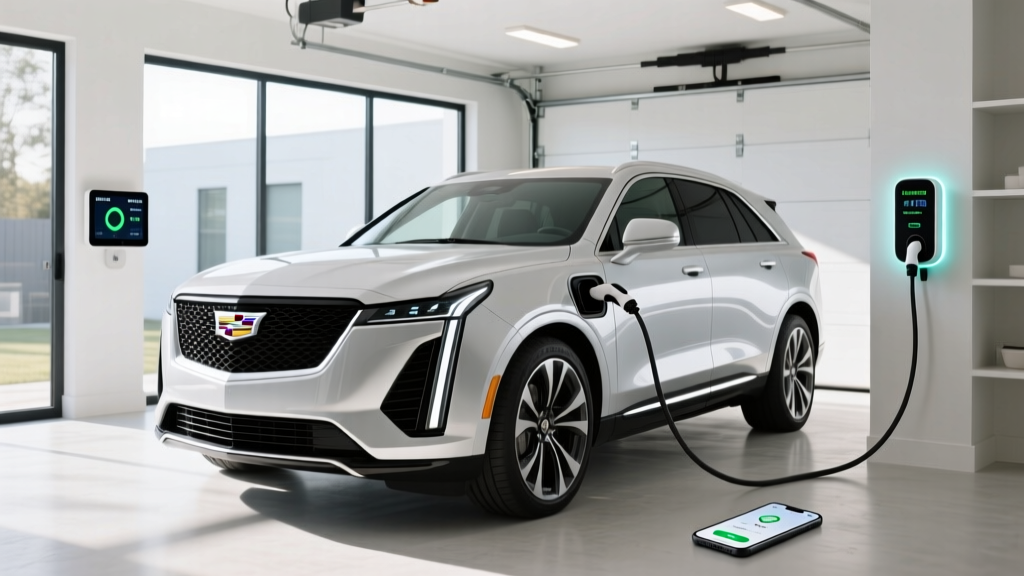
Charging the Escalade IQ at home is where you'll recover the most range most conveniently. But this SUV's massive battery means you'll want the fastest Level 2 setup your home can support.
Electrical Requirements
For a practical home installation targeting the Escalade IQ:
- Minimum recommended: 240V / 48A dedicated circuit (NEMA 14-50 outlet or hardwired), delivering 11.5 kW
- Optimal: 240V / 80A dedicated circuit (hardwired only), delivering the full 19.2 kW the onboard charger can accept
- Panel capacity: A 48A charger requires a 60A breaker (NEC code requires circuits rated at 125% of continuous load). An 80A charger requires a 100A breaker.
Installation Cost Breakdown
| Cost Component | 48A / 11.5 kW Setup | 80A / 19.2 kW Setup |
|---|---|---|
| Level 2 Charger (Equipment) | $500–$800 | $700–$1,200 |
| Electrical Permit | $50–$200 | $50–$250 |
| Electrician Labor (standard install, <50 ft run) | $600–$1,500 | $1,000–$2,500 |
| Panel Upgrade (if needed) | $2,000–$4,000 | $2,500–$5,000 |
| Total (no panel upgrade) | $1,150–$2,500 | $1,750–$3,950 |
| Total (with panel upgrade) | $3,150–$6,500 | $4,250–$8,950 |
These ranges assume a typical single-family home with the charger mounted in a garage or on an exterior wall near the panel. Longer wire runs, conduit through finished walls, or trenching to a detached garage add cost. Always get at least two quotes from licensed electricians.
Which Connector Does the Escalade IQ Use?
The 2026 Escalade IQ comes equipped with a NACS (North American Charging Standard) port — the connector originally developed by Tesla and now adopted across most of the industry. This is a significant advantage: it means native access to the Tesla Supercharger network without an adapter.
| Connector Type | Escalade IQ Compatibility | Network Access |
|---|---|---|
| NACS (Tesla) | Native — built in | Tesla Superchargers, Electrify America (newer stations), EVgo, and growing NACS networks |
| CCS1 | Requires NACS-to-CCS adapter | Legacy Electrify America, ChargePoint, and other CCS stations |
| CHAdeMO | Not supported (obsolete) | Nissan Leaf legacy network — declining |
| J1772 (Level 2 AC) | Requires NACS-to-J1772 adapter | Public Level 2 stations, older home chargers |
Adapter note: Most new public Level 2 and DC fast chargers are transitioning to NACS cables, but many existing CCS stations still require an adapter. Cadillac may include a CCS adapter with the vehicle (check your purchase agreement). Third-party NACS-to-CCS adapters from brands like Lectron and A2Z are available for $150–$300 if needed. For Level 2 home charging, buying a NACS-native wall connector eliminates the adapter hassle entirely.
Cost to Charge: Home vs. Public vs. Gas Comparison
The Escalade IQ's ~200 kWh battery makes charging costs a significant line item. Here's what you can expect to pay per full charge and per mile driven.
| Scenario | Rate ($/kWh) | Cost for Full ~200 kWh Fill | Cost per Mile (est. 400 mi usable) |
|---|---|---|---|
| Home Off-Peak (utility TOU rate) | $0.08–$0.12 | $16–$24 | $0.04–$0.06 |
| Home Standard Rate | $0.13–$0.18 | $26–$36 | $0.065–$0.09 |
| Public Level 2 (ChargePoint, etc.) | $0.25–$0.49 | $50–$98 | $0.125–$0.245 |
| DC Fast (Tesla Supercharger avg.) | $0.28–$0.42 | $56–$84 | $0.14–$0.21 |
| DC Fast (Electrify America peak) | $0.48–$0.64 | $96–$128 | $0.24–$0.32 |
Gas comparison: The outgoing gas-powered Escalade (6.2L V8, ~16 MPG combined) at $3.50/gallon costs roughly $0.22 per mile. Home charging the IQ at off-peak rates costs $0.04–$0.06 per mile — a 70–75% reduction in per-mile energy cost. Even DC fast charging on the road roughly matches the gas Escalade's fuel cost per mile.
Pro tip: If your utility offers time-of-use (TOU) rates, scheduling the Escalade IQ to charge between 11 PM and 6 AM can cut your home charging costs by 40–60%. The IQ's infotainment system supports scheduled charging natively.
Recommended Home Charging Equipment for the Escalade IQ
With a 19.2 kW onboard charger, the Escalade IQ can accept more AC power than most home chargers deliver. Here are three tiers of equipment matched to this SUV's needs.
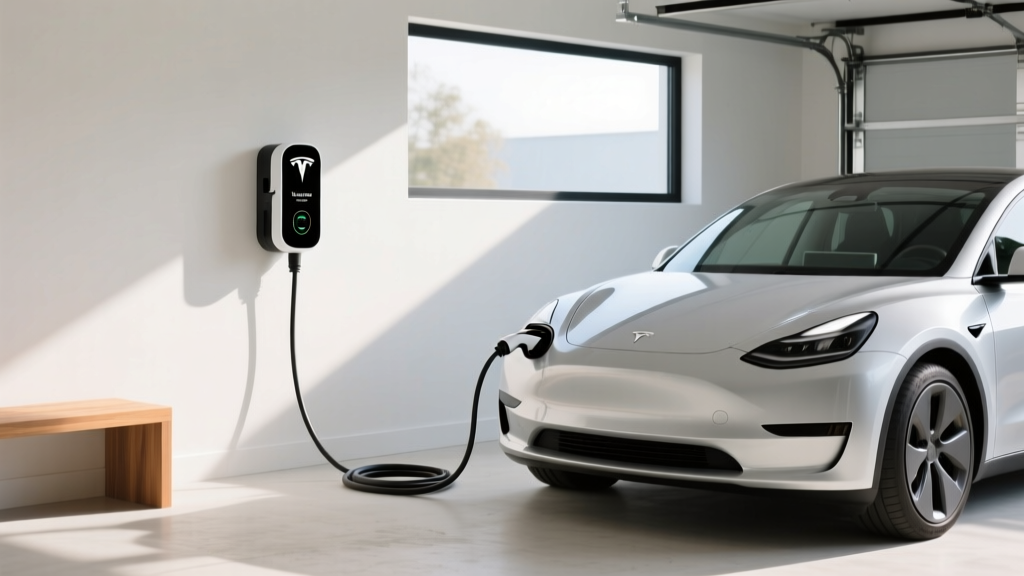
Best Overall: Tesla Wall Connector (NACS)
- Power Output: Up to 11.5 kW (48A) on a 60A circuit; up to 19.2 kW (80A) on a 100A circuit (Gen 3 firmware-dependent)
- Connector: Native NACS — no adapter needed
- Cable Length: 24 ft
- Smart Features: Wi-Fi, over-the-air updates, load sharing between multiple units, Tesla app integration
- Price: ~$475 (11.5 kW model)
- Why: Native NACS eliminates adapter clutter. Power sharing lets you install two units on one circuit if you add a second EV.
Best for Max Speed: Emporia Vue Pro with NACS
- Power Output: Up to 19.2 kW (80A) hardwired
- Connector: NACS (2025+ model)
- Cable Length: 24 ft
- Smart Features: Energy monitoring, solar integration, utility demand-response compatible, app scheduling
- Price: ~$800–$900
- Why: Unlocks the Escalade IQ's full 19.2 kW AC charging capability. Ideal if you have 200A+ panel capacity and want overnight fills from low SoC.
Budget Pick: ChargePoint Home Flex (with NACS cable)
- Power Output: Up to 12 kW (50A) on a 60A circuit; configurable down to 16A for smaller panels
- Connector: Available with NACS cable (2025+ SKU)
- Cable Length: 23 ft
- Smart Features: Wi-Fi, Alexa integration, detailed app energy tracking, flexible amperage dip-switch settings
- Price: ~$650
- Why: Flexible amperage settings make it ideal for homes with limited panel capacity. You can set it to 32A (7.7 kW) today and reconfigure to 48A if you upgrade your panel later.
Safety, Permits, and Electrical Code Considerations
EV charging is a high-draw, continuous electrical load — the kind of installation where cutting corners creates real fire risk. Here's what matters:
- Dedicated circuit: Your Level 2 charger must be on its own dedicated breaker — never shared with other appliances. The NEC defines EV charging as a continuous load, meaning the circuit must be rated at 125% of the charger's max draw (48A charger = 60A breaker).
- GFCI protection: The 2023 NEC (adopted in most states by 2025–2026) requires GFCI protection for all EV charging outlets. Hardwired installations may have different GFCI requirements depending on your local jurisdiction — confirm with your electrician and AHJ (Authority Having Jurisdiction).
- Outdoor rating: If your charger is mounted outdoors, both the unit and the receptacle must carry a NEMA 3R or NEMA 4 weatherproof rating. All chargers recommended above are outdoor-rated.
- Permitting: Virtually all jurisdictions require an electrical permit for a new 240V circuit. Permits typically cost $50–$250 and ensure the work is inspected. Unpermitted work can void homeowner's insurance coverage in the event of an electrical fire.
- Wire gauge: 48A circuits require 6 AWG copper wire (or 4 AWG aluminum). 80A circuits require 3 AWG copper. Your electrician will size wire based on run length and local code — longer runs may require upsizing to prevent voltage drop.
Public DC Fast Charging: What to Expect on the Road
The Escalade IQ's 800V architecture and ~350 kW peak charge rate put it in the top tier of DC fast-charging capability. Here's how to maximize it:
- Tesla Supercharger V4 stations: Now open to NACS-native non-Tesla vehicles. V4 stalls deliver up to 350 kW and feature pull-through lanes designed for vehicles towing trailers — critical for the Escalade IQ's size.
- Electrify America 350 kW stations: Many EA stations now feature NACS cables alongside CCS. Use the EA app to confirm connector availability before routing.
- Preconditioning: The Escalade IQ will automatically precondition its battery when you navigate to a DC fast charger via the built-in navigation system. This warms or cools the battery to optimal temperature for maximum charge acceptance. Skipping preconditioning (e.g., pulling into a charger without navigation routing) can reduce peak charge rates by 30–50% in cold weather.
- Charging curve taper: Expect the IQ to charge from 10–40% at or near peak 350 kW, then taper to ~200 kW through 60%, ~150 kW through 80%, and drop sharply above 80%. For road trips, charging to 80% and driving is far more time-efficient than waiting for 100%.
According to data from fueleconomy.gov, DC fast charging efficiency (accounting for charging losses of 5–10%) means you'll actually pull roughly 210–220 kWh from the grid to put 200 kWh into the battery.
Frequently Asked Questions
How much does it cost to install a home EV charger for the Escalade IQ?
Expect $1,150–$2,500 for a 48A/11.5 kW installation if your panel has capacity, or $1,750–$3,950 for an 80A/19.2 kW setup. If your home needs a panel upgrade (common in pre-2000 construction), add $2,000–$5,000. Always get a load calculation from a licensed electrician first.
How fast will each charging level add range to the Escalade IQ?
Level 1 (120V): ~2–3 miles per hour. Level 2 at 11.5 kW (48A): ~24 miles per hour. Level 2 at 19.2 kW (80A): ~40 miles per hour. DC fast charging at 350 kW: ~700+ miles per hour at peak, tapering as battery fills. The 10–80% DC fast charge takes approximately 20 minutes.
Which connector is compatible with the 2026 Escalade IQ?
The Escalade IQ uses a native NACS port. This gives you direct access to Tesla Superchargers and all NACS-equipped public stations. For legacy CCS stations, you'll need a NACS-to-CCS adapter. CHAdeMO is not supported.
How much does charging cost per mile compared to gas?
Home off-peak charging costs $0.04–$0.06 per mile — roughly 70–75% less than the gas Escalade's $0.22/mile at 16 MPG and $3.50/gallon. Public DC fast charging costs $0.14–$0.32 per mile depending on the network, roughly matching gas costs.
What electrical upgrades might I need for the Escalade IQ?
The most common upgrade is a main panel replacement from 100A or 150A to 200A or 400A service, especially if you plan an 80A/19.2 kW charger circuit. Other potential costs include: a new meter base ($200–$500), utility service upgrade coordination, and trenching for detached garages ($500–$2,000+). Homes with 200A+ panels and gas appliances typically have enough headroom for a 48A circuit without upgrades.
Does the Escalade IQ qualify for the federal EV tax credit?
Federal §30D tax credit eligibility depends on MSRP caps ($80,000 for SUVs), buyer income limits ($300,000 MFJ / $150,000 single), and battery critical-mineral sourcing requirements that tighten annually. The Escalade IQ's base MSRP may exceed the cap at higher trims. Check the latest rules at IRS.gov and consult a tax professional. Point-of-sale transfer is available if you qualify.
For the full EPA efficiency ratings and range data, visit fueleconomy.gov and search for the 2026 Cadillac Escalade IQ once official ratings are published. Cadillac's owner resources at cadillac.com also provide charging setup guides specific to this model.