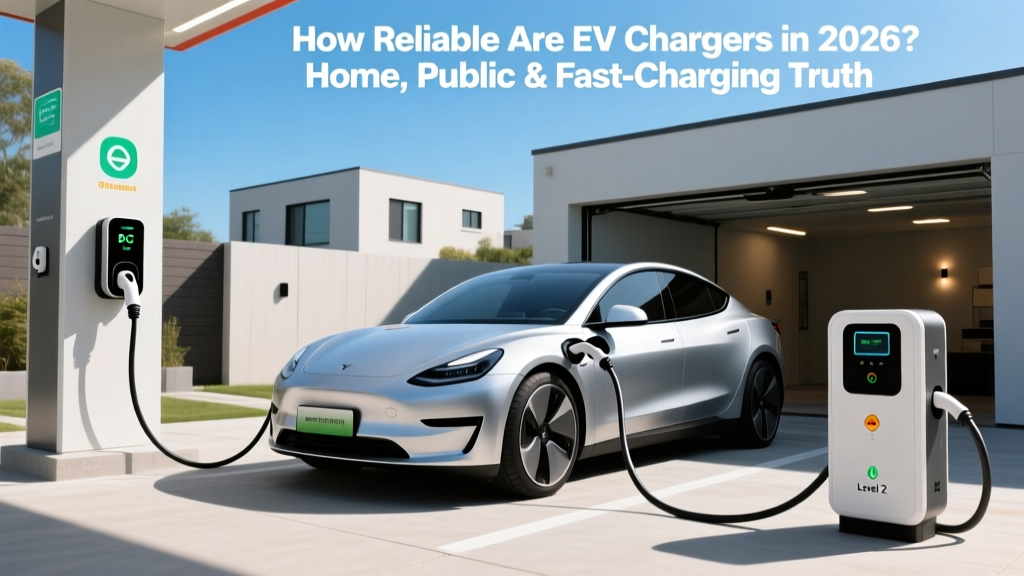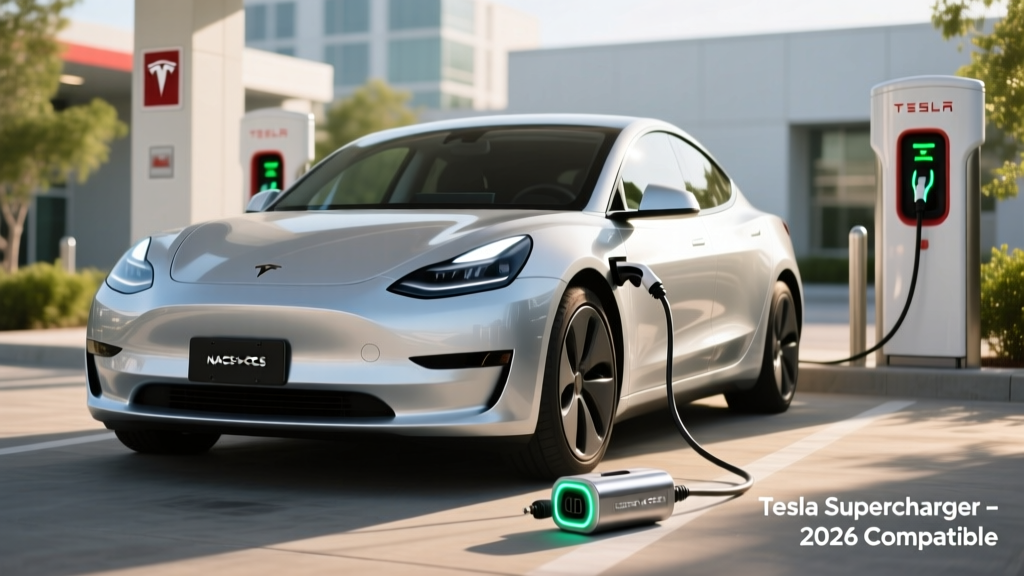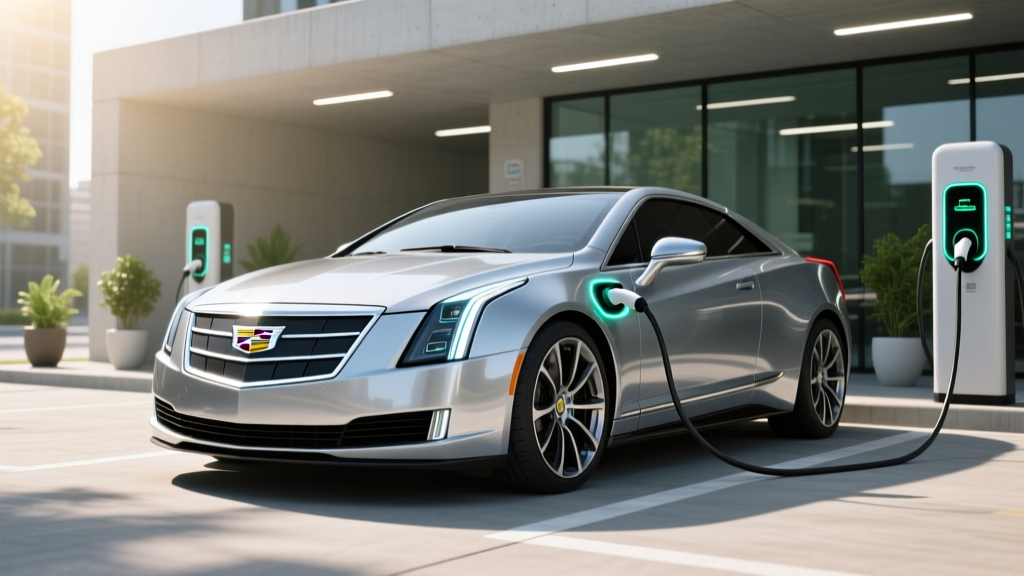
The Cadillac ELR remains one of the most distinctive plug-in hybrids ever built — a luxury coupe sharing its Voltec powertrain with the Chevrolet Volt but wrapped in Cadillac styling and a premium interior. Though production ended after the 2016 model year, thousands of ELRs still cruise American roads, and their owners face a unique set of charging considerations. With an EPA-rated 37–39 miles of electric range (depending on model year), the ELR is designed for daily electric commuting with a gasoline backup for longer trips. This guide breaks down exactly how to charge a Cadillac ELR at home and on the road, what equipment you need, and what the real costs look like in 2026.
Understanding the Cadillac ELR's Electric Range and Battery
Before selecting a charger, it is essential to understand what you are charging. The Cadillac ELR uses an 18.4 kWh lithium-ion battery pack (17.1 kWh usable in 2014 models, with a slight bump for 2016). The EPA rated the 2014 ELR at 37 miles of all-electric range, while the 2016 revision achieved 39 miles thanks to powertrain refinements and a slightly higher usable capacity.
EPA sticker: 37–39 miles electric. In practice, expect 30–35 miles in mixed driving, dropping to 22–28 miles in cold weather (below 35°F) due to cabin heating loads and reduced battery efficiency. Highway speeds above 70 mph will also reduce electric range to roughly 25–30 miles. Once the battery depletes, the 1.4L range-extender generator kicks in, delivering a combined EPA rating of 85 MPGe (electric + gas) and approximately 340+ total miles of range.
Because the ELR's battery is relatively small compared to a full battery-electric vehicle, charging it is straightforward and fast — but you still need the right setup to maximize convenience and battery longevity.
Charging Levels Explained: What the ELR Can Accept
The Cadillac ELR supports Level 1 (120V AC) and Level 2 (240V AC) charging. It does not support DC fast charging — there is no CCS, CHAdeMO, or NACS DC port on this vehicle. This is standard for plug-in hybrids of its era; the battery is small enough that DC fast charging would be unnecessary and potentially damaging to the cells.
A critical distinction for any EV or PHEV owner: kW (kilowatts) measures power — the rate at which energy flows into your car. kWh (kilowatt-hours) measures energy — the total capacity of your battery. Think of kW as the width of a pipe and kWh as the size of the tank. The ELR's onboard charger limits how many kW it can accept, regardless of how powerful your charging station is.
| Charging Level | Voltage | Max Power (kW) | Miles of Range Added per Hour | Full Charge Time (0–100%) |
|---|---|---|---|---|
| Level 1 (Standard Outlet) | 120V AC | ~1.4 kW | ~4–5 miles | ~12–14 hours |
| Level 2 (Home/Public AC) | 240V AC | ~3.6 kW (ELR onboard limit) | ~12–14 miles | ~4.5–5 hours |
| DC Fast Charging | N/A | Not Supported | N/A | N/A |
The ELR's onboard charger maxes out at approximately 3.6 kW on Level 2. This means that even if you plug into a 7.2 kW or 11.5 kW public Level 2 station, the ELR will only draw 3.6 kW. A full charge from empty still takes about 4.5 to 5 hours — which is perfectly manageable overnight and more than sufficient for a PHEV with under 40 miles of electric range.
Home Charging Setup: Electrical Requirements and Installation Costs
Most ELR owners will want a dedicated Level 2 home charger for daily convenience. Here is what that installation involves.
Electrical Requirements
- Circuit: A dedicated 240V circuit, typically 20A or 30A (a 40A circuit is overkill for the ELR's 3.6 kW draw but future-proofs for a BEV)
- Outlet vs. Hardwired: A NEMA 14-50 outlet (240V/50A rated) offers flexibility; hardwired units are slightly cheaper to install and avoid outlet wear
- Panel Capacity: Your home's electrical panel must have enough spare capacity. A 200A panel typically handles a Level 2 circuit without issue; older 100A panels may require an upgrade
- Permit: Most jurisdictions require an electrical permit for new 240V circuits — expect $50–$200 depending on your municipality
Installation Cost Breakdown
| Cost Component | Low End | High End | Notes |
|---|---|---|---|
| Level 2 Charging Equipment | $200 | $700 | Basic 16A–40A units; smart chargers cost more |
| Electrician Labor | $400 | $1,500 | Depends on run length, wall type, conduit needs |
| Electrical Permit | $50 | $200 | Varies by city/county |
| Panel Upgrade (if needed) | $1,500 | $3,500 | 100A→200A service upgrade; not always required |
| Total (no panel upgrade) | $650 | $2,400 | Most homes with 200A panels fall here |
| Total (with panel upgrade) | $2,150 | $5,900 | Older homes with 100A service |
For the ELR specifically, you can save on equipment costs. Since the car only accepts 3.6 kW, a lower-amperage charger (16A or 20A at 240V) will fully utilize the car's capability. However, installing a 32A or 40A circuit is smart if you plan to eventually own a full BEV that can accept 7.2–11.5 kW.
Panel Upgrade: The Hidden Cost
Homes built before the 1990s often have 100A electrical service. Adding a 240V/40A circuit to a maxed-out 100A panel is a code violation and a fire risk. A licensed electrician will perform a load calculation; if your panel is near capacity, a service upgrade to 200A (or even 400A for homes adding solar and heat pumps) may be required. This is the single largest variable in home charging cost and should be assessed before purchasing equipment.
Connector Compatibility: J1772 and the NACS Transition
The Cadillac ELR uses the J1772 connector for all AC charging (Level 1 and Level 2). This is the standard connector for all non-Tesla EVs and PHEVs sold in North America through 2024.
| Connector | Type | ELR Compatible? | Notes |
|---|---|---|---|
| J1772 | AC (Level 1 & 2) | Yes — native port | Standard on all US-market PHEVs/BEVs pre-2025 |
| NACS (Tesla) | AC & DC | AC only with adapter | Tesla's J1772-to-NACS adapter works for AC; DC irrelevant for ELR |
| CCS1 | DC Fast | No | ELR has no DC fast-charge port |
| CHAdeMO | DC Fast | No | ELR has no DC fast-charge port |
As the industry shifts toward NACS (North American Charging Standard) — Tesla's connector, now adopted by Ford, GM, Rivian, and most major automakers for 2025+ models — the J1772 infrastructure is not disappearing overnight. Most public Level 2 stations still carry J1772 connectors, and adapters are widely available. For ELR owners, the existing J1772 ecosystem will remain fully functional for the life of the vehicle.
One practical note: if you purchase a modern NACS-equipped home charger (such as the Tesla Wall Connector), you will need a NACS-to-J1772 adapter (~$50–$100) to plug into your ELR. These adapters are readily available and work seamlessly for AC charging.
Recommended Home Charging Equipment for the ELR
Because the ELR's onboard charger tops out at 3.6 kW, you do not need the most powerful charger on the market. That said, investing in a higher-output unit makes sense for resale value and future vehicle compatibility. Here are three strong options:
Emporia Vue Level 2 Charger
- Power Output: Up to 48A (11.5 kW at 240V)
- Connector: J1772 (native)
- Cable Length: 24 feet
- Smart Features: Wi-Fi, app scheduling, energy monitoring, solar integration
- Price: ~$350–$400
- Why for ELR: Affordable, smart scheduling lets you charge during off-peak utility rates, and the J1772 connector plugs directly in.
ChargePoint Home Flex
- Power Output: Configurable 16A–50A (3.8–12 kW at 240V)
- Connector: J1772 (native)
- Cable Length: 23 feet
- Smart Features: Wi-Fi, Alexa integration, ChargePoint app, flexible amperage settings
- Price: ~$550–$650
- Why for ELR: The adjustable amperage means you can set it to 16A (matching the ELR's 3.6 kW draw) on a 20A circuit — ideal for older homes with limited panel capacity.
Tesla Wall Connector (with adapter)
- Power Output: Up to 48A (11.5 kW at 240V)
- Connector: NACS (requires NACS-to-J1772 adapter for ELR)
- Cable Length: 24 feet
- Smart Features: Wi-Fi, power sharing between units, OTA updates
- Price: ~$425 (charger) + ~$70 (adapter)
- Why for ELR: Excellent build quality and future-proof if you add a Tesla or NACS-equipped vehicle later. The adapter adds a small inconvenience.
Charging Costs: Home vs. Public vs. Gasoline
One of the strongest arguments for driving the ELR on electricity is the cost savings per mile. Here is how the numbers break down across different charging scenarios.
| Scenario | Rate | Cost for Full Charge (18.4 kWh) | Cost Per Mile (Electric) |
|---|---|---|---|
| Home Off-Peak (utility TOU rate) | $0.09/kWh | $1.66 | $0.045 |
| Home Standard Rate | $0.16/kWh | $2.94 | $0.079 |
| Public Level 2 (networked) | $0.25–$0.35/kWh | $4.60–$6.44 | $0.12–$0.17 |
| Gasoline (range extender mode) | $3.40/gal, ~32 MPG | N/A | $0.106 |
At home on off-peak rates, the ELR costs roughly 4.5 cents per mile on electricity — less than half the cost of gasoline mode. Even on standard residential rates, electric driving at ~8 cents per mile beats gasoline at ~10.6 cents. Public Level 2 charging is the most expensive option and can actually exceed the cost of gasoline; this is why home charging is the economic sweet spot for PHEV owners.
For a commuter driving 30 miles round-trip, five days a week, on home off-peak electricity, the monthly fuel cost is approximately $27. The same commute on gasoline would cost roughly $64. Over a year, that is a savings of about $440 — meaningful, though less dramatic than a full BEV's savings due to the ELR's smaller battery.
Public Charging: Where and How to Charge an ELR on the Road
The ELR's J1772 port is compatible with virtually every public Level 2 charging station in North America. Networks like ChargePoint, EVgo (Level 2 stations), Blink, and FLO all provide J1772 connectors. You will find these at grocery stores, parking garages, workplaces, and hotels.
Because the ELR cannot use DC fast chargers, skip the CCS and CHAdeMO stalls — they will not physically connect. On a road trip, plan overnight stops where Level 2 charging is available (hotels with destination chargers are ideal). A 5-hour Level 2 session will fully replenish the battery, giving you a fresh 37–39 miles of electric range for local driving the next day.
Apps like PlugShare and ChargePoint are invaluable for locating compatible stations. Filter for J1772/Level 2 and check user reviews for reliability — a broken public charger is the PHEV owner's biggest frustration on the road.
Safety and Electrical Code Considerations
Installing a 240V circuit is not a DIY project for most homeowners. The National Electrical Code (NEC) and local building codes impose specific requirements:
- Dedicated Circuit: Your Level 2 charger must be on its own dedicated breaker — it cannot share a circuit with other appliances
- GFCI Protection: NEC 2020 and later require GFCI (Ground Fault Circuit Interrupter) protection for all EV charging outlets. Hardwired units may have GFCI built in; outlet-based installations need a GFCI breaker
- Outdoor Rating: If your charger is installed outdoors, the unit must carry a NEMA 3R or NEMA 4 weather-resistance rating. All three chargers recommended above meet this standard
- Wire Gauge: A 40A circuit requires 8 AWG copper wire; a 20A circuit requires 12 AWG. Your electrician will size this correctly based on the circuit amperage and run length
- Continuous Load Rule: EV chargers are classified as continuous loads under NEC Article 625, meaning the circuit must be rated for 125% of the charger's maximum draw. A 32A charger requires a 40A breaker; a 16A charger requires a 20A breaker
Always hire a licensed electrician and pull the required permits. Unpermitted electrical work can void your homeowner's insurance and create serious fire hazards.
Frequently Asked Questions
How much does it cost to install a home EV charger for the Cadillac ELR?
For most homes with a 200A electrical panel, expect to pay between $650 and $2,400 total — that includes the charger ($200–$700), electrician labor ($400–$1,500), and a permit ($50–$200). Homes with older 100A panels may need a service upgrade costing $1,500–$3,500 additional. Since the ELR only needs 3.6 kW, you can opt for a lower-amperage circuit to reduce costs.
How fast will each charging level add range to my ELR?
Level 1 (120V standard outlet) adds roughly 4–5 miles of electric range per hour. Level 2 (240V home or public station) adds about 12–14 miles per hour. The ELR does not support DC fast charging. A full Level 2 charge from empty takes approximately 4.5 to 5 hours.
Which connector and charger is compatible with my Cadillac ELR?
The ELR uses the J1772 connector for all AC charging. Any Level 1 or Level 2 station with a J1772 plug will work. If you purchase a NACS-equipped charger (like the Tesla Wall Connector), you will need a NACS-to-J1772 adapter (~$50–$100). The ELR cannot use CCS1 or CHAdeMO DC fast-charging connectors.
How much does charging the ELR cost per mile compared to gasoline?
On home off-peak electricity at $0.09/kWh, the ELR costs about 4.5 cents per mile in electric mode. On standard residential rates ($0.16/kWh), it is about 8 cents per mile. In gasoline mode (range extender), at $3.40/gallon and 32 MPG, it costs about 10.6 cents per mile. Home electric charging saves 20–55% per mile compared to gasoline.
What electrical upgrades might I need for a Level 2 charger?
If your home has a 200A electrical panel with spare breaker slots and sufficient remaining capacity, you likely need no upgrades beyond the new 240V circuit. Homes with 100A panels — common in houses built before the 1990s — often require a panel upgrade to 200A, which costs $1,500–$3,500. A licensed electrician can perform a load calculation to determine if an upgrade is necessary.
Can I use a standard 120V outlet to charge my ELR?
Yes. The ELR comes with a Level 1 charging cord that plugs into a standard 120V household outlet. At roughly 1.4 kW, a full charge takes 12–14 hours. For the ELR's small battery, overnight Level 1 charging can work if your daily commute is under 25 miles. However, a Level 2 installation is strongly recommended for convenience and to ensure a full charge in 4–5 hours.
Does the federal tax credit apply to home charger installation?
The IRS §30C Alternative Fuel Vehicle Refueling Property Credit offers up to 30% of the cost of home charging equipment and installation (capped at $1,000) — but only if you live in an eligible census tract (generally low-income or non-urban areas). Check the IRS website or consult a tax professional for current eligibility rules, as these are subject to change.
Final Thoughts: Charging the ELR in 2026
The Cadillac ELR's modest 18.4 kWh battery and 3.6 kW onboard charger make it one of the easiest plug-in vehicles to support at home. You do not need a high-powered charger or an expensive electrical upgrade in most cases. A basic 240V/20A circuit and a quality J1772 Level 2 unit will have you fully charged every morning for well under $2,000 all-in — and the per-mile cost of electric driving will pay for that installation within a few years of commuting. The key is working with a licensed electrician, choosing the right charger for your current and future needs, and taking advantage of off-peak utility rates to keep your fuel costs as low as possible.