Cadillac's 2026 EV Lineup and the Charging Reality
If you own or are shopping for a 2026 Cadillac Lyriq or the newly launched 2026 Cadillac Optiq, charging logistics likely top your concern list. General Motors' decision to adopt the North American Charging Standard (NACS) for all Cadillac EVs fundamentally changed the ownership equation — granting access to Tesla's Supercharger network alongside Electrify America, EVgo, and ChargePoint stations. But access isn't the same as reliability, and network uptime varies significantly by provider, region, and connector type.
This guide breaks down exactly what 2026 Cadillac EV owners face: home charging setup costs, public network reliability data, connector compatibility, real-world charging times for the Lyriq's 102 kWh battery and the Optiq's 79 kWh pack, and the per-mile cost math versus a gas-powered Cadillac XT5 or XT6.
Understanding Charging Levels: Speeds That Matter for Your Cadillac
Before evaluating networks or buying equipment, you need clarity on the three charging tiers. The single most common mistake new EV owners make is confusing kW (kilowatts — the rate of power delivery) with kWh (kilowatt-hours — the total energy stored in your battery). Think of kW as the flow rate of a hose and kWh as the size of the bucket.
| Level | Voltage | Power (kW) | Miles Added per Hour | Best For |
|---|---|---|---|---|
| Level 1 | 120V AC | 1.2–1.9 kW | 3–5 mi/hr | Overnight top-ups, PHEVs, emergencies |
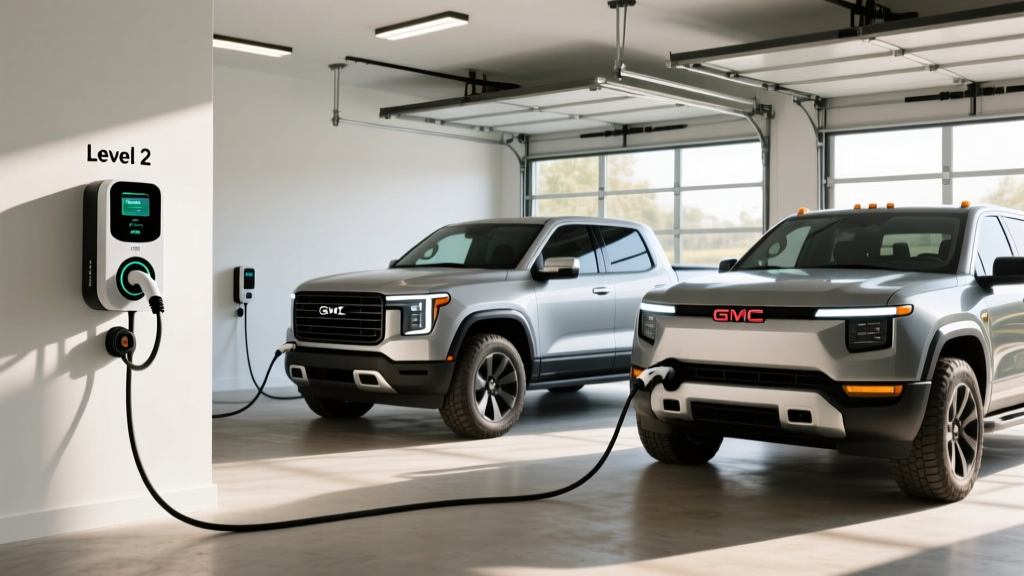
| Level 2 | 240V AC | 7.2–19.2 kW | 20–55 mi/hr | Daily home charging, workplace |
| DC Fast Charge | 400–800V DC | 50–350 kW | 150–500+ mi/hr | Road trips, rapid top-ups |
For a 2026 Lyriq with its 102 kWh battery, Level 1 charging from empty would take over 50 hours — impractical for daily use. A properly installed Level 2 home charger at 11.5 kW replenishes the Lyriq from 10% to 80% in roughly 7 hours, making overnight charging effortless. DC fast charging at the Lyriq's peak 190 kW adds approximately 76 miles of range in 10 minutes under ideal conditions, though real-world charge curves taper significantly above 80% state of charge.
Home Charger Installation: Requirements, Costs, and Gotchas
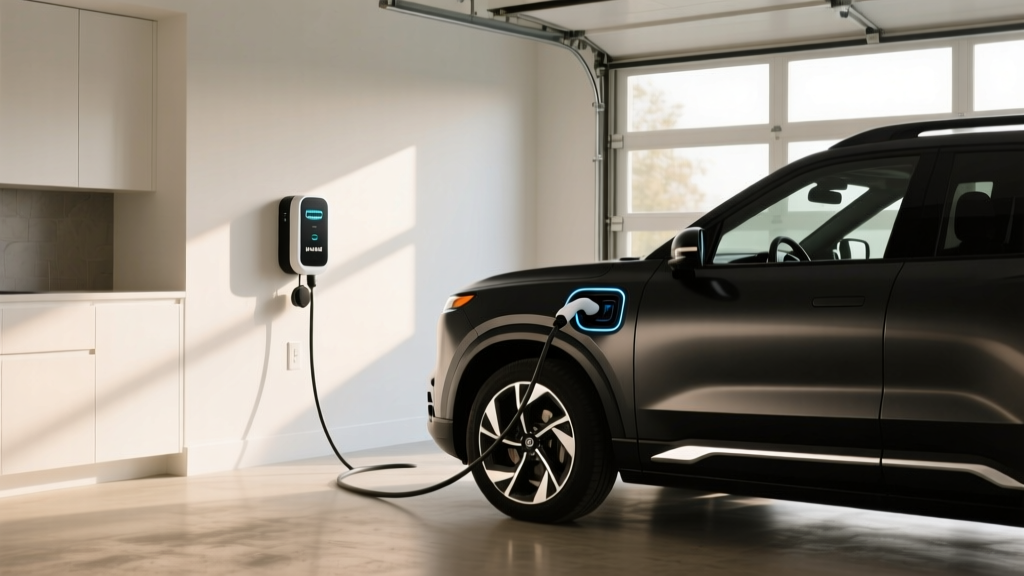
Installing a Level 2 home charger is the single biggest factor in Cadillac EV satisfaction. Most Lyriq and Optiq owners will want a 240V, 48-amp hardwired station delivering 11.5 kW — matching the vehicles' onboard charger capacity.
Electrical Requirements
A 48-amp EV charger requires a dedicated 60-amp circuit (National Electrical Code mandates that continuous loads use only 80% of a circuit's rated capacity). Your home's electrical panel must have sufficient spare capacity — typically 200-amp service is adequate for most modern homes, but older homes with 100-amp panels will likely need a panel upgrade, adding $1,500–$3,000 to the project.
| Component | Cost Range | Notes |
|---|---|---|
| Level 2 Charger (48A, hardwired) | $400–$750 | ChargePoint Home Flex, Emporia Vue, Wallbox Pulsar Plus |
| Electrician Labor (standard install) | $500–$1,500 | Varies by run length, wall type, conduit needs |
| Electrical Permit | $50–$250 | Required in most jurisdictions; varies by municipality |
| Panel Upgrade (if needed) | $1,500–$3,000 | 100A → 200A service; not needed in most newer homes |
| Total (no panel upgrade) | $950–$2,500 | Typical scenario for homes built after 2000 |
| Total (with panel upgrade) | $2,450–$5,500 | Older homes with 100A service |
The IRS §30D tax credit does not cover home charging equipment directly, but the separate §30C Alternative Fuel Vehicle Refueling Property Credit provides up to $1,000 (30% of cost, capped) for home charger installation in eligible census tracts. Verify your ZIP code eligibility at irs.gov and consult a tax professional before claiming.
Safety and Code Considerations
- Dedicated circuit: Your EV charger must be on its own breaker — never share with appliances.
- GFCI protection: NEC 2023 and later require GFCI for outdoor receptacles; hardwired units may bypass this requirement in some jurisdictions, but consult your electrician and local AHJ (Authority Having Jurisdiction).
- Outdoor rating: If installing outside, ensure the charger carries a NEMA 4 or IP65 rating for weather resistance.
- Cable management: Choose a unit with at least 18–24 feet of cable to reach your Cadillac's charge port (located on the driver's side front fender) without stretching.
- Wi-Fi connectivity: Smart chargers enable scheduled charging during off-peak utility rates — potentially cutting your per-kWh cost in half.
Public Charging Network Reliability: What Cadillac Owners Actually Experience
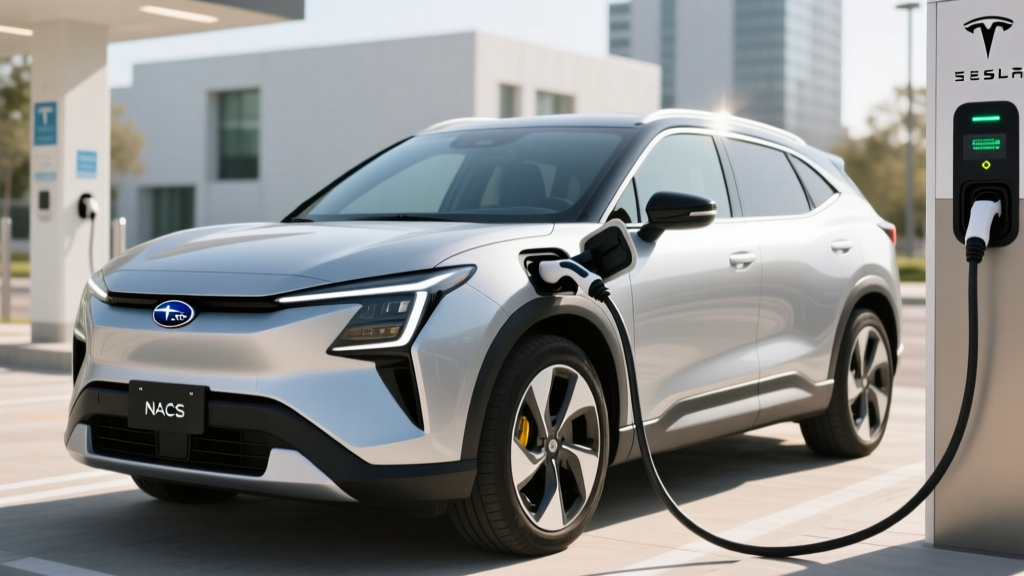
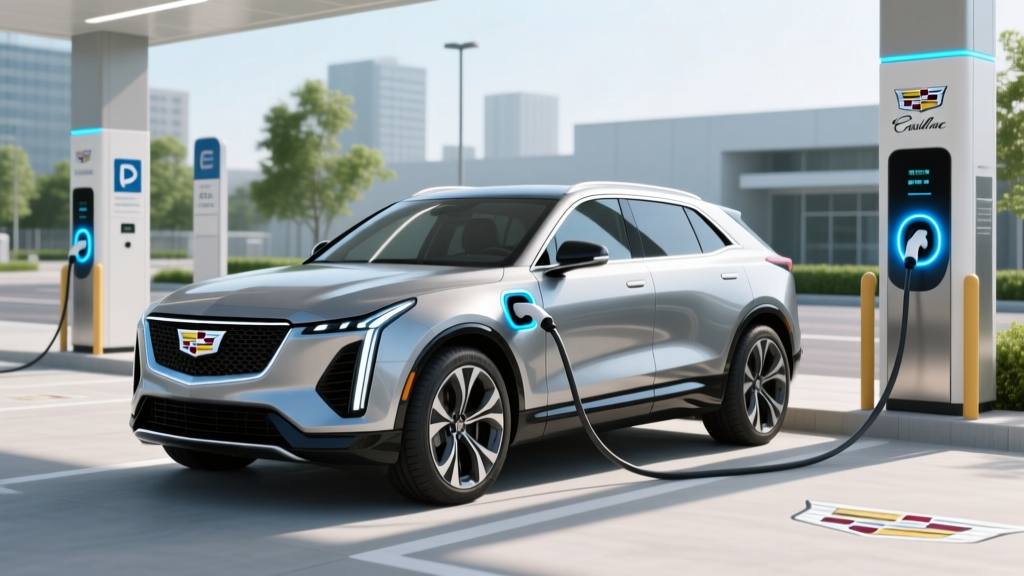
The 2026 Cadillac Lyriq and Optiq ship with the NACS connector, meaning native access to Tesla Superchargers — widely regarded as the most reliable DC fast-charging network in North America. This is a significant advantage over the CCS1 connector, which relies on third-party networks with more variable uptime.
| Network | Connector | Max Speed | 2026 Cadillac Compatibility | Reliability (J.D. Power / User Reports) |
|---|---|---|---|---|
| Tesla Supercharger (V3/V4) | NACS | 250 kW (V3), 350+ kW (V4) | Native — no adapter needed | Highest uptime (~95–97%) |
| Electrify America | CCS1 / NACS (select) | 350 kW | NACS adapter or native at NACS-equipped stalls | Moderate (~80–88% uptime) |
| EVgo | CCS1 / NACS | 350 kW | Adapter or native at newer stalls | Moderate-high (~85–90%) |
| ChargePoint | CCS1 / NACS (varies) | 400 kW (Express) | Adapter needed at CCS-only stalls | Variable by site (~78–88%) |
| GM Ultium Charge 360 | Aggregator app | Varies | Integrated in-vehicle routing | Depends on underlying network |
The NACS advantage is real but not absolute. Tesla's Supercharger network consistently leads in uptime and plug-and-charge simplicity — no app fumbling, no RFID cards, no broken screens. However, V3 Superchargers cap at 250 kW, and the Lyriq's peak acceptance is 190 kW regardless, so you won't bottleneck on V3 stalls. The emerging V4 Supercharger cabinets offer higher power and, crucially, longer cables that can reach the Lyriq's front-fender charge port without awkward parking positioning.
For Electrify America and EVgo stations equipped only with CCS1 cables, Cadillac provides a CCS1-to-NACS adapter (included with 2026 models or available through your dealer). These adapters are rated for up to 350 kW and work seamlessly, but they add a physical point of failure and require you to carry the adapter in your cargo area.
Real-World Charging Times: 2026 Lyriq and Optiq
Manufacturer-quoted peak kW figures represent a momentary maximum, not a sustained average. DC fast charging follows a charge curve: power ramps up, peaks briefly, then tapers as the battery fills — especially above 80% SoC. Here's what to expect:
- 2026 Cadillac Lyriq (102 kWh NMC): Peaks at 190 kW around 20–35% SoC, tapers to ~120 kW by 60%, and drops below 50 kW past 85%. Real-world 10–80% time: ~33 minutes on a 250 kW Supercharger or comparable DC station.
- 2026 Cadillac Optiq (79 kWh NMC): Peaks at approximately 150 kW, with a 10–80% time of ~27 minutes under good conditions.
- Cold-weather caveat: Below 40°F, battery preconditioning is essential. Without it, initial charge rates may be cut by 40–60% until the battery warms. Always use the Cadillac app to precondition 15–20 minutes before arriving at a DC station.
Charging Cost Per Mile: Cadillac EV vs. Gas-Powered Cadillac
The economics of charging a Cadillac Lyriq or Optiq depend heavily on where and when you charge. Home charging during off-peak hours is dramatically cheaper than public DC fast charging — and both are cheaper than premium gasoline.
| Scenario | Cost per kWh | Lyriq Efficiency (kWh/100mi) | Cost per Mile |
|---|---|---|---|
| Home — off-peak utility rate | $0.09–$0.14 | 33–35 | $0.03–$0.05 |
| Home — standard rate (no TOU) | $0.14–$0.20 | 33–35 | $0.05–$0.07 |
| Public Level 2 (workplace, retail) | $0.20–$0.35 | 33–35 | $0.07–$0.12 |
| DC Fast Charge (Tesla Supercharger) | $0.28–$0.42 | 33–35 | $0.09–$0.15 |
| DC Fast Charge (Electrify America) | $0.35–$0.55 | 33–35 | $0.12–$0.19 |
Gas comparison baseline: A 2026 Cadillac XT5 AWD with the 2.0L turbo (23 mpg combined on premium at ~$4.20/gallon) costs approximately $0.18 per mile in fuel alone. Even at the most expensive public DC fast chargers, the Lyriq undercuts the XT5 on a per-mile basis. With consistent home off-peak charging, the Lyriq's fuel cost drops to roughly one-fifth of the gas Cadillac's.
Over 15,000 miles per year, a Lyriq owner charging primarily at home saves approximately $1,800–$2,200 annually compared to fueling an XT5 — before factoring in the EV's reduced maintenance (no oil changes, fewer brake replacements due to regenerative braking).
Recommended Home Charging Equipment for Cadillac EVs
The 2026 Lyriq and Optiq both accept up to 11.5 kW on Level 2 AC charging (48 amps at 240V). To fully utilize this, you need a hardwired 48-amp station on a 60-amp breaker. Here are three proven options:
ChargePoint Home Flex
- Power: Up to 12 kW (50A) — configurable down to match your circuit
- Connector: NACS (native), 23-foot cable
- Smart features: Wi-Fi, app scheduling, utility integration, Alexa
- Price: ~$550–$650
- Verdict: Best all-rounder; flexible amperage settings work for panels with limited headroom
Emporia Level 2 EV Charger
- Power: Up to 11.5 kW (48A)
- Connector: NACS, 24-foot cable
- Smart features: Wi-Fi, energy monitoring, solar integration, real-time cost tracking
- Price: ~$400–$500
- Verdict: Best value; excellent energy dashboard pairs well with home solar setups
Wallbox Pulsar Plus (48A)
- Power: Up to 11.5 kW (48A)
- Connector: NACS (2026 model), 25-foot cable
- Smart features: Wi-Fi + Bluetooth, Power Sharing (dual-stall setups), compact form factor
- Price: ~$550–$700
- Verdict: Most compact and aesthetically refined; ideal for visible garage or exterior installs
All three are UL-listed, NEMA 4 rated for outdoor installation, and compatible with the Lyriq and Optiq's NACS inlet. Hardwired installation is strongly preferred over plug-in (NEMA 14-50) for continuous high-power charging — it eliminates the receptacle as a potential failure point and typically satisfies local code without requiring GFCI breakers (which can nuisance-trip on EV loads).
Tips for Maximizing Charging Reliability and Battery Longevity
Cadillac's battery warranty covers 8 years or 100,000 miles (whichever comes first) against defects and capacity loss below 60% of original capacity for the Lyriq's NMC pack. To stay well within that envelope:
- Set daily charge limits to 80% for routine driving. Reserve 100% charges for road trips where you'll immediately use the full range. NMC chemistry degrades faster when held at high SoC for extended periods.
- Precondition before DC fast charging. Use the Cadillac app or in-vehicle navigation routing to a charger — the thermal management system will warm the battery to optimal temperature, improving charge speed and reducing stress.
- Avoid repeated deep discharges below 10%. Lithium-ion cells experience the least stress between 20–80% SoC. Occasional deeper cycles are fine, but habitual 0–100% patterns accelerate degradation.
- Use Level 2 for daily needs; save DC fast charging for road trips. High-power DC charging generates more heat, and while modern thermal management mitigates most risk, minimizing cumulative DC sessions extends long-term battery health.
- Monitor State of Health (SoH). The Cadillac app and in-vehicle displays show estimated range and battery health metrics. Track these quarterly — significant drops may indicate a warranty-covered issue.
Frequently Asked Questions
How much does it cost to install a home EV charger for a Cadillac Lyriq?
Expect $950–$2,500 for a typical installation (48-amp hardwired Level 2 charger plus electrician labor and permit) in a home with a 200-amp electrical panel. Homes with older 100-amp panels may need a panel upgrade adding $1,500–$3,000, bringing the total to $2,450–$5,500. Always get at least two quotes from licensed electricians and verify they include permit costs.
How fast will each charging level add range to my Cadillac?
Level 1 (120V) adds roughly 3–5 miles per hour — enough only for overnight top-ups or PHEVs. Level 2 (240V, 48A) adds approximately 30–35 miles per hour to a Lyriq, fully replenishing overnight. DC fast charging at 190 kW peak adds about 76 miles in 10 minutes under ideal conditions, though the charge curve tapers significantly past 80% SoC.
Which connector does the 2026 Cadillac Lyriq use?
All 2026 Cadillac EVs — including the Lyriq and Optiq — use the NACS (North American Charging Standard) connector natively. This means direct compatibility with Tesla Superchargers without any adapter. For CCS1-only public chargers, Cadillac includes or offers a CCS1-to-NACS adapter rated for up to 350 kW.
How much does charging a Cadillac Lyriq cost per mile vs. gas?
Charging at home on off-peak rates costs approximately $0.03–$0.05 per mile. Public DC fast charging runs $0.09–$0.19 per mile depending on the network. A comparable gas-powered Cadillac XT5 on premium fuel costs roughly $0.18 per mile. Even the most expensive public EV charging scenarios match or beat gasoline costs.
What electrical upgrades might I need for a home charger?
The most common upgrade is a panel replacement from 100-amp to 200-amp service, required in older homes lacking spare breaker capacity. You'll also need a dedicated 60-amp breaker and appropriate-gauge wiring (typically 6 AWG copper for runs under 50 feet). Homes with 200-amp or larger panels usually need only the new circuit and breaker — no panel work required. A licensed electrician will assess your panel's available slots and load calculation before recommending upgrades.
Is the Tesla Supercharger network reliable enough for Cadillac road trips?
Yes — Tesla's Supercharger network consistently reports 95–97% uptime across North America, the highest of any public network. For 2026 Cadillac Lyriq and Optiq owners with native NACS, the experience is seamless: plug in and charging begins automatically through GM's Ultium Charge 360 integration. The main limitation is that some older V3 Supercharger stalls have shorter cables that may require precise parking to reach the Lyriq's front-fender charge port. Newer V4 stalls have longer cables and higher power capacity.
Does frequent DC fast charging damage my Cadillac's battery?
Modern NMC batteries with active thermal management — like those in the Lyriq and Optiq — handle DC fast charging well. However, exclusively relying on DC fast charging (versus Level 2) over several years can marginally accelerate degradation. For optimal long-term battery health, use Level 2 for daily charging and reserve DC fast charging for road trips. Cadillac's 8-year/100,000-mile battery warranty provides a strong backstop regardless.
Sources: EPA Fuel Economy — Cadillac Lyriq, IRS Clean Vehicle Credits (§30D / §30C), Cadillac Lyriq Official Specifications. Pricing and tax-credit rules reflect 2026 model year data; verify current incentives with a tax professional.