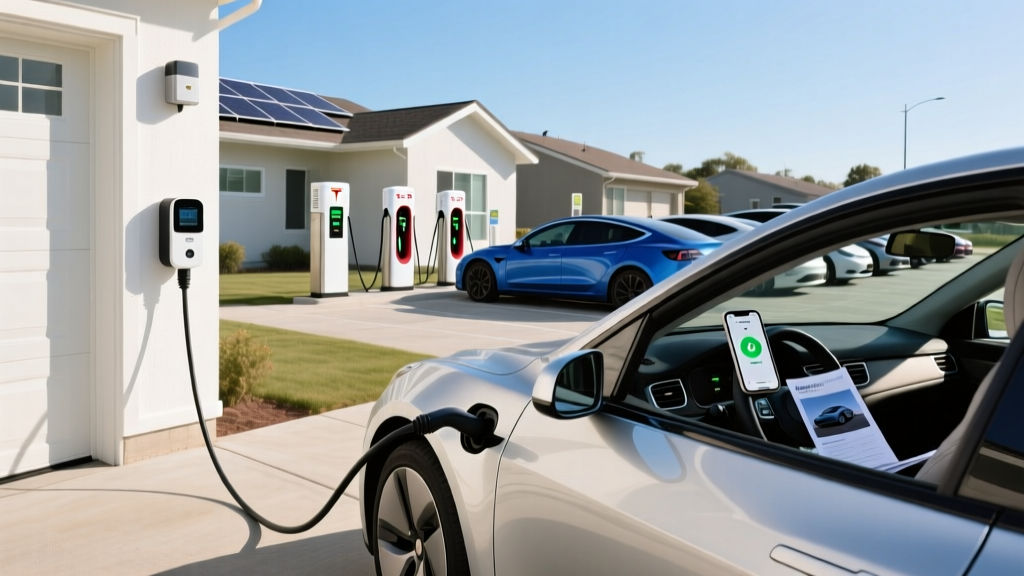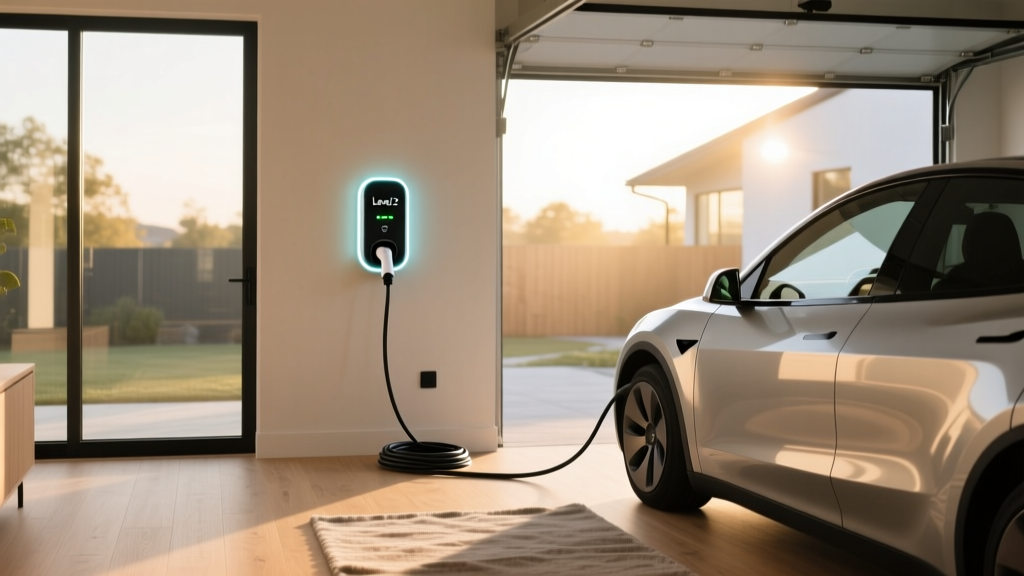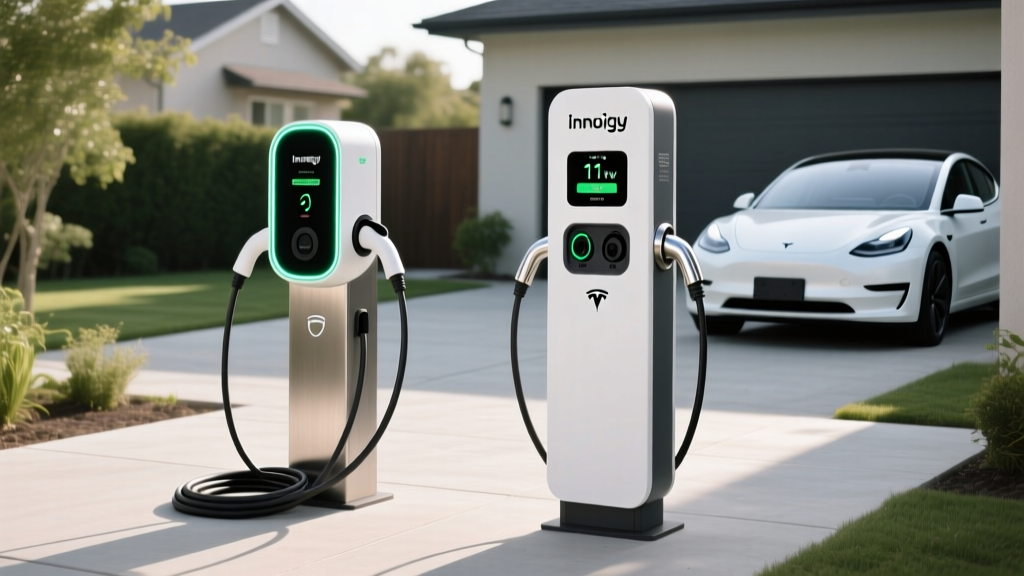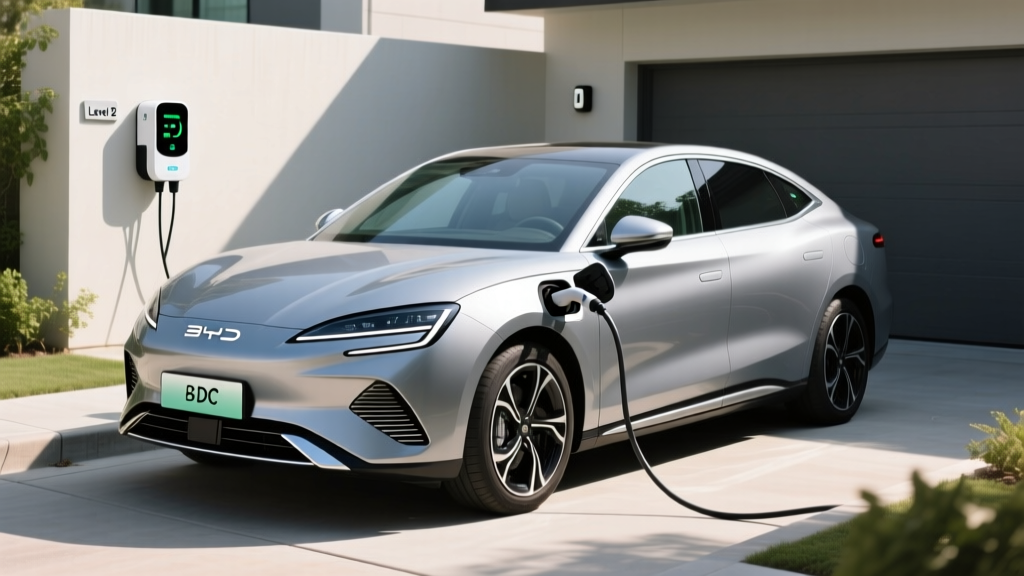
If you are researching the BYD Song Ultra EV range and how to keep its battery charged efficiently, you need more than a brochure figure. You need to know how many kilowatt-hours (kWh) the battery holds, how fast it can accept direct current (DC) in kilowatts (kW), and what it costs to install a Level 2 charger at home. This guide breaks down the BYD Song Ultra's efficiency and range profile, then walks through the exact charging hardware, electrical requirements, and per-mile costs you will face as an owner in 2026.
Note: BYD's U.S. market presence for passenger vehicles remains limited as of early 2026. The specifications below reflect announced global and regional variants of the Song Ultra EV platform. Always confirm final EPA-certified figures with your local dealer before purchase.
BYD Song Ultra EV Range and Battery at a Glance
The BYD Song Ultra EV is built around BYD's Blade Battery architecture — a lithium iron phosphate (LFP) cell design known for thermal stability, long cycle life, and a lower fire risk compared to nickel-manganese-cobalt (NMC) chemistries. LFP batteries also tolerate daily charging to 100% better than NMC, which simplifies home charging routines.
| Spec | Value |
|---|---|
| Battery Capacity (usable) | ~71.8 kWh (LFP Blade) |
| EPA-Estimated Range | ~310 miles (estimated; pending final EPA cert) |
| Real-World Highway Range | ~250–275 miles (70 mph, moderate temps) |
| Cold-Weather Range (20°F) | ~210–230 miles (estimated 25–30% loss) |
| Efficiency | ~3.5–3.8 kWh/mile (110–115 MPGe est.) |
| Peak DC Fast Charge Rate | ~140 kW |
| 10–80% DC Fast Charge Time | ~28–32 minutes |
| Level 2 AC Charge Rate (onboard) | 7.2 kW (single-phase) / 11 kW (three-phase) |
| 0–60 mph | ~7.9 seconds (est.) |
| Horsepower | ~201 hp (FWD variant) |
| Battery/Powertrain Warranty | 8 years / 100,000 miles (typical BYD global) |
Charging Levels Explained: kW Speeds and Miles Per Hour
The single most important distinction in EV charging is between kW (kilowatts) and kWh (kilowatt-hours). kW measures the rate of power delivery — how fast energy flows into your battery. kWh measures total energy capacity — how much the battery holds. Think of kW as the width of a hose and kWh as the size of the bucket.
Here is how each charging level translates to real range added per hour for the BYD Song Ultra EV's ~3.7 kWh/mile efficiency profile:
| Level | Voltage | Max Power (kW) | Miles of Range Per Hour | Best For |
|---|---|---|---|---|
| Level 1 (120V outlet) | 120V | 1.4 kW | ~3–4 miles/hr | Overnight trickle; emergency top-up |
| Level 2 (240V home/public) | 240V | 7.2–11 kW | ~19–30 miles/hr | Daily home charging; workplace |
| DC Fast Charging | 400V+ | Up to 140 kW | ~150–220 miles in 15 min | Road trips; rapid top-up |
For the Song Ultra's 71.8 kWh battery, a full Level 2 charge from empty at 7.2 kW takes roughly 10 hours. At 11 kW (if your home charger and the vehicle's onboard charger support three-phase), that drops to about 6.5 hours — easily an overnight session.
How Much Does It Cost to Install a Home EV Charger?
Installing a Level 2 home charger is the single highest-impact upgrade for EV ownership. Costs vary dramatically based on your home's electrical panel capacity, the distance from the panel to the charger location, and local permit fees.
| Component | Typical Range | Notes |
|---|---|---|
| Level 2 Charger (hardware) | $350–$700 | Smart Wi-Fi chargers; 32A–48A models |
| Electrician labor | $500–$2,000 | Depends on run length, wall type, conduit |
| Electrical permit | $50–$250 | Varies by municipality |
| Panel upgrade (if needed) | $1,500–$3,500 | Required if panel is 100A or near capacity |
| Total (no panel upgrade) | $900–$2,950 | Most homes with 200A service |
| Total (with panel upgrade) | $2,400–$6,450 | Older homes with 100A or 150A panels |
What Electrical Upgrades Might I Need?
The BYD Song Ultra EV's 7.2 kW onboard charger requires a dedicated 240V circuit rated for at least 40 amps (to deliver a continuous 32A charge). If you opt for a 48A charger to future-proof for a vehicle with a higher onboard rate, you will need a 60A circuit.
Your electrician will perform a load calculation on your panel. Homes with 200-amp service typically accommodate a 40A–60A EV circuit without an upgrade. Homes with older 100A panels — common in pre-2000 construction — will likely need a panel upgrade or a load-management device that dynamically throttles charger draw when other appliances are running.
Safety and code requirements: The National Electrical Code (NEC) requires a dedicated circuit (no shared loads), a GFCI breaker for outdoor installations, and a NEMA 14-50 receptacle or hardwired connection rated for the circuit amperage. Outdoor chargers must carry a NEMA 4 (weather-resistant) rating. Always have installation inspected — unpermitted work can void homeowner's insurance coverage in the event of an electrical fire.
Which Connector and Charger Are Compatible with the BYD Song Ultra?
Connector standards vary by market, and the BYD Song Ultra's compatibility depends on the region where it is sold. Here is how the major connector types map to popular EV brands and what you need to know:
| Connector | Used By | DC Fast Charging? | Notes |
|---|---|---|---|
| NACS (Tesla) | Tesla, Ford, GM, Rivian, Volvo, others (2025+) | Yes (Supercharger network) | Becoming the North American standard |
| CCS1 | Hyundai, Kia, VW, BMW, most legacy brands | Yes (EA, EVgo, ChargePoint) | Still widely available; declining on new models |
| CHAdeMO | Nissan Leaf (legacy) | Yes | Effectively discontinued for new vehicles |
| GB/T | BYD (China market), NIO, Xpeng | Yes | Chinese national standard; not used in U.S. |
| CCS2 | European-market EVs including BYD exports | Yes | Standard in EU, Australia, parts of Asia |
If the BYD Song Ultra EV arrives in North America, it will most likely use the NACS connector to access the Tesla Supercharger network, which now serves as the dominant DC fast-charging infrastructure. For CCS1-equipped public chargers, a CCS-to-NACS adapter (approximately $150–$250) would provide backup access. Always confirm the exact connector with your dealer before purchasing charging equipment.
Recommended Level 2 Chargers for the BYD Song Ultra EV
Below are three chargers well-matched to the Song Ultra's 7.2 kW onboard charger. All deliver 240V, support smart scheduling, and carry UL certification for safety.
Emporia Vue Smart EV Charger
- Power Output: 48A max (configurable to 40A/32A)
- Connector: NACS (J3400) native; CCS adapter available
- Cable Length: 24 ft
- Smart Features: Wi-Fi, solar integration, real-time energy monitoring, TOU scheduling
- Price: ~$399
- Best For: Budget-conscious buyers who want energy monitoring
ChargePoint Home Flex (2nd Gen)
- Power Output: Up to 50A (adjustable via DIP switch)
- Connector: NACS or CCS1 (select at purchase)
- Cable Length: 23 ft
- Smart Features: Wi-Fi, Alexa integration, charge scheduling, usage reports
- Price: ~$549
- Best For: Reliable brand with broad smart-home integration
Tesla Wall Connector (Gen 3)
- Power Output: Up to 48A
- Connector: NACS native
- Cable Length: 24 ft
- Smart Features: Wi-Fi, OTA updates, power sharing (multiple units on one circuit)
- Price: ~$450
- Best For: NACS-native vehicles; cleanest installation profile
Since the Song Ultra's onboard charger peaks at 7.2 kW (30A at 240V), any of the above chargers will deliver maximum speed. The extra amperage headroom means you won't need to replace the charger if you later buy a vehicle with an 11 kW or 19.2 kW onboard charger.
How Much Does Charging Cost Per Mile vs. Gasoline?
One of the strongest ownership arguments for the BYD Song Ultra EV is per-mile fuel cost. Below is a comparison using the Song Ultra's estimated 3.7 kWh/mile efficiency against a comparable gasoline crossover averaging 28 MPG combined.
| Scenario | Energy Cost | Cost Per Mile (EV) | Cost Per Mile (Gas, 28 MPG) |
|---|---|---|---|
| Home charging (off-peak TOU) | $0.09/kWh | $0.033 | $0.125 (at $3.50/gal) |
| Home charging (standard rate) | $0.15/kWh | $0.056 | $0.125 |
| Public Level 2 | $0.25/kWh | $0.093 | $0.125 |
| DC Fast Charging | $0.40/kWh | $0.148 | $0.125 |
At home on an off-peak electricity rate, the Song Ultra costs roughly 3.3 cents per mile — about one-quarter the cost of gasoline. Even on a standard residential rate of $0.15/kWh, you are paying 5.6 cents per mile, less than half the gas cost. However, exclusive reliance on DC fast charging at $0.40/kWh pushes EV cost per mile slightly above gasoline. This is why home charging access is the single biggest economic factor in EV ownership.
For annual savings: a driver covering 12,000 miles per year at home off-peak rates saves approximately $1,100 annually compared to a 28 MPG gas vehicle at $3.50/gallon. Over five years, that is $5,500 in fuel savings alone — a significant offset to the Song Ultra's purchase price. For official efficiency ratings as they become available, check fueleconomy.gov.
DC Fast Charging: Charge Curves and Road Trip Reality
The BYD Song Ultra's ~140 kW peak DC fast charge rate is respectable for its class, but peak rate is only part of the story. All EVs follow a charging curve: the battery accepts maximum power at a low state of charge (SoC), then tapers as the battery fills to protect cell health.
Here is a realistic charging timeline for the Song Ultra at a 150+ kW DC fast charger:
- 10%–50% SoC: Sustains near 130–140 kW; adds ~120 miles in ~12 minutes
- 50%–80% SoC: Tapers to 80–100 kW; adds ~80 miles in ~14 minutes
- 80%–100% SoC: Drops sharply to 20–40 kW; adds ~50 miles in ~20 minutes
Total 10%–80% time: approximately 28–32 minutes. Charging past 80% at a DC fast charger is rarely worth the time — it is faster to resume driving and charge again at the next stop. Plan road-trip charging stops to arrive at 10–15% SoC and depart at 75–80% for the fastest average speed.
Preconditioning matters: If the Song Ultra supports battery preconditioning (warming the battery before arrival at a fast charger), always enable it when navigating to a charging stop. A cold battery may accept only 50–70 kW initially, adding 5–10 minutes to your stop. Check your vehicle's navigation or app settings for this feature.
Frequently Asked Questions
How much does it cost to install a home EV charger for the BYD Song Ultra?
Expect $900–$2,950 for a standard Level 2 installation in a home with 200A electrical service. If your home has an older 100A panel that requires an upgrade, total costs can reach $2,400–$6,450. Always get a load calculation from a licensed electrician before committing to equipment.
How fast will each charging level add range to the Song Ultra?
Level 1 (120V) adds about 3–4 miles per hour. Level 2 (240V, 32A) adds approximately 19–22 miles per hour. DC fast charging at peak rate can recover 150+ miles in 15 minutes, but sustained speed depends on state of charge and battery temperature.
Which connector does the BYD Song Ultra use?
In the Chinese domestic market, BYD uses the GB/T connector. For European and other export markets, BYD typically equips vehicles with CCS2. If the Song Ultra launches in North America, it will likely adopt the NACS (J3400) connector to access the Tesla Supercharger network. Confirm with your dealer before purchasing a home charger.
Can I charge the BYD Song Ultra to 100% every day?
Yes. The Song Ultra uses an LFP (lithium iron phosphate) Blade Battery, which — unlike NMC chemistries — tolerates regular 100% charging without accelerated degradation. In fact, BYD recommends periodic full charges to help the battery management system recalibrate cell balance. This is a practical advantage for daily commuting.
How much does charging cost per mile compared to gas?
At home on an off-peak rate of $0.09/kWh, the Song Ultra costs approximately 3.3 cents per mile — about 75% cheaper than a 28 MPG gasoline crossover at $3.50/gallon. Even at standard residential rates ($0.15/kWh), EV charging costs roughly half as much per mile. DC fast charging at public rates ($0.35–$0.48/kWh) can approach or exceed gasoline costs, which is why home charging access is critical for EV economics.
Do I need a panel upgrade for a Level 2 charger?
Not necessarily. Homes with 200A service usually accommodate a 40A–60A dedicated EV circuit without an upgrade. Homes with 100A panels — particularly those already running electric dryers, ovens, and HVAC — will likely need a panel upgrade or a smart load-management device. Your electrician will determine this during the load calculation.
Is the BYD Song Ultra eligible for the U.S. federal EV tax credit?
As of 2026, the IRS §30D clean vehicle credit requires final assembly in North America, compliance with battery-component and critical-mineral sourcing thresholds, MSRP caps ($55,000 for sedans; $80,000 for SUVs/trucks), and buyer income limits ($150K single / $300K joint). BYD vehicles assembled outside North America would not qualify for the $7,500 credit. Always verify current eligibility on IRS.gov or with a tax professional before relying on incentive assumptions.
For the latest safety ratings and crash-test data as they become available for the BYD Song Ultra, monitor NHTSA.gov and the IIHS. The Song Ultra's combination of LFP battery durability, competitive range, and accessible charging speeds positions it as a practical electric crossover — provided you have reliable Level 2 access at home to maximize both convenience and per-mile savings.