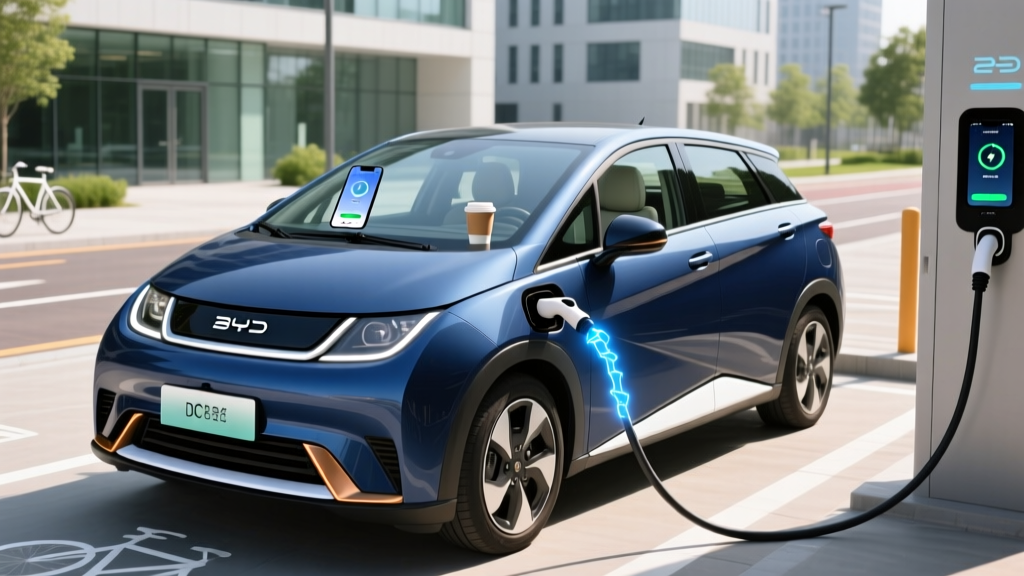
The BYD Dolphin has emerged as one of the most talked-about compact electric hatchbacks in global markets, and as BYD continues its international expansion through 2026, buyers are asking the same question: what is the real-world BYD Dolphin range, and what does it take to keep one charged? This guide breaks down the Dolphin's battery specs, efficiency data, and charging behavior — then walks through the home and public charging infrastructure you need to support it.
BYD Dolphin Range: EPA Estimates vs. Real-World Driving
The 2026 BYD Dolphin is offered with two primary battery options globally. The standard-range model uses a 44.9 kWh LFP (lithium iron phosphate) Blade Battery pack, while the extended-range variant carries a 60.48 kWh LFP pack. In markets where the Dolphin is sold with WLTP testing, the extended-range model is rated at approximately 427 km (265 miles) WLTP. Converted to EPA testing methodology — which tends to yield figures 10-15% lower than WLTP — the realistic EPA-equivalent estimate lands around 225-240 miles for the 60.48 kWh variant and roughly 170-185 miles for the 44.9 kWh model.
Real-World Range Expectations
EPA-equivalent estimate: ~225-240 mi (extended) / ~170-185 mi (standard)
Highway (70+ mph, sustained): expect 185-205 mi (extended) / 140-155 mi (standard)
Cold weather (below 32°F / 0°C): expect 155-175 mi (extended) / 115-135 mi (standard)
Combined real-world average: ~195-215 mi (extended) / ~150-165 mi (standard)
These numbers reflect the physics of LFP chemistry and a compact hatchback form factor. LFP cells offer excellent cycle life and thermal stability but carry a slight energy-density penalty compared to NMC (nickel manganese cobalt) packs. The Dolphin compensates with a relatively light curb weight (~1,600 kg / 3,527 lb for the extended model), which helps efficiency. BYD's integrated heat pump — standard on most 2026 trims — reduces cold-weather range loss compared to resistive heating, though you should still plan for 20-30% reduction in sub-freezing conditions.
| Spec | Standard Range (44.9 kWh) | Extended Range (60.48 kWh) |
|---|---|---|
| Battery Chemistry | LFP (Blade Battery) | LFP (Blade Battery) |
| Usable Capacity | ~42.7 kWh | ~58.5 kWh |
| EPA-equiv. Range | ~170-185 mi | ~225-240 mi |
| Real-World Combined | ~150-165 mi | ~195-215 mi |
| Efficiency (est.) | ~25-27 kWh/100mi | ~25-27 kWh/100mi |
| MPGe (est.) | ~125-135 MPGe | ~125-135 MPGe |
| Motor Output | 70 kW (94 hp) | 150 kW (201 hp) |
| 0-60 mph (est.) | ~12.0 sec | ~7.0 sec |
Charging the BYD Dolphin: Level 1, Level 2, and DC Fast
Understanding charging speeds requires a critical distinction: kW (kilowatts) measures power — the rate at which energy flows into the battery. kWh (kilowatt-hours) measures energy — the total capacity of the battery. A 60 kW charger delivers energy at a rate that could theoretically fill a 60 kWh battery in one hour (though charging curves prevent this in practice).
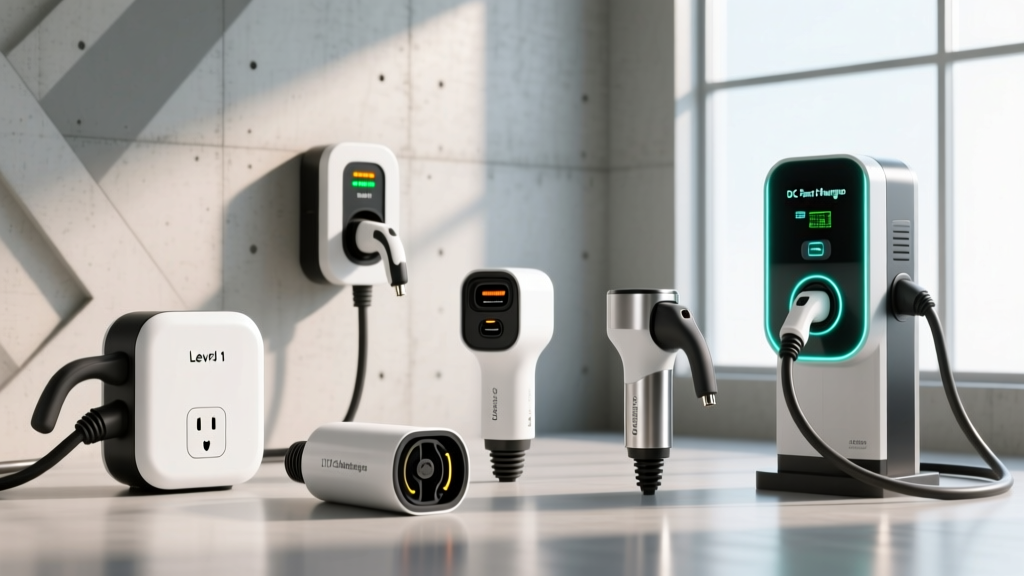
| Level | Voltage / Amperage | Power (kW) | Miles of Range per Hour | Best For |
|---|---|---|---|---|
| Level 1 | 120V / 12-16A | 1.4-1.9 kW | 4-6 mi/hr | Overnight top-ups, low-mileage drivers |
| Level 2 | 240V / 16-48A | 3.8-11.5 kW | 12-40 mi/hr | Daily home charging, workplace |
| DC Fast | 400-800V DC | 50-350 kW | 150-800+ mi/hr (peak) | Road trips, rapid top-ups |
For the BYD Dolphin extended-range (58.5 kWh usable), here is what charging looks like at each level:
- Level 1 (120V, ~1.4 kW): A full charge from 10-100% takes approximately 40-42 hours. Practical only for emergency trickle charging or plug-in hybrids with smaller batteries.
- Level 2 (240V, 32A / 7.7 kW): A 10-100% charge takes roughly 7.5-8 hours. An overnight session easily replenishes a full day's driving. The Dolphin's onboard charger is rated at 7 kW AC on most trims (some markets offer an 11 kW option), meaning you won't see full benefit from a 48A/11.5 kW home charger — the car limits intake to ~7 kW.
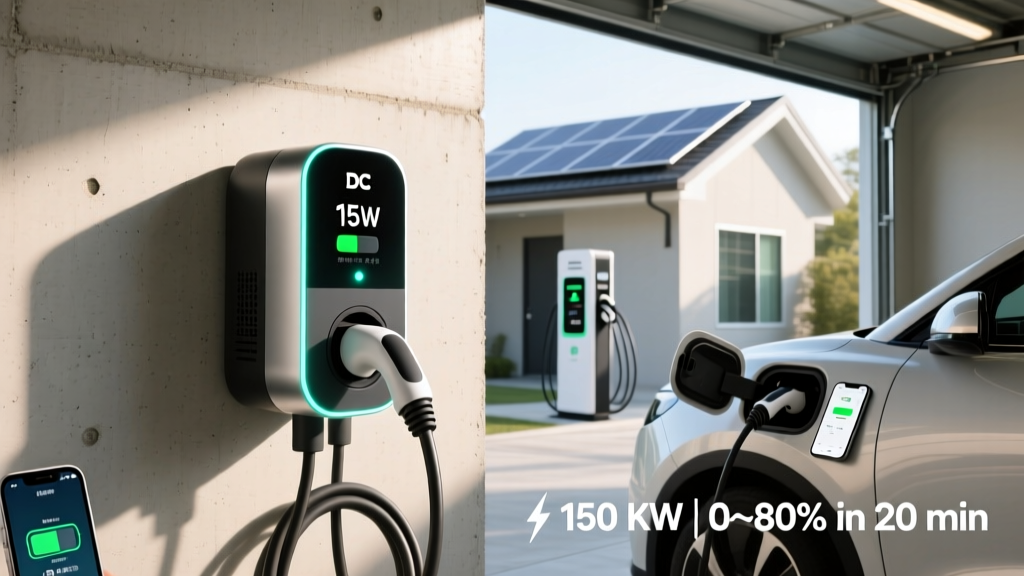
- DC Fast Charging (peak 88 kW): BYD rates the Dolphin extended-range at up to 88 kW DC peak. A 10-80% charge takes approximately 29-35 minutes under optimal conditions. The standard-range model peaks around 65 kW, with 10-80% in roughly 30-38 minutes.
Charging Curve Reality: The 88 kW peak rate applies only between roughly 10-50% State of Charge (SoC). Above 60%, the rate tapers significantly — expect 40-50 kW through the 60-80% window, and below 20 kW from 80-100%. This is why manufacturers quote 10-80% times rather than 0-100%. Charging to 100% on a DC fast charger adds 20+ minutes for the last 20% of the battery. For daily driving, charging to 80% is faster and — with LFP chemistry — you can actually charge to 100% regularly without the degradation concerns of NMC batteries. BYD recommends periodic 100% charges on LFP packs to allow the BMS (battery management system) to recalibrate cell balancing.
Home EV Charger Installation: Electrical Requirements and Costs
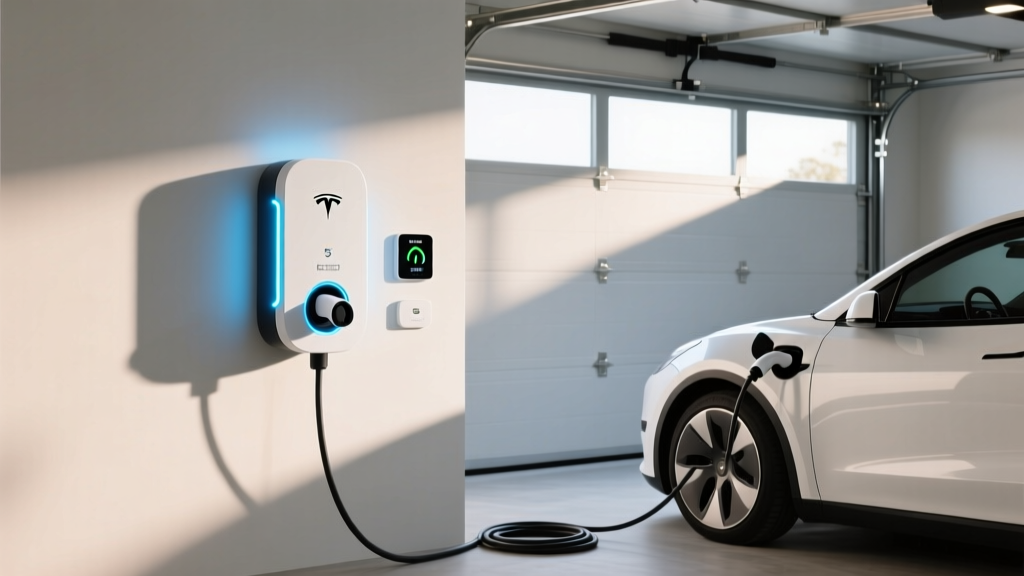
Installing a Level 2 home charger is the single biggest quality-of-life upgrade for any EV owner, including Dolphin drivers. Here is what is involved electrically and financially.
Electrical Requirements
A Level 2 charger requires a 240V dedicated circuit, similar to what powers an electric dryer or oven. The most common configurations:
- 240V / 32A circuit (delivers ~7.7 kW) — sufficient for the Dolphin's 7 kW onboard charger. Requires a 40A breaker (NEC code requires circuits rated at 125% of continuous load).
- 240V / 40A circuit (delivers ~9.6 kW) — a common middle ground that supports future EVs with higher onboard chargers.
- 240V / 48A circuit (delivers ~11.5 kW) — maximum for most residential chargers. Requires a 60A breaker and 6-gauge wire. Overkill for the Dolphin but future-proof for larger EVs.
Panel Upgrade Considerations
Many homes built before 2000 have 100A electrical panels. Adding a 40-60A EV circuit to an already-loaded 100A panel may exceed capacity, especially if you have electric heating, an electric oven, and an electric dryer. A licensed electrician will perform a load calculation to determine if your panel can support the new circuit. If not, a panel upgrade to 200A typically costs $1,500-$3,000 before the charger installation itself.
| Component | Low End | High End | Notes |
|---|---|---|---|
| Level 2 Charger (Equipment) | $300 | $700 | Smart Wi-Fi chargers, 32-48A |
| Electrician Labor (basic install) | $400 | $1,200 | Depends on run length from panel to garage |
| Electrical Permit | $50 | $200 | Varies by municipality |
| Panel Upgrade (if needed) | $1,500 | $3,000 | 100A to 200A service upgrade |
| Conduit, Wire, Misc. Materials | $100 | $400 | Longer runs = more wire cost |
| Total (no panel upgrade) | $850 | $2,500 | Typical suburban garage install |
| Total (with panel upgrade) | $2,350 | $5,500 | Older homes with 100A service |
Some utilities offer rebates of $200-$500 for Level 2 charger installation, and certain states provide additional incentives. Check with your local utility and refer to the Alternative Fuels Data Center for state-specific programs.
Connector Compatibility: NACS, CCS1, and CHAdeMO
The BYD Dolphin's charging port configuration depends on the market. In China and many Asian markets, it uses the GB/T standard. In European and Australasian markets, it ships with a CCS2 (Type 2 Combo) port. For any future U.S. market entry, the Dolphin would likely be equipped with either CCS1 (the current U.S. standard) or NACS (the Tesla-originated North American Charging Standard that has been adopted by Ford, GM, Rivian, Volvo, and others for 2025+ models).
| Connector | Region | DC Fast Networks | Adapter Needed? |
|---|---|---|---|
| NACS (J3400) | North America | Tesla Supercharger, growing EA/EVgo support | CCS-to-NACS adapters available (~$200-$300) |
| CCS1 | North America (legacy) | Electrify America, EVgo, ChargePoint | NACS-to-CCS adapters available |
| CCS2 | Europe, Australia, Asia (select) | Ionity, local networks | Not needed in native markets |
| CHAdeMO | Japan (legacy), older Leafs | Declining network support | Limited adapter options |
| GB/T | China | Domestic Chinese networks | Not applicable outside China |
If you are importing a Dolphin or purchasing in a market where CCS2 is standard but you need CCS1 or NACS compatibility, aftermarket adapters exist but must be sourced carefully. Always verify that any adapter is UL-listed or certified by the relevant safety body in your market. Using uncertified adapters can void warranty coverage and create fire risk.
Charging Cost: Dollars per Mile vs. Gasoline
One of the strongest arguments for the BYD Dolphin — or any efficient EV — is the per-mile energy cost. Let's run the numbers using the Dolphin extended-range's estimated efficiency of ~26 kWh/100 miles.
| Scenario | Rate ($/kWh) | Cost per 100 Miles | Cost per Mile | Annual Cost (12,000 mi) |
|---|---|---|---|---|
| Home Off-Peak (utility TOU) | $0.08-$0.12 | $2.08-$3.12 | $0.02-$0.03 | $250-$375 |
| Home Standard Rate | $0.14-$0.18 | $3.64-$4.68 | $0.04-$0.05 | $437-$562 |
| Public Level 2 (workplace/mall) | $0.20-$0.35 | $5.20-$9.10 | $0.05-$0.09 | $624-$1,092 |
| DC Fast Charging (road trips) | $0.35-$0.55 | $9.10-$14.30 | $0.09-$0.14 | $1,092-$1,716* |
*Assumes 100% DC fast charging, which is unrealistic for most owners. Typical mixed-use (80% home, 20% public/DC) yields an annual charging cost of approximately $400-$650.
For comparison, a gasoline compact hatchback achieving 30 MPG combined at $3.40/gallon costs $0.113/mile, or roughly $1,360 annually for 12,000 miles. The Dolphin charged primarily at home saves $700-$1,000 per year in energy costs alone.
Recommended Home Charging Equipment for the BYD Dolphin
Since the Dolphin's onboard AC charger tops out at 7 kW (single-phase), you do not need the most powerful residential charger on the market. However, investing in a 40A or 48A unit provides future-proofing for your next EV. Here are proven options:
ChargePoint Home Flex
- Power: Up to 11.5 kW (48A, 240V)
- Connector: NACS or CCS1 (configurable)
- Cable Length: 18 ft or 23 ft
- Smart Features: Wi-Fi, app scheduling, utility TOU integration, Alexa
- Price: ~$550-$650
- Best For: Dolphin owners who want smart scheduling and may upgrade to a larger EV later
Emporia Vue Level 2 Charger
- Power: Up to 11.5 kW (48A, 240V)
- Connector: NACS or J1772
- Cable Length: 24 ft
- Smart Features: Wi-Fi, energy monitoring, solar integration, load management
- Price: ~$400-$500
- Best For: Budget-conscious buyers; pairs well with Emporia whole-home energy monitor
Wallbox Pulsar Plus
- Power: Up to 9.6 kW (40A, 240V)
- Connector: NACS or J1772
- Cable Length: 16 ft or 25 ft
- Smart Features: Wi-Fi + Bluetooth, app control, Power Sharing for dual installations
- Price: ~$450-$550
- Best For: Compact form factor; good for tight garages and multi-EV households
All three chargers are UL-listed, support hardwired or NEMA 14-50 plug installation, and deliver more than enough power for the Dolphin's 7 kW AC limit. For the Dolphin specifically, even a 32A/7.7 kW charger like the Lectron V-BOX Pro (~$300) will max out the car's onboard charger.
Safety, Code Compliance, and Installation Best Practices
EV charger installation is electrical work that must comply with the National Electrical Code (NEC) and local building codes. Key requirements:
- Dedicated circuit: Your Level 2 charger must be on its own dedicated breaker — not shared with other appliances.
- GFCI protection: NEC 2020 and later require GFCI (ground-fault circuit interrupter) protection for all EV charging outlets. Hardwired chargers with built-in GFCI may satisfy this requirement.
- Outdoor rating: If your charger is installed outdoors (driveway, carport), it must carry a NEMA 4 or IP65 weather-resistance rating. All three chargers recommended above meet this standard.
- Wire gauge: A 40A circuit requires 8 AWG copper wire; a 48A circuit requires 6 AWG. Undersized wire is a fire hazard and will fail inspection.
- Permit and inspection: Most jurisdictions require an electrical permit and a post-installation inspection. Skipping this can void homeowner's insurance coverage in the event of an electrical fire.
Always hire a licensed electrician for Level 2 charger installation. While plug-in NEMA 14-50 outlets can technically be DIY-installed if the circuit already exists, new circuit runs from the panel should never be attempted without professional training. Refer to NHTSA's EV safety resources for general guidance on EV electrical safety.
Frequently Asked Questions
How much does it cost to install a home EV charger for the BYD Dolphin?
A basic Level 2 home charger installation (equipment + electrician + permit) typically costs $850-$2,500 if your electrical panel has sufficient capacity. If you need a panel upgrade from 100A to 200A service, total costs can reach $2,350-$5,500. The Dolphin's 7 kW onboard charger means you can save money with a 32A charger rather than a premium 48A unit.
How fast will each charging level add range to the Dolphin?
Level 1 (120V) adds approximately 4-6 miles of range per hour — too slow for daily use. Level 2 (240V, 32A) adds roughly 25-28 miles per hour, fully replenishing the extended-range Dolphin overnight in about 7-8 hours. DC fast charging at peak 88 kW can add up to 150+ miles in 20 minutes, though the rate tapers significantly above 60% SoC.
Which connector and charger is compatible with the BYD Dolphin?
The connector depends on your market: CCS2 in Europe/Australia, GB/T in China, and likely CCS1 or NACS if the Dolphin enters the U.S. market. For home Level 2 charging, any J1772 or NACS-compatible charger works with the appropriate adapter. Always check your specific vehicle's charge port before purchasing equipment.
How much does charging the Dolphin cost per mile vs. a gas car?
Charging primarily at home at standard residential rates ($0.14-$0.18/kWh), the Dolphin costs approximately $0.04-$0.05 per mile. A comparable 30 MPG gas car at $3.40/gallon costs about $0.11 per mile. Over 12,000 miles annually, that is a savings of roughly $700-$900 per year with home charging.
What electrical upgrades might I need for a home charger?
The most common upgrade is a panel capacity increase from 100A to 200A, which costs $1,500-$3,000. Homes with existing 200A panels usually have sufficient capacity for a 32-48A EV circuit. Your electrician will perform a NEC Article 220 load calculation to determine your panel's available headroom. Other potential upgrades include adding a sub-panel (if the main panel is full but has capacity) or upgrading the service drop from the utility.
Can I charge the BYD Dolphin to 100% regularly?
Yes. Unlike NMC batteries, the Dolphin's LFP (lithium iron phosphate) Blade Battery is designed for regular 100% charging without significant degradation concerns. BYD actually recommends charging to 100% at least once per week to allow the BMS to perform cell balancing. LFP chemistry offers 3,000+ charge cycles with minimal capacity loss, translating to well over 300,000 miles of driving before meaningful degradation.