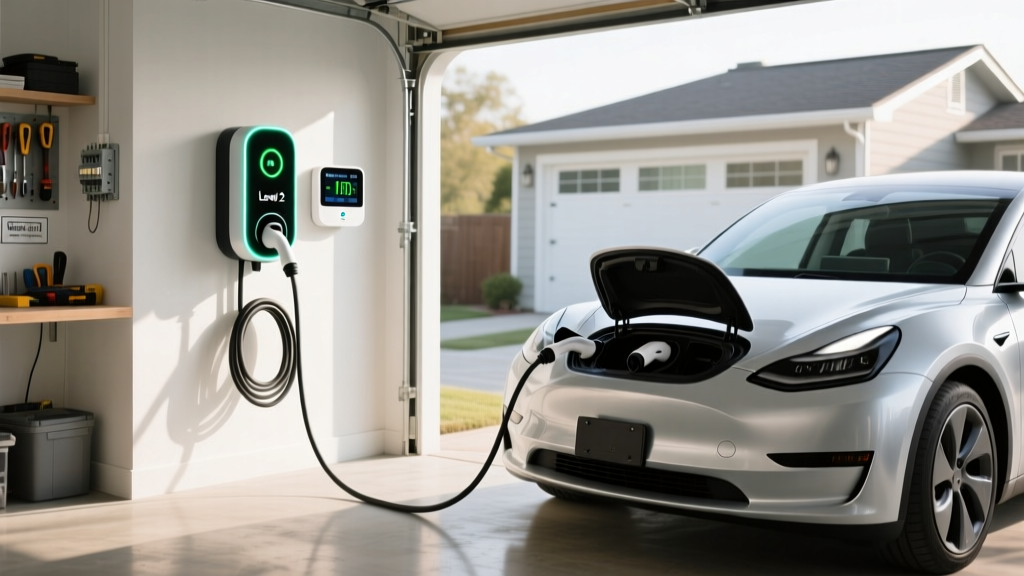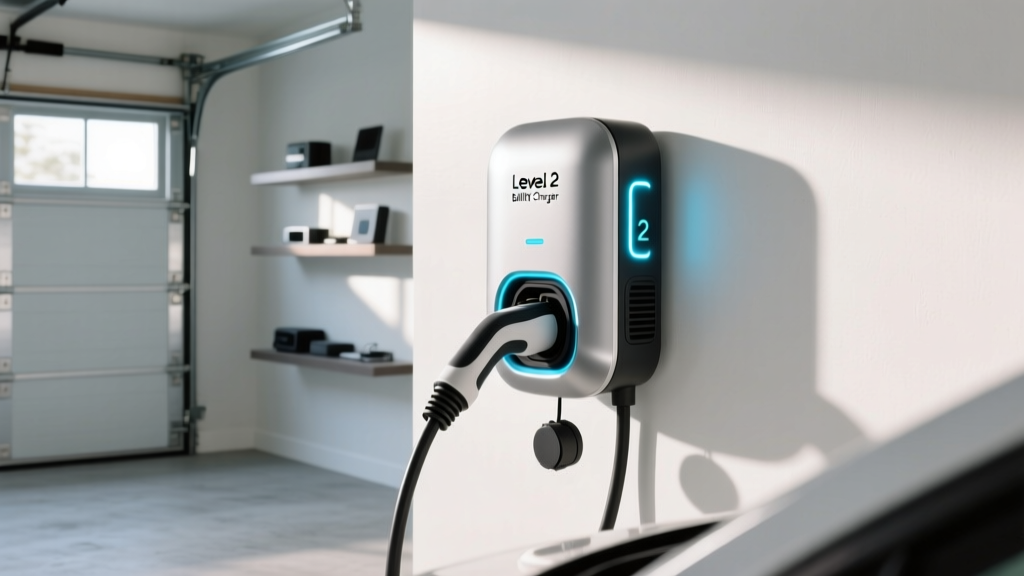
If you've been shopping for a Level 2 home EV charger, you've probably encountered a wall of options — ChargePoint, Emporia, Wallbox, Tesla — and maybe a name that stands out for being different: the Bullitt Charger. Marketed with a focus on rugged build quality and straightforward performance, the Bullitt Charger targets EV owners who want a no-nonsense, high-output Level 2 unit without paying a premium for brand-name ecosystems.
But does it deliver where it counts — actual charging speed, installation practicality, connector compatibility, and cost per mile? We've analyzed the specs, compared it against the competition, and mapped out the full ownership picture so you can decide whether the Bullitt Charger belongs on your garage wall.
Understanding EV Charging Levels: Where the Bullitt Charger Fits
Before evaluating any specific charger, it's essential to understand the three charging tiers available to EV owners. The distinction between kW (kilowatts, a measure of power or charging speed) and kWh (kilowatt-hours, a measure of energy or battery capacity) is the single most important piece of EV literacy. Think of kW as how fast water flows from a hose, and kWh as the size of the bucket you're filling.
| Level | Voltage | Max Power (kW) | Miles of Range Added Per Hour | Typical Use Case |
|---|---|---|---|---|
| Level 1 | 120V AC | 1.4–1.9 kW | 3–5 miles | Overnight trickle, PHEVs, low-mileage drivers |
| Level 2 (Bullitt Charger category) | 240V AC | 7.2–19.2 kW | 20–60+ miles | Daily home charging, workplace, destination |
| DC Fast Charging | 400–900V DC | 50–350+ kW | 150–1,000+ miles (theoretical) | Road trips, highway corridors, quick top-ups |
The Bullitt Charger is a Level 2, 240-volt home charging station rated at up to 11.5 kW (48 amps). This places it in the upper tier of residential chargers — capable of adding roughly 35–44 miles of range per hour of charging for a typical mid-size EV like a Tesla Model Y or Hyundai Ioniq 5.
For context, a common 80 kWh battery pack charged from 10% to 80% state of charge (SoC) at a sustained 11.5 kW would take approximately 5 hours. Most Level 2 chargers on the market max out between 7.7 kW (32A) and 11.5 kW (48A), with a few pushing to 19.2 kW (80A) for homes with robust electrical panels.
Bullitt Charger Specifications and Power Output
The Bullitt Charger's headline spec — 11.5 kW at 48 amps — means it can extract close to the maximum speed most EVs accept on Level 2 AC power. Many popular EVs have onboard chargers limited to 11.5 kW (Tesla Model 3/Y), 10.9 kW (Ford Mustang Mach-E), or 7.7 kW (some base trims). If your car's onboard charger maxes at 7.7 kW, the Bullitt will still work — it simply charges at the car's limit, not its own.
- Max Output: 11.5 kW / 48 amps @ 240V
- Connector: J1772 (standard for non-Tesla EVs); NACS adapter available for Tesla vehicles
- Cable Length: 25 feet
- Smart Features: Wi-Fi connectivity, app-based scheduling, energy monitoring
- Enclosure Rating: NEMA 4 (indoor/outdoor, weather-resistant)
- Estimated Equipment Price: $450–$550
The 25-foot cable is longer than average (many competitors ship with 18–20 feet), which matters if your parking spot isn't directly adjacent to the charger mount. The NEMA 4 rating means it handles rain, dust, and hose spray — critical if you're mounting on an exterior wall or in an unconditioned garage.
Home Installation: Electrical Requirements and Cost Breakdown
The Bullitt Charger at 48 amps requires a dedicated 60-amp circuit on a 240-volt line. The National Electrical Code (NEC) mandates that continuous loads — and EV charging qualifies — cannot exceed 80% of a circuit's rated capacity. So 48A continuous draw requires a 60A breaker (48 ÷ 0.80 = 60).
Here's where many buyers get surprised: your home's electrical panel may or may not support a new 60A circuit without an upgrade.
Panel Capacity Assessment
Homes with a 200-amp main service panel can usually accommodate a 60A EV circuit, provided existing loads (HVAC, electric range, dryer, water heater) don't push total demand beyond the panel's capacity. A licensed electrician will perform a load calculation per NEC Article 220 to verify.
Homes with older 100-amp panels — common in houses built before the 1990s — often require a panel upgrade to 200 amps, which is the single largest variable in your installation cost.
| Component | Cost Range | Notes |
|---|---|---|
| Bullitt Charger (equipment) | $450–$550 | Varies by retailer, sales tax excluded |
| Electrician labor (standard install) | $600–$1,500 | Short run from panel, no upgrade needed |
| Electrical panel upgrade (100A → 200A) | $1,500–$3,500 | If existing panel lacks capacity |
| Permit and inspection | $50–$250 | Varies by municipality; required by code |
| Conduit, wiring, miscellaneous | $100–$400 | Longer wire runs, outdoor conduit |
| Total (no panel upgrade) | $1,200–$2,700 | Most common scenario for modern homes |
| Total (with panel upgrade) | $2,700–$6,200 | Older homes needing 200A service |
The federal government offers a tax credit for alternative fuel vehicle refueling property (IRS Form 8911) — up to $1,000 for home charging equipment and installation, subject to income and census-tract eligibility. Check current rules at irs.gov, as provisions can shift year to year.
Safety and Code Requirements
Any Level 2 installation must comply with NEC Article 625 (Electric Vehicle Charging System Equipment). Key requirements:
- Dedicated circuit: The EV charger must have its own breaker — no sharing with other appliances.
- GFCI protection: The 2023 NEC update requires GFCI (Ground Fault Circuit Interrupter) protection for all EV charging outlets. Hardwired installations may have different requirements depending on local code adoption. Many modern chargers, including the Bullitt, have built-in ground fault detection.
- Outdoor rating: If mounted outside, the unit must carry at minimum a NEMA 3R rating. The Bullitt's NEMA 4 rating exceeds this.
- Permit: Most jurisdictions require an electrical permit and post-installation inspection. Skipping this risks insurance claim denials and code violations.
Connector Compatibility: Will the Bullitt Charger Work With Your EV?
The connector landscape has shifted dramatically since Tesla opened its Supercharger network and the industry began migrating to the NACS (North American Charging Standard) connector. As of 2026, new EVs from most major automakers ship with NACS charge ports, while older models still carry CCS1 (Combined Charging System) or, in a few remaining cases, CHAdeMO (primarily the Nissan Leaf).
| Connector Type | Compatible EV Brands | Bullitt Charger Support |
|---|---|---|
| NACS (Tesla standard) | Tesla (all), Ford, GM, Rivian, Volvo, Polestar, Hyundai/Kia (2025+), others | Available with NACS connector or via J1772-to-NACS adapter (~$150–$250) |
| J1772 (Level 2 standard) | All EVs accept J1772 for Level 2 AC charging (NACS vehicles via adapter) | Native J1772 connector included — works with every EV on the road |
| CCS1 | Older VW ID.4, BMW i4, pre-2025 Hyundai/Kia, pre-2025 Ford | J1772 Level 2 portion compatible; CCS1 DC pins irrelevant for home Level 2 |
| CHAdeMO | Nissan Leaf (discontinued after 2025 model year in US) | J1772 Level 2 compatible; CHAdeMO only used for DC fast charging |
The critical takeaway: for home Level 2 charging, J1772 is the universal standard. Every EV sold in the US, including Teslas, can accept a J1772 plug for Level 2 AC charging — Teslas simply use a J1772-to-Tesla adapter (included with most Tesla vehicles). The Bullitt Charger ships with a J1772 connector, so it will charge any EV you plug into it. If you prefer a native NACS plug for convenience, check whether Bullitt offers a NACS-terminated cable or plan to use an adapter.
Charging Time Examples: How Long Will the Bullitt Charger Take?
Charging speed depends on your vehicle's onboard charger capacity and battery size. Here are real-world estimates for popular 2026 EVs charging from 10% to 80% SoC on the Bullitt Charger at 11.5 kW:
| Vehicle | Battery (kWh usable) | Onboard Charger Limit | 10–80% Time (approx.) |
|---|---|---|---|
| Tesla Model Y (Long Range) | 75 kWh | 11.5 kW | ~4.5 hours |
| Hyundai Ioniq 5 (Long Range) | 77.4 kWh | 10.9 kW | ~4.7 hours |
| Ford Mustang Mach-E (Extended Range) | 91 kWh | 10.9 kW | ~5.8 hours |
| Chevrolet Equinox EV | 85 kWh | 11.5 kW | ~5.2 hours |
| BMW i4 eDrive40 | 81.5 kWh | 11.0 kW | ~5.2 hours |
These times assume a full overnight charge, which is the ideal use case for Level 2. You plug in when you get home at 6 PM and wake up to a full battery at 7 AM — 13 hours of available charging window, more than enough for any EV on the market.
Cost to Charge: Bullitt Charger vs. Gas vs. Public Charging
One of the strongest arguments for home Level 2 charging is cost. Electricity prices vary widely by region, but even at higher rates, electrons are cheaper than gasoline per mile driven.
| Scenario | Rate | Cost Per Mile (3 mi/kWh avg EV) | Annual Cost (12,000 mi) |
|---|---|---|---|
| Home charging (national avg, off-peak) | $0.13/kWh | $0.043 | $520 |
| Home charging (California, peak) | $0.34/kWh | $0.113 | $1,360 |
| Home charging (off-peak TOU rate) | $0.08/kWh | $0.027 | $320 |
| Public Level 2 (network average) | $0.25–$0.49/kWh | $0.083–$0.163 | $1,000–$1,960 |
| DC Fast Charging ( Electrify America, EVgo) | $0.35–$0.55/kWh | $0.117–$0.183 | $1,400–$2,200 |
| Gasoline vehicle (28 MPG combined, $3.40/gal) | $3.40/gallon | $0.121 | $1,457 |
At the national average residential electricity rate of roughly $0.16/kWh (per EIA data), charging at home costs about $0.05 per mile — roughly 60% cheaper than fueling an average gasoline car. If your utility offers time-of-use (TOU) rates and you schedule charging during off-peak hours (typically 10 PM – 6 AM), you can push that cost down to $0.03/mile or less.
The Bullitt Charger's app-based scheduling feature lets you set charging windows to coincide with your utility's cheapest rates — a feature that pays for itself over time.
How the Bullitt Charger Compares to Competitors
The Level 2 home charger market is crowded. Here's how the Bullitt stacks up against the most popular alternatives:
Bullitt Charger
- Power: 11.5 kW (48A)
- Cable: 25 ft
- Smart: Wi-Fi, app scheduling, energy monitoring
- Rating: NEMA 4
- Price: ~$450–$550
Best for: Owners wanting max power and a long cable without a brand-name premium.
ChargePoint Home Flex
- Power: Up to 12 kW (50A), configurable
- Cable: 23 ft
- Smart: Wi-Fi, Alexa, app, detailed energy reports
- Rating: NEMA 4
- Price: ~$550–$700
Best for: Ecosystem integration and adjustable amperage for panel-limited homes.
Emporia Vue Level 2
- Power: 11.5 kW (48A)
- Cable: 24 ft
- Smart: Wi-Fi, energy tracking, solar integration
- Rating: NEMA 4
- Price: ~$350–$400
Best for: Budget-conscious buyers with solar panels who want granular energy data.
Tesla Wall Connector
- Power: 11.5 kW (48A)
- Cable: 24 ft
- Smart: Wi-Fi, firmware updates, power sharing
- Rating: NEMA 4 (outdoor rated)
- Price: ~$425–$475
Best for: Tesla owners who want native NACS and seamless vehicle integration.
Wallbox Pulsar Plus
- Power: 11.5 kW (48A)
- Cable: 25 ft
- Smart: Wi-Fi + Bluetooth, app, Eco-Smart solar mode
- Rating: NEMA 4
- Price: ~$550–$650
Best for: Compact design and solar-aware charging with Bluetooth fallback.
The Bullitt Charger occupies a competitive middle ground: it matches the Tesla Wall Connector and Emporia on power output, offers the longest cable in its class at 25 feet, and undercuts the ChargePoint and Wallbox on price. Its main vulnerability is brand recognition — it doesn't have the ecosystem depth of ChargePoint's app or the Tesla integration of the Wall Connector.
Frequently Asked Questions
How much does it cost to install a home EV charger like the Bullitt?
Expect to pay between $1,200 and $2,700 total (equipment + electrician + permit) if your home already has a 200-amp panel with available capacity. If you need a panel upgrade from 100A to 200A, add $1,500–$3,500, bringing the total to $2,700–$6,200. Always get a load calculation from a licensed electrician before committing.
How fast will each charging level add range?
Level 1 (120V) adds about 3–5 miles per hour. Level 2 at 11.5 kW — the Bullitt Charger's output — adds roughly 35–44 miles per hour depending on your vehicle's efficiency. DC fast charging can add 100–300 miles in 20–30 minutes but is meant for road trips, not daily use.
Which connector does the Bullitt Charger use, and will it fit my EV?
The Bullitt Charger ships with a J1772 connector, which is the universal Level 2 AC standard in North America. Every EV sold in the US — including Teslas — can charge via J1772 on Level 2. If your car has a NACS port, you'll use the J1772-to-NACS adapter that came with your vehicle, or purchase one separately.
How much does charging cost per mile vs. gas?
At the national average residential electricity rate (~$0.16/kWh), home charging costs about $0.05/mile for a typical EV getting 3 miles per kWh. A comparable gasoline car at 28 MPG and $3.40/gallon costs about $0.12/mile. Home charging is roughly 55–65% cheaper per mile than gasoline.
What electrical upgrades might I need for the Bullitt Charger?
The Bullitt Charger requires a dedicated 60-amp, 240-volt circuit. If your home has a 200-amp service panel with available capacity, you likely need only a new breaker and wiring run. If your panel is 100 amps or already near capacity, you may need a panel upgrade ($1,500–$3,500) or a load-management device that throttles the charger when other large appliances are running.
Can I plug the Bullitt Charger into a dryer outlet?
Only if the charger is configured with a NEMA 14-50 plug and the outlet is on a dedicated circuit rated for the charger's amperage. However, sharing a dryer outlet is not code-compliant without a transfer mechanism, and many electricians recommend hardwiring for reliability and safety. If you go the plug-in route, ensure the outlet is inspected — older NEMA 14-50 outlets are a known fire risk if improperly wired.
Does the Bullitt Charger qualify for any tax credits or rebates?
The federal Alternative Fuel Vehicle Refueling Property Credit (IRS Form 8911) offers up to $1,000 for home charger equipment and installation, subject to income limits and census-tract eligibility (the property must be in a qualifying non-urban or low-income census tract). Many utilities also offer rebates of $200–$500 for installing a smart Level 2 charger. Check irs.gov and your local utility for current programs.