Buick Electra PHEV Range and Charging: What Owners Actually Need to Know
The Buick Electra PHEV slots into General Motors' expanding plug-in hybrid lineup, offering buyers a bridge between pure electric driving and the flexibility of a gasoline engine. With an EPA-estimated electric-only range of approximately 38 miles on a full charge and a combined gas-electric range exceeding 420 miles, the Electra PHEV targets drivers who want daily electric commuting without range anxiety on longer trips. But understanding the Buick Electra PHEV range is only half the equation — knowing how to charge it efficiently at home and on the road determines whether you actually capture those electric miles or default to burning gas.
This guide breaks down the Electra PHEV's battery specs, charging speeds at every level, real-world range expectations, home charger installation costs, and the per-mile economics of plugging in versus filling up.
| Spec | Value |
|---|---|
| Battery Capacity (usable) | ~17.5 kWh (NMC lithium-ion) |
| EPA Electric-Only Range | ~38 miles |
| Total Range (electric + gas) | ~420+ miles |
| EPA MPGe (electric mode) | ~85 MPGe |
| Combined MPG (gas-only, charge-depleted) | ~38 MPG |
| Level 2 AC Charge Rate (max) | 7.7 kW |
| DC Fast Charge Capability | Not supported (PHEV) |
| Level 1 (120V) Charge Time (0–100%) | ~10–12 hours |
| Level 2 (240V) Charge Time (0–100%) | ~2.5–3 hours |
| Connector | J1772 (CCS1 inlet, DC portion unused) |
| Base MSRP | ~$39,500 (estimated) |
| Battery/Powertrain Warranty | 8 years / 100,000 miles |
Note: Specifications based on announced/preliminary GM data for the Electra PHEV platform. Final EPA certification figures may vary. Always verify at fueleconomy.gov before purchasing.
Real-World Range vs. EPA Sticker
EPA electric-only: ~38 miles. In real-world driving, expect roughly 30–35 miles of electric range in mixed city/highway conditions during moderate temperatures (60–80°F). In cold weather (below 32°F), cabin heating and battery efficiency losses can reduce electric-only range to 22–28 miles. Highway-dominant driving at 70+ mph also cuts electric range by 15–25% compared to city use, where regenerative braking recovers more energy.
Charging Levels Explained: How Fast Will Each Level Add Range?
The three charging levels differ fundamentally in power delivery, measured in kilowatts (kW). Remember: kW measures power (the rate of energy flow), while kWh measures energy (the total capacity stored in the battery). Think of kW as how fast water flows from a hose, and kWh as the size of the bucket you're filling.
| Level | Voltage | Power (kW) | Miles of Range Added per Hour | Best Use Case |
|---|---|---|---|---|
| Level 1 (Standard Outlet) | 120V AC | 1.2–1.9 kW | ~3–5 miles/hr | Overnight top-up; no install needed |
| Level 2 (Home/Public AC) | 240V AC | 3.3–19.2 kW | ~12–60 miles/hr | Daily home charging; destination charging |
| DC Fast Charging | 400–800V DC | 50–350 kW | ~150–1,000+ miles/hr | Road trips; rapid top-up (BEVs only) |
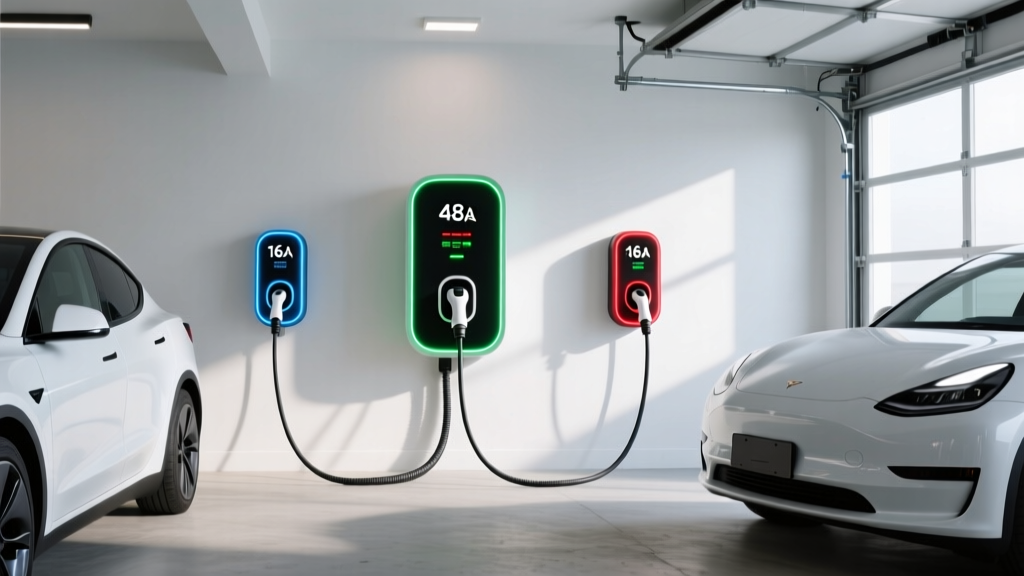
For the Buick Electra PHEV specifically: The vehicle's onboard charger caps AC charging at 7.7 kW, meaning even if you plug into a 48-amp Level 2 station capable of 11.5 kW, the Electra PHEV will only draw 7.7 kW. This is typical for PHEVs — their smaller batteries don't require (and aren't engineered to accept) the high charge rates that full BEVs use.
The Electra PHEV does not support DC fast charging. This is standard for most plug-in hybrids: the battery is small enough that Level 2 fully replenishes it in under 3 hours, and the cost/weight of DC fast-charge hardware isn't justified. If you need rapid public charging, you'll be limited to Level 2 public stations.
Which Connector Is Compatible with the Buick Electra PHEV?
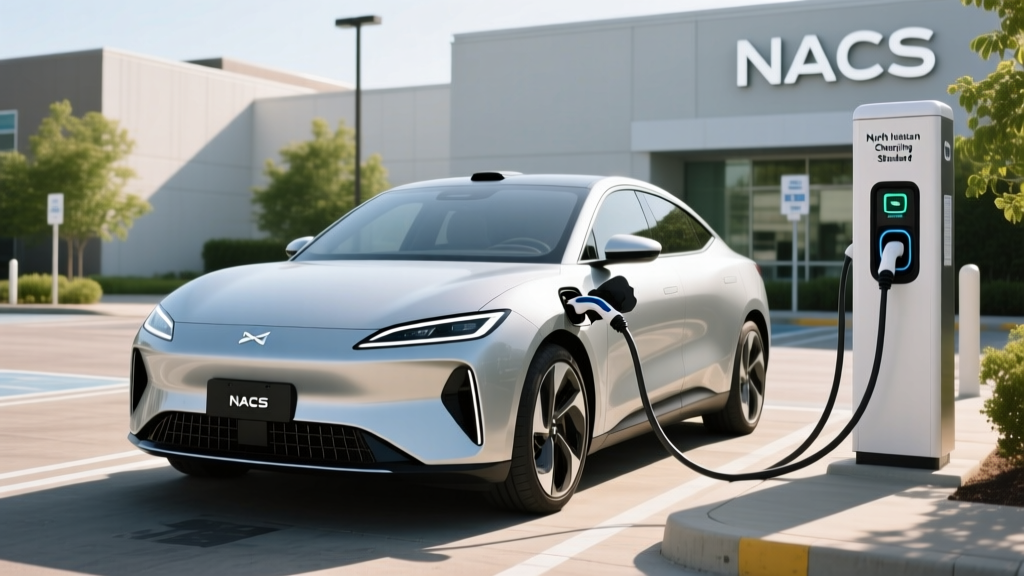
The Electra PHEV uses a J1772 connector for AC charging (Level 1 and Level 2). This is the universal standard for non-Tesla EVs and PHEVs sold in North America. The vehicle has a CCS1 inlet shape, but the DC fast-charge pins are inactive since the PHEV doesn't support DC charging.
| Connector Type | Compatible? | Notes |
|---|---|---|
| J1772 (AC Level 1/2) | ✅ Yes — native | Standard plug for all Level 1 and Level 2 AC charging |
| CCS1 (DC Fast) | ❌ No (AC portion yes, DC inactive) | Physical inlet accepts CCS1, but DC pins not wired |
| NACS (Tesla) | ⚠️ With adapter | Use a NACS-to-J1772 adapter for Tesla Level 2 destination chargers; not needed for Superchargers (DC) |
| CHAdeMO | ❌ No | Largely discontinued standard; not relevant for PHEV |
Adapter note: As Tesla opens its Destination Charging network (Level 2 AC chargers at hotels, restaurants, etc.) to non-Tesla vehicles, a NACS-to-J1772 adapter ($50–$150) lets you use those stations. Brands like Lectron and Tesla's official adapter are reliable options. You will not be able to use Tesla Superchargers (DC fast), which is irrelevant since the Electra PHEV doesn't accept DC charging anyway.
Home Charger Installation: Electrical Requirements and Cost Breakdown
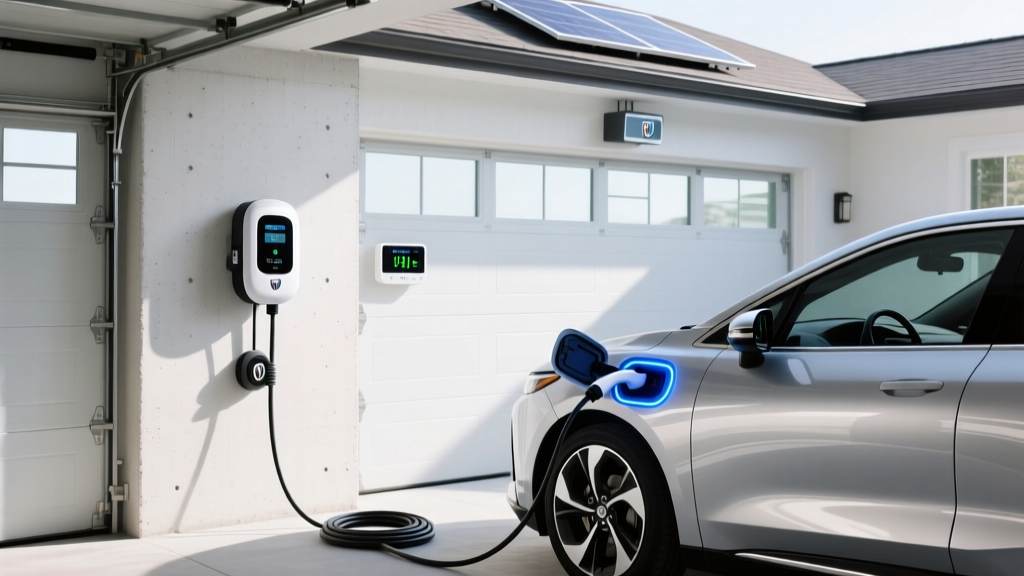
Installing a Level 2 home charger is the single most impactful upgrade for PHEV ownership. It ensures you wake up to a full battery every morning, maximizing your electric-only miles and minimizing gas consumption. But installation costs vary widely depending on your home's electrical infrastructure.
Electrical Requirements for a Level 2 Charger
A Level 2 charger requires a 240-volt dedicated circuit, similar to what powers an electric dryer or oven. For the Buick Electra PHEV's 7.7 kW max charge rate, you need a circuit rated for at least 40 amps (the National Electrical Code requires circuits to be rated at 125% of the continuous load, so a 32-amp charger needs a 40-amp circuit; a 48-amp charger needs a 60-amp circuit).
Key electrical specs:
- Voltage: 240V (split-phase, standard US residential)
- Amperage: 40A circuit minimum for a 32A charger; 50–60A circuit for a 40–48A charger
- Wiring: 6 AWG copper (for 40–50A) or 4 AWG copper (for 60A)
- Breaker: Double-pole, correctly sized to circuit
- Outlet type: NEMA 14-50 (50A, common) or NEMA 6-50 (50A, no neutral) — or hardwired connection
Do You Need a Panel Upgrade?
This is the variable that can double or triple your installation cost. Most modern homes have a 200-amp electrical panel, which typically has enough spare capacity for a 40–50A EV circuit. However, older homes (pre-1990s) often have 100-amp panels that may be near capacity already.
Signs you may need a panel upgrade:
- Your panel is 100A and you already run electric heat, an electric dryer, an electric stove, and central AC
- Your electrician's load calculation shows less than 40A of spare capacity
- Your panel is a known problematic brand (e.g., Federal Pacific, Zinsco) that needs replacement regardless
A panel upgrade from 100A to 200A typically costs $1,500–$3,500 depending on your utility's requirements, local labor rates, and whether a new service drop is needed.
| Component | Low Estimate | High Estimate | Notes |
|---|---|---|---|
| Level 2 Charger (Equipment) | $300 | $750 | 32A–48A smart chargers; hardwired or plug-in |
| Electrician Labor | $500 | $2,000 | Depends on run length from panel to garage/driveway |
| Electrical Materials (wire, conduit, breaker) | $150 | $600 | Longer runs = more copper wire cost |
| Permit and Inspection | $50 | $300 | Required in most jurisdictions; varies by municipality |
| Panel Upgrade (if needed) | $1,500 | $3,500 | Only if existing panel lacks capacity |
| Total (no panel upgrade) | $1,000 | $3,650 | Most homes fall in $1,200–$2,200 range |
| Total (with panel upgrade) | $2,500 | $7,150 | Older homes with 100A service |
Tip: Get at least three quotes from licensed electricians. Ask specifically for a load calculation per NEC Article 220 to determine if your panel can handle the new circuit. Some utilities offer rebates of $200–$500 for EV charger installation — check with your local provider.
Safety and Code Considerations
- Dedicated circuit: Your EV charger must be on its own dedicated breaker — it cannot share a circuit with other appliances.
- GFCI protection: NEC 2023 (and likely adopted by your jurisdiction in 2026) requires GFCI protection for all 240V EV charging outlets. Hardwired chargers may be exempt depending on local code interpretation.
- Outdoor rating: If your charger is installed outdoors (driveway, exterior wall), it must carry a NEMA 4 or NEMA 4X rating for weather resistance. All major chargers listed below meet this standard.
- Permit required: Most municipalities require an electrical permit and post-installation inspection. Skipping this can void homeowner's insurance coverage for electrical fires.
Level 2 Charger Recommendations for the Buick Electra PHEV
Since the Electra PHEV caps at 7.7 kW (32 amps at 240V), you don't strictly need a 48-amp charger. However, installing a higher-capacity unit future-proofs your setup for a future BEV purchase. Below are top picks across three tiers.
Budget Pick: Emporia Level 2 Charger
- Power Output: 48A (11.5 kW max; Electra PHEV will draw 32A/7.7 kW)
- Connector: J1772
- Cable Length: 24 feet
- Smart Features: Wi-Fi, app scheduling, energy monitoring, solar integration
- Installation: Hardwired or NEMA 14-50 plug
- Price: ~$350–$400
Best value on the market. The app is solid, and the energy monitoring helps track charging costs.
Mid-Range Pick: ChargePoint Home Flex
- Power Output: Configurable 16A–50A (up to 12 kW)
- Connector: J1772 (NACS adapter available)
- Cable Length: 23 feet
- Smart Features: Wi-Fi, app scheduling, Alexa integration, flexible amperage setting
- Installation: NEMA 14-50 or NEMA 6-50 plug, or hardwired
- Price: ~$550–$700
The adjustable amperage is ideal: set it to match your circuit capacity without buying a different unit.
Premium Pick: Tesla Universal Wall Connector
- Power Output: 48A (11.5 kW max)
- Connector: Built-in NACS + J1772 adapter included
- Cable Length: 24 feet
- Smart Features: Wi-Fi, power sharing (link multiple units on one circuit), OTA updates
- Installation: Hardwired only
- Price: ~$600
Future-proof choice if you might add a Tesla to your household. The integrated NACS plug plus included J1772 adapter covers all vehicles.
Cost to Charge: Electra PHEV Per-Mile Economics vs. Gas
The financial case for plugging in your Electra PHEV every night hinges on the gap between electricity cost and gasoline cost per mile. Here's how the numbers work with a ~17.5 kWh battery and ~38 miles of electric range.
| Scenario | Rate ($/kWh) | Cost for Full Charge | Cost per Electric Mile | Equivalent Gas Price (at 38 MPG) |
|---|---|---|---|---|
| Home Off-Peak (Time-of-Use) | $0.09 | $1.58 | $0.042 | $1.58/gal |
| Home Standard Rate (avg US) | $0.16 | $2.80 | $0.074 | $2.80/gal |
| Public Level 2 (ChargePoint, etc.) | $0.28 | $4.90 | $0.129 | $4.90/gal |
| Public Level 2 (high-cost metro) | $0.45 | $7.88 | $0.207 | $7.88/gal |
Gas comparison baseline: At $3.40/gallon and 38 MPG combined (gas-only, charge-depleted), the Electra PHEV costs roughly $0.089/mile on gasoline. This means:
- Home off-peak charging saves about 53% per mile vs. gas
- Home standard-rate charging saves about 17% per mile vs. gas
- Public Level 2 at $0.28/kWh costs about 45% more per mile than gas — not economical for routine use
The takeaway: Home charging is where PHEV economics shine. If you can install a Level 2 charger and use time-of-use rates (charging overnight when electricity is cheapest), the per-mile cost is roughly half what you'd pay for gas. Public Level 2 charging at premium rates erases the savings — use it only when necessary, not as a routine strategy.
For a driver covering 12,000 miles/year with 70% of miles on electricity (home-charged at $0.12/kWh average) and 30% on gas ($3.40/gal, 38 MPG), annual fuel cost is approximately $1,140. A comparable gas-only SUV at 28 MPG combined would cost about $1,457 — a savings of roughly $317/year, or $1,585 over five years. The PHEV premium over a gas equivalent will determine whether this pays back the purchase price.
Charging Time Examples: What to Expect with the Electra PHEV
Because the Electra PHEV's battery is relatively small (~17.5 kWh usable), charging times are short compared to full BEVs with 75–100 kWh packs.
| Charging Scenario | Power | Estimated Time |
|---|---|---|
| Level 1 (120V, 12A) | 1.4 kW | ~12–13 hours (0–100%) |
| Level 1 (120V, 16A) | 1.9 kW | ~9–10 hours (0–100%) |
| Level 2 (240V, 32A — vehicle max) | 7.7 kW | ~2.5 hours (0–100%) |
| Level 2 (240V, 48A station) | 7.7 kW (vehicle-limited) | ~2.5 hours (0–100%) — no faster than 32A |
Practical implication: Even on a standard 120V outlet (Level 1), an overnight charge of 10 hours adds roughly 30–40 miles of electric range — enough to fully replenish the battery for most daily commutes. Level 2 is faster and more efficient, but Level 1 is viable if your daily driving is under 30 miles and you park near an outlet.
Unlike BEVs, there's no meaningful charge-curve taper to worry about with PHEVs. The battery is small enough that the onboard charger sustains its peak rate through most of the charge cycle. You won't experience the 80%+ slowdown that BEV owners see at DC fast chargers.
Federal Tax Credit and Incentive Considerations
Under IRS §30D, the Buick Electra PHEV may qualify for a federal tax credit of up to $7,500, but eligibility depends on multiple factors that change regularly:
- MSRP cap: PHEVs classified as SUVs must have an MSRP at or below $80,000; sedans capped at $55,000. The Electra PHEV is expected to fall well under these caps.
- Buyer income limits: Adjusted gross income must not exceed $150,000 (single), $225,000 (head of household), or $300,000 (joint filers).
- Battery sourcing: A percentage of critical minerals and battery components must be sourced from the US or free-trade-agreement countries. This requirement tightens annually — verify current-year compliance at IRS.gov §30D.
- Point-of-sale transfer: As of 2024, you can transfer the credit to the dealer at purchase, reducing your out-of-pocket cost immediately rather than waiting for a tax refund.
- Assembly requirement: Final assembly must occur in North America. GM vehicles generally meet this requirement.
Critical caveat: Battery sourcing rules have disqualified several PHEVs and BEVs from the full credit in past years. Always confirm the Electra PHEV's current eligibility on the IRS clean vehicle credit page or with a qualified tax professional before relying on the credit in your purchase budget.
Frequently Asked Questions
How much does it cost to install a home EV charger for the Buick Electra PHEV?
Most homeowners pay between $1,200 and $2,200 for a complete Level 2 installation (charger, electrician labor, materials, and permit) when no panel upgrade is needed. If your home has an older 100-amp panel that needs upgrading to 200 amps, total costs can reach $2,500–$7,150. The charger itself is $300–$700; the rest is labor, wiring, and permitting.
How fast will each charging level add range to the Electra PHEV?
Level 1 (120V) adds roughly 3–5 miles of electric range per hour. Level 2 (240V at the vehicle's 7.7 kW max) adds approximately 25–30 miles per hour. DC fast charging is not supported on the Electra PHEV. For a full 0–100% charge, expect ~12 hours on Level 1 or ~2.5 hours on Level 2.
Which connector and charger are compatible with my Buick Electra PHEV?
The Electra PHEV uses the J1772 connector for all AC charging. Any Level 1 or Level 2 charger with a J1772 plug will work natively. For Tesla Destination Chargers (Level 2), you'll need a NACS-to-J1772 adapter. DC fast-charge connectors (CCS1 DC pins, NACS Supercharger, CHAdeMO) are not usable since the PHEV doesn't support DC charging.
How much does charging cost per mile vs. gas for the Electra PHEV?
Charging at home on off-peak rates (~$0.09/kWh) costs about $0.042 per electric mile. At the US average residential rate (~$0.16/kWh), it's about $0.074/mile. Running on gasoline at $3.40/gallon and 38 MPG costs roughly $0.089/mile. Home charging almost always beats gas on cost; public Level 2 charging at $0.28+/kWh usually costs more than gas.
What electrical upgrades might I need for a Level 2 charger?
You need a 240V dedicated circuit at 40 amps minimum (for a 32A charger). If your electrical panel is 200 amps and has spare capacity, no upgrade is needed. If you have a 100-amp panel or your load calculation shows insufficient capacity, a panel upgrade to 200 amps ($1,500–$3,500) will be required. Always have a licensed electrician perform a load calculation before committing to a charger.
Can I just use a regular 120V outlet instead of installing a Level 2 charger?
Yes. Level 1 charging on a standard 120V outlet adds 3–5 miles of range per hour, which is enough to fully recharge the Electra PHEV's ~17.5 kWh battery overnight (10–12 hours). If your daily commute is under 30 miles and you park near an outlet, Level 1 is a viable, zero-installation-cost option. The trade-off is lower efficiency (more energy lost as heat during slow charging) and less flexibility if you drain the battery mid-day.
Does the Buick Electra PHEV qualify for HOV lane access?
HOV lane access for PHEVs varies by state. California, for example, has phased out Clean Air Vehicle stickers for many PHEVs. Check your state's DMV or transportation authority for current rules, as these programs change frequently and often have waiting lists or income restrictions.
Sources: EPA fuel economy data via fueleconomy.gov; IRS §30D clean vehicle credit rules at IRS.gov; GM vehicle specifications via manufacturer press materials. Verify all figures at time of purchase — specs, pricing, and incentive eligibility are subject to change.