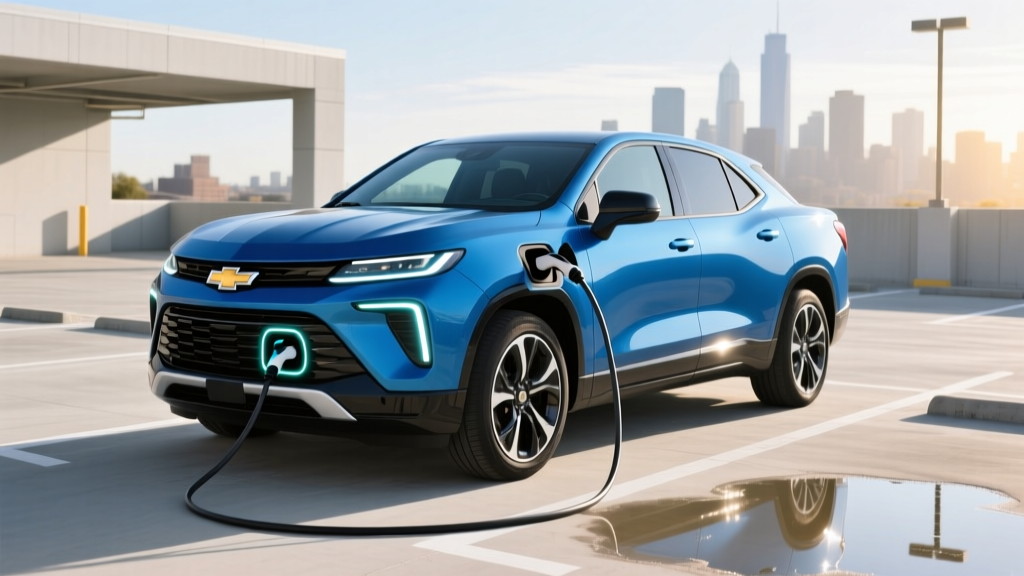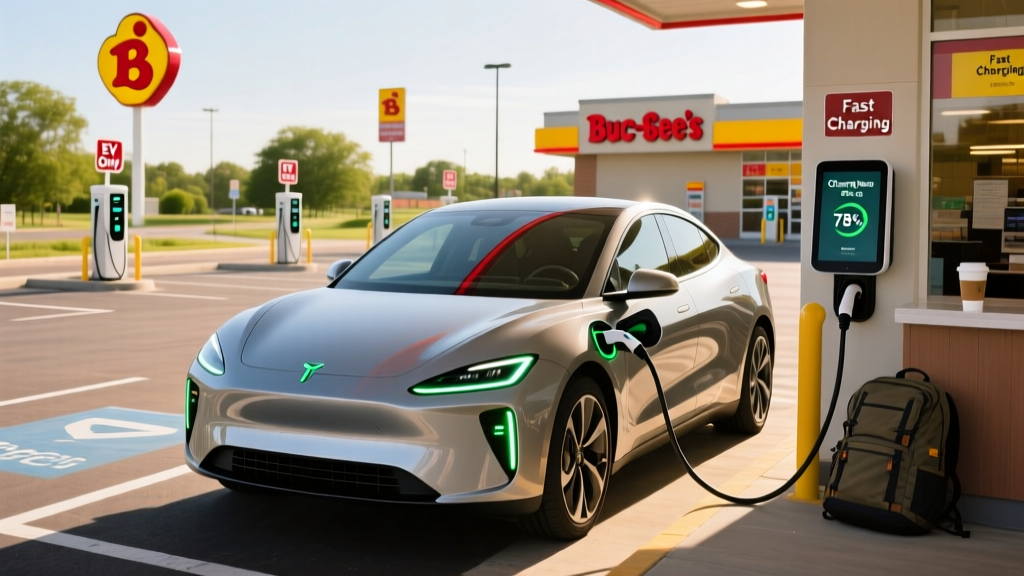
If you've ever driven through Texas, you already know Buc-ee's isn't just a gas station — it's a cultural phenomenon. With 40+ fuel pumps, spotless restrooms, and enough Beaver Nuggets to fill a semi-truck, these mega-stores are the default road-trip pit stop across the Lone Star State and beyond. But if you're behind the wheel of an EV, the real question is practical: does Buc-ee's have charging stations?
The short answer is yes — but selectively. As of early 2026, Buc-ee's has installed DC fast charging infrastructure at a growing subset of its locations, primarily through partnerships with networks like Electrify America and Tesla Superchargers. However, not every Buc-ee's has chargers, and the ones that do vary widely in stall count, peak power, and connector type. This guide maps out what's available, what speeds you can expect, and how to plan a reliable EV road trip around these iconic stops.
Which Buc-ee's Locations Have EV Chargers?
Buc-ee's operates over 50 locations across Texas, Alabama, Florida, Georgia, Kentucky, Mississippi, North Carolina, South Carolina, and Tennessee. As of 2026, roughly 15–20 of those locations feature DC fast charging, with more planned as the chain continues its aggressive Southeast expansion.
The chargers are typically installed in dedicated EV parking areas near the store entrance, separate from the fuel island. Most locations that offer charging have between 4 and 12 stalls, though flagship locations along I-10 and I-35 in Texas tend to have the most robust setups.
- Bastrop, TX (I-10) — Electrify America, 4 stalls, up to 350 kW, CCS1
- New Braunfels, TX (I-35) — Tesla Supercharger (8 stalls, NACS) + Electrify America (4 stalls, CCS1, up to 350 kW)
- Luling, TX (I-10) — Electrify America, 4 stalls, up to 150 kW
- Richmond, TX (Grand Parkway) — Electrify America, 4 stalls, up to 350 kW
- Denton, TX (I-35) — Electrify America, 4 stalls, up to 350 kW
- St. Augustine, FL (I-95) — Electrify America, 4 stalls, up to 350 kW
- Daytona Beach, FL (I-95) — Electrify America, 4 stalls, up to 150 kW
- Auburn, AL (I-85) — Electrify America, 4 stalls, up to 350 kW
Always verify availability on the Electrify America or Tesla app before your trip — stations can be offline for maintenance, and stall counts change with expansions.
Charging Speeds at Buc-ee's: What to Expect
The DC fast chargers at Buc-ee's locations span a range of power outputs. Understanding the difference between kW (power — the rate of charging) and kWh (energy — the total capacity of your battery) is critical here. A 350 kW charger doesn't put 350 kWh into your car; it delivers energy at a rate of up to 350 kW, and your vehicle's onboard charge curve determines how much of that peak it actually sustains.
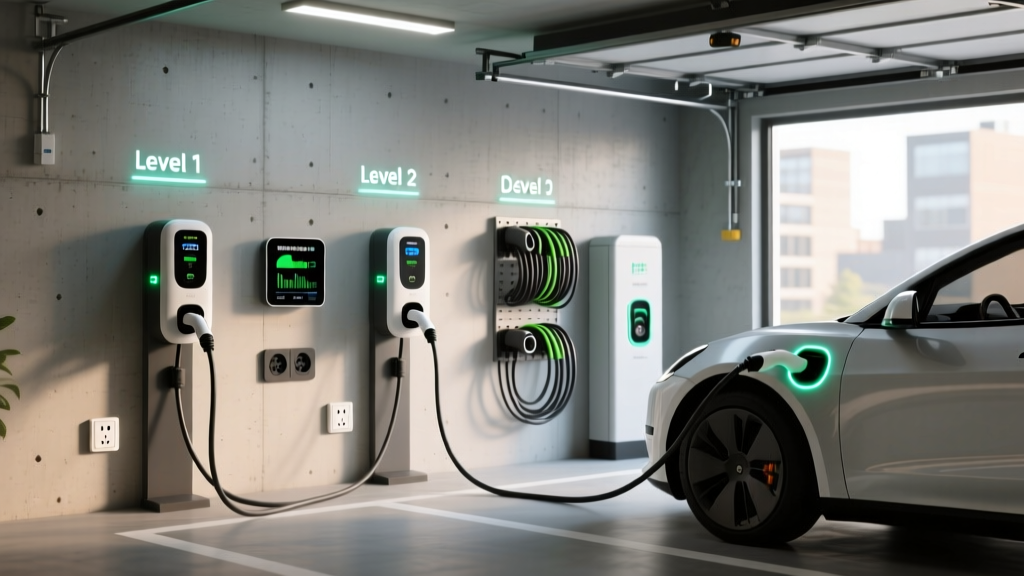
| Level | Voltage | Power (kW) | Miles of Range Added per Hour | Typical Use Case |
|---|---|---|---|---|
| Level 1 | 120V AC | 1.0–1.4 kW | 3–5 mi/hr | Overnight trickle, emergencies |
| Level 2 | 240V AC | 7.2–19.2 kW | 25–75 mi/hr | Home daily charging, workplaces, hotels |
| DC Fast (150 kW) | 400–800V DC | 50–150 kW | 150–400 mi/hr | Road trips, highway rest stops |
| DC Fast (350 kW) | 800V DC | 150–350 kW | 400–900+ mi/hr (peak) | Ioniq 5, EV6, Taycan, Lucid — 800V vehicles |
At Buc-ee's Electrify America stations with 350 kW hardware, vehicles with 800V architectures — like the Hyundai Ioniq 5, Kia EV6, and Porsche Taycan — can peak at 230–250 kW and charge from 10–80% in roughly 18–22 minutes. Vehicles on 400V platforms (most Teslas, Ford Mustang Mach-E, VW ID.4) will peak closer to 120–150 kW at these same chargers, yielding 10–80% times of 25–35 minutes.
At locations limited to 150 kW hardware, expect 10–80% times of 30–40 minutes for most mainstream EVs. That's still a reasonable stop for a bathroom break, Beaver Nuggets, and a brisket sandwich — which is exactly the use case these chargers are designed for.
Connector Compatibility: Will It Fit Your EV?
Connector availability at Buc-ee's depends on the charging network at each location. Electrify America stations provide CCS1 connectors as standard, with some newer installations adding NACS (Tesla-style) connectors. Tesla Supercharger installations at select Buc-ee's locations use the NACS connector exclusively.
| Connector | Brands That Use It (Native) | Available at Buc-ee's? | Adapter Needed? |
|---|---|---|---|
| NACS (Tesla) | Tesla (all), Ford (2025+), GM (2025+), Rivian (2025+), Volvo/Polestar (2025+) | Yes — at Supercharger locations; limited EA stalls | Legacy Teslas: no. CCS vehicles: NACS-to-CCS adapter (~$200) |
| CCS1 | Hyundai, Kia, VW, BMW, Mercedes, Ford (pre-2025), GM (pre-2025), most others | Yes — at all Electrify America locations | NACS vehicles need Tesla-to-CCS adapter (included with newer Teslas) |
| CHAdeMO | Nissan Leaf (legacy), Mitsubishi Outlander PHEV | Rare — being phased out at most networks | No adapter available; use CCS-to-CHAdeMO stations if found |
If you drive a 2025+ Ford, GM, or Rivian that has switched to the NACS port, you can use Tesla Superchargers at Buc-ee's locations that have them. For Electrify America CCS1 stalls, you'll need a NACS-to-CCS adapter — check whether your automaker includes one or budget ~$200 for a third-party unit.
For Nissan Leaf owners still on CHAdeMO: the writing is on the wall. CHAdeMO infrastructure is shrinking, and Buc-ee's Electrify America installations do not include CHAdeMO connectors. Plan road trips around other networks that still support the standard, or consider upgrading to a CCS/NACS vehicle.
How Much Does Charging at Buc-ee's Cost?
DC fast charging at public stations like those at Buc-ee's is priced per kWh, and rates vary by location, time of day, and network membership. As of 2026, Electrify America's pricing at Texas locations typically falls between $0.37–$0.52/kWh for Pass+ members and $0.43–$0.58/kWh for guest users.
| Scenario | Rate | Cost per Mile (250 Wh/mi EV) | Equivalent Gas Vehicle (28 MPG, $3.10/gal) |
|---|---|---|---|
| Home Level 2 (off-peak utility rate) | $0.09–$0.14/kWh | $0.023–$0.035 | $0.11/mi |
| Home Level 2 (standard rate) | $0.13–$0.18/kWh | $0.033–$0.045 | $0.11/mi |
| Buc-ee's DC Fast (EA member) | $0.37–$0.52/kWh | $0.093–$0.130 | $0.11/mi |
| Buc-ee's DC Fast (guest) | $0.43–$0.58/kWh | $0.108–$0.145 | $0.11/mi |
At member rates, charging at Buc-ee's is roughly cost-competitive with a 28 MPG gas car. At guest rates, it can actually exceed gas costs per mile. The economics of EV ownership shine brightest with home Level 2 charging — public DC fast charging is a road-trip convenience, not a daily cost-saver.
For a concrete example: adding 200 miles of range (roughly 50 kWh) at a Buc-ee's Electrify America station at $0.45/kWh costs about $22.50. That same 200 miles in a 28 MPG sedan at $3.10/gallon costs $22.14. The difference is negligible — you're paying for the convenience of fast charging on the road.
Planning Your EV Road Trip Around Buc-ee's
Buc-ee's locations are strategically placed along major interstate corridors, which makes them natural EV charging waypoints. Here's how to integrate them into a road-trip plan:
- Check before you go. Open the Electrify America app (or Tesla app for Supercharger locations) and confirm the station is online, the stall count, and current pricing. Stations occasionally go offline for maintenance.
- Arrive at 10–15% SoC. This maximizes your charge curve speed. Showing up at 40% SoC means slower peak charging and wasted time.
- Precondition your battery. If your EV supports it (Tesla, Hyundai/Kia, Ford, BMW, and others do), navigate to the charger in your car's built-in nav. The vehicle will warm or cool the battery to optimal temperature for maximum charge speed — especially important in cold weather or extreme Texas heat.
- Charge to 80%, then move on. The 80–100% portion is painfully slow on DC fast chargers. Plan your next stop 150–200 miles down the road rather than waiting for a full battery.
- Have a backup. Identify an alternate charger within 15–20 miles of your Buc-ee's stop. Apps like PlugShare and A Better Routeplanner show real-time station status.
For long Texas drives (say, Houston to El Paso — roughly 750 miles), you can realistically plan 2–3 Buc-ee's stops with 20–30 minute charging sessions each. Total added trip time compared to a gas car: approximately 40–60 minutes, much of which you'd spend inside the store anyway.
Home Charging Setup: The Real Foundation
Road-trip charging at Buc-ee's is convenient, but 90%+ of EV charging happens at home. If you're buying an EV and relying solely on public DC fast charging, you're paying 5–10x more per mile than you need to and adding unnecessary wear to your battery from repeated high-power sessions.
Electrical Requirements for Level 2 Home Charging
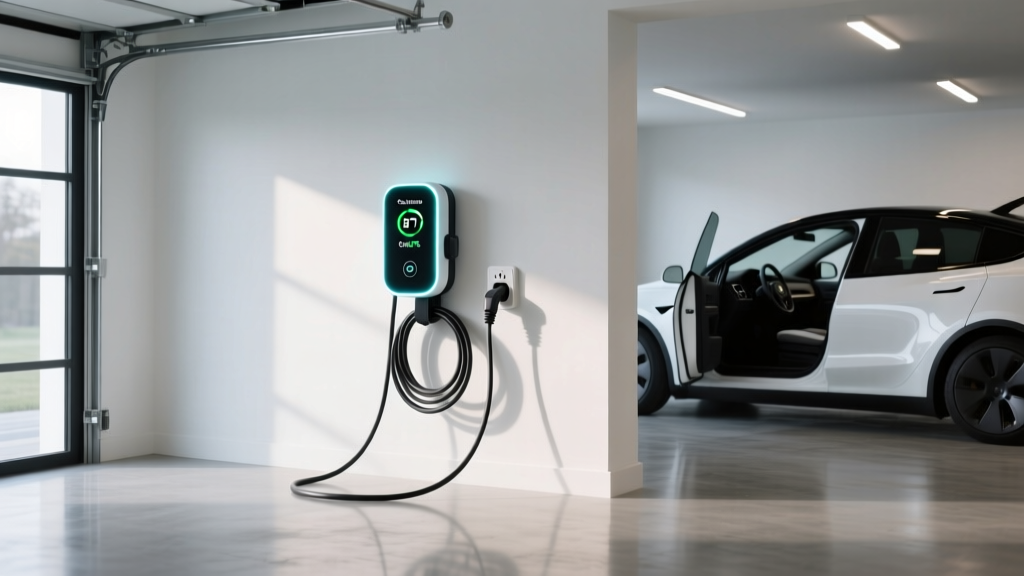
A Level 2 home charger requires a 240V dedicated circuit, similar to what powers a clothes dryer or electric oven. The most common residential setup is a 240V/40A circuit, which delivers up to 9.6 kW (enough to add roughly 35–40 miles of range per hour). For faster charging, a 240V/60A circuit delivers 14.4 kW.
Your home's electrical panel capacity matters. Most modern homes have 200A panels, which can typically accommodate a 40A EV charger circuit without upgrades. Older homes with 100A panels may need a panel upgrade — a significant cost factor.
| Item | Cost Range | Notes |
|---|---|---|
| Level 2 charger hardware | $300–$700 | Varies by brand, power output, smart features |
| Electrician labor (standard install, <50 ft run) | $500–$1,500 | Depends on panel proximity, conduit, wall type |
| Permit and inspection | $50–$200 | Required by most local jurisdictions |
| Electrical panel upgrade (if needed) | $1,500–$4,000 | 100A to 200A upgrade for older homes |
| Total (no panel upgrade) | $850–$2,400 | Most common scenario for newer homes |
| Total (with panel upgrade) | $2,350–$6,400 | Older homes, high-draw panels |
The IRS §30C Alternative Fuel Vehicle Refueling Property Credit can offset up to 30% of home charger installation costs (hardware + labor), capped at $1,000. Eligibility depends on income limits and whether you live in a qualifying census tract. Consult a tax professional to confirm your eligibility.
What Electrical Upgrades Might You Need?
Before hiring an electrician, check your panel's amperage rating (printed on the main breaker). If you have a 200A panel with moderate existing loads (electric stove, dryer, HVAC), a 40A EV circuit is usually feasible. A licensed electrician will perform a load calculation per NEC Article 220 to confirm.
If your panel is at capacity, you have options beyond a full upgrade: a smart panel load-management device (like the Emporia VUE or Span smart panel) can dynamically reduce charger draw when other high-load appliances are running, potentially avoiding a panel upgrade entirely. Cost: $300–$800 for the device plus installation.
Recommended Home Chargers for 2026
Here are three proven Level 2 chargers suited to different needs and budgets:
Emporia Level 2 Smart Charger
- Power output: 11.5 kW (48A) on a 60A circuit, or 9.6 kW (40A) on a 50A circuit
- Connector: J1772 (NACS adapter available separately)
- Cable length: 24 ft
- Smart features: Wi-Fi, app scheduling, solar integration, energy monitoring
- Price: ~$399
- Best for: Budget-conscious owners who want smart scheduling and solar integration
ChargePoint Home Flex
- Power output: Up to 12 kW (50A), configurable from 16A–50A
- Connector: J1772 (NACS version available for 2025+ vehicles)
- Cable length: 23 ft
- Smart features: Wi-Fi, Alexa integration, app scheduling, flexible amperage
- Price: ~$549
- Best for: Flexibility — adjustable amperage works with various panel capacities
Tesla Wall Connector (Gen 4)
- Power output: Up to 11.5 kW (48A)
- Connector: NACS native (J1772 adapter included for non-Tesla EVs)
- Cable length: 24 ft
- Smart features: Wi-Fi, OTA updates, power sharing between multiple units, Tesla app integration
- Price: ~$450
- Best for: Tesla owners and households with mixed NACS/CCS vehicles (using adapter)
Safety and Code Considerations
Per the National Electrical Code (NEC), your Level 2 charger must be on a dedicated circuit — it cannot share a breaker with other outlets or appliances. For outdoor installations, the charger must carry a NEMA 4 or NEMA 4X rating (weatherproof). Most jurisdictions require a GFCI breaker for outdoor EV charging circuits, though some chargers have built-in GFCI protection that satisfies code.
Always pull a permit and schedule an inspection. Unpermitted electrical work can void your homeowner's insurance and create fire risk. A licensed electrician familiar with EV charger installations will handle permitting as part of the job.
Frequently Asked Questions
Does every Buc-ee's have EV charging?
No. As of early 2026, roughly 15–20 of the 50+ Buc-ee's locations have DC fast charging. Availability is concentrated along major Texas interstates (I-10, I-35, I-45) and newer Southeast locations. Always check the Electrify America or Tesla app for real-time station status before relying on a specific location.
How fast will each charging level add range?
Level 1 (120V) adds 3–5 miles per hour — useful only for overnight trickle charging. Level 2 (240V home) adds 25–75 miles per hour depending on amperage and your vehicle's onboard charger. DC fast charging (150–350 kW) at stations like those at Buc-ee's adds 150–900+ miles per hour at peak, though actual sessions are measured in minutes (typically 20–35 minutes for 10–80%).
How much does charging cost per mile vs. gas?
Home Level 2 charging costs roughly $0.025–$0.045 per mile for a typical EV consuming 250 Wh/mi. Public DC fast charging at Buc-ee's Electrify America stations costs $0.09–$0.15 per mile. A comparable gas car at 28 MPG with $3.10/gallon fuel costs about $0.11 per mile. Home charging is the clear winner; road-trip DC fast charging is roughly cost-neutral with gasoline.
What connector do I need for Buc-ee's chargers?
Electrify America stations at Buc-ee's use CCS1 connectors. Tesla Supercharger locations use NACS. If your EV has a CCS1 port (most non-Tesla EVs through 2024, and many 2025 models), you're covered at EA stations. If you have a NACS port (Tesla, 2025+ Ford/GM/Rivian), you can use Supercharger locations and may need an adapter for CCS1 stations. CHAdeMO (Nissan Leaf) is not supported.
Is it safe to charge at Buc-ee's overnight or late at night?
Buc-ee's locations are open 24/7 and are generally well-lit with high foot traffic, making them among the safer public charging environments. However, as with any public stop, stay aware of your surroundings, lock your vehicle, and don't leave valuables visible.
Can I use a Buc-ee's charger if I'm not a Tesla owner?
Yes — Electrify America stations at Buc-ee's are open to all EVs with CCS1 connectors. Tesla Supercharger stalls at select Buc-ee's locations may also be open to non-Tesla EVs with NACS ports, depending on the specific site's participation in Tesla's open network program.
For the most current map of Buc-ee's charging locations, cross-reference Electrify America's station finder and PlugShare before your trip. Station availability, pricing, and hardware can change, and a 30-second app check can save you a 30-mile detour.