If you've driven through Texas, you already know Buc-ee's is a cultural institution — massive convenience stores with spotless restrooms, brisket sandwiches, and enough Beaver Nuggets to fill a frunk. But as the chain expands across the South and Southeast, EV drivers are asking a practical question: does Buc-ee's have electric chargers?
The short answer is yes. Buc-ee's has been installing DC fast chargers at many of its locations, typically through partnerships with major charging networks. But not every Buc-ee's has them, the charger counts vary, and the experience differs from a dedicated Tesla Supercharger plaza. This guide breaks down exactly what you'll find, how fast you can charge, what connectors are available, and how to plan a road trip around Buc-ee's stops — plus everything you need to know about EV charging levels, home installation costs, and per-mile economics.
Does Buc-ee's Have Electric Chargers? What's Available in 2026
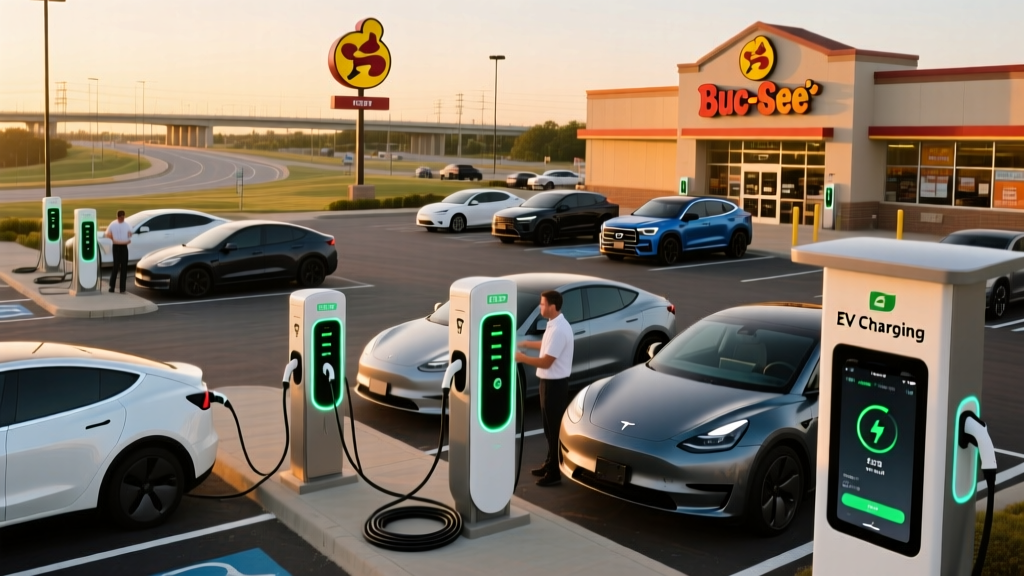
Buc-ee's began rolling out EV charging infrastructure in the early 2020s, and as of 2026, a growing number of locations feature DC fast charging stations. These are typically Level 3 DC fast chargers capable of delivering between 50 kW and 350 kW depending on the hardware installed and the network partner operating them.
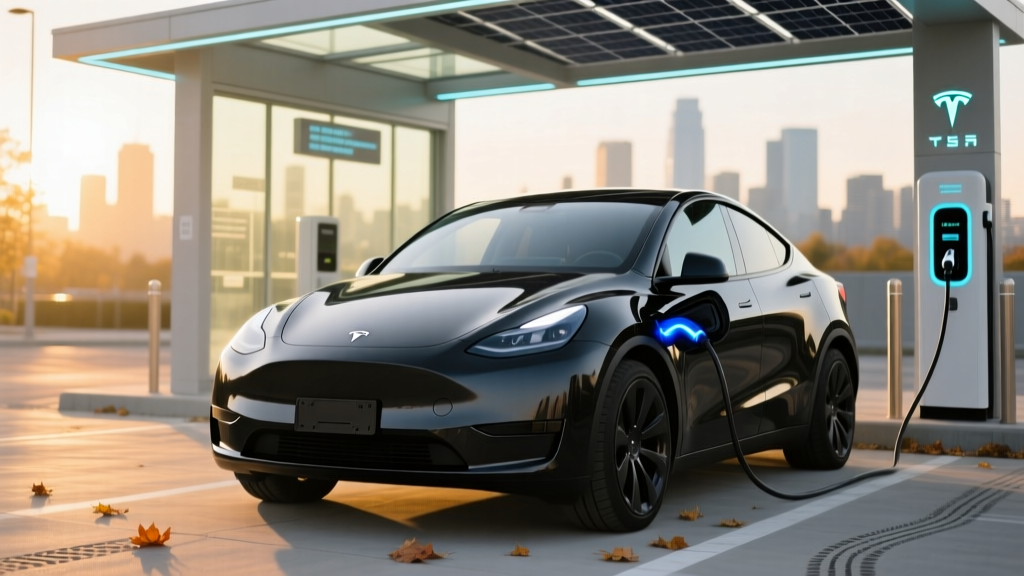
Most Buc-ee's EV chargers are operated by networks like Electrify America, EVgo, or Tesla Supercharger (now open to non-Tesla vehicles via the NACS connector standard). The exact network, number of stalls, and power levels vary by location. Larger Buc-ee's travel centers — particularly those along I-10, I-35, and I-45 in Texas — tend to have 4 to 8 DC fast charging stalls, while smaller or older locations may have none.
EV Charging Levels Explained: Speeds, Power, and Range Added
Before pulling into any charging station — Buc-ee's or otherwise — you need to understand the three charging levels and what they mean for your battery. The critical distinction: kW (kilowatts) measures power — how fast energy flows into your car — while kWh (kilowatt-hours) measures energy — the total capacity of your battery. Think of kW as the width of a pipe and kWh as the size of the tank it's filling.
| Level | Power (kW) | Voltage / Amperage | Miles of Range Added per Hour | Best For |
|---|---|---|---|---|
| Level 1 | 1.0–1.9 kW | 120V / 12–16A | 3–5 miles/hr | Overnight trickle, PHEVs, emergencies |
| Level 2 | 3.3–19.2 kW | 240V / 16–80A | 12–75 miles/hr | Home daily charging, workplaces, hotels |
| DC Fast (Level 3) | 50–350 kW | 400–800V DC | 150–1,000+ miles/hr (peak) | Road trips, rapid top-ups |
At a Buc-ee's with DC fast chargers, you're looking at a road-trip charging experience. A 150 kW charger can add roughly 100–120 miles of range in about 15 minutes to a typical crossover SUV with a 75–85 kWh battery (like a Tesla Model Y, Hyundai Ioniq 5, or Ford Mustang Mach-E). A 350 kW charger — if your vehicle can accept that rate — can push 200+ miles in the same window.
But here's the real-world caveat that spec sheets gloss over: peak charge rate is not sustained charge rate. Your vehicle's battery management system will taper charging speed as the battery fills. Most EVs charge fastest between 10% and 50% state of charge (SoC), then progressively slow down. Charging from 10–80% might take 18–25 minutes on a capable charger, but pushing from 80–100% can add another 20–30 minutes. This is why road-trip strategy focuses on the 10–80% window.
Connector Compatibility: Will Your EV Plug In at Buc-ee's?
The connector landscape has shifted dramatically. As of 2026, the North American Charging Standard (NACS) — originally Tesla's proprietary connector — has become the dominant standard, with Ford, GM, Rivian, Volvo, Polestar, and most major automakers adopting it for new vehicles. CCS1 (Combined Charging System) remains on many 2023–2025 model-year vehicles, and CHAdeMO is essentially legacy (Nissan Leaf being the primary holdout).
| Connector | Brands Using It | Adapter Needed? |
|---|---|---|
| NACS | Tesla (all years), Ford (2025+), GM (2025+), Rivian (2025+), Volvo, Polestar, Hyundai/Kia (2026+) | CCS→NACS adapter for older CCS vehicles at NACS-only stalls |
| CCS1 | VW, BMW, Mercedes, Honda, many 2023–2025 models from Ford/GM/Hyundai | NACS→CCS adapter for Tesla Superchargers; Magic Dock at some stations |
| CHAdeMO | Nissan Leaf (legacy), Mitsubishi Outlander PHEV (older) | Very limited; no reliable adapter to NACS/CCS for DC fast charging |
At Buc-ee's locations with Electrify America or EVgo chargers, you'll typically find both CCS1 and NACS cables (or a CHAdeMO connector at older installations). Tesla Supercharger stalls at Buc-ee's will have NACS connectors, and many now include Tesla's "Magic Dock" built-in CCS adapter for non-Tesla vehicles. Always verify connector availability in your charging app before committing to a stop.
DC Fast Charging Times: What to Expect at Buc-ee's
How long you'll spend charging at a Buc-ee's depends on three factors: your vehicle's maximum charge acceptance rate, the charger's output, and your battery's current state of charge. Here are realistic 10–80% charge times for common EV battery sizes at different charger speeds:
| Battery Size | Example Vehicles | At 50 kW | At 150 kW | At 250–350 kW |
|---|---|---|---|---|
| ~60 kWh | Chevrolet Bolt EV/EUV, base Volvo EX30 | ~45–55 min | ~25–30 min | ~20–25 min (limited by vehicle) |
| ~75–85 kWh | Tesla Model Y, Ford Mach-E, Hyundai Ioniq 5 | ~60–70 min | ~22–28 min | ~18–22 min |
| ~100–130 kWh | GMC Hummer EV, Rivian R1T, Tesla Model S | ~90–110 min | ~35–45 min | ~22–30 min |
How Much Does Charging Cost at Buc-ee's vs. Home vs. Gas?
One of the biggest ownership questions is cost. DC fast charging at public stations like those at Buc-ee's is the most expensive way to charge an EV — but it's still often competitive with gasoline on a per-mile basis, and dramatically cheaper when you charge at home.
| Scenario | Rate | Cost per Mile (3.5 mi/kWh EV) | Cost per Mile (28 MPG gas car at $3.20/gal) |
|---|---|---|---|
| Home (off-peak utility rate) | $0.08–$0.14/kWh | $0.023–$0.040 | $0.114 |
| Home (average US rate) | $0.16–$0.18/kWh | $0.046–$0.051 | $0.114 |
| Public Level 2 (ChargePoint, etc.) | $0.25–$0.49/kWh | $0.071–$0.140 | $0.114 |
| DC Fast (Buc-ee's / Electrify America / EVgo) | $0.35–$0.61/kWh | $0.100–$0.174 | $0.114 |
At Buc-ee's DC fast chargers, expect to pay between $0.35 and $0.61 per kWh depending on the network and whether you have a membership. Electrify America's Pass+ membership ($4/month) drops the per-kWh rate significantly. A typical 50 kWh fill-up (roughly 175 miles of range in an efficient crossover) would cost $17.50–$30.50 at a public DC fast charger — compared to about $20 for the equivalent gasoline in a 28 MPG car.
The economics are clear: home charging is the cheapest option by far, at roughly one-quarter to one-third the cost of gasoline per mile. Public DC fast charging is a road-trip convenience cost — competitive with gas but not a long-term savings strategy. If you can charge at home 90% of the time and use DC fast chargers only for road trips, your annual fuel costs will be dramatically lower than a gasoline vehicle.
Home EV Charger Installation: Costs, Electrical Requirements, and Equipment
The real advantage of EV ownership unlocks when you charge at home. Here's what's involved in installing a Level 2 home charger — and what it actually costs.
Electrical Requirements
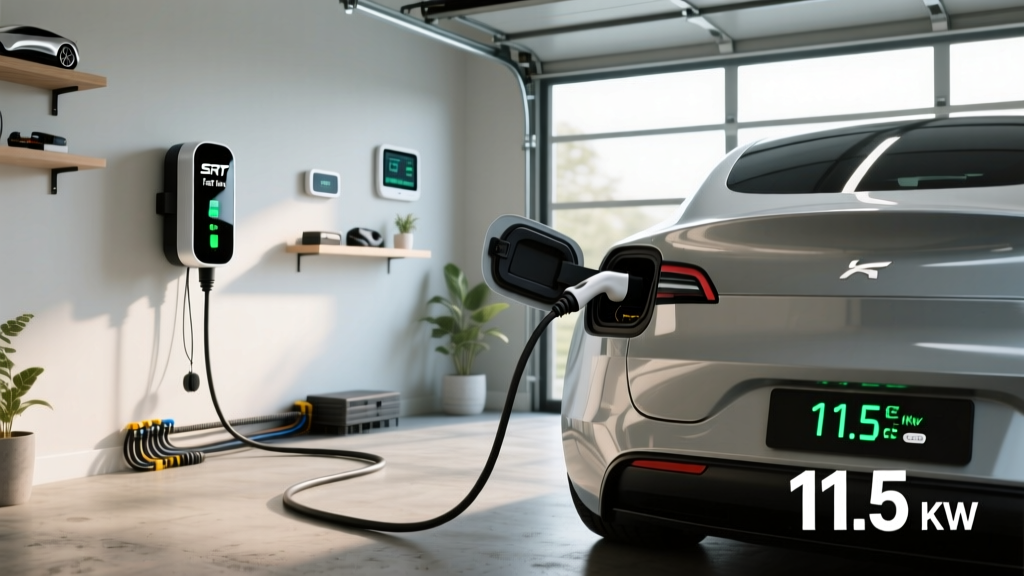
A Level 2 home charger requires a 240-volt dedicated circuit, similar to what powers an electric dryer or oven. The most common setup is a 240V/40A circuit (NEMA 14-50 outlet or hardwired), which delivers up to 9.6 kW and adds roughly 30–40 miles of range per hour — enough to fully recharge most EVs overnight.
If you want faster home charging (11.5 kW or 19.2 kW), you'll need a 50A or 80A circuit respectively. Your home's electrical panel must have sufficient capacity. Most modern 200A panels can accommodate a 40A EV circuit without issue. Older homes with 100A panels may require a panel upgrade — a significant added cost.
| Component | Cost Range | Notes |
|---|---|---|
| Level 2 charger (equipment) | $300–$750 | Varies by power output, smart features, cable length |
| Electrician labor (standard install) | $400–$1,200 | Depends on panel proximity, conduit run length, wall type |
| Permit and inspection | $50–$250 | Required in most jurisdictions; varies by municipality |
| Electrical panel upgrade (if needed) | $1,500–$4,000 | 100A→200A upgrade for older homes; not always required |
| TOTAL (standard, no panel upgrade) | $750–$2,200 | Most homeowners land in the $1,000–$1,500 range |
| TOTAL (with panel upgrade) | $2,250–$6,200 | Older homes; get a quote before committing |
The federal Residential Clean Energy Credit (IRC §25C) covers 30% of home EV charger equipment and installation costs, up to $1,000, for equipment placed in service. Check current-year IRS guidance for eligibility and phase-out rules. Many utilities also offer rebates of $200–$500 for Level 2 charger installation — check with your local provider.
Recommended Level 2 Home Chargers (2026)
ChargePoint Home Flex
- Power: Up to 12 kW (50A) — configurable from 16A to 50A
- Connector: NACS or J1772 (choose at purchase)
- Cable length: 23 feet
- Smart features: Wi-Fi, app scheduling, energy tracking, Alexa
- Price: ~$549–$649
- Best for: Flexible amperage, reliable app, wide compatibility
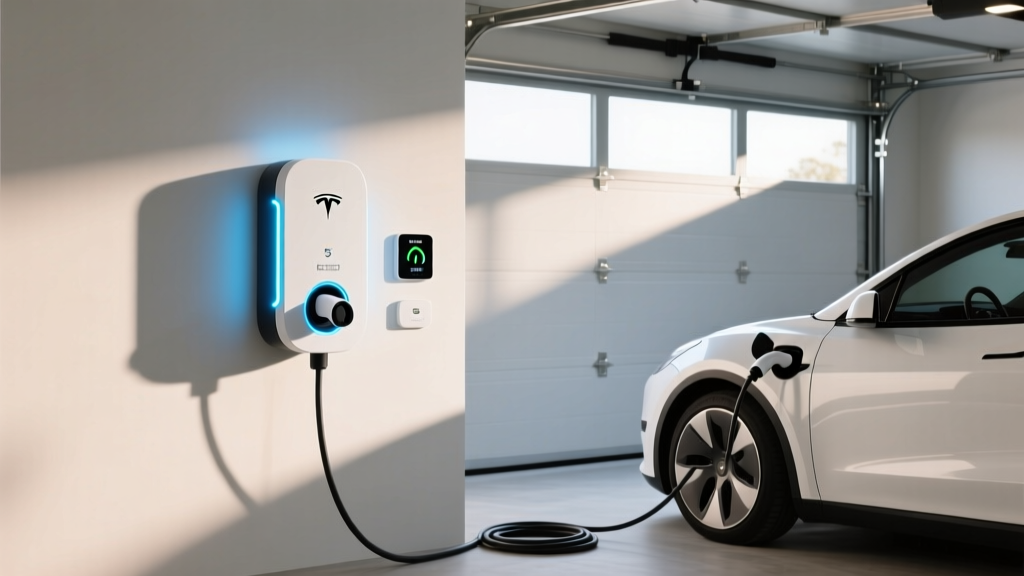
Tesla Wall Connector
- Power: Up to 11.5 kW (48A)
- Connector: NACS (native Tesla; works with all NACS vehicles)
- Cable length: 24 feet
- Smart features: Wi-Fi, OTA updates, power sharing between units
- Price: ~$420–$475
- Best for: Tesla and NACS-equipped owners; excellent value
Emporia Vue Level 2
- Power: Up to 11.5 kW (48A)
- Connector: J1772 (NACS adapter available)
- Cable length: 24 feet
- Smart features: Whole-home energy monitoring, solar integration, app
- Price: ~$399–$449
- Best for: Budget-conscious buyers; solar homes
Safety and Code Considerations
Any Level 2 installation must comply with the National Electrical Code (NEC) and local building codes. Key requirements:
- Dedicated circuit: Your EV charger must have its own breaker — no sharing with other appliances.
- GFCI protection: Required for outdoor installations and many indoor installations per NEC 2023+ codes. Hardwired units often have built-in GFCI; outlet-based setups may need a GFCI breaker.
- Outdoor rating: If installing outside (garage exterior, driveway), the charger must carry a NEMA 4 or IP65 weather resistance rating. All three chargers above are outdoor-rated.
- 80% rule: EV chargers are continuous loads. A 40A charger requires a 50A breaker (load cannot exceed 80% of breaker rating). Your electrician will size accordingly.
- Permit and inspection: Most municipalities require an electrical permit and post-installation inspection. Skip this and you risk voiding insurance coverage for electrical fires.
Road-Trip Strategy: Planning Buc-ee's EV Charging Stops
Buc-ee's locations make excellent road-trip charging stops for a simple reason: the amenities. While your car charges for 20–30 minutes, you can grab a hot meal, use clean restrooms, and stock up on snacks — exactly the kind of break that makes a 10-hour drive manageable.
Here's how to plan effectively:
- Pre-plan with apps: Before departing, map your route in A Better Routeplanner (ABRP) or your vehicle's built-in navigation. Filter for Buc-ee's locations along your corridor and confirm charger status.
- Precondition your battery: If your EV supports navigation-based preconditioning (Tesla, Hyundai/Kia, Ford, BMW), set the Buc-ee's charger as your destination. The car will warm the battery for optimal charge speed — this alone can shave 5–10 minutes off your stop.
- Arrive at 10–15% SoC: This positions you in the fastest part of the charge curve. Don't arrive at 40% and expect fast charging — the taper will slow you significantly.
- Charge to 80%, then go: Unless you absolutely need the range to reach your next stop, charging past 80% at a DC fast station is expensive and slow. Plan an intermediate stop rather than waiting for 100%.
- Have a backup: Buc-ee's chargers can be occupied, out of service, or slower than advertised. Always identify an alternative charger within 15–20 miles.
Frequently Asked Questions
Does every Buc-ee's have electric vehicle chargers?
No. As of 2026, many Buc-ee's locations — particularly newer and larger travel centers along major interstate corridors in Texas, Alabama, Florida, Georgia, and Tennessee — have DC fast chargers. However, smaller or older locations may not. Always verify using a charger-finder app like PlugShare or the Alternative Fuels Data Center before relying on a specific Buc-ee's for charging.
How much does it cost to install a home EV charger?
A standard Level 2 home charger installation (equipment + electrician + permit) typically costs between $750 and $2,200 if your electrical panel has sufficient capacity. If you need a panel upgrade from 100A to 200A, total costs can reach $2,250–$6,200. The federal Residential Clean Energy Credit covers 30% of the cost (up to $1,000), and many utilities offer additional rebates. Always get a quote from a licensed electrician before committing.
How fast will each charging level add range?
Level 1 (120V standard outlet) adds roughly 3–5 miles per hour — suitable for plug-in hybrids or overnight trickle charging. Level 2 (240V, home or public) adds 12–75 miles per hour depending on amperage — the standard for daily home charging. DC fast charging (50–350 kW) can add 150–1,000+ miles per hour at peak rate, making it practical for road trips with 15–30 minute stops.
Which connector or charger is compatible with my EV?
Check your vehicle's charge port. 2025–2026 models from Tesla, Ford, GM, Rivian, Volvo, and others use NACS. Many 2023–2025 models still use CCS1. The Nissan Leaf uses CHAdeMO. At Buc-ee's locations with Electrify America or EVgo, you'll usually find CCS and NACS. Tesla Superchargers have NACS and increasingly include Magic Dock adapters for CCS vehicles. If your vehicle's connector doesn't match the station, you may need an adapter — check your manufacturer's accessory catalog.
How much does charging cost per mile compared to gasoline?
Home charging at average US electricity rates ($0.16–$0.18/kWh) costs roughly $0.04–$0.05 per mile for an efficient EV — about half to one-third the cost of gasoline at $3.20/gallon in a 28 MPG car ($0.11/mile). Public DC fast charging at $0.35–$0.61/kWh costs $0.10–$0.17 per mile — competitive with gas but not cheaper. The maximum savings come from home charging with time-of-use rates during off-peak hours.
What electrical upgrades might I need for a home charger?
If your home has a 200A electrical panel with available breaker slots, you likely need no upgrade — just a dedicated 40A–50A circuit. If you have an older 100A panel, or if your panel is near capacity with existing loads (electric heat, dryer, oven, AC), you may need a panel upgrade to 200A or higher. A licensed electrician can perform a load calculation to determine this. Some utilities offer "make-ready" programs that cover part of the panel upgrade cost.
Whether you're pulling into a Buc-ee's on I-10 outside of Houston or planning your first EV road trip through the Southeast, the charging infrastructure is real and expanding. The key is preparation: verify charger availability, understand your vehicle's connector and charge rate, and use home charging for the vast majority of your miles to keep costs low. The brisket and Beaver Nuggets are just a bonus.