Why Buc-ee's Electric Charging Matters for EV Road Trips
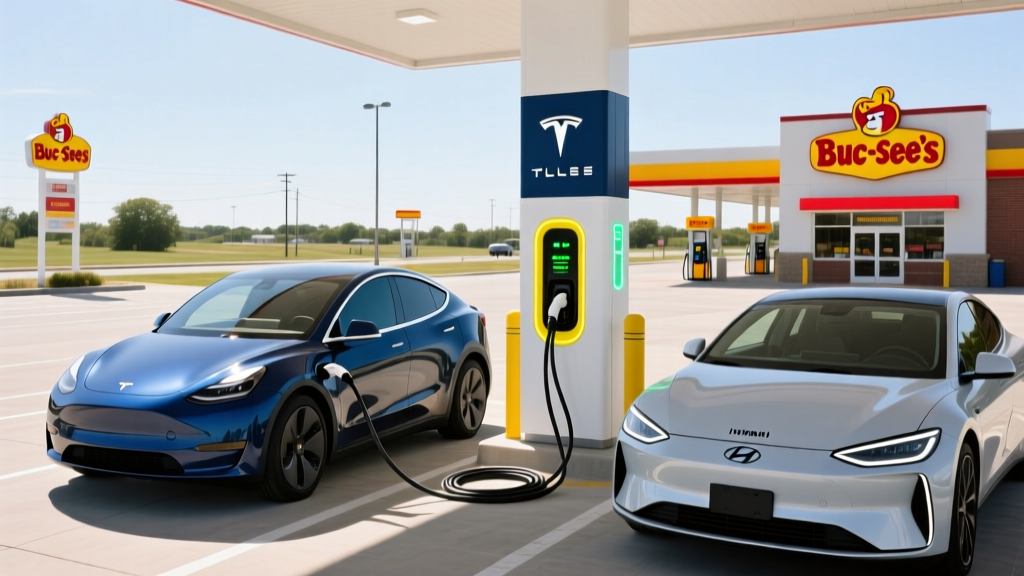
If you've driven through Texas, Georgia, or the Carolinas, you've likely seen the beaver logo. Buc-ee's travel centers are legendary for their 120+ fuel pumps, spotless restrooms, and Beaver Nuggets — and they're rapidly becoming a key node in the Southern EV road-trip network. As of early 2026, Buc-ee's has rolled out DC fast charging infrastructure at a growing number of its locations, strategically placed along I-10, I-35, I-45, and other major corridors where EV drivers need reliable high-speed stops.
But Buc-ee's charging experience is different from a dedicated Tesla Supercharger plaza or an Electrify America station. The travel-center model — massive parking lots, 24/7 food service, and long dwell times — creates unique advantages and a few quirks for EV owners. This guide breaks down exactly what you'll find, how fast you can charge, what it costs, and how to integrate Buc-ee's stops into your charging strategy.
Buc-ee's Charger Types and Speeds: What's Actually There
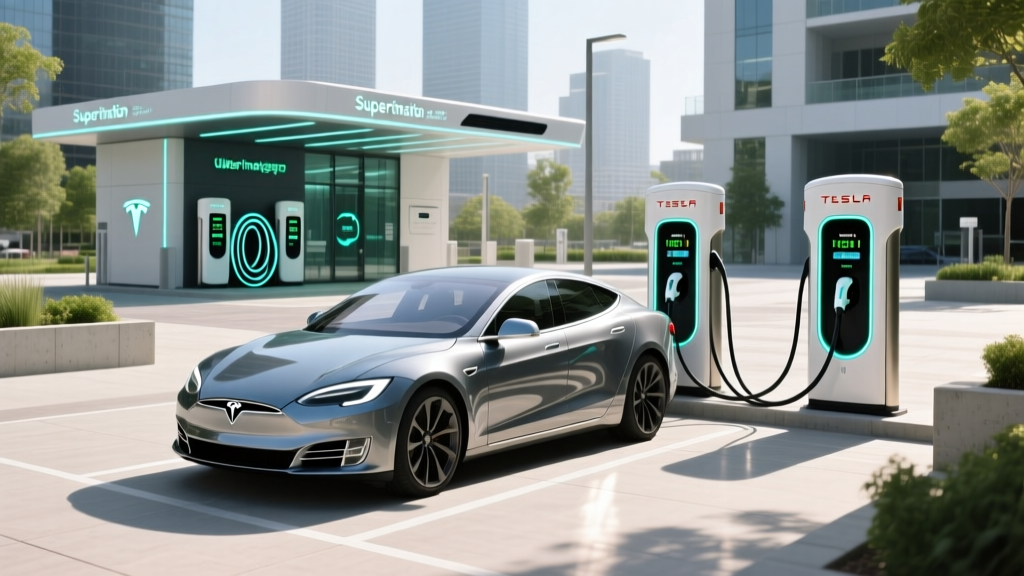
Buc-ee's has partnered with major charging networks to install DC fast chargers at select locations. The typical deployment includes stalls capable of delivering between 150 kW and 350 kW peak power, depending on the site and the network operator. Here's how those speeds translate into real-world range recovery during a brisket sandwich stop:
| Charger Rating | Peak Power (kW) | Typical 10–80% Time | Range Added in 20 Min* |
|---|---|---|---|
| 150 kW stall | 150 kW | ~28–35 min | ~120–160 miles |
| 175 kW stall | 175 kW | ~24–30 min | ~140–180 miles |
| 350 kW stall | 350 kW (vehicle-dependent) | ~18–22 min | ~180–250 miles |
*Range estimates assume a mid-size crossover with ~75–84 kWh usable battery (e.g., Hyundai Ioniq 5, Ford Mustang Mach-E, Tesla Model Y). Actual results vary by battery chemistry, state of charge, ambient temperature, and the vehicle's charge curve. A 350 kW stall only delivers peak power to vehicles with 800V architectures like the Ioniq 5, Kia EV6, and Porsche Taycan — most 400V vehicles will peak between 150–250 kW regardless of stall capacity.
Connector Compatibility: Will Your EV Plug In at Buc-ee's?
The connector landscape has shifted dramatically. Tesla opened its Supercharger network to non-Tesla vehicles via the North American Charging Standard (NACS), and by 2025–2026, most automakers have adopted NACS as their native port. However, many EVs on the road still use CCS1 or the older CHAdeMO connector. Here's what you need to know before pulling into a Buc-ee's charging stall:
| Connector | Vehicles Using It | Buc-ee's Availability | Adapter Needed? |
|---|---|---|---|
| NACS (Tesla-style) | Tesla (all), Ford F-150 Lightning (2025+), Rivian (2025+), GM Ultium vehicles (2025+), Hyundai/Kia (2026+) | Increasingly common at new installations | No — native on newer vehicles |
| CCS1 | Hyundai Ioniq 5 (pre-2026), Kia EV6 (pre-2026), Ford Mach-E (pre-2025), VW ID.4, BMW iX, most 2022–2024 EVs | Standard at most Buc-ee's DC fast stalls | No — native port on these vehicles |
| CHAdeMO | Nissan Leaf (2013–2025), Mitsubishi Outlander PHEV (older) | Limited — not available at most new DC fast sites | Yes — CHAdeMO-to-CCS adapters exist but cap at ~50 kW |
Practical tip: If you drive a Tesla and plan to use non-Tesla chargers at Buc-ee's (operated by third-party networks), you may need Tesla's CCS adapter (roughly $175 from Tesla's shop). Conversely, if you drive a CCS1-equipped vehicle and want to access Tesla Superchargers that may be co-located at some Buc-ee's sites, you'll need a NACS-to-CCS adapter from a manufacturer like Lectron or A2Z (~$200–$275). Always check the specific Buc-ee's location on PlugShare or the network's app before your trip to confirm connector availability.
How Much Does Charging at Buc-ee's Cost?
DC fast charging at travel centers typically costs more than home Level 2 charging but less than gasoline on a per-mile basis. Pricing at Buc-ee's charging stations depends on the network operator (e.g., Electrify America, EVgo, or a regional provider) and the local electricity rate. Here's a realistic cost breakdown as of 2026:
| Scenario | Cost per kWh | Cost per Mile† | Cost for 200-Mile Refuel |
|---|---|---|---|
| Home Level 2 (off-peak utility rate) | $0.08–$0.14 | $0.02–$0.04 | $4.80–$8.40 |
| Home Level 2 (standard rate) | $0.12–$0.18 | $0.03–$0.05 | $7.20–$10.80 |
| Buc-ee's DC fast (typical) | $0.35–$0.55 | $0.09–$0.15 | $21.60–$32.40 |
| Gas vehicle (27 MPG, $3.10/gal) | N/A | $0.11 | $22.96 |
| Gas vehicle (20 MPG, $3.10/gal) | N/A | $0.16 | $31.00 |
†EV cost-per-mile assumes 3.0–3.5 miles per kWh (typical for mid-size crossovers like the Model Y or Ioniq 5). Actual efficiency varies by speed, temperature, and terrain. Source for efficiency data: fueleconomy.gov.
The takeaway: Buc-ee's DC fast charging is roughly cost-competitive with gasoline for efficient vehicles, and noticeably cheaper than fueling a truck or large SUV. But it's 3–5× more expensive than charging at home. The value proposition is convenience during road trips — you're paying for speed and location, not the cheapest electrons.
Planning a Road Trip Around Buc-ee's Charging Stops
Buc-ee's locations are engineered for high-volume traffic with ample parking, which means you're less likely to encounter the "all stalls occupied" frustration common at urban charging sites. The travel-center model also means you have excellent amenities during your 20–35 minute charge session: full-service food, clean restrooms, and convenience shopping.
Route-planning strategy for Southern EV road trips:
- I-10 corridor (Jacksonville to San Antonio): Buc-ee's locations in Daytona Beach, FL; Valdosta, GA; and multiple Texas sites (Bastrop, Wharton, Kerrville) provide roughly 150–200 mile spacing — ideal for vehicles with 250+ miles of EPA range.
- I-35 corridor (San Antonio to Dallas/Fort Worth): The Temple, TX and New Braunfels, TX locations offer convenient mid-route charging for the ~275-mile trip.
- I-45 corridor (Houston to Dallas): The Madisonville, TX Buc-ee's sits near the midpoint of this ~240-mile route.
Charging Levels Explained: From Trickle to Thunder
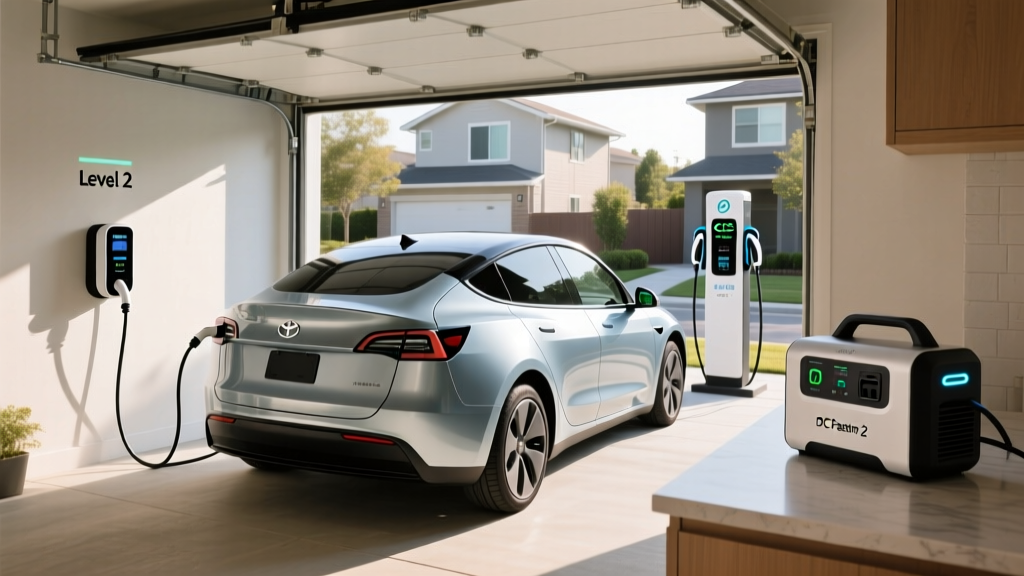
Whether you're charging overnight at home or topping up at Buc-ee's, understanding the three charging levels helps you make smart decisions. Here's the definitive breakdown — note that kW (kilowatts) measures power delivery rate, while kWh (kilowatt-hours) measures total energy stored in your battery. These are not interchangeable.
| Level | Voltage / Power | Speed (miles of range per hour) | Typical Use Case |
|---|---|---|---|
| Level 1 | 120V / 1.4–1.9 kW | 3–5 miles/hr | Emergency / overnight top-up for PHEVs and low-mileage commuters |
| Level 2 | 240V / 7.2–19.2 kW | 20–60 miles/hr | Home daily charging, workplace, hotels, some retail locations |
| DC Fast (Level 3) | 400–900V / 50–350 kW | 150–1,000+ miles/hr (peak) | Road trips, rapid top-ups — like Buc-ee's DC fast stalls |
At home, Level 2 is the sweet spot. A 48-amp (11.5 kW) Level 2 charger on a 240V circuit will fully recharge a 75 kWh battery overnight in roughly 7–8 hours — more than enough for daily driving. For road trips, DC fast charging at locations like Buc-ee's is the only practical option to recover meaningful range in under an hour.
Home Charging Setup: What You Need for Daily Charging
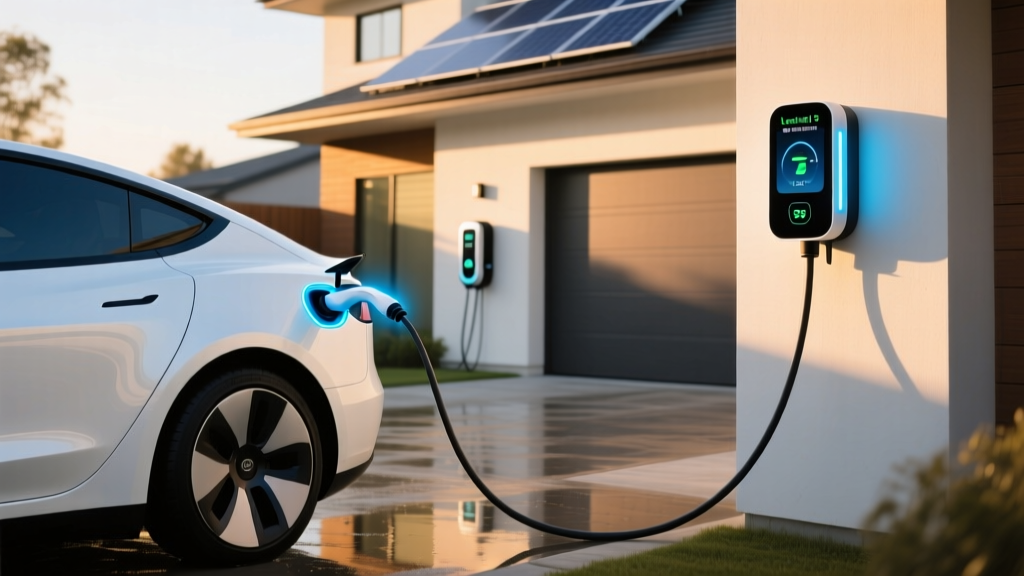
Relying solely on public DC fast chargers like those at Buc-ee's is expensive and unnecessary. The vast majority of EV charging — roughly 80–90% for most owners — happens at home on Level 2. Here's what a proper home installation involves and what it costs:
Electrical Requirements
A Level 2 home charger requires a dedicated 240V circuit, similar to what powers an electric dryer or oven. The most common configurations:
- 40-amp circuit / 32-amp continuous: Delivers up to 7.7 kW — adequate for most EVs and the minimum recommended for a battery-electric vehicle.
- 50-amp circuit / 40-amp continuous: Delivers up to 9.6 kW — the most popular setup, future-proofs for larger batteries.
- 60-amp circuit / 48-amp continuous: Delivers up to 11.5 kW — ideal for trucks like the F-150 Lightning (extended range) or for charging two vehicles with a splitter.
Installation Cost Breakdown
| Component | Low End | High End | Notes |
|---|---|---|---|
| Level 2 charger (hardware) | $350 | $750 | Smart Wi-Fi-enabled units (ChargePoint, Emporia, Wallbox) |
| Electrician labor (standard install) | $500 | $1,500 | Depends on run length from panel to garage/carport |
| Permit and inspection | $50 | $300 | Varies by municipality; some jurisdictions waive for EV installs |
| Electrical panel upgrade (if needed) | $1,500 | $4,000 | Required if your panel is at capacity or is an older 100-amp service |
| Total (no panel upgrade) | $900 | $2,550 | Most homes with 200-amp service fall in this range |
| Total (with panel upgrade) | $2,400 | $6,550 | Older homes (pre-2000) or those with 100-amp panels |
Panel upgrade reality check: If your home has a 100-amp electrical panel, adding a 40–60 amp dedicated circuit for EV charging will likely require upgrading to a 200-amp panel. This is a significant cost, but it also increases your home's resale value and enables future electrification (heat pumps, induction ranges). Always have a licensed electrician perform a load calculation before committing to a charger amperage.
Safety and Code Requirements
- Dedicated circuit: Your EV charger must have its own breaker — never share a circuit with other high-draw appliances.
- GFCI protection: The 2023 NEC (National Electrical Code) requires GFCI protection for outdoor EV charging receptacles. Hardwired chargers may have different requirements depending on local code interpretation — your electrician will advise.
- Outdoor rating: If your charger is installed outside (carport, driveway), the unit must carry a NEMA 4 or IP65 weather-resistance rating. All major brands (ChargePoint, Emporia, Wallbox, Grizzl-E) offer outdoor-rated models.
- EV-specific breaker: Some jurisdictions now require Type A or Type F GFCI breakers designed to handle the DC leakage current inherent in EV onboard chargers.
Recommended Home Chargers to Complement Public Stops
Your home Level 2 charger handles daily charging so you only need DC fast chargers (like those at Buc-ee's) for road trips. Here are proven units we recommend based on reliability, smart features, and value:
Emporia Vue Level 2 Charger
- Power: 48 amps (11.5 kW) on 60A circuit; adjustable down to 16A
- Connector: J1772 (NACS adapter available)
- Cable: 24 ft
- Smart features: Wi-Fi, app scheduling, energy monitoring via Emporia Vue panel integration
- Price: ~$399
- Best for: Budget-conscious buyers who want full smart features and adjustable amperage
ChargePoint Home Flex
- Power: Up to 50 amps (12 kW) on 60A circuit; configurable 16–50A
- Connector: J1772 (NACS version available)
- Cable: 23 ft
- Smart features: Wi-Fi, Alexa/Google Home, detailed app with charging history
- Price: ~$649
- Best for: Established brand reliability and robust app ecosystem
Wallbox Pulsar Plus
- Power: 48 amps (11.5 kW) on 60A circuit
- Connector: J1772 or NACS (choose at purchase)
- Cable: 25 ft
- Smart features: Wi-Fi + Bluetooth, Power Sharing for dual installs, compact form factor
- Price: ~$599
- Best for: Two-EV households (Power Sharing balances load across two units on one circuit)
Tesla Wall Connector
- Power: 48 amps (11.5 kW) on 60A circuit
- Connector: NACS native (J1772 adapter included)
- Cable: 24 ft
- Smart features: Wi-Fi, OTA updates, power sharing, integrates with Tesla app
- Price: ~$475
- Best for: Tesla owners — best price-to-performance ratio for NACS-native vehicles
Frequently Asked Questions About Buc-ee's EV Charging
How fast will each charging level add range to my EV?
Level 1 (120V household outlet) adds roughly 3–5 miles of range per hour — essentially a trickle, useful only for plug-in hybrids or emergency situations. Level 2 (240V home charger) adds 20–60 miles per hour depending on amperage and your vehicle's onboard charger capacity — enough to fully replenish overnight. DC fast charging (the type at Buc-ee's) adds 150–1,000+ miles per hour at peak, though the charge curve tapers significantly above 80% SoC. A typical 10–80% session at a 175 kW stall takes 24–30 minutes for a mid-size crossover.
How much does it cost to install a home EV charger?
Expect to spend $900–$2,550 for a complete Level 2 home installation (charger hardware, licensed electrician, and permit) if your electrical panel has sufficient capacity. If your home needs a panel upgrade from 100-amp to 200-amp service, add $1,500–$4,000, bringing the total to $2,400–$6,550. Always get a load calculation from a licensed electrician before purchasing equipment. The IRS also offers a Residential Clean Energy Credit that may offset some costs — consult a tax professional for eligibility.
Which connector and charger is compatible with my EV?
Check your vehicle's charge port. If you drive a Tesla, Ford F-150 Lightning (2025+), or any 2025–2026 model from GM, Rivian, Hyundai, or Kia, you likely have a NACS port. If you drive a 2022–2024 EV from Hyundai, Kia, Ford, VW, or BMW, you likely have a CCS1 port. CHAdeMO is limited to older Nissan Leafs and Mitsubishis. Most Buc-ee's DC fast chargers offer CCS1 connectors, with NACS becoming standard at newer installations. Use the PlugShare or network app to verify connector types at specific locations before your trip.
How much does charging cost per mile compared to gas?
At home on Level 2 (average $0.13/kWh), an efficient EV like the Tesla Model Y costs roughly $0.03–$0.04 per mile — about one-third the cost of a 30 MPG gas car at $3.10/gallon. At a Buc-ee's DC fast charger ($0.35–$0.55/kWh), the cost rises to $0.09–$0.15 per mile, which is comparable to or slightly cheaper than a 22–27 MPG gas vehicle. The economic advantage of EVs is maximized when you charge at home and use DC fast charging only for road trips.
What electrical upgrades might I need for home charging?
The most common upgrade is a panel capacity increase. Homes built before 2000 often have 100-amp panels that are already near capacity with existing appliances. Adding a 40–60 amp dedicated EV circuit may push total load beyond the panel's rating, requiring an upgrade to 200-amp service ($1,500–$4,000). Other potential upgrades include: running new conduit from the panel to the garage (if the run is long or through finished walls), replacing a Federal Pacific or Zinsco panel (known safety hazards that must be replaced regardless of EV charging), or installing a sub-panel if your garage is detached. A licensed electrician's load calculation — typically $100–$200 — will identify exactly what's needed.
Are Buc-ee's chargers reliable for long-distance travel?
Buc-ee's partners with established charging networks, and the travel-center model means staff are on-site 24/7 to report issues. However, reliability varies by network operator and site age. Before any road trip, check the specific Buc-ee's location on PlugShare or the network's app for real-time stall status, user reviews, and recent outage reports. As a best practice, always identify a backup charging location within 15–20 miles of your planned Buc-ee's stop.