BMW iX3 Reservations Open May 6 Featuring Increased Electric Range — Are You Ready to Charge It?
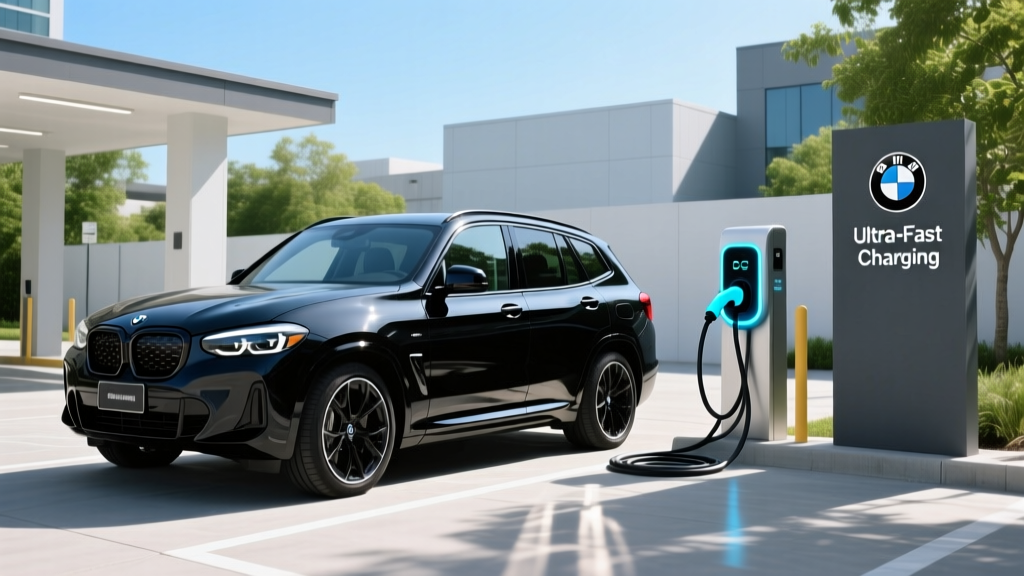
The next-generation BMW iX3 (built on the Neue Klasse platform) is generating significant buzz as BMW iX3 reservations open May 6 featuring increased electric range — an estimated EPA range exceeding 300 miles from a battery pack expected around 108 kWh (usable). But range is only half the ownership equation. If you're reserving this SUV, you need a charging plan that matches its capabilities. This guide covers everything from home Level 2 installation to DC fast-charging realities for the new iX3.
The 2026 iX3 is expected to support peak DC fast charging at approximately 200–220 kW via the NACS connector (BMW has committed to the North American Charging Standard for its US models starting with the Neue Klasse generation). A 10–80% charge should take roughly 25–30 minutes under ideal thermal conditions. At home, a properly configured Level 2 charger will be your daily workhorse.
Charging Levels Explained: kW, Speeds, and What Each Level Means for the iX3
Before we discuss equipment, let's clarify the single most important distinction in EV charging: kW (kilowatts) measures power — the rate of energy delivery. kWh (kilowatt-hours) measures energy — the total capacity of the battery. A 108 kWh battery charged at 11 kW takes far longer than one charged at 200 kW. Think of kW as the width of a hose and kWh as the size of the bucket you're filling.
| Level | Power (kW) | Voltage | Miles of Range Added per Hour | Best For |
|---|---|---|---|---|
| Level 1 | 1.4–1.9 kW | 120V AC | 3–5 miles | Overnight top-up, low-mileage days |
| Level 2 | 7.2–19.2 kW | 240V AC | 25–65 miles | Daily home charging |
| DC Fast | 50–350 kW | 400–800V DC | 150–600+ miles | Road trips, quick top-ups |
For the iX3's ~108 kWh battery, Level 1 charging is impractical as a primary method — fully replenishing from 10% would take over 60 hours. Level 2 at 11.5 kW (48A) adds roughly 40 miles per hour of charging, meaning an overnight session of 8 hours restores about 320 miles — effectively a full charge. DC fast charging at a peak of ~200 kW can add 150+ miles in roughly 15 minutes, though sustained rates taper significantly above 80% State of Charge.
Home Level 2 Installation: Electrical Requirements, Costs, and Panel Upgrades
The iX3 is expected to feature an onboard charger rated at approximately 11–22 kW (single-phase/three-phase). In US residential settings with split-phase 240V power, you'll realistically max out at 11.5 kW (48 amps on a 60-amp dedicated circuit) or 9.6 kW (40 amps on a 50-amp circuit).
Electrical Requirements
- Circuit: Dedicated 60-amp breaker (for 48A continuous charging) or 50-amp breaker (for 40A charging)
- Voltage: 240V split-phase (standard US dryer/range outlet voltage)
- Wire gauge: 6 AWG copper for 60A circuits; 8 AWG for 50A (run in conduit)
- Outlet option: NEMA 14-50 receptacle (if using a plug-in charger) or hardwired connection (often preferred for higher-amperage setups and required by code in some jurisdictions for circuits above 50A)
How Much Does It Cost to Install a Home EV Charger?
Installation costs vary dramatically based on your home's electrical panel capacity, the distance from panel to charging location, and local permit fees. Here's a realistic breakdown:
| Component | Simple Install (panel near garage) | Complex Install (long run, older home) |
|---|---|---|
| Level 2 charger equipment | $400–$700 | $500–$800 |
| Electrician labor | $400–$800 | $1,200–$2,500 |
| Electrical permit | $50–$150 | $100–$300 |
| Panel upgrade (if needed) | $0 (not required) | $1,500–$3,500 |
| Conduit/wiring materials | $100–$200 | $300–$600 |
| TOTAL ESTIMATE | $950–$1,850 | $3,600–$7,700 |
Panel upgrade reality check: Homes built before 2000 often have 100-amp or 150-amp main panels. Adding a 60-amp EV circuit to an already-loaded panel may require upgrading to a 200-amp service — this is the single biggest variable in installation cost. Have a licensed electrician perform a load calculation before you commit to equipment. The National Electrical Contractors Association can help you find qualified professionals in your area.
Connector Compatibility: NACS, CCS1, and the iX3's Charging Port
BMW has confirmed that its Neue Klasse vehicles sold in North America will use the NACS (North American Charging Standard) connector — the same physical plug used by Tesla's Supercharger network. This is a significant advantage for iX3 buyers, as it grants native access to the most reliable and expansive DC fast-charging network in the US without adapters.
| Connector | Networks / Brands | iX3 Compatibility |
|---|---|---|
| NACS (J3400) | Tesla Supercharger, Electrify America (newer stations), EVgo, many others by 2026 | Native — no adapter needed |
| CCS1 | Legacy Electrify America, ChargePoint DC stations, older public chargers | Requires NACS-to-CCS adapter (~$150–$250) |
| CHAdeMO | Nissan Leaf-era infrastructure (declining) | Not supported; no adapter available |
| J1772 (Level 2 AC) | Public Level 2 chargers, most home chargers pre-2025 | Requires J1772-to-NACS adapter (often included with vehicle) |
For home Level 2 charging, most new chargers sold in 2026 ship with a NACS connector natively. If you already own a J1772 charger from a previous EV, a simple adapter (typically $40–$80) will allow it to work with the iX3.
Recommended Level 2 Home Chargers for the BMW iX3
Given the iX3's expected 11 kW+ onboard charger capability, you want a Level 2 unit that can deliver at least 48 amps (11.5 kW) to take full advantage. Here are three proven options:
ChargePoint Home Flex (NACS)
- Power output: Up to 11.5 kW (48A) on a 60A circuit
- Connector: NACS native (2025+ models)
- Cable length: 23 feet
- Smart features: Wi-Fi, app scheduling, utility demand-response integration, Alexa
- Price: ~$550–$650
- Best for: Flexible amperage settings (dial down to 32A if your panel is limited)
Tesla Wall Connector (NACS)
- Power output: Up to 11.5 kW (48A) on a 60A circuit
- Connector: NACS native
- Cable length: 24 feet
- Smart features: Wi-Fi, over-the-air updates, power sharing between multiple units, load management
- Price: ~$420–$475
- Best for: Best value-to-performance ratio; works with all NACS vehicles
Emporia Level 2 Smart Charger
- Power output: Up to 11.5 kW (48A)
- Connector: NACS native (2025+ revision)
- Cable length: 24 feet
- Smart features: Solar integration, real-time energy monitoring, time-of-use scheduling, 2-year warranty
- Price: ~$400–$500
- Best for: Homes with solar panels or those wanting detailed energy tracking
All three units support hardwired installation (recommended for 48A+ operation) and carry UL certification. Always verify your chosen charger is Energy Star certified for potential utility rebates.
Cost to Charge the iX3: Home vs. Public vs. Gas Comparison
One of the most compelling arguments for the iX3 is the per-mile fuel cost. Let's run real numbers based on the expected ~108 kWh battery and approximately 3.0–3.3 miles per kWh efficiency (roughly 100–110 MPGe combined).
| Scenario | Rate / Price | Cost per Full Charge (~100 kWh usable) | Cost per Mile (300 mi range) |
|---|---|---|---|
| Home off-peak (utility TOU rate) | $0.08–$0.12/kWh | $8.00–$12.00 | $0.027–$0.040 |
| Home standard rate | $0.14–$0.18/kWh | $14.00–$18.00 | $0.047–$0.060 |
| Public Level 2 (workplace, shopping) | $0.20–$0.30/kWh | $20.00–$30.00 | $0.067–$0.100 |
| DC Fast Charging (road trips) | $0.35–$0.55/kWh | $35.00–$55.00 | $0.117–$0.183 |
| Gasoline SUV (25 MPG combined) | $3.50/gallon (2026 avg) | $42.00 (12 gal for 300 mi) | $0.140 |
The bottom line: Charging at home on off-peak rates saves roughly 70–80% per mile versus gasoline. Even DC fast charging on road trips is competitive with or cheaper than premium fuel. If you drive 12,000 miles annually and charge primarily at home, expect annual "fuel" costs of $350–$600 versus $1,680+ for a comparable gas SUV.
DC Fast Charging: 10–80% Times and the Charge Curve Reality
The iX3's expected 200–220 kW peak DC fast-charge rate is impressive on paper, but understanding the charge curve is critical for trip planning. No EV sustains its peak rate from 10% to 80%.
Here's what a typical DC fast-charging session looks like for a large-battery EV like the iX3:
- 10–30% SoC: Peak rate (~200 kW) — roughly 6–8 minutes, adding ~80–100 miles
- 30–60% SoC: Sustained high rate (~150–180 kW) — roughly 10–12 minutes
- 60–80% SoC: Taper begins (~100–130 kW) — roughly 8–10 minutes
- 80–100% SoC: Significant taper (~30–50 kW) — avoid unless necessary; adds 20+ minutes for the final 20%
Total 10–80% time: approximately 25–30 minutes at a 350 kW-capable station with battery preconditioning active. Without preconditioning (navigating to the charger in the iX3's nav system), cold-soak can add 5–10 minutes to this session.
For context, a BMW X5 xDrive40 getting 22 MPG combined would need roughly 4 minutes at a gas pump to add 300 miles. The iX3's 25–30 minute stop is the trade-off for $8 home fills versus $42 gas fills.
Safety, Code, and Installation Best Practices
EV charging involves sustained high-current draw for hours — this is fundamentally different from intermittent appliance use. Follow these non-negotiable safety requirements:
- Dedicated circuit: Your Level 2 charger must have its own dedicated breaker — never share a circuit with other loads
- GFCI protection: NEC 2023+ requires GFCI protection for all EV charging outlets; hardwired installations may have different requirements depending on jurisdiction
- Outdoor rating: If installing outside, the charger must carry a NEMA 4 (weatherproof) rating and the receptacle must be in an in-use weatherproof cover
- Permit and inspection: Most municipalities require an electrical permit for new 240V circuits — skip this and you risk voiding homeowner's insurance coverage for related incidents
- Load calculation: A licensed electrician must verify your panel has sufficient spare capacity using NEC Article 220 calculations before adding a 40–60A circuit
Never use extension cords, adapters from dryer outlets (unless using a certified smart splitter like the NeoCharge), or undersized wiring. The sustained thermal load of EV charging exposes poor connections that intermittent use might not.
Frequently Asked Questions
How much does it cost to install a home EV charger for the BMW iX3?
A straightforward installation with a nearby 200-amp panel typically costs $950–$1,850 (equipment, labor, and permit combined). Older homes requiring a panel upgrade or long conduit runs can see costs of $3,600–$7,700. Always get a site-specific quote from a licensed electrician.
How fast will each charging level add range to the iX3?
Level 1 (120V) adds 3–5 miles per hour — impractical for the iX3's large battery. Level 2 (240V, 48A) adds roughly 35–42 miles per hour, fully replenishing the battery overnight. DC fast charging at 200 kW adds approximately 150+ miles in 15 minutes during the peak portion of the charge curve.
Which connector and charger are compatible with the BMW iX3?
The 2026 iX3 uses the NACS connector natively, granting direct access to Tesla Superchargers and an expanding network of NACS-equipped public chargers. For older CCS1 stations, a NACS-to-CCS adapter (~$150–$250) will be needed. For home charging, any NACS-equipped Level 2 charger (Tesla Wall Connector, ChargePoint Home Flex NACS) will work directly.
How much does charging the iX3 cost per mile versus a gas SUV?
Home off-peak charging costs approximately $0.03–$0.04 per mile — roughly 75% less than a 25 MPG gasoline SUV at $3.50/gallon ($0.14/mile). Even DC fast charging at $0.48/kWh ($0.16/mile) is competitive with gasoline. Annual fuel savings for 12,000 miles driven: $1,000–$1,300.
What electrical upgrades might I need for a Level 2 charger?
Homes with 200-amp panels and spare breaker slots typically need no upgrades. Homes with 100–150 amp panels, or panels already near capacity (electric heat, pool, workshop), may require a service upgrade to 200 amps ($1,500–$3,500). Some utilities offer load-management devices that allow EV charging without a panel upgrade by temporarily reducing charger amperage when other loads are high.
Does the BMW iX3 qualify for the federal EV tax credit?
Tax credit eligibility under IRS §30D depends on the vehicle's MSRP (must be under $80,000 for SUVs), battery component and critical-mineral sourcing requirements, and buyer income limits ($150K single / $300K joint). The iX3's pricing and BMW's battery supply chain will determine eligibility — verify on the IRS qualified vehicles list before reserving. The credit can be transferred to the dealer at point of sale for an immediate price reduction.