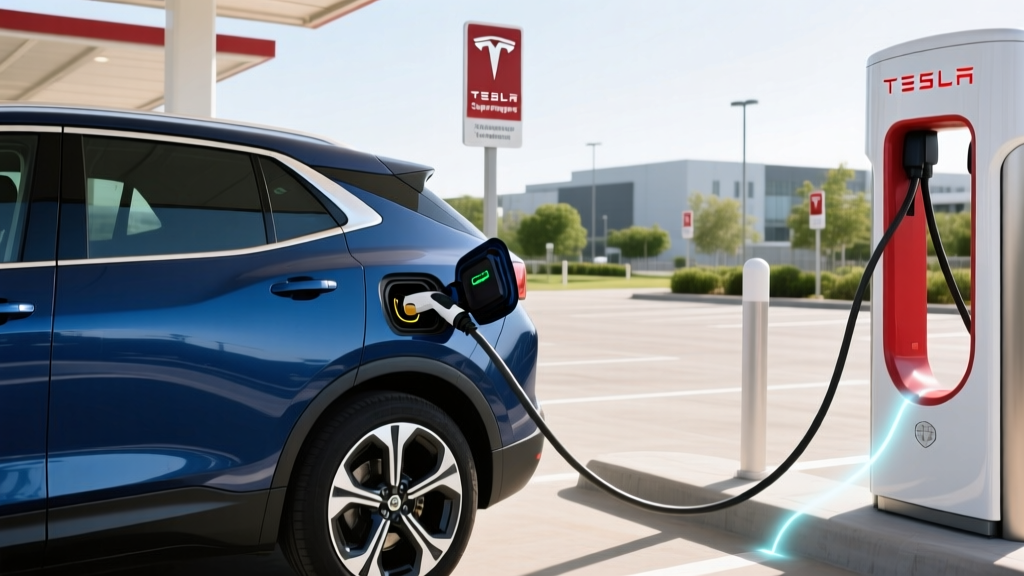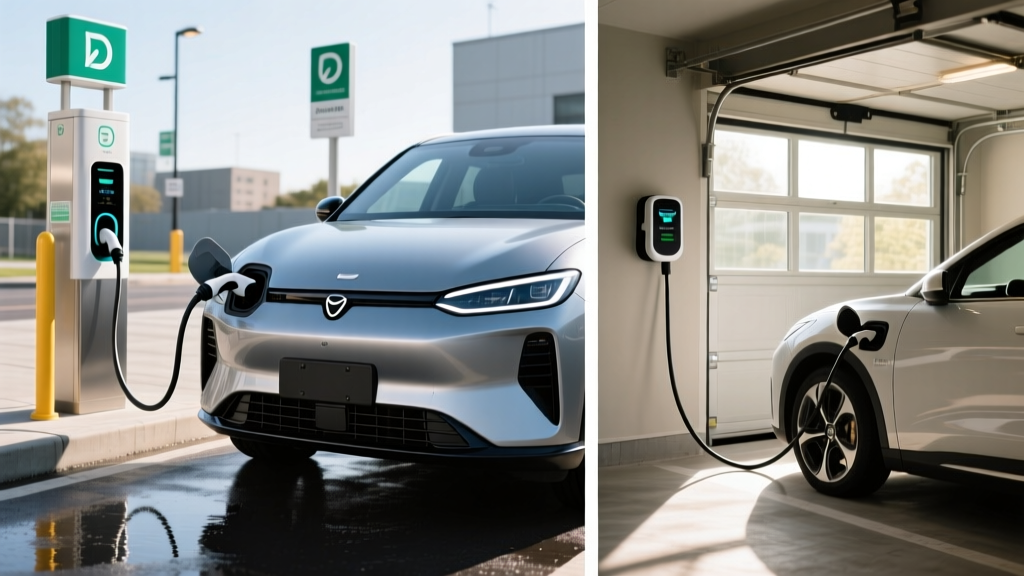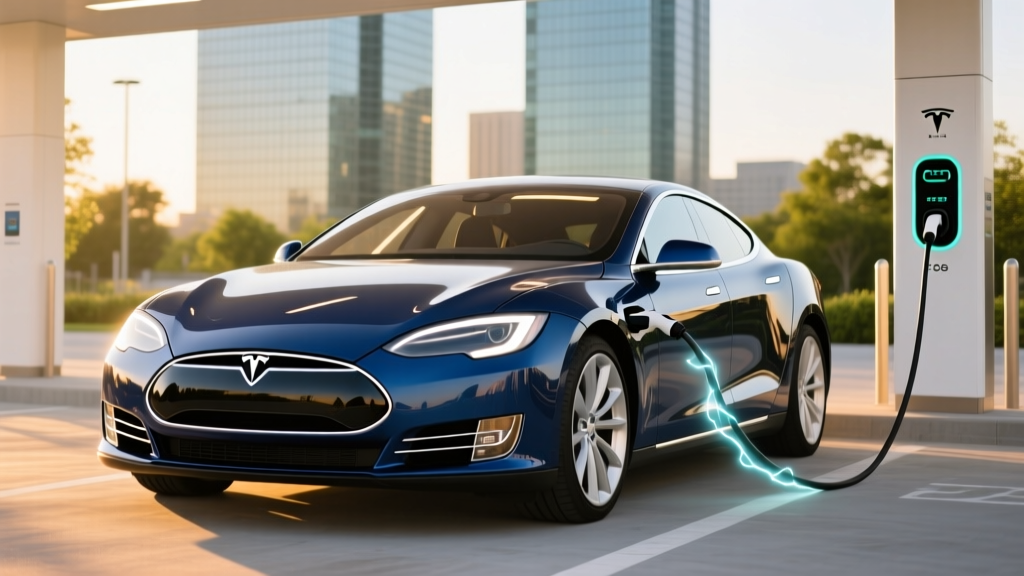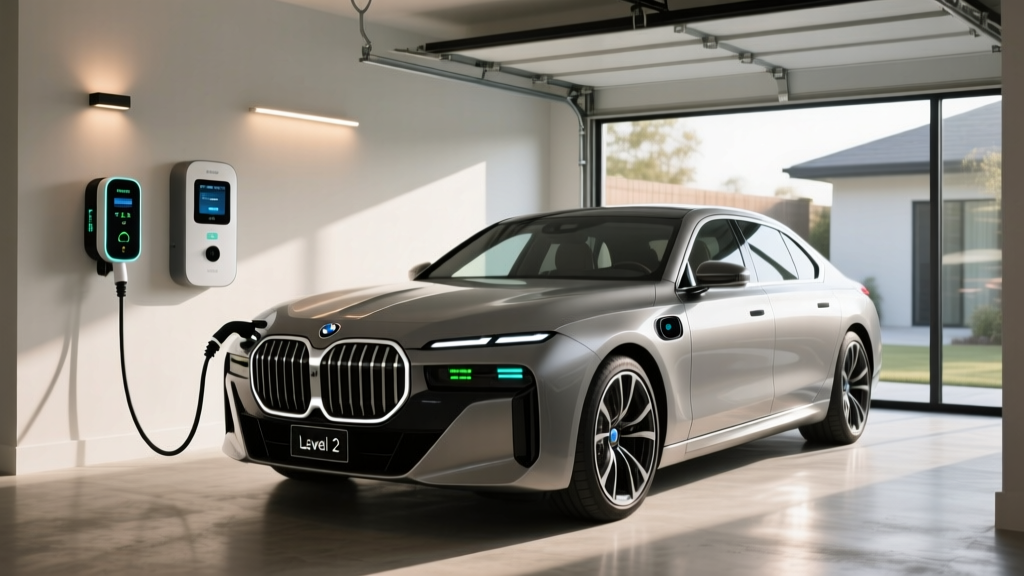
The BMW i7 xDrive60 is a flagship electric luxury sedan built for long-distance comfort, but its real-world usability hinges on one thing: how you charge it at home. With an EPA-estimated 318 miles of range from its 101.7 kWh (usable) battery pack, the i7 has the legs for cross-country travel — yet most owners will do 90% of their charging in their own garage. Getting that setup right is the difference between waking up to a full battery every morning and constantly hunting for public fast chargers.
This guide walks through the electrical requirements, equipment choices, connector standards, and true costs of charging the BMW i7 at home and on the road. We'll also cover the specific numbers that matter: kW charge rates, miles added per hour, and what your electrician will actually charge to make it happen.
Understanding the BMW i7's Battery and Range Baseline
Before selecting a charger, you need to know what you're filling. The 2025/2026 BMW i7 xDrive60 uses a 101.7 kWh usable lithium-ion (NMC chemistry) battery pack powering a dual-motor all-wheel-drive system producing 536 horsepower. The EPA rates it at 318 miles of combined range.
The i7's efficiency lands around 82 MPGe combined (roughly 41 kWh per 100 miles), which is reasonable for a 5,800-pound luxury sedan but means charging sessions move a lot of energy. That's why your home charger's power output matters far more here than it would for a smaller EV.
Charging Levels Explained: Speeds That Matter for the i7
EV charging breaks into three tiers. The critical distinction: kW (kilowatts) measures power — how fast energy flows into the battery. kWh (kilowatt-hours) measures energy — the total capacity of the battery. Think of kW as the width of a hose and kWh as the size of the tank you're filling.
| Level | Voltage / Amperage | Max Power (kW) | Miles of Range Added per Hour | Best Use Case |
|---|---|---|---|---|
| Level 1 | 120V / 12A | ~1.4 kW | ~3–4 miles/hr | Emergency / overnight trickle |
| Level 2 | 240V / 40–48A | 9.6–11.5 kW | ~25–30 miles/hr | Daily home charging (primary) |
| DC Fast Charge | 400V+ DC | Up to 195 kW peak | ~200+ miles in 10 min (peak) | Road trips / highway corridors |
For the i7's 101.7 kWh battery, Level 1 charging is impractical as a daily solution — it would take over 70 hours for a full charge. A properly installed Level 2 home charger at 11.5 kW refills the battery from empty in roughly 9–10 hours, meaning an overnight session easily restores a full day's driving.
On DC fast charging, the i7 peaks at 195 kW on a compatible CCS1 or NACS-equipped station. BMW states a 10–80% charge in approximately 34 minutes under ideal conditions (battery preconditioned, warm ambient temperature). Real-world sessions often stretch to 38–42 minutes because the charge curve tapers significantly above 60% state of charge to protect battery health. Don't expect to sustain 195 kW for the full session — average power across a 10–80% session is closer to 120–140 kW.
Home Charger Installation: Electrical Requirements and Costs
The i7's onboard charger accepts up to 11 kW on Level 2 (single-phase, 48 amps). To unlock that speed, you need a 240-volt circuit rated at 60 amps (EV chargers are considered continuous loads under NEC code, so the circuit must be rated 125% above the charger's max draw — a 48A charger requires a 60A breaker).
Here's where many homeowners hit a wall: older electrical panels may not have the spare capacity for a new 60A double-pole breaker. A 200-amp service panel with existing heavy loads (electric range, dryer, HVAC) may need an upgrade to 300 or 400 amps — or a load-management device that throttles the charger when other appliances cycle on.
| Component | Typical Range | Notes |
|---|---|---|
| Level 2 Charger (hardware) | $400–$750 | 40A–48A smart charger, NACS or CCS1 connector |
| Electrician labor (standard install) | $600–$1,500 | Run from panel to garage, ~20–40 ft conduit |
| Permit & inspection | $100–$300 | Required in most jurisdictions; varies by locality |
| Electrical panel upgrade (if needed) | $2,000–$5,000 | 200A → 300A/400A; not required in most newer homes |
| Total (standard install) | $1,100–$2,550 | Without panel upgrade |
| Total (with panel upgrade) | $3,100–$7,550 | If panel capacity is insufficient |
Federal incentive note: The IRS Residential Clean Energy Credit (IRC §25D) covers 30% of qualified EV charger equipment and installation costs, up to $1,000, for chargers placed in service through 2032. Check current-year eligibility with a tax professional, as rules around income limits and census-tract requirements have shifted in recent legislative updates.
Connector Compatibility: NACS, CCS1, and the i7
BMW has transitioned to the North American Charging Standard (NACS) connector for new vehicles starting with the 2025 model year. If you're buying a 2025 or 2026 BMW i7, it will come equipped with a NACS charge port natively, giving you direct access to Tesla Supercharger stations (now open to non-Tesla EVs) as well as NACS-equipped Electrify America, EVgo, and ChargePoint locations.
| Connector | Used By | Adapter Needed for i7 (2025+)? |
|---|---|---|
| NACS (Tesla-style) | Tesla, BMW (2025+), Ford, GM, Rivian, Hyundai, others | No — native on 2025+ i7 |
| CCS1 | Legacy non-Tesla EVs (2024 and earlier) | CCS1-to-NACS adapter (~$200) for older CCS stations |
| CHAdeMO | Nissan Leaf (legacy); essentially discontinued | Not recommended; no practical adapter |
| J1772 (Level 2 AC) | Universal for Level 2 public charging | J1772-to-NACS adapter (often included with vehicle) |
For home Level 2 charging, most wall connectors now ship with either a NACS plug or a J1772 plug. If your charger has a J1772 connector and your i7 has a NACS port, you'll need a J1772-to-NACS adapter — BMW typically includes one in the vehicle's charge kit. For the cleanest home setup, buy a wall connector with a native NACS plug to avoid adapter clutter.
Cost to Charge: Home vs. Public vs. Gasoline Equivalent
The i7 consumes approximately 41 kWh per 100 miles driven (EPA combined). That figure is your baseline for calculating cost per mile across different charging scenarios.
| Scenario | Rate | Cost per 100 Miles | Cost per Mile |
|---|---|---|---|
| Home (off-peak utility rate) | $0.12/kWh | $4.92 | $0.049 |
| Home (national avg. residential) | $0.17/kWh | $6.97 | $0.070 |
| Public Level 2 (network rate) | $0.30/kWh | $12.30 | $0.123 |
| DC Fast Charge (public) | $0.48/kWh | $19.68 | $0.197 |
| Comparable gasoline sedan (25 MPG) | $3.50/gal | $14.00 | $0.140 |
Home charging at off-peak rates delivers fuel costs roughly one-third to one-half of gasoline. Even public DC fast charging at premium rates stays competitive with gas on a per-mile basis. The i7 owner who installs a home Level 2 charger and uses time-of-use utility rates will spend roughly $600–$900 per year on electricity for 12,000 miles of driving — compared to $1,680 for a comparable gasoline luxury sedan.
Recommended Level 2 Chargers for the BMW i7
Given the i7's 11 kW onboard charger acceptance rate, you want a wall connector that delivers 48 amps (11.5 kW) on a 60A circuit to maximize charge speed. Here are three proven options for 2025/2026:
Tesla Wall Connector (NACS)
Power output: 11.5 kW (48A) on a 60A circuit
Connector: NACS (native — plugs directly into 2025+ i7)
Cable length: 24 feet
Smart features: Wi-Fi connectivity, firmware updates, power-sharing between two units, load management
Price: ~$450 (hardware only)
Verdict: Best value for NACS-equipped EVs. Simple, reliable, and the 24-foot cable reaches most garage configurations. No app required for basic use — plug and charge.
ChargePoint Home Flex (NACS version)
Power output: Up to 11.5 kW (48A) on a 60A circuit; adjustable down to 16A for smaller circuits
Connector: NACS (available in 2025+ models) or J1772
Cable length: 23 feet
Smart features: ChargePoint app with scheduling, energy tracking, Alexa integration, amperage dip-switch adjustment
Price: ~$550–$650
Verdict: Best for owners who want granular app control and adjustable amperage. The ability to dial down to 32A on a 40A circuit is useful if your panel can't spare 60A.
Emporia Vue Level 2 Charger
Power output: 11.5 kW (48A) on a 60A circuit
Connector: NACS or J1772 options
Cable length: 24 feet
Smart features: Deep energy monitoring (pairs with Emporia Vue home energy panel), solar integration, time-of-use scheduling, EV-only circuit tracking
Price: ~$500–$600
Verdict: Best for data-driven owners with solar panels or who want to track exact EV energy consumption separate from household load. The energy monitoring is unmatched at this price point.
Charging Times: What to Expect with the i7's 101.7 kWh Battery
Here's how long it takes to add meaningful range to the BMW i7 across common charging scenarios:
| Scenario | Charge Rate | Time to Add 200 Miles | 10–80% Time |
|---|---|---|---|
| Level 1 (120V outlet) | 1.4 kW | ~55–60 hours | ~50+ hours |
| Level 2 (40A / 9.6 kW) | 9.6 kW | ~8.5 hours | ~8 hours |
| Level 2 (48A / 11.5 kW) | 11.5 kW | ~7 hours | ~6.5 hours |
| DC Fast (195 kW peak) | ~130 kW avg (10–80%) | ~25 minutes | ~34 minutes |
Pro tip — battery preconditioning: When you set a DC fast charger as your navigation destination, the i7 automatically warms the battery to optimal temperature before arrival. Skipping preconditioning (or arriving at a charger with a cold-soaked battery in winter) can add 10–15 minutes to your 10–80% session because the battery limits charge rate until it reaches operating temperature.
Safety, Electrical Code, and Installation Best Practices
A Level 2 EV charger is a high-draw continuous appliance — it runs at full load for hours, which puts it in a different category than a dryer or oven that cycles on and off. The National Electrical Code (NEC) Article 625 governs EV charging installations, and your licensed electrician should follow these requirements:
- Dedicated circuit: The charger must have its own dedicated breaker — no sharing with other outlets or appliances.
- GFCI protection: Outdoor installations require a Ground Fault Circuit Interrupter breaker. Indoor garage installations may or may not require GFCI depending on local code interpretation (NEC 2023 expanded GFCI requirements).
- NEMA vs. hardwired: Hardwired installations (no plug) are preferred for 48A+ chargers because NEMA 14-50 receptacles are rated for intermittent use, not continuous multi-hour draws. If using a NEMA 14-50 plug, ensure it's a commercial-grade receptacle (Hubbell/Bryant) rated for continuous duty — cheap residential receptacles have caused melting incidents with EV chargers.
- Outdoor rating: If mounting outside, the charger must carry a NEMA 4 (weatherproof) rating. All recommended chargers above meet this standard.
- Permit and inspection: Most jurisdictions require an electrical permit for a new 240V circuit. The inspection verifies wire gauge, breaker sizing, grounding, and conduit are up to code. Skip the permit and you risk insurance denial if an electrical fire occurs.
Frequently Asked Questions
How much does it cost to install a home EV charger for the BMW i7?
A standard Level 2 installation (60A circuit, 20–40 ft run, no panel upgrade) costs $1,100–$2,550 including hardware, electrician labor, and permits. If your electrical panel needs upgrading from 200A to 300A or 400A, add $2,000–$5,000. Get at least three quotes from licensed electricians who have documented EV charger installation experience.
How fast will each charging level add range to the i7?
Level 1 (120V) adds roughly 3–4 miles per hour — essentially useless for the i7's large battery. Level 2 at 48A (11.5 kW) adds approximately 28–30 miles per hour, meaning a 10-hour overnight session restores nearly the full 318-mile EPA range. DC fast charging at 195 kW peak can add 150+ miles in about 15 minutes under ideal conditions.
Which connector and charger is compatible with my BMW i7?
The 2025+ BMW i7 uses a NACS charge port. For home charging, any NACS-equipped Level 2 wall connector (Tesla Wall Connector, ChargePoint Home Flex NACS, Emporia Vue NACS) plugs in directly. For older CCS1 public chargers, you'll need a CCS1-to-NACS adapter. For J1772 public Level 2 stations, a J1772-to-NACS adapter is required (typically included with the vehicle).
How much does charging the i7 cost per mile compared to gas?
At home with national average electricity rates ($0.17/kWh), the i7 costs about $0.07 per mile to fuel — roughly half the $0.14/mile cost of a comparable 25 MPG gasoline luxury sedan at $3.50/gallon. With off-peak utility rates ($0.12/kWh), home charging drops to under $0.05/mile. Public DC fast charging at $0.48/kWh runs about $0.20/mile, still competitive with premium gasoline.
What electrical upgrades might I need before installing a charger?
The most common upgrade is a panel capacity increase if your existing 200A service doesn't have room for a new 60A breaker. Alternatives include installing an automatic load-management device (which reduces charger power when other appliances are running) or simply installing a lower-amperage circuit (e.g., 40A/32A) that still provides adequate overnight charging. Your electrician will determine this with a NEC Article 220 load calculation.
Does the BMW i7 battery warranty cover degradation?
BMW provides an 8-year/100,000-mile high-voltage battery warranty that covers defects and capacity loss below 70% of original capacity. With NMC chemistry and the i7's active thermal management system, typical degradation is projected at 5–10% over the first 100,000 miles based on data from BMW's iX and i4 platforms using similar battery architecture.
Source references: EPA Fuel Economy — BMW i7 | IRS Residential Clean Energy Credit | BMW USA i7 Specifications