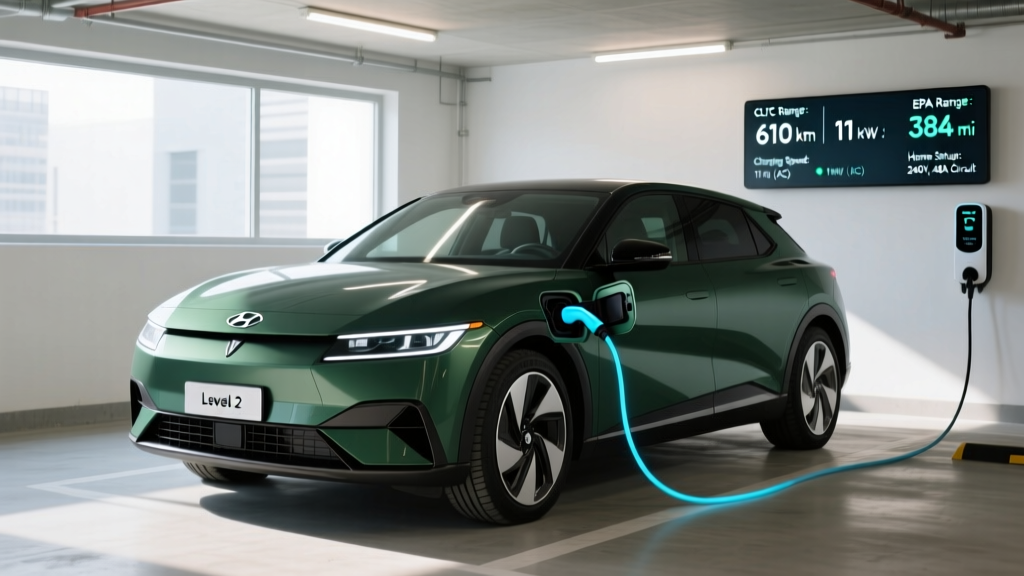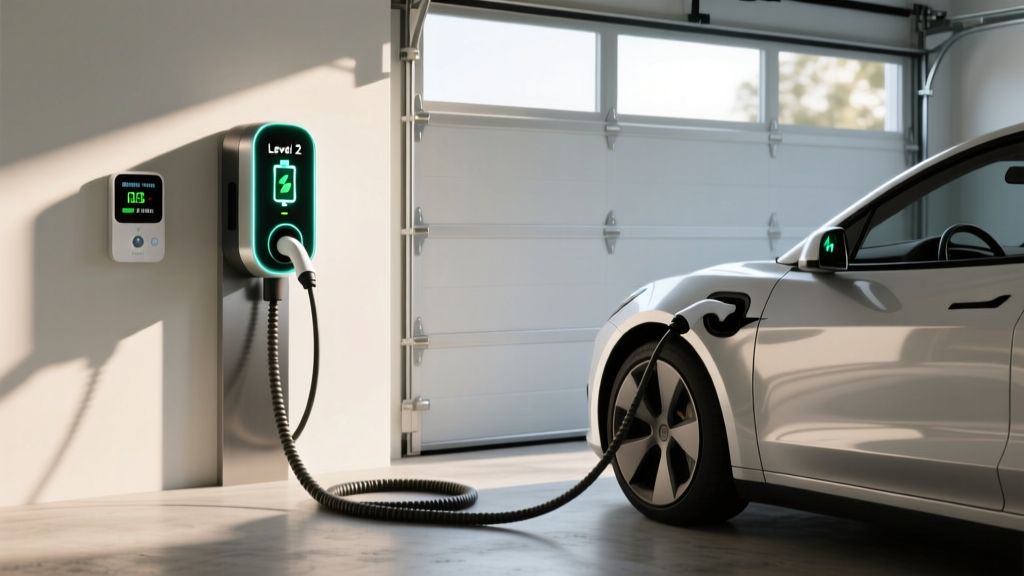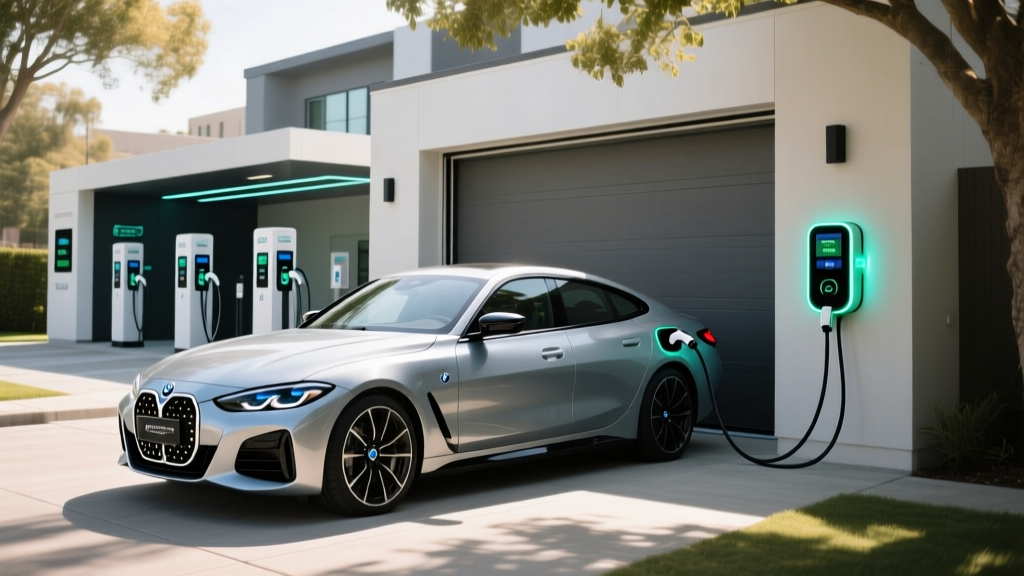
The 2026 BMW i4 lineup continues to refine the electric Gran Coupe formula, but one question dominates owner forums and search queries alike: how do you actually maximize the BMW i4 range increase potential of this platform in 2026? The answer isn't a software hack or an aftermarket battery — it's a comprehensive charging strategy that preserves battery State of Health (SoH), exploits preconditioning, and puts the right Level 2 hardware in your garage.
This guide breaks down exactly how to charge a BMW i4 (eDrive40, xDrive40, and M50 trims) for maximum real-world range and long-term battery health, with precise install costs, equipment picks, and per-mile economics.
2026 BMW i4 Battery, Range, and Charging Specs at a Glance
Before optimizing your charging setup, you need the exact numbers for your trim. The 2026 i4 carries over the fifth-generation eDrive architecture with an 83.9 kWh usable battery pack (NMC chemistry, 400V nominal) across all trims.
| Specification | eDrive40 | xDrive40 | M50 |
|---|---|---|---|
| Usable Battery | 83.9 kWh (NMC) | 83.9 kWh (NMC) | 83.9 kWh (NMC) |
| EPA Range | 301 mi | 282 mi | 269 mi |
| Real-World Highway (70 mph) | ~260–275 mi | ~245–260 mi | ~230–245 mi |
| Peak DC Fast Charge Rate | 205 kW | 205 kW | 205 kW |
| 10–80% DCFC Time | ~31 min | ~31 min | ~31 min |
| Level 2 AC Charge Rate | 11 kW | 11 kW | 11 kW |
| 0–80% Level 2 Time | ~6.5 hrs | ~6.5 hrs | ~6.5 hrs |
| Connector | CCS1 (NACS adapter avail.) | CCS1 (NACS adapter avail.) | CCS1 (NACS adapter avail.) |
| Base MSRP | $57,900 | $62,400 | $72,900 |
Charging Levels Explained: kW, Speeds, and Range Added per Hour
Understanding charging speed requires one critical distinction: kW (kilowatts) measures power — the rate of energy delivery — while kWh (kilowatt-hours) measures energy — the total capacity stored. Think of kW as water flow rate and kWh as the bucket size. This is the single most common confusion point for new EV owners.
| Level | Voltage | Max Power (kW) | Miles of Range Added/Hour | Typical Use Case |
|---|---|---|---|---|
| Level 1 (120V) | 120V AC | 1.4–1.9 kW | 3–5 mi/hr | Emergency / overnight trickle |
| Level 2 (240V) | 240V AC | 7.2–11.5 kW | 22–36 mi/hr | Home daily charging |
| DC Fast Charging | 400–800V DC | 50–350 kW | 150–400+ mi/hr (peak) | Road trips, rapid top-ups |
For the BMW i4's 11 kW onboard charger, a Level 2 station delivering 11.5 kW (48A on a 60A circuit) will add approximately 36 miles of range per hour — enough to fully replenish the 83.9 kWh pack from empty in roughly 7.5 hours. A standard 40A / 9.6 kW Level 2 circuit still delivers a practical ~30 mi/hr, which covers most daily needs.
Home Charger Installation: Electrical Requirements, Costs, and Panel Upgrades
A proper Level 2 home charging setup for the BMW i4 requires a dedicated 240V circuit. Here's what's involved electrically and financially.
Electrical Requirements
- Circuit: Dedicated 60A breaker (for a 48A continuous-load charger) or 50A breaker (for a 40A charger). The National Electrical Code requires circuits rated at 125% of the continuous load.
- Wiring: 6 AWG copper (for 60A) or 8 AWG copper (for 50A), run in conduit where required.
- Outlet vs. hardwired: A NEMA 14-50 outlet offers portability; hardwired units allow higher amperage and avoid GFCI nuisance trips common with some 50A receptacles.
- Panel capacity: Your main electrical panel must have sufficient spare amperage. A 200A panel with existing heavy loads (electric range, dryer, HVAC) may need a load calculation — or a full panel upgrade to 200A or 400A service.
Installation Cost Breakdown
| Component | Simple Install (Near Panel) | Complex Install (Long Run / Upgrade) |
|---|---|---|
| Level 2 Charger (Equipment) | $500–$700 | $500–$700 |
| Electrician Labor | $300–$600 | $800–$2,000 |
| Wiring & Conduit Materials | $50–$150 | $200–$600 |
| Permit & Inspection | $50–$150 | $100–$300 |
| Panel Upgrade (if needed) | N/A | $1,500–$4,000 |
| Total Estimated Cost | $900–$1,600 | $3,100–$7,600 |
Connector Compatibility: NACS, CCS1, and the Adapter Landscape
The 2026 BMW i4 ships with a CCS1 (Combined Charging System) inlet as standard. However, BMW now offers a factory-approved NACS adapter that unlocks access to Tesla's Supercharger network — the largest DC fast-charging network in North America with over 30,000 stalls.
| Connector | Native / Adapter | Networks Available | Notes |
|---|---|---|---|
| CCS1 | Native | Electrify America, EVgo, ChargePoint, Ionity | Standard on all i4 trims |
| NACS (Tesla) | BMW-approved adapter (~$200) | Tesla Supercharger (15,000+ US stalls) | Adapter required; does NOT reduce charge speed |
| CHAdeMO | Not supported | N/A | Effectively obsolete in North America |
| J1772 (Level 2) | Native (CCS1 includes J1772 upper coupler) | All public Level 2 stations | Works natively at all public AC chargers |
For home Level 2 charging, all BMW i4 models accept a standard J1772 connector — which is what virtually every home wall charger uses. No adapter is needed for home charging.
Equipment Recommendations: Top Level 2 Chargers for the BMW i4
Since the i4's onboard charger maxes out at 11 kW (single-phase), you need a Level 2 unit capable of at least 48A to exploit the full charge rate. Here are three proven options across budgets:
ChargePoint Home Flex
- Power Output: Up to 12 kW (50A) on a 60A circuit
- Connector: J1772 (25-ft cable)
- Smart Features: Wi-Fi, app scheduling, Alexa integration, energy tracking
- Price: ~$650
- Best for: Most i4 owners — covers the full 11 kW AC rate
Tesla Wall Connector (with J1772 adapter)
- Power Output: Up to 11.5 kW (48A) on a 60A circuit
- Connector: NACS native; J1772 adapter (~$50) needed for i4
- Smart Features: Wi-Fi, OTA updates, load sharing for 2+ units
- Price: ~$475 + adapter
- Best for: Mixed Tesla + BMW households
Emporia Vue Level 2 Charger
- Power Output: Up to 11.5 kW (48A) on a 60A circuit
- Connector: J1772 (24-ft cable)
- Smart Features: Real-time energy monitoring, solar integration, app control
- Price: ~$400
- Best for: Budget-conscious buyers wanting smart energy tracking
Cost to Charge: Home vs. Public vs. Gas — Per-Mile Economics
The financial case for home charging is where the BMW i4 ownership story gets compelling. Let's run the numbers against a comparable gas-powered BMW 4 Series Gran Coupe (430i, EPA 29 mpg combined).
| Scenario | Cost per kWh | Cost to Fill 83.9 kWh (10–100%) | Cost per Mile (301 mi range) |
|---|---|---|---|
| Home (off-peak utility rate) | $0.09/kWh | $7.55 | $0.025/mi |
| Home (national avg. $0.16/kWh) | $0.16/kWh | $13.42 | $0.045/mi |
| Public Level 2 (avg.) | $0.28/kWh | $23.49 | $0.078/mi |
| DC Fast Charging (avg. $0.40/kWh) | $0.40/kWh | $33.56 | $0.112/mi |
| BMW 430i Gas ($3.50/gal, 29 mpg) | — | $36.33 (14.5 gal tank) | $0.121/mi |
Even at public DC fast-charging rates, the i4 costs less per mile than the gas 430i. But home off-peak charging delivers fuel costs roughly one-fifth of gasoline — saving approximately $1,100–$1,400 per year for a driver covering 12,000 miles annually. The i4 achieves an EPA-rated 100 MPGe combined (eDrive40), per fueleconomy.gov.
Preserving Battery Health for Maximum Range Over Time
The "range increase" conversation for the 2026 BMW i4 is really about preserving the range you have. NMC batteries degrade based on three factors: charge cycles, temperature extremes, and sustained high SoC. Here's how to minimize degradation and keep your i4 closer to its EPA sticker for years:
- Daily charge limit: Set the i4's built-in charge limiter to 80–85% for daily driving. Use 100% only before long road trips. BMW's iDrive system allows programmable SoC targets.
- Preconditioning: Always precondition the battery before DC fast charging — the i4 does this automatically when a DCFC station is set as your navigation destination. A warm battery charges faster and with less stress on cells.
- Avoid frequent DCFC: DC fast charging generates more heat than Level 2. For daily needs, Level 2 home charging is gentler on NMC chemistry. Reserve DCFC for road trips.
- Cold-weather strategy: In sub-freezing climates, garage your i4 if possible and precondition while plugged in. This uses grid power to warm the battery rather than range-robbing pack energy.
- Storage: If leaving the i4 unused for 2+ weeks, store at ~50% SoC. Never store at 100% or below 10%.
BMW's high-voltage battery warranty covers 8 years or 100,000 miles against capacity loss below 70% of original — per BMW USA warranty terms. Real-world data from earlier i4 model years (2022–2024) suggests approximately 3–5% degradation over the first 50,000 miles with proper charging habits, which is within normal NMC expectations.
DC Fast Charging on the Road: What to Expect from the i4's 205 kW Peak
The i4's 205 kW peak DC fast-charge rate is competitive, but understanding the charge curve is critical for trip planning. Peak rate is not sustained rate:
- 10–40% SoC: Near-peak 190–205 kW — this is where the i4 charges fastest
- 40–60% SoC: Tapers to ~150–170 kW
- 60–80% SoC: Further taper to ~100–120 kW
- 80–100% SoC: Drops sharply to ~50 kW and below (this is why 10–80% is the standard benchmark)
On a road trip, plan to charge from ~10% to ~80% (about 31 minutes at a 200+ kW stall) and then drive on. Charging from 80–100% adds nearly as much time as the 10–80% session due to the taper — it's rarely worth the wait unless you need maximum range for a remote destination.
NACS Adapter and Tesla Supercharger Access
With BMW's NACS adapter, i4 owners can access V3 (250 kW) and V4 Supercharger stalls. The i4 will charge at its 205 kW ceiling on V3 stalls, making this a significant range-expansion upgrade for road-trip charging. Expect ~180 miles of range added in 15 minutes at a V3 stall.
Federal Tax Credit and Incentives for Home Charging Equipment
Under the current IRS §30D and §25E rules, there are two relevant credits for i4 owners:
- §30D New EV Credit: The 2026 BMW i4's eligibility for the up-to-$7,500 federal credit depends on battery critical-mineral sourcing, buyer income caps ($300K joint / $150K single AGI), and MSRP limits ($55,000 for sedans — the i4 exceeds this cap as a sedan priced above $55K). The point-of-sale transfer option allows dealers to apply the credit at purchase if eligible. Verify current-year eligibility at IRS.gov §30D.
- §25E Home Charger Credit: Up to $1,000 (30% of cost, capped) for qualified home EV charging equipment installed in eligible census tracts. This covers the charger hardware and installation. Check your census tract eligibility at the DOE's AFDC incentive database.
Frequently Asked Questions
How much does it cost to install a home EV charger for the BMW i4?
A straightforward Level 2 installation near your electrical panel typically costs $900–$1,600 (charger + electrician + permit). Complex installs requiring long wire runs or a panel upgrade can range from $3,100–$7,600. The single biggest variable is whether your existing electrical panel has spare capacity.
How fast will each charging level add range to my i4?
Level 1 (120V) adds roughly 3–5 miles per hour — only practical for overnight trickle or emergencies. Level 2 (240V, 48A) adds ~36 miles per hour, fully replenishing the i4's 83.9 kWh battery in about 7.5 hours. DC fast charging at 205 kW peak adds up to ~180 miles in 15 minutes at the low end of the charge curve.
Which connector and charger is compatible with my BMW i4?
The 2026 i4 uses a CCS1 connector natively, which includes J1772 for all public Level 2 stations. For Tesla Supercharger access, you'll need BMW's NACS adapter (~$200). For home charging, any J1772 Level 2 wall charger rated at 48A or higher on a 60A circuit will fully utilize the i4's 11 kW onboard charger.
How much does charging the i4 cost per mile compared to gas?
At home off-peak rates (~$0.09/kWh), the i4 costs roughly $0.025 per mile — about one-fifth the cost of a gas BMW 430i at $0.12/mile. Even at public DCFC rates (~$0.40/kWh), the i4 at $0.11/mile undercuts gasoline. Home charging is where the economics overwhelmingly favor electric.
What electrical upgrades might I need for a home charger?
You'll need a dedicated 60A, 240V circuit. If your panel is already near capacity (common in homes with electric heat, dryer, and range), you may need a panel upgrade to 200A or 400A service — adding $1,500–$4,000. An electrician will perform a load calculation to determine if your current panel can handle the additional circuit. Homes with existing 200A panels and gas appliances usually have sufficient headroom.
Can I increase the BMW i4's range beyond the EPA sticker?
You can't exceed the EPA rating through a charger upgrade, but you can preserve more of the factory range over time. Setting an 80% daily charge limit, preconditioning before DC fast charging, minimizing rapid-charge frequency, and maintaining tire pressure at the recommended PSI all contribute to slower degradation. Drivers who follow these practices report 3–5% degradation over 50,000 miles versus 6–8% for those who DCFC daily and charge to 100% routinely.