If you have shopped for an electric vehicle in the last two years, you have likely seen the term bidirectional charging tossed around in press releases and spec sheets. But what does it actually mean for your daily life, your home electrical system, and your wallet? Unlike standard one-way charging — where electricity flows from the grid into your battery — bidirectional charging allows energy to flow back out of your EV to power devices, your home, or even the electrical grid.
This guide cuts through the marketing language. We will cover the three flavors of bidirectional tech (V2L, V2H, V2G), which 2026 EVs actually support it, what electrical upgrades your home may need, and whether the investment makes sense today. We will also address the foundational charging knowledge you need — levels, speeds, connectors, and costs — so you can plan a complete home charging setup.
The Three Types of Bidirectional Charging
Not all bidirectional charging is the same. The capability depends on where the energy goes once it leaves your battery.
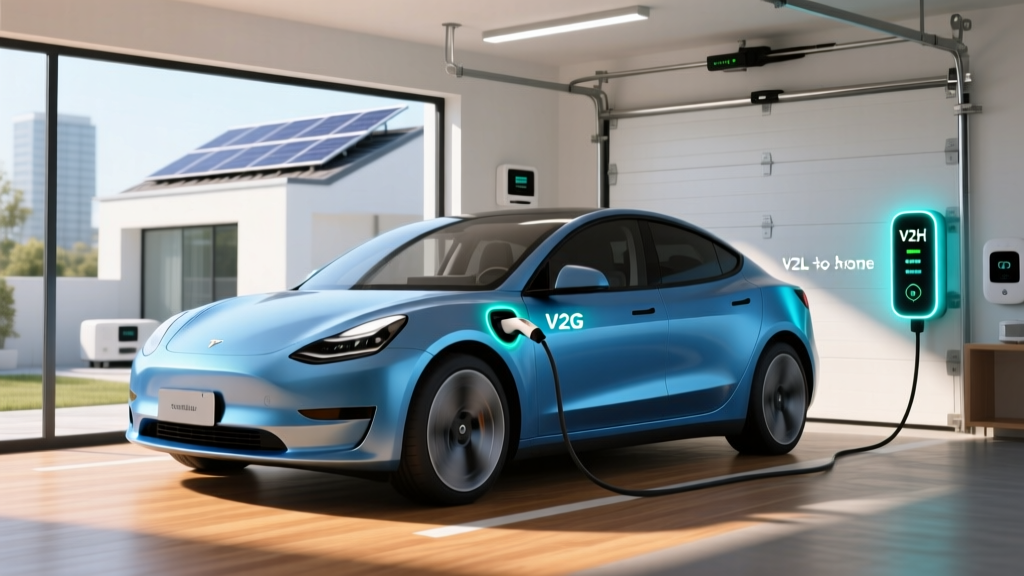
V2L (Vehicle-to-Load)
The simplest and most widely available form. Your EV provides standard AC outlets (typically 120V or 240V) to power tools, appliances, or camping gear directly. No special home equipment is required — just plug in. Most V2L systems deliver between 1.5 kW and 3.6 kW of continuous power, enough to run a microwave, power tools, or a small window AC unit.
V2H (Vehicle-to-Home)
Your EV connects to your home's electrical panel through a dedicated bidirectional charger and an automatic transfer switch, effectively turning your car into a backup generator. During an outage, a 77 kWh battery (like the one in the Ford F-150 Lightning) can power an average U.S. home (roughly 30 kWh/day) for about two to three days. V2H requires a compatible bidirectional wallbox, a transfer switch, and electrical panel integration.
V2G (Vehicle-to-Grid)
The most complex tier. Your EV sends energy back to the utility grid during peak-demand hours, potentially earning you credits or payments from your utility. V2G requires utility cooperation, a compatible bidirectional charger, specific rate plans, and grid interconnection agreements. As of 2026, V2G programs remain limited to select utility pilot programs — NREL tracks active pilots across the country.
Which 2026 EVs Support Bidirectional Charging?
Bidirectional capability is not universal. Many EVs support only V2L, while full V2H/V2G remains restricted to a smaller group. Here is where major models stand for the 2026 model year:
| Vehicle | Battery (kWh usable) | V2L | V2H | V2G | Connector |
|---|---|---|---|---|---|
| Ford F-150 Lightning | 98 (ext. range) | Yes (up to 9.6 kW w/ Pro Power Onboard) | Yes (w/ Charge Station Pro) | Pilot only | NACS |
| Hyundai Ioniq 5 | 77.4 | Yes (3.6 kW) | Yes (2025+ w/ Wallbox Quasar) | Limited pilots | NACS (2025+) |
| Kia EV6 | 77.4 | Yes (3.6 kW) | Limited | No | NACS (2025+) |
| Chevrolet Silverado EV | 200 (max) | Yes (up to 10.2 kW) | Yes (w/ Energy Transfer Pro) | Announced | NACS |
| Tesla Cybertruck | ~123 | Yes (Powershare, up to 11.5 kW) | Yes (w/ Tesla Wall Connector + Gateway) | No | NACS |
| VW ID.4 (2025+) | 77 | Yes (select trims) | Announced | No | NACS (2025+) |
Important caveat: Manufacturer announcements do not always equal immediate availability. Always confirm bidirectional features are active on the specific trim and model year you purchase, and that compatible home hardware is shipping — not just "coming soon."
Charging Levels: Speeds, Power, and Range Added
Before you size a bidirectional system, understand the standard charging levels that fill your battery in the first place. Power is measured in kW (kilowatts — the rate of flow), while battery capacity is measured in kWh (kilowatt-hours — the total energy stored). Think of kW as the width of a hose and kWh as the size of the bucket.
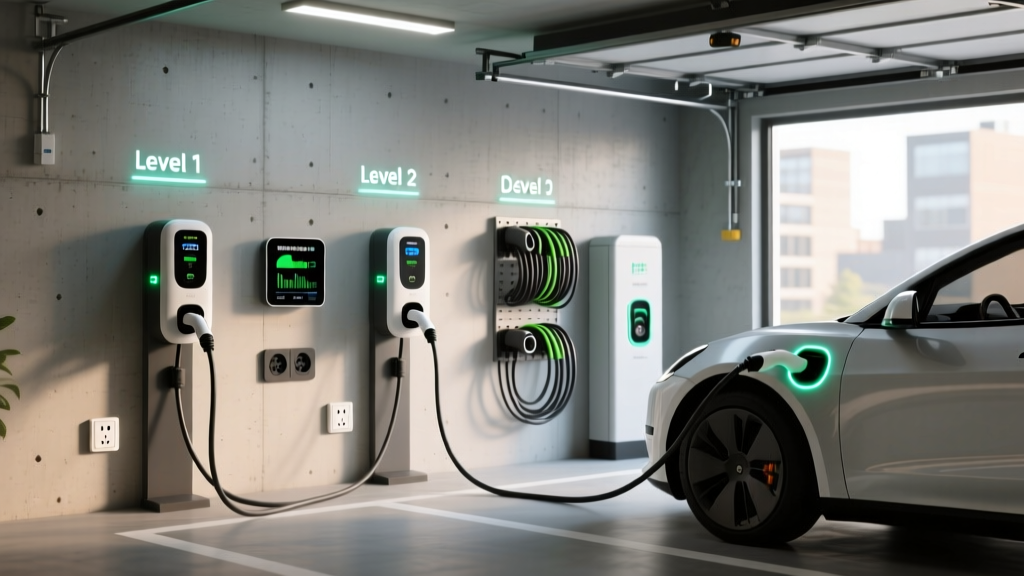
| Level | Voltage | Power (kW) | Miles of Range Added per Hour | Typical Use Case |
|---|---|---|---|---|
| Level 1 | 120V AC | 1.0–1.4 kW | 3–5 mi/hr | Overnight top-ups, PHEVs, low-mileage drivers |
| Level 2 | 240V AC | 3.3–19.2 kW | 12–75 mi/hr | Home daily charging, workplace, public AC stations |
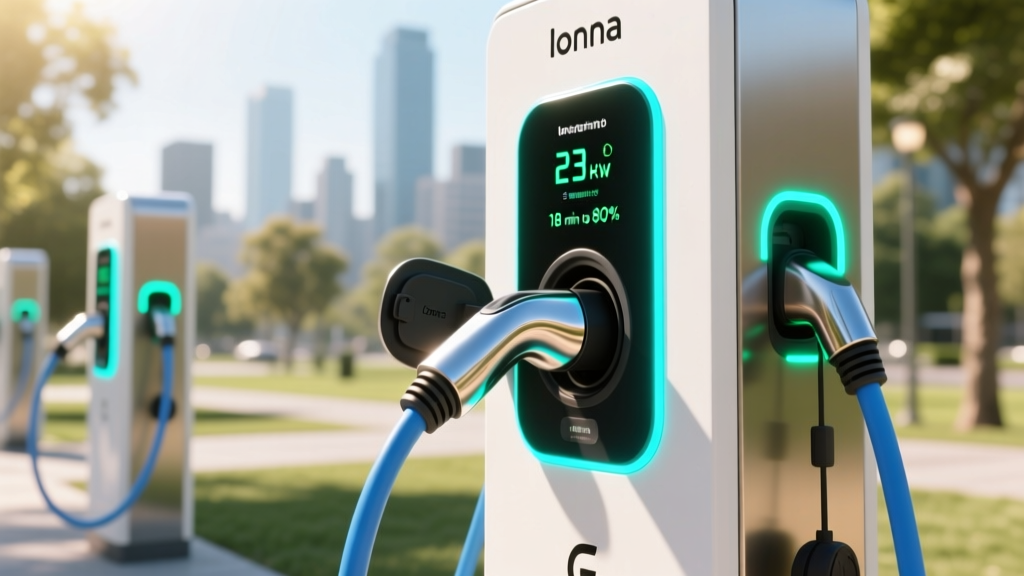
| DC Fast Charging | 400–800V DC | 50–350 kW | 150–1,200+ mi/hr (peak) | Road trips, highway corridors, 10-80% in 15–30 min |
Charging time examples (10–80% SoC):
- 77 kWh battery (Hyundai Ioniq 5) on a 350 kW DC charger: ~18 minutes (peak rate, tapering above 80%)
- 98 kWh battery (F-150 Lightning ext. range) on a 150 kW DC charger: ~41 minutes
- 85 kWh battery (Tesla Model Y Long Range) on a 250 kW Supercharger: ~25 minutes
- Any 75–100 kWh battery on a 48A Level 2 home charger (11.5 kW): 7–10 hours (overnight)
Home Installation: Electrical Requirements, Costs, and Panel Upgrades
Installing a Level 2 home charger — bidirectional or standard — requires a dedicated 240V circuit. Here is what you need to know about electrical requirements and the real costs involved.
Electrical Specifications
- Voltage: 240V (split-phase, same as an electric dryer or oven)
- Amperage: 40A circuit for a 32A continuous charger; 60A circuit for a 48A charger; 100A circuit for bidirectional units like the Ford Charge Station Pro (19.2 kW charge / 19.2 kW discharge)
- Wire gauge: Typically 6 AWG copper for 40A; 4 AWG for 60A; 2 AWG or larger for 100A circuits
- Code requirement: NEC Article 625 governs EV charging installations. A dedicated circuit with GFCI protection is required for outdoor installations. Your local jurisdiction may require a permit and inspection.
Do You Need a Panel Upgrade?
This is the cost that catches many homeowners off guard. Most homes built before 2000 have 100A or 150A main panels. Adding a 60A EV circuit to a panel already running central AC, an electric range, and a dryer may exceed your panel's capacity. A licensed electrician will perform a load calculation (NEC Article 220) to determine if your panel can handle the additional draw.
If you need a panel upgrade from 100A/150A to 200A, expect to add $2,000–$4,500 to your project. Some homeowners opt for a smart load-management device (like the Emporia V2 or Span Drive) that dynamically throttles charger amperage to avoid overloading the panel — this can avoid a panel upgrade entirely.
| Component | Cost Range | Notes |
|---|---|---|
| Level 2 charger (standard, 48A) | $400–$750 | ChargePoint Home Flex, Emporia Vue, Wallbox Pulsar Plus |
| Bidirectional charger (V2H capable) | $1,500–$3,500 | Wallbox Quasar 2, Ford Charge Station Pro, Tesla Universal Wall Connector |
| Electrician labor (standard install) | $500–$1,500 | Assumes panel is nearby; longer wire runs add cost |
| Electrical permit | $50–$250 | Varies by municipality |
| Transfer switch (V2H only) | $500–$1,500 | Required for home backup integration |
| Panel upgrade (if needed) | $2,000–$4,500 | 100A/150A to 200A service upgrade |
| Total (standard Level 2) | $950–$2,500 | Without panel upgrade |
| Total (bidirectional V2H) | $4,500–$10,000+ | With transfer switch, possible panel upgrade |
Connector Compatibility: NACS, CCS, and What You Need
The connector landscape shifted dramatically between 2023 and 2026. Tesla's North American Charging Standard (NACS) has been adopted by nearly every major automaker, effectively replacing CCS1 as the dominant connector for new vehicles.
| Connector | Type | Adopted By | Adapter Needed? |
|---|---|---|---|
| NACS (J3400) | AC + DC | Tesla, Ford, GM, Hyundai/Kia (2025+), Rivian, Volvo, BMW, most others | None for new EVs; CCS-to-NACS adapters available for older CCS vehicles |
| CCS1 | AC + DC | Legacy: pre-2025 VW ID.4, pre-2025 Hyundai/Kia, BMW i4 (pre-2025) | NACS-to-CCS adapter required at Tesla Superchargers |
| CHAdeMO | DC only | Nissan Leaf (discontinued 2025), Mitsubishi Outlander PHEV (older) | Limited public availability; no adapter to NACS |
For bidirectional charging specifically: Most V2H systems currently require CCS connectors or proprietary connections. The Ford Charge Station Pro uses a CCS connector for bidirectional flow (even though the truck charges via NACS for standard charging). The Wallbox Quasar 2 supports CCS bidirectional protocols. As NACS bidirectional standards mature through 2026 and 2027, expect broader native compatibility — but for now, confirm connector requirements with both your vehicle and charger manufacturer before purchasing.
Charging Cost Per Mile: Home vs. Public vs. Gas
The economic case for home charging is overwhelming — but public DC fast charging narrows the gap significantly. Here is how costs break down per mile driven.
| Scenario | Rate ($/kWh or $/gal) | Vehicle Efficiency | Cost Per Mile |
|---|---|---|---|
| Home Level 2 (off-peak TOU rate) | $0.09/kWh | 3.0 mi/kWh (typical midsize EV) | $0.030 |
| Home Level 2 (standard rate) | $0.16/kWh | 3.0 mi/kWh | $0.053 |
| Public Level 2 (ChargePoint, EVgo) | $0.25–$0.35/kWh | 3.0 mi/kWh | $0.083–$0.117 |
| DC Fast Charging (Electrify America) | $0.35–$0.55/kWh | 3.0 mi/kWh | $0.117–$0.183 |
| Tesla Supercharger (average) | $0.28–$0.38/kWh | 3.2 mi/kWh (Model Y) | $0.088–$0.119 |
| Gasoline (28 MPG combined) | $3.40/gal | 28 MPG | $0.121 |
| Gasoline (22 MPG combined, truck/SUV) | $3.40/gal | 22 MPG | $0.155 |
The takeaway: Home off-peak charging costs roughly 75% less per mile than gasoline. However, exclusive reliance on DC fast charging at $0.45+/kWh can push your per-mile cost above that of an efficient gas car. The economics of EV ownership depend heavily on reliable home or workplace charging access.
For bidirectional V2H use, the math changes: if your utility charges $0.30/kWh during peak hours and your time-of-use off-peak rate is $0.09/kWh, you can charge overnight and discharge during peak hours — saving $0.21/kWh on energy you would have bought from the grid at peak rates. For a home using 15 kWh during peak hours daily, that translates to roughly $3.15/day or ~$95/month in savings, depending on your rate structure.
Equipment Recommendations: Chargers for Every Setup
Here are specific charger recommendations for three common scenarios, with exact power outputs, connector types, and pricing.
Best Standard Level 2 Home Charger: ChargePoint Home Flex
- Power output: Up to 12 kW (50A) on a 60A circuit; configurable down to 16A
- Connector: NACS (J3400) native; CCS adapter included
- Cable length: 23 feet
- Smart features: Wi-Fi, scheduled charging, energy tracking, Alexa integration, load-sharing with second unit
- Price: $599 (MSRP)
- Best for: Daily home charging for any NACS or CCS vehicle
Best Bidirectional V2H Charger: Wallbox Quasar 2
- Power output: Up to 11.5 kW charge / 11.5 kW discharge
- Connector: CCS1 (CCS bidirectional protocol, ISO 15118-20)
- Cable length: 18 feet (tethered)
- Smart features: V2H/V2G ready, solar integration, myWallbox app, outage auto-switching (with transfer switch), energy arbitrage scheduling
- Price: $2,499 (charger only; transfer switch and installation additional)
- Best for: Home backup power and energy arbitrage with compatible CCS bidirectional vehicles (Ioniq 5, select others)
Best Budget Option: Emporia Level 2 EV Charger
- Power output: Up to 11.5 kW (48A) on a 60A circuit
- Connector: NACS (J3400)
- Cable length: 24 feet
- Smart features: Wi-Fi, Emporia energy monitoring integration, real-time cost tracking, solar-aware scheduling
- Price: $399 (MSRP)
- Best for: Cost-conscious buyers who want energy monitoring without a premium price
Best for Ford V2H: Ford Charge Station Pro
- Power output: 19.2 kW charge / 9.6 kW discharge (V2H via Intelligent Backup Power)
- Connector: CCS (for bidirectional); NACS adapter for standard charging
- Cable length: 25 feet
- Smart features: Seamless outage switchover via Home Integration System, FordPass app control, 80A circuit required
- Price: $1,895 (charger); Home Integration System transfer switch ~$1,200 additional
- Best for: F-150 Lightning owners wanting whole-home backup
Safety, Electrical Code, and Permit Requirements
EV charger installations are governed by NEC Article 625 (Electric Vehicle Charging System Equipment) and your local building codes. Here is what you must address:
- Dedicated circuit: Your EV charger must have its own dedicated breaker — no sharing with other appliances. A 48A charger requires a 60A breaker (NEC requires circuits to be rated at 125% of continuous load).
- GFCI protection: Required for all outdoor receptacles and increasingly required for indoor EV installations under 2023 NEC updates. Hardwired installations may exempt this in some jurisdictions — confirm with your inspector.
- Outdoor rating: If your charger is mounted outside or in an unconditioned garage, it must carry a NEMA 3R or NEMA 4 (watertight) rating. All chargers listed above meet NEMA 4 standards.
- Permit and inspection: Most jurisdictions require an electrical permit for new 240V circuits. The inspection verifies wire gauge, breaker sizing, grounding, and GFCI compliance. Budget $50–$250 for the permit and 1–3 weeks for scheduling.
- Utility notification: For bidirectional V2H systems, notify your utility before installation. Some utilities require interconnection agreements even for systems that do not export to the grid, because the transfer switch alters how your home connects to the service drop.
Is Bidirectional Charging Worth It in 2026?
The honest answer depends on your situation:
V2L is a no-brainer. It costs nothing extra if your EV supports it. You get portable power for camping, tailgating, job sites, and emergencies. Most 2026 EVs with V2L deliver 1.9–3.6 kW — enough for meaningful real-world use.
V2H makes sense if you experience frequent outages or have expensive peak-hour rates. A Ford F-150 Lightning with the Charge Station Pro and Home Integration System can replace a whole-home standby generator (which costs $8,000–$15,000 installed and requires natural gas or propane). If you already plan to buy the truck, the incremental V2H cost is roughly $3,000–$4,000 for the charger, transfer switch, and installation. If you are buying an EV primarily for home backup, weigh this against a dedicated battery system like the Tesla Powerwall ($12,000–$16,000 installed) which does not require you to keep your car plugged in.
V2G is not yet practical for most owners. Utility pilot programs are limited, compensation rates are modest, and the added battery cycling may concern owners worried about long-term degradation. Monitor your utility's programs — this space will evolve significantly through 2027–2028.
Choose V2H if: You experience 3+ outages per year, have time-of-use rates with expensive peak periods, or want to avoid buying a standalone generator.
Wait on V2G if: Your utility does not yet offer a formal V2G program with guaranteed compensation. The hardware is ready; the regulatory and economic frameworks are not.
Frequently Asked Questions
How much does it cost to install a home EV charger?
A standard Level 2 charger installation (48A, hardwired) typically costs $950–$2,500 including equipment ($400–$750), electrician labor ($500–$1,500), and a permit ($50–$250). A bidirectional V2H installation costs significantly more: $4,500–$10,000+ when you add the bidirectional charger ($1,500–$3,500), transfer switch ($500–$1,500), and potential panel upgrade ($2,000–$4,500). Always get a load calculation from a licensed electrician before committing.
How fast will each charging level add range?
Level 1 (120V) adds 3–5 miles per hour. Level 2 (240V) adds 12–75 miles per hour depending on amperage — a 48A/11.5 kW charger adds roughly 35–40 miles per hour for a midsize EV. DC fast charging at 150–350 kW can add 150–1,200+ miles per hour at peak rates, though real-world 10–80% sessions take 15–45 minutes depending on battery size and charge-curve taper.
Which connector is compatible with my EV?
For 2026 model-year vehicles, NACS (J3400) is the dominant standard. If you own a pre-2025 EV with CCS1, you will need a CCS-to-NACS adapter (typically $150–$250) to access the Tesla Supercharger network, which now serves non-Tesla vehicles. CHAdeMO is effectively discontinued for new vehicles. For bidirectional charging, check your vehicle's specific requirements — some V2H systems still use CCS connectors for the bidirectional protocol even on NACS-equipped vehicles.
How much does EV charging cost per mile compared to gas?
Home off-peak charging costs roughly $0.03/mile — about 75% less than gasoline at $3.40/gal in a 28 MPG vehicle ($0.12/mile). Standard-rate home charging runs ~$0.05/mile. Public DC fast charging at $0.40–$0.55/kWh costs $0.13–$0.18/mile, which can exceed the cost of an efficient gas car. The economic advantage of EV ownership depends on consistent access to affordable home or workplace charging.
What electrical upgrades might I need for a bidirectional charger?
Bidirectional V2H chargers draw and deliver high power — the Ford Charge Station Pro requires an 80A dedicated circuit, and the Wallbox Quasar 2 requires a 60A circuit. Homes with 100A or 150A main panels will likely need a service upgrade to 200A ($2,000–$4,500). You will also need an automatic transfer switch ($500–$1,500) to safely isolate your home from the grid during backup operation. A licensed electrician must perform a NEC Article 220 load calculation to determine your panel's available capacity.
Does bidirectional charging degrade my EV battery faster?
Every charge-discharge cycle contributes to battery wear, but the effect is modest with modern battery management systems. V2L use (powering a few appliances for a few hours) adds negligible wear. V2H use as backup during outages (a few times per year) has minimal impact. Daily V2G cycling for grid services will accelerate degradation more noticeably — but most V2G programs guarantee minimum battery state-of-health thresholds and offer compensation that offsets eventual replacement costs. Check your battery warranty terms: most manufacturers warranty 70% capacity retention for 8 years/100,000 miles regardless of bidirectional use.