Why Tires Matter More on a Tesla Model 3 Long Range Than Any Gas Car
Tires are the single most underappreciated efficiency variable on an electric vehicle. On a Tesla Model 3 Long Range — with its 75 kWh usable battery, instant torque (0-60 in ~4.2 seconds), and heavy curb weight (~4,034 lbs) — the rubber meeting the road directly determines how far you can drive, how quickly you can stop in the wet, and how much energy you reclaim during regenerative braking. Unlike a gas car where poor tire choice costs you a few MPG, on an EV it can cost you 20-30 miles of EPA-rated range and measurably increase your cost per mile.
The Model 3 Long Range's OEM tire (typically the Michelin Pilot Sport 4S or Hankook Ventus S1 evo3 EV in 235/40R19) is tuned for low rolling resistance and noise suppression. But owners replacing tires at 30,000-40,000 miles face a broader market with trade-offs between range, grip, longevity, and winter capability. This guide walks through the best tire options for the 2025-2026 Model 3 Long Range, quantifies the range and efficiency impact, and explains how tire choice interacts with your home charging setup and electricity costs.
How Tire Rolling Resistance Affects Your Real-World Range
Rolling resistance coefficient (RRC) measures how much energy is lost as a tire deforms under load. Lower RRC means less energy wasted as heat, translating directly to more miles per kWh. The EPA rates the 2025 Model 3 Long Range at 363 miles of range and 130 MPGe combined (approximately 26 kWh/100 miles). But real-world highway driving at 75 mph typically yields 270-310 miles depending on temperature, elevation, and — critically — tire choice.
EPA vs. Real-World Range with Different Tires:
- OEM low-rolling-resistance tire: EPA 363 mi | Real-world highway ~300-320 mi
- High-performance summer tire (higher RRC): Expect EPA-equivalent ~330-340 mi | Real-world ~270-290 mi
- All-season grand-touring tire: Expect EPA-equivalent ~345-355 mi | Real-world ~285-305 mi
- Winter/snow tire: Expect EPA-equivalent ~310-325 mi | Real-world ~250-270 mi
A 10% increase in rolling resistance typically costs 3-5% in range. On a 363-mile EPA vehicle, that's 11-18 miles lost — meaningful on a road trip where DC fast charging stops are planned around specific SoC targets.
Best Tires for Tesla Model 3 Long Range: Top Picks by Category
Below are the top-performing tires for the Model 3 Long Range across key owner priorities. All sizes are for the standard 19" Sport Wheel configuration (235/40R19); 18" Aero Wheel owners should look for 235/45R18 equivalents.
Best Overall: Michelin Pilot Sport All Season 4
The Pilot Sport All Season 4 balances low rolling resistance, excellent wet grip, and 45,000-mile treadwear warranty. Independent testing shows only a ~2-3% range penalty versus the OEM Pilot Sport 4S, while offering genuine year-round usability in light snow. Priced around $240-$270 per tire, it's the default recommendation for most Model 3 LR owners who don't want to swap to dedicated winter rubber.
Best for Maximum Range: Michelin Energy Saver A/S or Continental EcoContact 6 Q
If squeezing every mile out of your 75 kWh battery is the priority, the EcoContact 6 Q (the "Q" denotes EV-optimized quiet foam liner) offers class-leading rolling resistance. Expect near-OEM range figures with a slight trade-off in ultimate dry grip. Treadwear is rated at 60,000 miles. Price: ~$210-$240 per tire.
Best for Performance Driving: Michelin Pilot Sport 4S (OEM Replacement)
The OEM tire remains the benchmark for dry and wet grip, with a 30,000-mile warranty. If you prioritize cornering feel and braking performance over range, this is the tire. Expect ~3-5% range loss versus a dedicated eco-tire. Price: ~$280-$320 per tire.
Best Winter Tire: Nokian Hakkapeliitta R5 EV
Designed specifically for EVs with foam-lined noise suppression and a rubber compound that stays pliable below 40°F. Range penalty is significant (~12-15% versus OEM summer tires), but snow and ice traction are unmatched. Swap these on dedicated 18" steel wheels for winter, then back to summers for the rest of the year. Price: ~$250-$290 per tire.
Best Budget Option: Hankook Kinergy GT EV
Hankook's EV-specific grand-touring tire offers solid rolling resistance, a foam noise liner, and a 60,000-mile warranty at roughly $170-$200 per tire. Grip is a step below Michelin, but for daily commuting and highway driving, it's a strong value pick.
How Tire Choice Interacts With Your Charging Setup and Costs
Your tire's rolling resistance directly affects how many kWh you consume per mile, which in turn determines how much you spend on electricity — whether at home or at a public DC fast charger. Let's break down the math.
Understanding Charging Levels and Speeds
| Level | Voltage / Amperage | Power (kW) | Miles Added per Hour | Best Use Case |
|---|---|---|---|---|
| Level 1 | 120V / 12A | ~1.4 kW | ~3-5 mi/hr | Overnight trickle, emergency top-up |
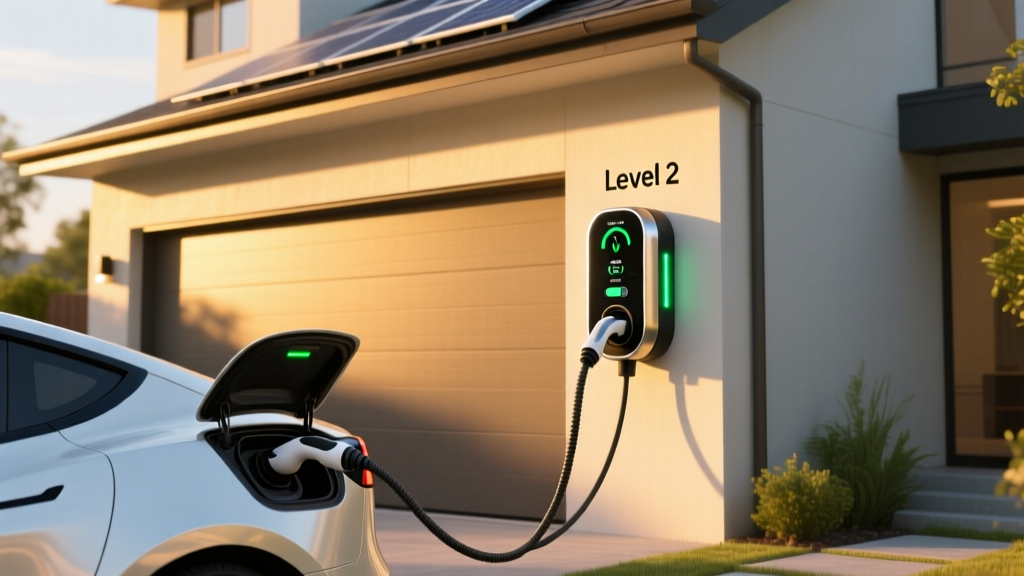
| Level 2 (Home) | 240V / 32-48A | 7.7-11.5 kW | ~25-44 mi/hr | Daily home charging, full overnight refill |
| DC Fast Charging | 400V+ / 200-500A | 50-250 kW | ~150-1,000+ mi/hr (peak) | Road trips, rapid top-ups |
Note: kW (kilowatts) measures power — the rate at which energy flows into your battery. kWh (kilowatt-hours) measures energy — the total capacity stored. Your Model 3 Long Range has a ~75 kWh usable battery; charging at 11.5 kW (Level 2) means a full charge takes roughly 6.5 hours.
Cost per Mile: Tire Efficiency Meets Electricity Price
| Scenario | Efficiency (kWh/100 mi) | Electricity Cost | Cost per Mile | Annual Cost (12,000 mi) |
|---|---|---|---|---|
| Home Level 2, off-peak ($0.13/kWh), eco tire | 25 | $0.13/kWh | $0.033 | $390 |
| Home Level 2, off-peak ($0.13/kWh), performance tire | 28 | $0.13/kWh | $0.036 | $437 |
| Public DC fast ($0.40/kWh), eco tire | 25 | $0.40/kWh | $0.10 | $1,200 |
| Public DC fast ($0.40/kWh), performance tire | 28 | $0.40/kWh | $0.112 | $1,344 |
| Gas car baseline (28 MPG, $3.50/gal) | — | $3.50/gal | $0.125 | $1,500 |
Switching from an eco tire to a high-performance tire at home charging rates costs roughly $47 more per year. If you rely heavily on DC fast charging, that gap widens to ~$144/year. Over a tire's 40,000-mile lifespan, that's $155-$480 in extra electricity — a meaningful fraction of the tire's purchase price.
Home Charger Installation: What Model 3 Owners Need to Know
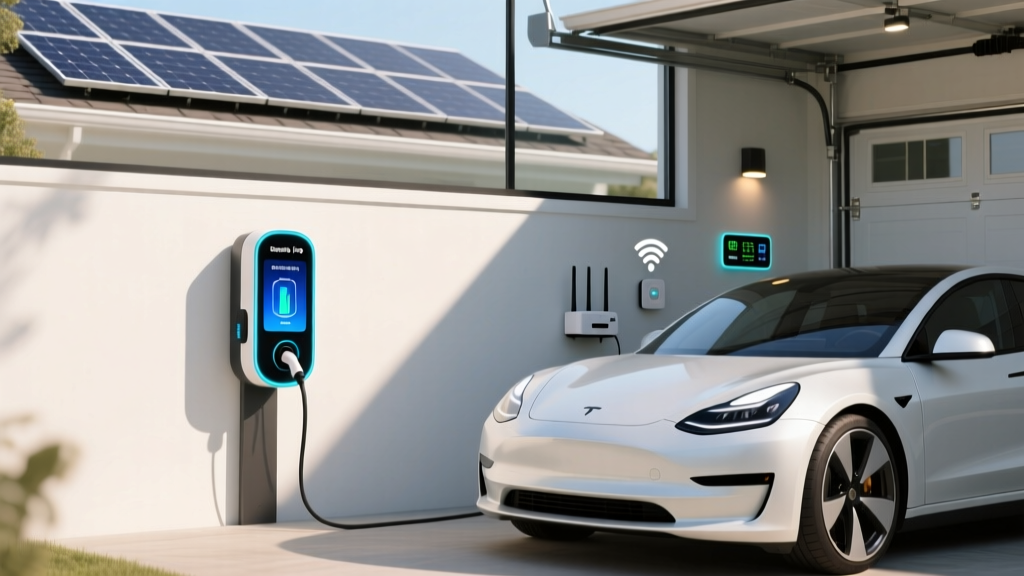
If you're replacing tires and re-evaluating your charging setup, here's a comprehensive look at what a Level 2 home installation involves.
Electrical Requirements
A Level 2 charger for a Model 3 Long Range requires a dedicated 240V circuit. The Tesla Wall Connector (Gen 3) supports up to 48 amps, which requires a 60-amp breaker (NEC code mandates circuits be rated at 125% of continuous load). Most homes with a 200-amp electrical panel can accommodate this without a panel upgrade, but older homes with 100-amp service may need an upgrade costing $1,500-$3,000.
Installation Cost Breakdown
| Component | Low Estimate | High Estimate | Notes |
|---|---|---|---|
| Level 2 Charger Equipment | $400 | $700 | Tesla Wall Connector, ChargePoint Home Flex, Emporia Vue |
| Electrician Labor (2-6 hrs) | $300 | $1,200 | Depends on run length from panel to garage |
| Permit & Inspection | $50 | $300 | Varies by municipality |
| Panel Upgrade (if needed) | $1,500 | $3,500 | 100A → 200A service upgrade |
| Total (no panel upgrade) | $750 | $2,200 | |
| Total (with panel upgrade) | $2,250 | $5,700 |
Always hire a licensed electrician familiar with EV charger installations. Per the National Electrical Code, your installation must include a dedicated circuit, proper grounding, and — in many jurisdictions — a GFCI breaker for outdoor installations. Some utilities offer rebates of $200-$500 for Level 2 charger installation; check with your local provider.
Charging Times for the Model 3 Long Range: 10-80% Estimates
The Model 3 Long Range supports up to 250 kW peak DC fast charging via its NACS (North American Charging Standard) port. However, peak rate is not sustained rate — the charging curve tapers significantly above 50% SoC to protect the NMC battery chemistry. Here are realistic 10-80% times:
- Tesla Supercharger V3 (250 kW): ~25-28 minutes (peak rate sustained to ~45% SoC, then tapering)
- Electrify America / EVgo 150 kW CCS (with adapter): ~32-38 minutes
- Level 2 at 11.5 kW (48A): ~4.5 hours (10-80%)
- Level 2 at 7.7 kW (32A): ~6.7 hours (10-80%)
- Level 1 at 1.4 kW: ~45+ hours (not practical for full charges)
Preconditioning the battery before a DC fast charge session (automatic when navigating to a Supercharger in the Tesla app) can shave 5-8 minutes off your 10-80% time by warming the battery to optimal charging temperature.
Connector Compatibility: NACS, CCS, and Adapters
Tesla vehicles use the NACS connector natively. With the broader industry adopting NACS (Ford, GM, Rivian, and others now include it), access to Tesla's Supercharger network is expanding. Here's what you need to know:
| Connector | Native on Model 3? | Adapter Needed? | Network Access |
|---|---|---|---|
| NACS (Tesla) | Yes | No | Tesla Superchargers (17,000+ stalls in North America) |
| CCS1 | No | Yes (Tesla CCS adapter, ~$250) | Electrify America, EVgo, ChargePoint DC |
| CHAdeMO | No | Yes (rare, ~$400+) | Limited; mostly legacy Nissan Leaf infrastructure |
| J1772 (Level 2) | No | Yes (included with Tesla Mobile Connector) | Public Level 2 stations, hotels, workplaces |
For most Model 3 owners, the native NACS port and Tesla Supercharger network are sufficient. The CCS adapter is worth purchasing if you frequently travel in areas where Supercharger coverage is sparse but Electrify America or EVgo stations are available. According to fueleconomy.gov, DC fast charging infrastructure continues to expand rapidly, with over 50,000 public DC fast ports in the U.S. as of 2026.
Equipment Recommendations: Best Home Chargers for Model 3 Long Range
Tesla Wall Connector (Gen 3)
- Power Output: Up to 11.5 kW (48A)
- Connector: NACS (native Tesla)
- Cable Length: 24 ft
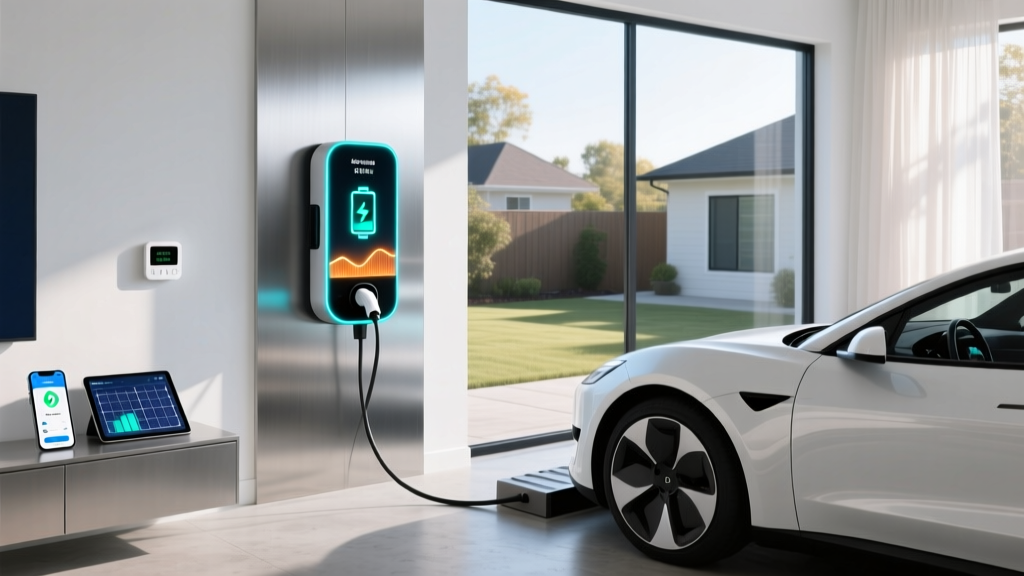
- Smart Features: Wi-Fi, OTA updates, load sharing (up to 6 units on one circuit), Tesla app integration
- Price: ~$475
- Verdict: Best for Tesla-only households. Seamless integration, fastest Level 2 speeds.
ChargePoint Home Flex
- Power Output: Up to 12 kW (50A, configurable down to 16A)
- Connector: J1772 (NACS adapter included for newer models)
- Cable Length: 23 ft
- Smart Features: Wi-Fi, ChargePoint app, scheduling, Alexa integration, flexible amperage
- Price: ~$550-$650
- Verdict: Best for multi-EV households (Tesla + non-Tesla). Flexible amperage works with older panels.
Emporia Level 2 EV Charger
- Power Output: Up to 11.5 kW (48A)
- Connector: J1772 (NACS adapter available)
- Cable Length: 24 ft
- Smart Features: Wi-Fi, energy monitoring via Emporia Vue panel integration, solar-aware charging, scheduling
- Price: ~$400-$500
- Verdict: Best for solar homeowners. Real-time energy tracking pairs charger with home solar production.
Safety, Code, and Maintenance Considerations
EV charger installations must comply with NEC Article 625 and local building codes. Key requirements include:
- Dedicated Circuit: Your Level 2 charger must be on its own breaker — no shared circuits with other appliances.
- GFCI Protection: Required for outdoor installations in most jurisdictions; some indoor installations also require it.
- Outdoor Rating: If mounting outside, ensure the charger has a NEMA 4 or IP65 rating for weather resistance.
- Cable Management: Use a holster or retractable reel to prevent trip hazards and cable damage.
On the tire side, maintaining proper inflation (42 psi cold for the Model 3 LR — check your door jamb sticker) is critical. Under-inflation by just 5 psi can increase rolling resistance by 5-10%, costing you range and accelerating tread wear. Check pressures monthly and before long road trips. Rotate tires every 6,000-8,000 miles; EVs tend to wear front tires faster due to regenerative braking and weight distribution.
Federal Tax Credit and Charging Installation Incentives
As of 2026, the federal IRS §30D tax credit provides up to $7,500 for qualifying new EVs and up to $4,000 for qualifying used EVs, subject to MSRP caps ($55,000 for sedans), buyer income limits ($150,000 single / $300,000 joint), and battery sourcing requirements. The Model 3 Long Range's eligibility varies by model year and battery sourcing — always verify current status on the IRS clean vehicle credit page before purchasing.
For home charging equipment, the Alternative Fuel Vehicle Refueling Property Credit (IRS §30C) was extended and can cover up to 30% of charger equipment and installation costs (capped at $1,000 for residential). This credit is subject to census-tract eligibility requirements. Additionally, many state utilities offer rebates — check the AFDC database for local incentives.
Frequently Asked Questions
How much does it cost to install a home EV charger?
A Level 2 home charger installation typically costs $750-$2,200 if your electrical panel has capacity, or $2,250-$5,700 if a panel upgrade is needed. This includes the charger ($400-$700), electrician labor ($300-$1,200), and permits ($50-$300).
How fast will each charging level add range?
Level 1 (120V) adds ~3-5 miles per hour. Level 2 (240V, 48A) adds ~38-44 miles per hour on a Model 3 Long Range. DC fast charging at a Tesla Supercharger V3 (250 kW) can add ~200 miles in 15 minutes at peak rate, though the curve tapers above 50% SoC.
Which connector/charger is compatible with my Tesla Model 3?
The Model 3 uses the NACS connector natively, which is compatible with Tesla Superchargers without an adapter. For CCS-based public DC chargers (Electrify America, EVgo), you'll need Tesla's CCS adapter (~$250). For Level 2 public stations with J1772 connectors, the Tesla Mobile Connector includes a J1772 adapter.
How much does charging cost per mile vs gas?
At home off-peak rates (~$0.13/kWh), a Model 3 Long Range costs $0.03-$0.04 per mile. At DC fast charger rates (~$0.40/kWh), it's ~$0.10-$0.11 per mile. A comparable gas car at 28 MPG and $3.50/gallon costs ~$0.125 per mile. Home charging is roughly 3-4x cheaper per mile than gasoline.
What electrical upgrades might I need?
If your home has a 200-amp electrical panel with available breaker slots, you likely need no upgrade. Homes with 100-amp service, older wiring, or fully loaded panels may need a panel upgrade ($1,500-$3,500). A licensed electrician can perform a load calculation to determine your panel's capacity.
Do low-rolling-resistance tires compromise safety or grip?
Modern eco-tires like the Continental EcoContact 6 Q and Michelin Energy Saver have closed the grip gap significantly. In independent braking tests, the difference between an eco-tire and a performance tire in wet braking (60-0 mph) is typically 3-6 feet — noticeable but not dramatic. For most daily driving, eco-tires are safe and effective. If you drive aggressively or live in an area with heavy rain, a grand-touring all-season like the Pilot Sport All Season 4 offers a better grip/efficiency balance.
How do tires affect regenerative braking performance?
Regenerative braking relies on tire grip to transfer deceleration force to the road. A tire with poor wet traction will trigger the Model 3's traction control to reduce regen strength, resulting in a less effective one-pedal driving experience. This is especially noticeable on winter tires in warm conditions or on worn tires in rain. Keep tires properly inflated and replace them when tread depth reaches 4/32" for optimal regen performance.