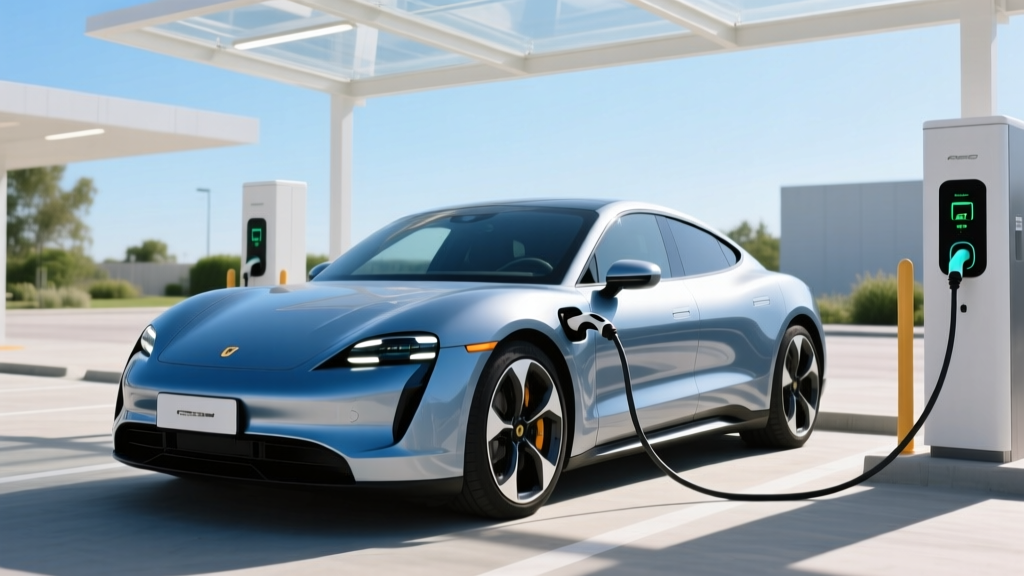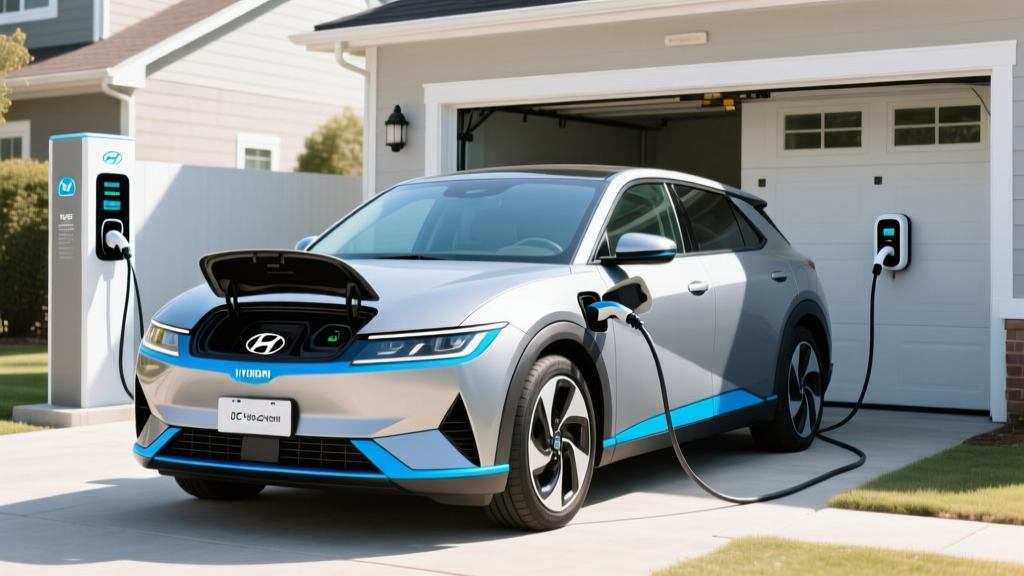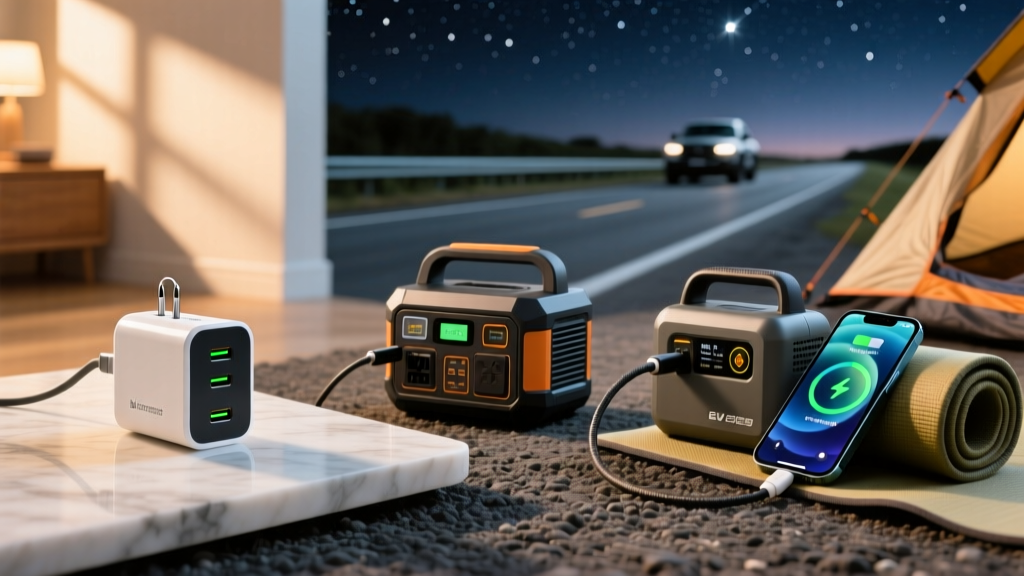
If you own an electric vehicle, a portable EV charger is the single most practical piece of hardware you can buy beyond the car itself. Unlike a hardwired wall unit, a portable charger moves with you — plugging into a standard 120V household outlet at home, a 240V dryer receptacle at a rental cabin, or a NEMA 14-50 at an RV park. The best units in 2026 bridge the gap between trickle-charging and full-speed Level 2, and several now ship with swappable plugs or NACS-native connectors to match the industry's shift away from CCS1.
This guide breaks down exactly what portable EV chargers can (and cannot) do, how fast they'll add range to your specific battery size, which connector you need, and what electrical work your home might require. We'll also cover the critical distinction between kW (power — how fast energy flows) and kWh (energy — how much your battery holds). Confusing the two is the most common mistake new EV owners make.
Charging Levels Explained: What Portable Units Actually Deliver
Every EV charger falls into one of three categories. Portable chargers span Level 1 and Level 2 — they cannot deliver DC fast charging, which requires heavy, permanently installed commercial equipment.
| Level | Voltage | Power (kW) | Miles of Range Added per Hour | Typical Use |
|---|---|---|---|---|
| Level 1 | 120V AC | 1.0 – 1.4 kW | 3 – 5 miles | Overnight top-ups, emergency, no electrical work |
| Level 2 | 240V AC | 3.3 – 19.2 kW | 12 – 70+ miles | Daily home charging, portable 240V units, public AC |
| DC Fast | 400–800V DC | 50 – 350+ kW | 150 – 1,000+ miles (equivalent) | Road trips, public stations only — not portable |
Most portable EV chargers sold today are dual-voltage: they ship with a 120V (NEMA 5-15) plug for standard outlets and include or offer a 240V (NEMA 14-50) adapter for significantly faster charging. On 120V, expect roughly 1.2 kW of continuous power — enough to replenish about 40 miles of range overnight on an efficient sedan like the Hyundai Ioniq 6 (which achieves roughly 4.0 mi/kWh per fueleconomy.gov). On 240V at 32 amps, that same charger delivers 7.7 kW and adds roughly 28 miles per hour.
Charging Time Estimates for Common EV Battery Sizes
Here's how long popular portable EV chargers take to charge common battery sizes from 10% to 80% state of charge (SoC). We use 10–80% because charging slows dramatically above 80% to protect battery health — a phenomenon called charge curve taper.
| Battery Size (usable kWh) | Example Vehicles | Level 1 (1.2 kW) | Portable L2 (7.7 kW / 32A) | Portable L2 (9.6 kW / 40A) |
|---|---|---|---|---|
| 58 kWh | VW ID.4, base Ioniq 5 | ~34 hours | ~5.3 hours | ~4.2 hours |
| 75 kWh | Tesla Model Y LR, Ford Mach-E ER | ~44 hours | ~6.8 hours | ~5.5 hours |
| 82 kWh | BMW iX, Rivian R1S | ~48 hours | ~7.5 hours | ~6.0 hours |
| 100 kWh | Tesla Model S, Lucid Air | ~58 hours | ~9.1 hours | ~7.3 hours |
Level 1 is strictly for overnight top-ups or emergencies — you will not recharge a depleted large battery in a single night. A 7.7 kW portable Level 2 unit is the sweet spot for most owners: it fully replenishes a 75 kWh battery overnight and requires only a NEMA 14-50 outlet (the same as an electric dryer), which many homes already have or can add relatively affordably.
Connector Compatibility: NACS, CCS1, and Adapter Reality in 2026
The North American Charging Standard (NACS), originally developed by Tesla, has become the dominant connector for new EVs sold in the US starting with 2025 model-year vehicles. If you're buying a portable charger in 2026, connector choice matters enormously.
| Connector | Native on Vehicles | Adapter Needed For |
|---|---|---|
| NACS (Tesla-style) | Tesla (all years), Ford (2025+), GM (2025+), Rivian (2025+), Hyundai/Kia (2025+), most new models | Older CCS1 vehicles using a CCS-to-NACS adapter |
| CCS1 | 2024 and older non-Tesla EVs (VW ID.4 pre-2025, older Mach-E, older Bolt) | Newer NACS vehicles using a NACS-to-CCS adapter (rarely needed) |
| CHAdeMO | Nissan Leaf (all years), Mitsubishi Outlander PHEV | No viable adapter to NACS/CCS for DC; AC charging uses J1772 |
For Level 2 portable charging, the physical connector on the vehicle side is the J1772 standard for non-Tesla vehicles, or the Tesla connector for Teslas. Most 2025+ EVs with NACS ports accept Level 2 charging through the same NACS inlet. If you drive a pre-2025 non-Tesla EV, you need a portable charger with a J1772 plug. If you drive a Tesla or any 2025+ NACS vehicle, look for a NACS-connector portable charger or a J1772 unit with the Tesla adapter that ships with every Tesla.
The key buying advice: purchase a portable charger that natively matches your vehicle's inlet. Adapters add bulk, can introduce connection faults, and may void warranty claims on charging-related issues. Several 2026 portable chargers now ship with swappable connector heads to future-proof your investment.
Home Electrical Requirements and Installation Costs
A portable EV charger on Level 1 (120V) requires zero electrical work — you simply plug into any standard household outlet on a dedicated 15A or 20A circuit. But for Level 2 speeds, you need a 240V outlet, and that's where costs and electrical considerations come in.
| Item | Cost Range | Notes |
|---|---|---|
| NEMA 14-50 outlet (parts) | $15 – $40 | Industrial-grade receptacle recommended (Hubbell, Bryant) |
| Electrician labor (outlet install) | $300 – $800 | Varies by run length from panel to garage; short runs are cheaper |
| Permit and inspection | $50 – $200 | Required in most jurisdictions; ensures code compliance |
| Dedicated 50A circuit breaker | $15 – $50 | Must match wire gauge (6 AWG copper for 50A) |
| Total — no panel upgrade | $380 – $1,090 | Most homes with 200A service and garage-adjacent panel |
| Electrical panel upgrade (100A → 200A) | $1,500 – $3,500 | Needed in older homes with 100A service or full panels |
| Total — with panel upgrade | $1,880 – $4,590 | Significant cost; get 2–3 electrician quotes |
Electrical Specifications for Portable Level 2 Charging
Most portable Level 2 chargers draw between 16A and 40A at 240V. The National Electrical Code (NEC) requires that continuous loads (anything running 3+ hours, which includes EV charging) use no more than 80% of a circuit's rated capacity. This means:
- A 32A charger (7.7 kW) requires a 40A circuit minimum (32 ÷ 0.8 = 40).
- A 40A charger (9.6 kW) requires a 50A circuit minimum (40 ÷ 0.8 = 50) — this is why NEMA 14-50 (rated for 50A) is the standard recommendation.
- Never plug a 40A continuous-load charger into a circuit rated below 50A.
Panel upgrade warning: If your home has a 100-amp electrical panel — common in homes built before 1990 — adding a 50A EV circuit may consume half your panel's total capacity. A licensed electrician will perform a load calculation per NEC Article 220 to determine if your panel can handle the addition. If it can't, a panel upgrade to 200A is required, and this is the single biggest cost variable in home EV charging setup. Always get a professional assessment before purchasing equipment.
Cost to Charge: Portable EV Charger Economics vs. Gas
One of the strongest arguments for home charging — even with a portable unit — is cost. Electricity prices vary widely by state and time of day, but home charging is nearly always cheaper than gasoline per mile driven.
| Scenario | Rate | Vehicle Efficiency | Cost per Mile |
|---|---|---|---|
| Home Level 2 (off-peak, national avg) | $0.13/kWh | 3.5 mi/kWh (typical EV) | $0.037 |
| Home Level 2 (California peak) | $0.34/kWh | 3.5 mi/kWh | $0.097 |
| Public Level 2 (network pricing) | $0.30/kWh | 3.5 mi/kWh | $0.086 |
| DC Fast Charging (public, avg) | $0.48/kWh | 3.5 mi/kWh | $0.137 |
| Gasoline vehicle (30 MPG, $3.40/gal) | $3.40/gal | 30 MPG | $0.113 |
| Gasoline vehicle (22 MPG, $3.40/gal) | $3.40/gal | 22 MPG | $0.155 |
At national average residential electricity rates, home-charging an EV with a portable Level 2 unit costs roughly one-third of what a 30 MPG gas car costs per mile. Even at California's higher rates, home EV charging is competitive with or cheaper than gasoline. The savings shrink at public DC fast chargers, which is precisely why a reliable portable home charger is the most cost-effective charging strategy you can adopt.
For a driver covering 12,000 miles per year, the annual fuel cost difference between home-charged EV ($444 at $0.037/mi) and a 22 MPG gas car ($1,860) is roughly $1,416 in savings. Over five years, that's over $7,000 — more than enough to offset the cost of a portable charger and a NEMA 14-50 installation.
2026 Portable EV Charger Recommendations
We evaluated portable chargers based on power output, build quality, connector options, cable length, smart features, safety certifications, and real-world reliability. Every unit below is UL-listed or ETL-certified — never use an uncertified charger, as EV charging draws sustained high current that can overheat substandard components.
Best Overall: Tesla Universal Wall Connector (Mobile Configuration) / Tesla Mobile Connector
- Power Output: Up to 7.7 kW (32A at 240V) with NEMA 14-50 adapter
- Connector: NACS native; includes J1772 adapter for non-Tesla EVs
- Cable Length: 20 feet
- Smart Features: Wi-Fi, scheduling via Tesla app, firmware updates
- Safety: UL-listed, integrated GFCI, NEMA 4 outdoor rating
- Price: ~$230 (Mobile Connector bundle with 14-50 adapter); ~$475 (Universal Wall Connector, wall-mount but detachable)
- Best For: Tesla and NACS-equipped vehicle owners who want a reliable, lightweight portable option
Best for Non-Tesla EVs: ChargePoint Home Flex (Portable Mode)
- Power Output: Up to 12 kW (50A at 240V) when hardwired; 9.6 kW (40A) on NEMA 14-50 plug
- Connector: J1772 native (2025+ models also available with NACS)
- Cable Length: 23 feet
- Smart Features: Wi-Fi, Alexa/Google integration, ChargePoint app scheduling, energy tracking
- Safety: UL-listed, NEMA 4 outdoor rating, built-in GFCI
- Price: ~$599 – $699
- Best For: Owners of J1772-equipped EVs who want maximum Level 2 speed on a 50A circuit; the amperage is adjustable via DIP switches to match your circuit
Best Budget Dual-Voltage: Lectron V-BOX Pro (2026 Model)
- Power Output: Up to 7.7 kW (32A at 240V); 1.4 kW on 120V
- Connector: Available in J1772 or NACS versions
- Cable Length: 21 feet
- Smart Features: Basic LCD display, no Wi-Fi (trade-off for lower price)
- Safety: ETL-certified, IP65 rated for outdoor use
- Price: ~$259 – $299
- Best For: Budget-conscious buyers who want dual-voltage flexibility without smart-home integration; ships with both NEMA 5-15 and NEMA 14-50 plugs
Best for High-Output Portable: Emporia Vue EV Charger (Portable Config)
- Power Output: Up to 9.6 kW (40A at 240V) on NEMA 14-50; 48A hardwired
- Connector: J1772 or NACS (selectable at purchase)
- Cable Length: 24 feet
- Smart Features: Wi-Fi, Emporia app with real-time energy monitoring, integrates with Emporia home energy panel
- Safety: UL-listed, NEMA 4, GFCI protection
- Price: ~$399 – $449
- Best For: EV owners who want near-maximum portable Level 2 speed and detailed energy tracking; pairs well with solar or time-of-use rate optimization
Safety, Code Compliance, and What to Watch For
Portable EV chargers draw sustained, high-current loads for hours at a time — a fundamentally different duty cycle than plugging in a power tool or space heater. Here are the safety requirements that matter:
- Dedicated circuit: Your 240V outlet must be on a dedicated breaker used only for EV charging. Sharing a circuit with other appliances risks tripping the breaker or overheating wiring.
- GFCI protection: The NEC (2023 edition and later) requires GFCI (Ground Fault Circuit Interrupter) protection for all EV charging outlets. Most quality portable chargers include built-in GFCI, but your breaker panel may also need a GFCI breaker — confirm with your electrician.
- Outdoor rating: If you charge outside, both the outlet and the charger must be rated for outdoor use (NEMA 4 or IP65 minimum). A weatherproof outlet cover ("in-use" bubble cover) is required by code for outdoor receptacles.
- Wire gauge: A 50A circuit requires 6 AWG copper wire. Undersized wiring is a fire hazard and will fail inspection. Your electrician handles this, but verify it on the permit documentation.
- Never use extension cords: No portable EV charger manufacturer endorses extension cord use. The sustained current draw creates voltage drop and heat buildup at connection points. If your cable doesn't reach, move the outlet — don't add an extension.
- UL/ETL certification: Only purchase chargers with UL listing or ETL certification marks. Uncertified chargers from online marketplaces may lack overcurrent, overvoltage, and thermal protection — and may void your vehicle's charging-system warranty.
Frequently Asked Questions
How much does it cost to install a home EV charger?
For a portable Level 2 charger using a NEMA 14-50 outlet, expect to pay $380–$1,090 total (outlet, wiring, breaker, electrician labor, and permit) if your electrical panel has sufficient capacity. If your home needs a panel upgrade from 100A to 200A, add $1,500–$3,500. Level 1 charging on a standard 120V outlet costs nothing to install. The portable charger itself ranges from $200–$700 depending on output and features.
How fast will each charging level add range?
Level 1 (120V, 1.2 kW) adds roughly 3–5 miles of range per hour. Level 2 at 7.7 kW (32A, 240V) adds roughly 25–30 miles per hour for an efficient EV. Level 2 at 9.6 kW (40A) adds roughly 32–38 miles per hour. DC fast charging at 150+ kW can add 150–300+ miles in 20 minutes, but this requires dedicated public stations and is not achievable with portable equipment.
Which connector/charger is compatible with my EV?
If you drive a Tesla or any 2025+ model-year EV from Ford, GM, Rivian, Hyundai, Kia, or most other brands, your vehicle has a NACS port — buy a NACS-connector portable charger. If you drive a 2024 or older non-Tesla EV, you likely have a J1772/CCS1 port — buy a J1772 portable charger. Nissan Leaf owners use CHAdeMO for DC but J1772 for Level 1 and Level 2 AC charging. Check your vehicle's charging port or owner's manual to confirm.
How much does charging cost per mile vs gas?
At the US national average residential electricity rate of ~$0.13/kWh, home EV charging costs approximately $0.037 per mile for a vehicle averaging 3.5 mi/kWh. A comparable 25 MPG gasoline vehicle at $3.40/gallon costs $0.136 per mile — nearly 4x more. Even at California's higher rates (~$0.34/kWh), EV home charging at $0.097/mile still undercuts a 25 MPG gas car. Public DC fast charging ($0.48/kWh average) at $0.137/mile is roughly equivalent to gasoline, which is why home charging is the economic sweet spot.
What electrical upgrades might I need?
The most common upgrade is installing a NEMA 14-50 (240V, 50A) outlet on a dedicated circuit in your garage or driveway. In homes with 200A electrical service and available breaker slots, this is straightforward ($380–$1,090). In older homes with 100A service, a full panel upgrade to 200A may be required ($1,500–$3,500 additional). Some utility companies offer rebates or special EV electricity rates that offset installation costs — check with your local utility before scheduling work. A licensed electrician should always perform a NEC Article 220 load calculation before any installation.
Can I use a portable EV charger as my only charger?
Yes, provided you have access to a 240V NEMA 14-50 outlet and your daily driving is within the overnight recharge capacity of your unit. A 7.7 kW portable charger running for 8 hours adds roughly 200–240 miles of range — sufficient for the vast majority of daily driving. For road trips, you'll rely on DC fast charging networks. Many EV owners use a portable charger as their primary home solution and appreciate the ability to take it when they move or travel.
Portable EV chargers in 2026 are more capable, more affordable, and more connector-compatible than ever. Whether you choose a $260 budget dual-voltage unit or a $700 smart charger with energy monitoring, the key is matching the charger's kW output, connector type, and circuit requirements to your specific vehicle and home electrical setup. Get the electrical work done right, buy a certified unit, and you'll have a charging solution that moves with you wherever you go.