The EV Charging App Landscape in 2026
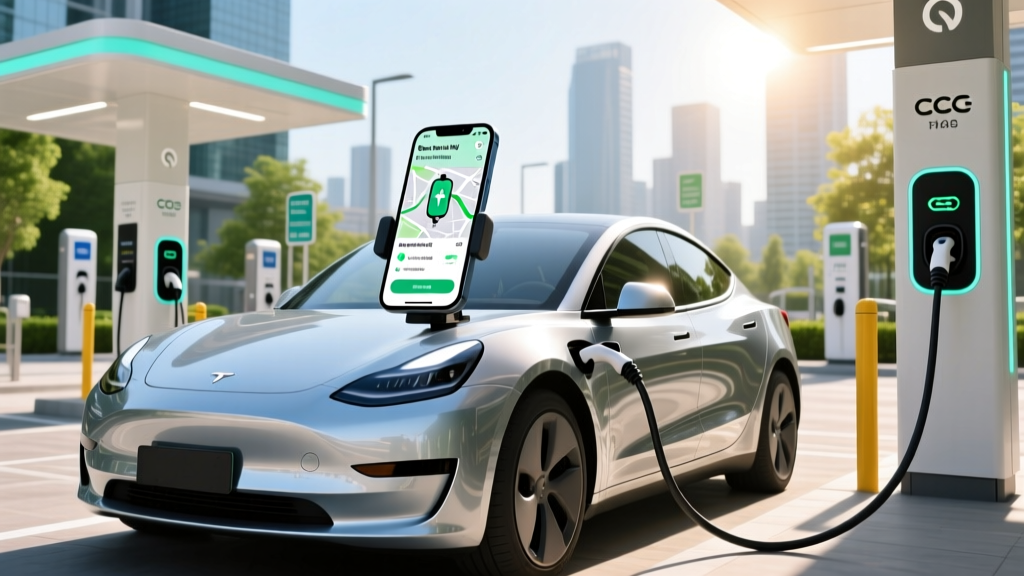
If you've ever circled a parking garage hunting for a working charger, you already know the single biggest quality-of-life upgrade in EV ownership isn't hardware — it's software. The best app for EV charging stations is the one that accurately maps working chargers, filters by your vehicle's connector, and predicts whether you'll actually get peak power when you arrive. In 2026, with the Tesla Supercharger network (now branded the North American Charging Standard, or NACS) open to nearly every major automaker and public CCS infrastructure continuing to mature, the app ecosystem has consolidated around a few dominant players, each with distinct strengths.
This guide compares the top charging apps head-to-head, then walks through the full charging stack you need to understand — levels, connectors, home install costs, and per-mile economics — so you can pair the right app with the right hardware.
Top Apps for Finding EV Charging Stations
Each app below solves a slightly different problem. Most EV owners end up using two or three in combination.
PlugShare — The Community-Verified Map
PlugShare remains the gold standard for reliability intel. Its user-generated check-ins and photos tell you whether a station is actually working, blocked by an ICE vehicle, or delivering reduced power — information no network app provides. It aggregates nearly every network (Electrify America, EVgo, ChargePoint, Tesla, Blink, Shell Recharge, Francis Energy) into one map. The tradeoff: it can't initiate a charge session or handle payment.
A Better Routeplanner (ABRP) — For Road Trips
ABRP is a route planner, not a station finder, but it's essential for any trip over 150 miles. You input your exact vehicle model, battery size, and current state of charge (SoC), and it generates a charging plan accounting for elevation, temperature, and charger power curves. It integrates with OBD-II dongles for live battery telemetry. For multi-state drives, nothing else comes close.
ChargePoint — Largest Aggregated Network App
If you charge at workplaces, shopping centers, or apartment complexes, ChargePoint's app covers the largest single network of Level 2 destinations in North America. The app handles session start, payment, and waitlist notifications. Its weakness: limited DC fast-charging coverage compared to Electrify America or EVgo.
Tesla App (Supercharger Network)
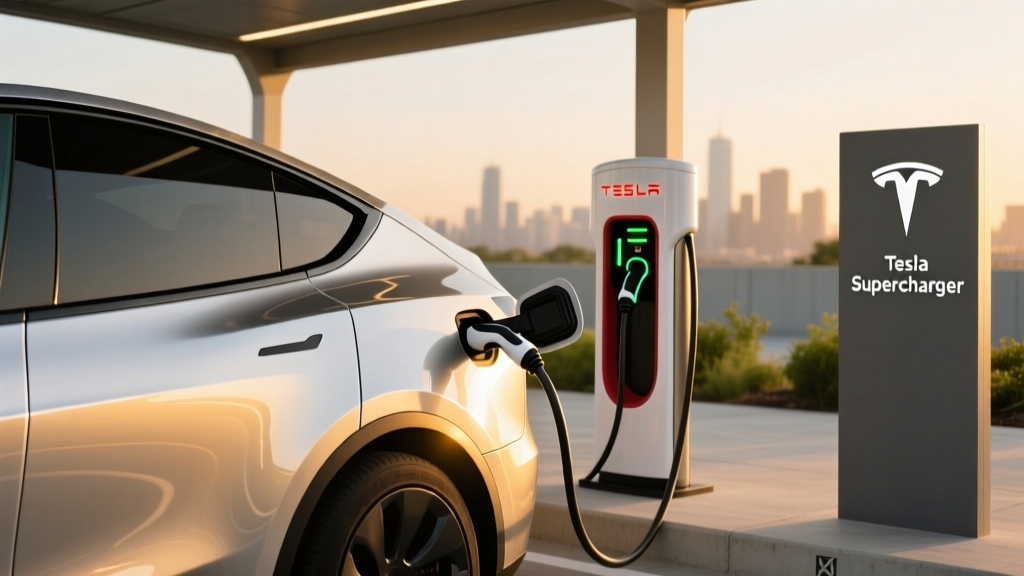
Now that Ford, Rivian, GM, Hyundai/Kia, and most other OEMs have adopted NACS, the Tesla app (or your vehicle's built-in navigation routed through Tesla's network) is the most reliable DC fast-charging experience available. Tesla's uptime consistently exceeds 95% — far above the industry average for CCS stations. Non-Tesla drivers can access Superchargers via the Tesla app using the Magic Dock adapter at select locations or via their vehicle's native NACS port.
Electrify America & EVgo — Highway Corridor Apps
Both networks dominate interstate travel corridors. Electrify America's app provides real-time charger availability and peak/sustained power estimates. EVgo's app integrates with Apple CarPlay and Android Auto for in-dash navigation. Neither is great for destination charging — they're highway tools.
Google Maps / Apple Maps — The Default Fallback
Both now show EV charger locations, connector types, and sometimes live availability. They're useful for quick "is there a charger nearby?" queries but lack reliability data, session management, and route planning. Use them as a supplement, not a primary tool.
Charging Levels Explained: kW, Miles per Hour, and Real-World Times
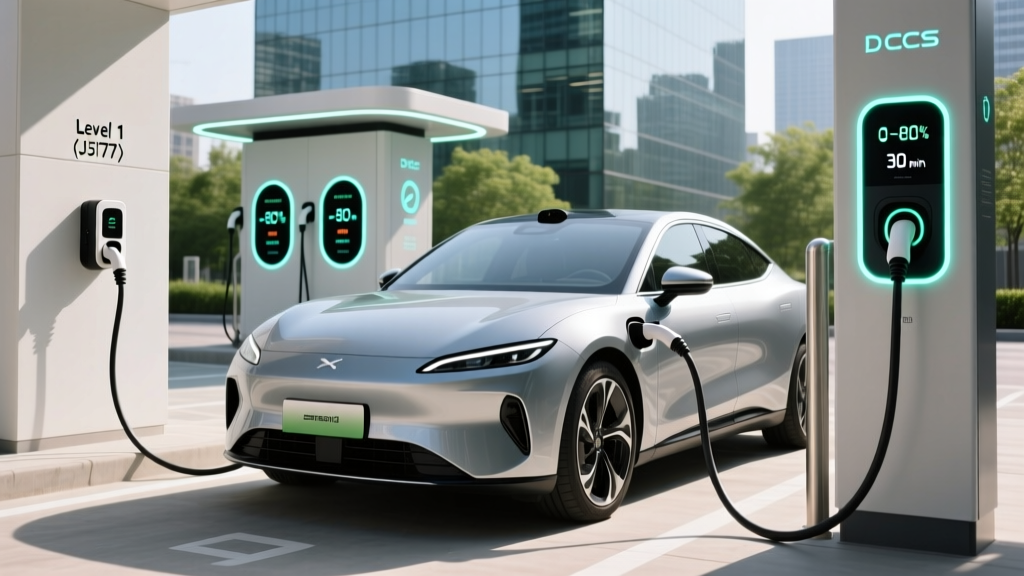
Before you filter any app, you need to know what you're looking for. EV charging is measured in kW (kilowatts), which is the rate of power delivery — think of it as the width of the pipe. Your battery's capacity is measured in kWh (kilowatt-hours), which is the total energy stored — the size of the tank. These are not interchangeable.
| Level | Voltage | Power (kW) | Miles of Range per Hour | Typical Use Case |
|---|---|---|---|---|
| Level 1 | 120V AC | 1.0–1.9 kW | 3–5 mi/hr | Overnight trickle; PHEVs, low-mileage commutes |
| Level 2 | 240V AC | 7.2–19.2 kW | 25–65 mi/hr | Home, workplace, destination charging |
| DC Fast Charge | 400–800V DC | 50–350 kW | 150–1,000+ mi/hr | Road trips, highway corridors |
Real-world charging time examples (10% to 80% SoC):
- 75 kWh battery (e.g., Tesla Model Y) at a 250 kW Supercharger: ~18–22 minutes, tapering significantly above 60% SoC.
- 77 kWh battery (e.g., Ford Mustang Mach-E) at a 150 kW CCS station: ~30–38 minutes.
- 84 kWh battery (e.g., Hyundai Ioniq 5, 800V architecture) at a 350 kW Electrify America station: ~18 minutes (10–80%), one of the fastest in production.
- 18 kWh battery (e.g., Toyota RAV4 Prime PHEV) on a 7.2 kW Level 2: ~2.5 hours (full charge).
The charge curve matters: no EV sustains peak kW for the full session. A "250 kW" charger might deliver that rate only between 10–40% SoC, then taper to 100 kW, then 50 kW above 80%. Apps like ABRP model this curve; basic map apps do not.
Connector Compatibility: NACS, CCS1, and CHAdeMO
The connector landscape shifted dramatically between 2023 and 2026. Here's where things stand:
| Connector | Brands Using It (2026 Models) | Network Availability | Adapter Needed? |
|---|---|---|---|
| NACS (Tesla) | Tesla, Ford, GM, Rivian, Hyundai, Kia, Volvo, Polestar, BMW (2025+), most new OEMs | Tesla Superchargers (20,000+ stalls), growing third-party NACS stations | None for new NACS-native vehicles; CCS-to-NACS adapters available for legacy CCS vehicles |
| CCS1 | Legacy models (pre-2025 VW ID.4, older Bolt, some Stellantis PHEVs) | Electrify America, EVgo, ChargePoint DC, Blink | NACS-to-CCS adapter needed for Supercharger access |
| CHAdeMO | Nissan Leaf (discontinued after 2025), Mitsubishi Outlander PHEV (legacy) | Declining; some Electrify America and EVgo stations still equipped | No adapter available for DC fast charging; CHAdeMO infrastructure is being phased out |
Adapter note: Ford, GM, and Rivian owners received complimentary Tesla NACS adapters in 2024–2025. Aftermarket CCS-to-NACS adapters (e.g., Lectron, A2Z) are available for $150–$250 but verify they support your vehicle's maximum DC charge rate — some cap at 150 kW.
Home Level 2 Charger Installation: Costs, Electrical Requirements, and Equipment
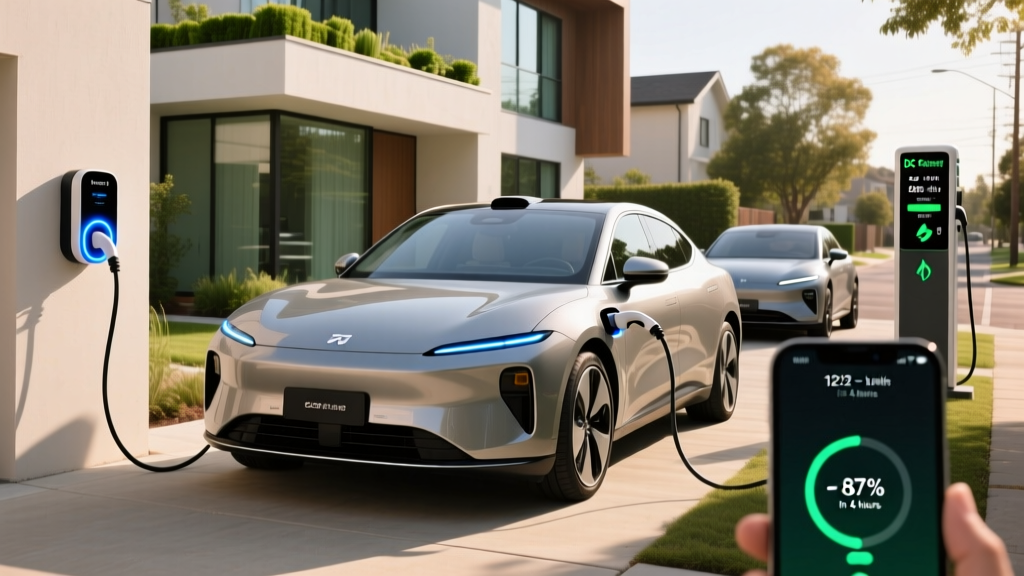
Over 80% of EV charging happens at home. A Level 2 home charger is the single most impactful purchase for an EV owner. Here's what's involved.
Electrical Requirements
A typical Level 2 charger requires a 240V dedicated circuit, similar to a dryer or oven outlet. The most common configurations:
- 40A circuit / 32A continuous charge (7.7 kW): Sufficient for most EVs with onboard chargers rated at 11.5 kW or lower.
- 50A circuit / 40A continuous charge (9.6 kW): Recommended for larger batteries (100+ kWh) or vehicles with 11.5–19.2 kW onboard chargers (e.g., Ford F-150 Lightning, Hummer EV).
- 60A circuit / 48A continuous charge (11.5 kW): Maximum for most residential panels; ideal for future-proofing.
National Electrical Code (NEC) requires EV circuits to be rated at 125% of the continuous load — so a 32A charger needs a 40A breaker, a 40A charger needs a 50A breaker.
Panel Upgrade Considerations
If your home has a 100A main panel (common in homes built before 1990), adding a 40–50A EV circuit may require a panel upgrade to 200A, which costs $1,500–$3,000. Homes with 200A panels usually have sufficient headroom. A licensed electrician will perform a load calculation per NEC Article 220 to determine if your panel can support the additional circuit. Some utilities offer panel-upgrade rebates — check with your local provider.
Installation Cost Breakdown
| Component | Cost Range | Notes |
|---|---|---|
| Level 2 EVSE (charger hardware) | $300–$750 | Varies by power output, cable length, smart features |
| Electrician labor (standard install) | $500–$1,500 | Assumes panel is nearby; 20–50 ft conduit run |
| Electrical permit | $50–$200 | Required in most jurisdictions; varies by municipality |
| Panel upgrade (if needed) | $1,500–$3,000 | 100A to 200A upgrade; not always required |
| Trenching / long conduit runs | $500–$2,500 | If charger is far from panel (detached garage, etc.) |
| Total (standard install, no panel upgrade) | $850–$2,450 | Most homeowners fall in $1,200–$1,800 range |
| Total (with panel upgrade) | $2,350–$5,450 | Older homes; check for utility rebates |
Safety and Code Requirements
- Dedicated circuit: The EV charger must be on its own breaker — no sharing with other appliances.
- GFCI protection: NEC 2020 and later require GFCI (Ground Fault Circuit Interrupter) protection for all EVSE installations. Many modern chargers have built-in GFCI; confirm with your electrician to avoid nuisance tripping from double-GFCI setups.
- Outdoor rating: If installing outside, ensure the EVSE is NEMA 4-rated (weatherproof). Hardwired units are generally more weather-resistant than plug-in NEMA 14-50 configurations.
- Hardwired vs. plug-in: Hardwired installations (direct wire to junction box) are preferred for 48A+ chargers and outdoor installs. Plug-in (NEMA 14-50) offers portability but NEC 2023 tightened requirements for 14-50 receptacles in EV applications.
Recommended Level 2 Home Chargers (2026)
ChargePoint Home Flex — Up to 12 kW (50A), 23-ft cable, NEMA 4 outdoor-rated, Wi-Fi connected, Alexa integration, NACS or J1772 connector options. ~$650. Best for: smart-home users who want scheduling and energy tracking.
Grizzl-E Smart — Up to 11.5 kW (48A), 24-ft cable, NEMA 4, extreme cold rated (-40°F), OCPP-compatible, made in Canada. ~$550. Best for: cold-climate owners and those wanting open-protocol flexibility.
Tesla Wall Connector — Up to 11.5 kW (48A), 24-ft cable, NACS native, Wi-Fi updates, Power Sharing for multi-unit installs. ~$450. Best for: NACS-native vehicles (Tesla, Ford, GM, Rivian, Hyundai/Kia 2025+). J1772 adapter available for legacy vehicles.
Emporia Level 2 EV Charger — Up to 11.5 kW (48A), 24-ft cable, integrated energy monitoring (pairs with Emporia Vue home energy monitor), budget-friendly. ~$400. Best for: solar owners and energy-conscious households tracking circuit-level consumption.
Cost to Charge: Home vs. Public vs. Gas
The economics of EV charging depend heavily on where and when you plug in.
| Scenario | Rate ($/kWh) | Cost to Add 200 Miles* | Cost per Mile |
|---|---|---|---|
| Home (off-peak utility rate) | $0.08–$0.14 | $4.80–$8.40 | $0.024–$0.042 |
| Home (standard residential avg.) | $0.16 | $9.60 | $0.048 |
| Public Level 2 (ChargePoint, etc.) | $0.25–$0.49 | $15.00–$29.40 | $0.075–$0.147 |
| DC Fast Charge (Electrify America, EVgo) | $0.35–$0.56 | $21.00–$33.60 | $0.105–$0.168 |
| Tesla Supercharger (avg. 2026) | $0.28–$0.36 | $16.80–$21.60 | $0.084–$0.108 |
| Gas vehicle (28 MPG, $3.40/gal) | — | $24.29 | $0.121 |
*Based on 3.0 mi/kWh efficiency (typical for a midsize crossover EV like the Hyundai Ioniq 5 or Tesla Model Y). Your actual efficiency varies by vehicle, temperature, and driving style. See fueleconomy.gov for EPA-rated kWh/100mi figures by model.
The takeaway: home charging on off-peak rates costs roughly one-third to one-half what gasoline costs per mile. Exclusive DC fast charging erases most of the cost advantage — which is why home Level 2 is the economic foundation of EV ownership.
How to Choose the Right App for Your Situation
There is no single "best app for EV charging stations" — the right choice depends on your driving pattern:
- Daily commuter who charges at home: Your vehicle's native app (Tesla, FordPass, Hyundai Bluelink) plus your charger's companion app (ChargePoint, Emporia) cover 95% of needs. Add PlugShare for occasional public charging.
- Road-tripper: ABRP for route planning + PlugShare for reliability verification + your vehicle's native nav for turn-by-turn.
- Apartment dweller relying on public charging: PlugShare (reliability data) + the network app for your most-used provider (Electrify America, EVgo, or ChargePoint) + your automaker's app for any included free-charging credits.
- Fleet or multi-EV household: ChargePoint or Emporia for load management and per-vehicle energy tracking.
Frequently Asked Questions
How much does it cost to install a home EV charger?
A standard Level 2 home charger installation costs $850–$2,450 (equipment + electrician + permit) if your electrical panel has sufficient capacity. If you need a panel upgrade from 100A to 200A, total costs rise to $2,350–$5,450. Most homeowners with a 200A panel spend $1,200–$1,800. The federal Alternative Fuel Vehicle Refueling Property Credit (IRS Form 8911) covers up to 30% of home charger equipment and installation costs, capped at $1,000, subject to income and census-tract eligibility.
How fast will each charging level add range?
Level 1 (120V) adds 3–5 miles per hour — fine for PHEVs with small batteries. Level 2 (240V) adds 25–65 miles per hour depending on amperage and your vehicle's onboard charger capacity. DC fast charging adds 150–1,000+ miles per hour at peak power, but the charge curve tapers significantly above 60–80% SoC, so real-world sessions average lower than the peak kW rating suggests.
Which connector/charger is compatible with my EV?
For 2026 model-year vehicles, nearly all new EVs sold in the U.S. use the NACS (Tesla) connector. Older CCS1 vehicles can access Tesla Superchargers via a CCS-to-NACS adapter. CHAdeMO is effectively discontinued for new vehicles. Check your owner's manual or the EPA's fueleconomy.gov vehicle listings for your specific model's connector type and maximum charge rate.
How much does charging cost per mile vs gas?
Home charging on off-peak electricity costs $0.02–$0.05 per mile for a typical EV — roughly one-quarter the cost of gasoline at $3.40/gallon in a 28 MPG vehicle ($0.12/mile). Public DC fast charging at $0.35–$0.56/kWh costs $0.10–$0.17 per mile, comparable to or slightly more than gasoline. The cost advantage of an EV is maximized when you charge at home.
What electrical upgrades might I need?
If your home has a 200A electrical panel with available breaker spaces and load capacity, you likely need only a new dedicated circuit — no upgrade required. If you have a 100A panel (common in pre-1990 homes), or if your panel is near capacity with existing loads (electric oven, dryer, HVAC, water heater), you may need a 200A panel upgrade ($1,500–$3,000). A licensed electrician will perform a NEC Article 220 load calculation to determine your exact requirements. Some utilities and states offer rebates for panel upgrades paired with EV charger installations.
Is a smart charger worth the extra cost?
Smart chargers (Wi-Fi connected, app-controlled) cost $100–$250 more than "dumb" chargers but offer meaningful benefits: scheduled charging during off-peak utility hours, energy consumption tracking, remote session management, and integration with solar or home battery systems. If your utility offers time-of-use (TOU) rates, a smart charger pays for itself within months through off-peak savings.
Can I use any app to start a charging session?
No. Network-specific apps (ChargePoint, Electrify America, EVgo) are required to initiate and pay for sessions on their respective networks. Aggregator apps like PlugShare show station locations and status but cannot start a session. Most networks now also support tap-to-pay with a credit card (a federal requirement for NEVI-funded stations), so you can charge without the network's app in most cases.