If you've owned an Audi with the 3.0T supercharged V6 — whether in an S4, S5, Q5, or A6 from the 2009–2017 era — you know the appeal: linear power, a subtle whine under load, and effortless highway passing. That EA837 engine produced roughly 333 horsepower and 325 lb-ft of torque in most applications, delivering 0–60 mph times in the low-to-mid five-second range. But as those vehicles age past the 10-year mark, maintenance costs climb: supercharger belt tensioners, carbon buildup services, water pump replacements, and PCV valve failures are all familiar line items.
For many supercharged V6 owners, 2026 is the year they're seriously evaluating an electric vehicle as a replacement. The question isn't just "which EV?" — it's whether the charging ecosystem can match the convenience of a five-minute gas stop. This guide breaks down exactly what home and public EV charging looks like today, with real numbers on cost, speed, and installation requirements.
Charging Levels Explained: Level 1, Level 2, and DC Fast Charging
EV charging operates across three tiers. Understanding the difference between kW (power, or how fast energy flows) and kWh (energy, or how much the battery holds) is essential. Think of kW as the width of a hose and kWh as the size of the bucket.
| Level | Voltage | Max Power (kW) | Miles of Range Added Per Hour | Best For |
|---|---|---|---|---|
| Level 1 | 120V AC | 1.4–1.9 kW | 3–5 miles | Overnight trickle; PHEVs; low-mileage drivers |
| Level 2 | 240V AC | 7.2–19.2 kW | 20–75 miles | Home daily charging; workplace; destinations |
| DC Fast Charging | 400–800V DC | 50–350 kW | 150–1,000+ miles (equivalent rate) | Road trips; rapid top-ups; commercial fleets |
Level 2 is where 90% of EV charging happens for homeowners. A typical Level 2 home charger delivering 11.5 kW (48 amps on a 60-amp circuit) can add roughly 44 miles of range per hour to a midsize electric SUV. That means an Audi Q8 e-tron with its 106 kWh usable battery can fully replenish overnight in about 9–10 hours.
DC fast charging bypasses the vehicle's onboard charger and feeds direct current straight to the battery. Peak speeds of 270 kW on the Q8 e-tron (or 250 kW on the Porsche Macan Electric, a common cross-shop for Audi loyalists) mean a 10–80% charge in approximately 20–23 minutes under ideal thermal conditions. Real-world charging curves taper significantly above 80% State of Charge — that last 20% can take as long as the first 70%.
How Much Does It Cost to Install a Home EV Charger?
This is the number one question from former ICE owners. The honest answer: it depends heavily on your home's electrical panel capacity and the distance from panel to charger location. Here's a realistic 2026 breakdown based on national averages.
| Component | Low End | High End | Notes |
|---|---|---|---|
| Level 2 Charger Unit (hardwired, 48A) | $400 | $750 | ChargePoint Home Flex, Emporia Level 2, Tesla Wall Connector |
| Electrician Labor (240V/60A circuit) | $600 | $1,800 | Varies by run length, conduit, wall penetrations |
| Permit & Inspection | $100 | $400 | Required by most jurisdictions; varies by municipality |
| Electrical Panel Upgrade (if needed) | $1,500 | $4,000 | 100A → 200A service; common in pre-2000 homes |
| Total (no panel upgrade) | $1,100 | $2,950 | Most homes with 200A service fall here |
| Total (with panel upgrade) | $2,600 | $6,950 | Older homes with 100A or 150A panels |
The panel upgrade gotcha: If your home has a 100-amp electrical service — common in houses built before 1990 — adding a 60-amp dedicated EV circuit may exceed your panel's capacity. An electrician will perform a load calculation per NEC Article 220. If you're over 80% of panel capacity with existing loads (HVAC, electric dryer, oven, water heater), a service upgrade to 200A is required. Budget for this possibility.
A cost-saving alternative: some smart chargers like the Emporia Vue with EV charger or the Enel X Way JuiceBox integrate with home energy monitors to dynamically limit charging amperage based on real-time household load, potentially avoiding a panel upgrade. Check with a licensed electrician whether your jurisdiction accepts load-management devices as a code-compliant solution.
Which Connector and Charger Is Compatible with My EV?
The connector landscape shifted dramatically between 2023 and 2026. Tesla's North American Charging Standard (NACS) has been adopted by nearly every major automaker, but CCS1-equipped vehicles remain on the road in large numbers. Here's what you need to know if you're transitioning from a supercharged V6 Audi to a new EV.
| Connector | Brands Using It (2026) | Adapter Availability |
|---|---|---|
| NACS (Tesla standard) | Tesla, Ford, GM, Rivian, Volvo, Polestar, Mercedes-Benz, BMW, Hyundai, Kia, Audi (2025+), Lucid | CCS-to-NACS adapters widely available (~$200–$300) |
| CCS1 | Legacy VW ID.4 (pre-2025), older BMW i4/iX, older Hyundai Ioniq 5, older Kia EV6, Stellantis EVs | NACS-to-CCS adapters available; Tesla Supercharger access via adapter |
| CHAdeMO | Nissan Leaf (legacy only); effectively discontinued for new vehicles | Limited adapter options; declining network support |
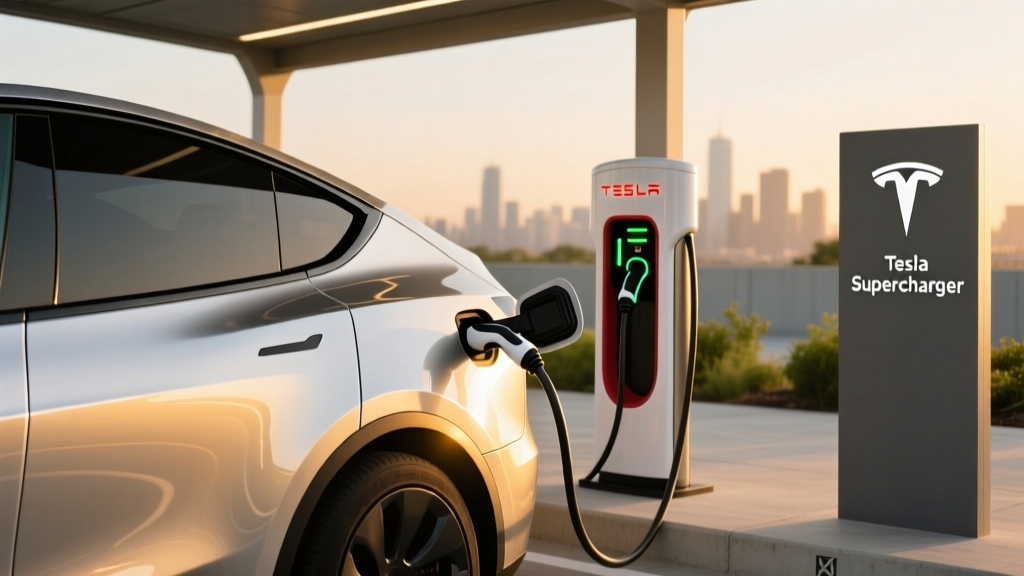
For 2026 Audi EVs — including the Q6 e-tron, Q8 e-tron, and A6 e-tron — Audi has transitioned to the NACS connector in North America. This means native access to Tesla's Supercharger network (over 28,000 stalls in the US as of early 2026, per Tesla's Supercharger page) without an adapter. If you purchase a slightly used 2024 Audi Q8 e-tron, it will still have CCS1 and require a CCS-to-NACS adapter (approximately $200 from Tesla or third-party suppliers) for Supercharger access.
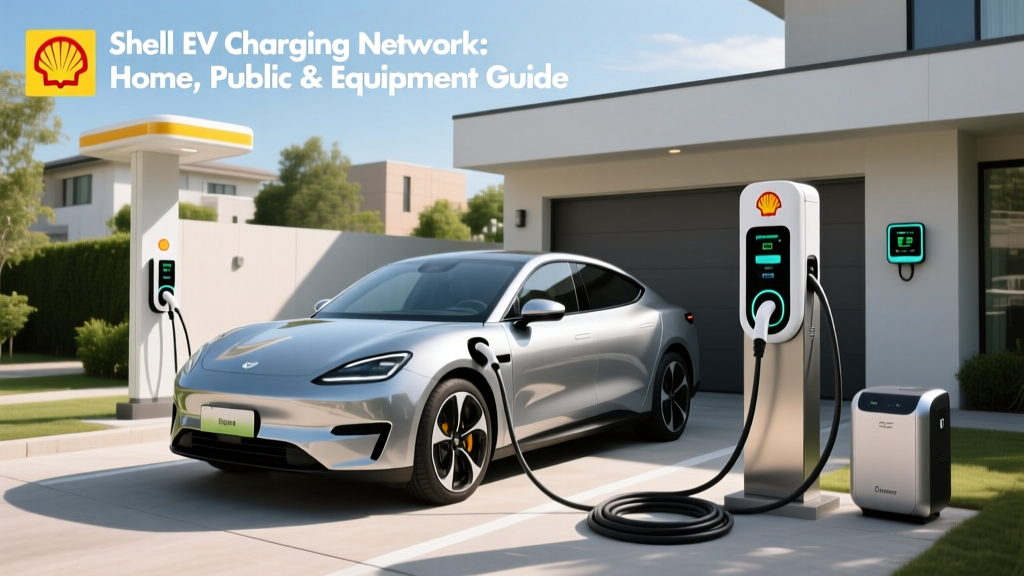
For home charging, the connector on your wall unit must match your vehicle. Most 2026 home chargers now ship with NACS plugs by default, with CCS available as a swap option.
Cost to Charge: EV Electricity Cost Per Mile vs. Gasoline
This is where the economics shift decisively. A 3.0T supercharged V6 Audi typically achieves 18–22 mpg combined in real-world driving. At $3.50/gallon (2026 national average), that's roughly $0.17–$0.19 per mile in fuel alone. Here's how EV charging compares across scenarios.
| Scenario | Rate | Vehicle Efficiency | Cost Per Mile |
|---|---|---|---|
| Home charging (off-peak utility rate) | $0.09/kWh | 2.5 kWh/mile (Q8 e-tron) | $0.023 |
| Home charging (standard residential rate) | $0.16/kWh | 2.5 kWh/mile | $0.040 |
| Public Level 2 (workplace/destination) | $0.25/kWh | 2.5 kWh/mile | $0.063 |
| DC Fast Charging (Electrify America, EVgo) | $0.48/kWh | 2.5 kWh/mile | $0.120 |
| Tesla Supercharger (average 2026) | $0.30/kWh | 2.5 kWh/mile | $0.075 |
| Audi 3.0T SC V6 (gas, 20 mpg, $3.50/gal) | $3.50/gal | 20 mpg | $0.175 |
Even at the most expensive DC fast-charging rates, the per-mile cost undercuts premium gasoline. For home-charging-dominant owners (the vast majority), fuel cost drops by 75–87% compared to the supercharged V6. Over 15,000 annual miles, that translates to $2,200–$2,600 in annual fuel savings alone, based on data from fueleconomy.gov.
Many utilities offer time-of-use (TOU) plans that drop rates to $0.06–$0.10/kWh during overnight hours (typically 10 PM – 6 AM). Scheduling your EV to charge during these windows maximizes savings. Smart chargers with app-based scheduling handle this automatically.
Charging Time Examples: 10–80% for Common Battery Sizes
The 10–80% metric is the industry standard because charging slows dramatically above 80% State of Charge to protect battery health. Here's how long a 10–80% session takes across representative 2026 EVs that a supercharged V6 Audi owner might cross-shop:
- Audi Q6 e-tron (94.9 kWh usable, NMC, 270 kW peak DC): ~21 minutes 10–80% at a 350 kW-capable station. Sustains above 200 kW through approximately 55% SoC before tapering.
- Audi Q8 e-tron (106 kWh usable, NMC, 170 kW peak DC): ~31 minutes 10–80%. The larger battery and lower peak rate make this a longer session — plan accordingly on road trips.
- Tesla Model Y Long Range (75 kWh usable, NMC, 250 kW peak DC): ~18 minutes 10–80% at a V3 Supercharger.
- Hyundai Ioniq 5 (77.4 kWh usable, NMC, 240 kW peak DC, 800V architecture): ~18 minutes 10–80%. The 800V platform sustains higher charge rates longer than 400V competitors.
- Level 2 home charging (11.5 kW): A full 0–100% charge on a 95 kWh battery takes approximately 8.5 hours. Most owners arrive home at 40–50% SoC and need only 3–5 hours to reach 80%.
Charge curve reality check: Advertised peak kW is a momentary maximum, not a sustained rate. A vehicle rated at 270 kW may only hold that peak for 5–8 minutes before thermal management throttles the rate. What matters is the average kW across the 10–80% session. Vehicles with 800V architectures (Hyundai/Kia/Porsche/Audi Q6 e-tron) sustain higher averages than 400V platforms.
Recommended Home EV Chargers for 2026
Based on power output, build quality, smart features, and connector availability, these are the top home Level 2 chargers for 2026:
ChargePoint Home Flex (NACS or CCS)
- Power Output: Up to 12 kW (50A) on a 60A circuit; adjustable down to 16A for lower-capacity panels
- Cable Length: 23 feet
- Smart Features: Wi-Fi, Alexa integration, scheduling, energy reporting, ChargePoint network account
- Price: ~$599 (NACS version)
- Best For: Versatility; adjustable amperage avoids panel upgrades
Tesla Wall Connector (NACS)
- Power Output: Up to 11.5 kW (48A) on a 60A circuit
- Cable Length: 24 feet
- Smart Features: Wi-Fi, over-the-air updates, power sharing (link multiple units on one circuit), Tesla app integration
- Price: ~$475
- Best For: Tesla and NACS-native vehicles; cleanest aesthetic; power-sharing for multi-EV garages
Emporia Level 2 Smart Charger (NACS)
- Power Output: Up to 11.5 kW (48A) on a 60A circuit
- Cable Length: 24 feet
- Smart Features: Integrates with Emporia Vue home energy monitor, real-time load management, solar-aware charging, scheduling
- Price: ~$399 (charger only; Vue monitor sold separately)
- Best For: Homes with solar panels or those wanting granular energy data; load-management may avoid panel upgrades
Safety, Electrical Code, and Installation Requirements
EV chargers draw sustained high current for hours — this is fundamentally different from a dryer or oven that cycles on and off. The National Electrical Code (NEC) treats EV charging as a continuous load, meaning the circuit must be rated for 125% of the charger's maximum draw. A 48-amp charger requires a 60-amp breaker and appropriately rated wire (typically 6 AWG copper for runs under 100 feet).
Key safety and code requirements for a 2026 home installation:
- Dedicated circuit: The EV charger must have its own dedicated breaker — no sharing with other outlets or appliances.
- GFCI protection: NEC 2020 and later require GFCI (Ground Fault Circuit Interrupter) protection for all 240V EV charging outlets. Hardwired installations may have different GFCI requirements depending on jurisdiction — your electrician will confirm.
- Outdoor rating: If the charger is installed outside (driveway, exterior wall), it must carry a NEMA 4 or NEMA 4X rating for weather resistance. All three chargers recommended above meet this standard.
- Hardwired vs. plug: Hardwired installations (no plug, direct connection to junction box) are preferred for 48A+ chargers. NEMA 14-50 outlets are acceptable for 40A or lower chargers but must be installed with a torque-specified terminal connection — loose 14-50 outlets are a documented fire risk.
- Permit and inspection: Virtually all jurisdictions require an electrical permit for a new 240V circuit. The inspection ensures code compliance and protects your home insurance coverage. Never skip this step.
Making the Switch: What Supercharged V6 Owners Should Expect
The transition from a 3.0T supercharged V6 to a modern EV involves a mental model shift. You trade the ritual of gas station stops for the passivity of home charging — plug in at night, wake up "full" every morning. The instant torque of an electric powertrain (the Q6 e-tron produces 509 hp and hits 0–60 in 4.3 seconds) more than compensates for any nostalgia for the supercharger whine.
For road trips, plan around 20–30 minute DC fast-charging stops every 200–250 miles. Apps like A Better Routeplanner and PlugShare map reliable stations along your route. The Tesla Supercharger network, now open to NACS-equipped Audis, remains the most reliable public charging infrastructure in North America.
The total cost of ownership math strongly favors the EV: lower fuel costs, minimal drivetrain maintenance (no oil changes, no supercharger belt service, no spark plugs, regenerative braking extends pad life to 100,000+ miles), and available federal tax credits. The IRS §30D Clean Vehicle Credit offers up to $7,500 for qualifying new EVs, subject to MSRP caps ($80,000 for SUVs, $55,000 for sedans), buyer income limits ($300,000 joint / $150,000 single), and battery mineral sourcing requirements that vary by model year. Always verify eligibility with a tax professional before purchase.
Frequently Asked Questions
How much does it cost to install a home EV charger?
Between $1,100 and $2,950 for a typical 240V/48A Level 2 installation in a home with an adequate 200-amp electrical panel. If a panel upgrade from 100A to 200A is needed, add $1,500–$4,000. The charger unit itself costs $400–$750.
How fast will each charging level add range?
Level 1 (120V): 3–5 miles per hour. Level 2 (240V, 48A): 30–45 miles per hour depending on vehicle efficiency. DC Fast Charging: effectively 150–300+ miles in a 20–30 minute session, though the rate is measured in peak kW, not sustained miles-per-hour.
Which connector/charger is compatible with my EV?
2026 Audi EVs use the NACS connector natively. Older (pre-2025) Audi EVs use CCS1 and require an adapter for Tesla Supercharger access. CHAdeMO is effectively discontinued. Check your vehicle's charge port or owner's manual to confirm.
How much does charging cost per mile vs. gas?
Home charging at standard residential rates ($0.16/kWh) costs approximately $0.04 per mile for a midsize electric SUV. A supercharged V6 Audi at 20 mpg and $3.50/gallon costs $0.175 per mile. That's a 77% reduction in fuel cost per mile with home charging.
What electrical upgrades might I need?
If your home has a 200-amp panel with available capacity, likely none beyond a new 60-amp dedicated circuit. Homes with 100-amp or 150-amp service, or panels already near capacity from HVAC, electric heat, and appliances, may require a service upgrade to 200A — budget $1,500–$4,000 for this work. A licensed electrician's load calculation is the definitive answer.