The supercharged Audi S4 (B8 generation, 2010–2016) holds legendary status among enthusiasts. Its 3.0L supercharged V6 pushed 333 hp and 325 lb-ft of torque through quattro AWD, hitting 0–60 mph in roughly 4.9 seconds. But in 2026, a new question dominates owner forums and Reddit threads: how does the S4's real-world fuel cost and performance stack up against a modern battery-electric vehicle — and what does it actually take to charge an EV at home today?
If you're cross-shopping a used supercharged S4 against a new EV, or you already own the S4 and are considering adding an EV to your garage, this guide gives you exact numbers: home charger installation costs, charging speeds by level, $/mile comparisons, and the electrical upgrades you might need.
The Audi S4 Supercharged: Quick Spec Baseline
Before comparing charging and costs, here's what the supercharged S4 delivers on paper and in practice. These figures represent the B8/B8.5 generation (2010–2016) with the 3.0T supercharged V6.
| Spec | Audi S4 3.0T Supercharged (2010–2016) |
|---|---|
| Engine | 3.0L Supercharged V6 |
| Horsepower | 333 hp |
| Torque | 325 lb-ft |
| 0–60 mph | ~4.9 seconds |
| EPA Fuel Economy | 18 city / 27 hwy / 21 combined MPG |
| Drivetrain | quattro AWD |
| Transmission | 6-speed manual or 7-speed S tronic DCT |
| Fuel Tank | 16.9 gallons |
| Premium Fuel Required | Yes (91 octane) |
At 21 MPG combined on premium fuel, the S4's per-mile cost is meaningful — and that's the baseline we'll compare against EV charging costs below. According to fueleconomy.gov, the 2014 Audi S4 averages 21 MPG combined.
EV Charging Levels Explained: kW, Speeds, and Miles Per Hour
Understanding EV charging starts with one critical distinction: kW (kilowatts) measures power — the rate of energy delivery, like water pressure from a hose. kWh (kilowatt-hours) measures energy — the total amount stored, like the size of a bucket. A 10 kW charger delivers energy twice as fast as a 5 kW charger, filling the same kWh battery in half the time.
| Level | Voltage | Power (kW) | Miles of Range Added Per Hour | Best Use Case |
|---|---|---|---|---|
| Level 1 | 120V AC | 1.2–1.9 kW | 3–5 miles/hr | Overnight top-up for PHEVs or low-mileage commutes |
| Level 2 | 240V AC | 7.2–19.2 kW | 20–60+ miles/hr | Daily home charging — the standard for BEV owners |
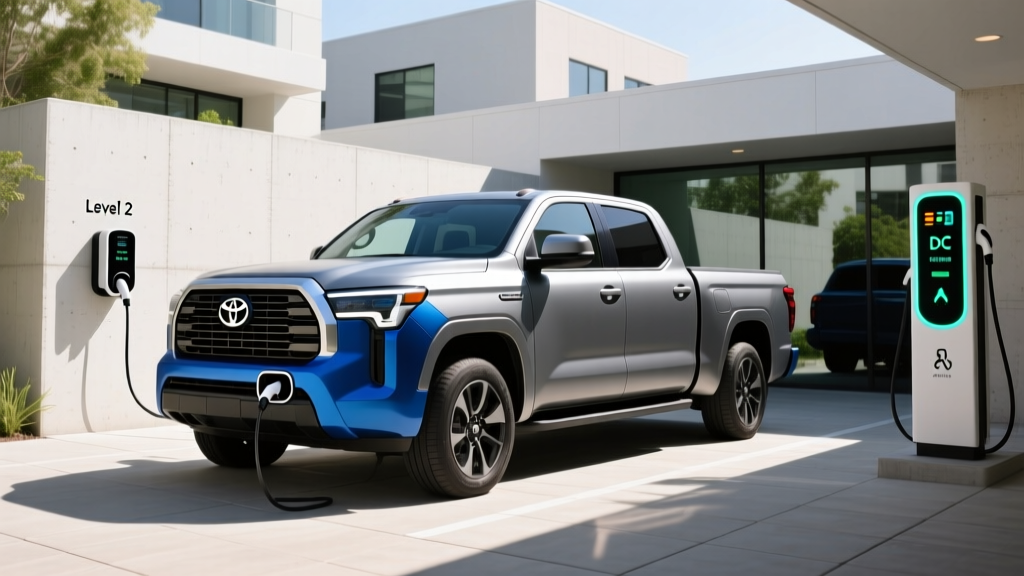
| DC Fast Charge | 200–800V DC | 50–350 kW | 150–800+ miles/hr | Road trips and rapid top-ups; 10–80% in 15–40 min |
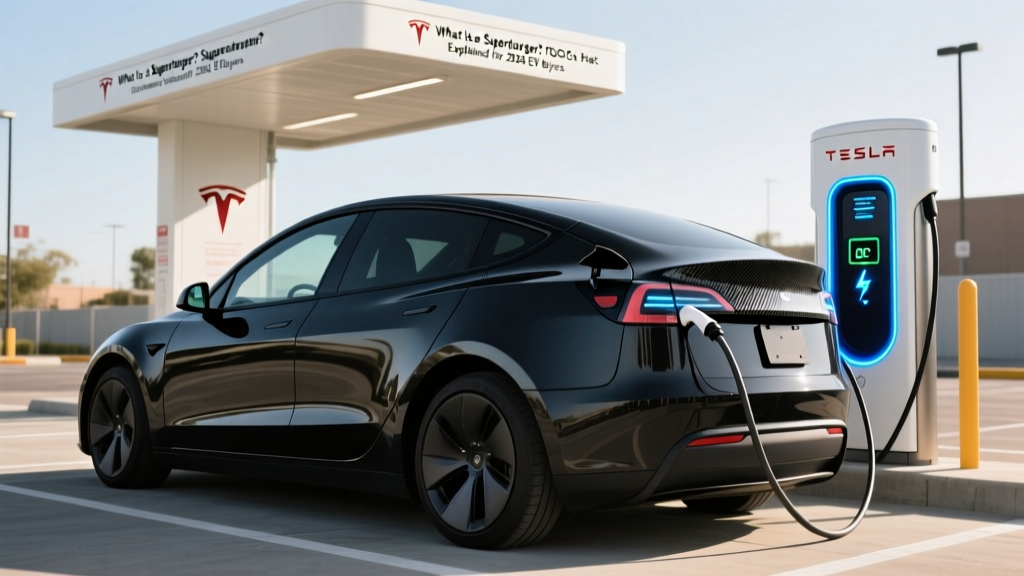
For context: a 75 kWh battery (like the one in a Tesla Model Y or Hyundai Ioniq 5) charging on a 48-amp (11.5 kW) Level 2 circuit adds roughly 37 miles of range per hour. A full 10–80% charge takes about 5–6 hours overnight. On a 250 kW DC fast charger, that same 10–80% session takes roughly 18–25 minutes depending on the vehicle's charge curve and battery preconditioning.
Charge curve reality: No EV sustains peak kW for the entire session. A car rated for 250 kW peak might hold that rate from 10–40% SoC, then taper to 150 kW through 60%, and drop to 50 kW above 80%. This is why 10–80% times matter more than peak kW figures.
Home EV Charger Installation: Costs, Electrical Requirements, and Panel Upgrades
Installing a Level 2 home charger is the single biggest ownership decision after buying the car. Here's what it actually requires and costs in 2026.
Electrical Requirements
A standard Level 2 home charger requires a dedicated 240V circuit, typically 40 to 60 amps. The most common setup is a NEMA 14-50 outlet (the same type used for electric ranges) on a 50-amp breaker, which supports continuous charging at 40 amps (National Electrical Code requires circuits be loaded to no more than 80% of breaker rating for continuous loads).
- Minimum viable: 240V / 20A circuit → 3.8 kW (adequate for PHEVs or short commutes)
- Standard recommended: 240V / 50A circuit (NEMA 14-50) → 9.6 kW
- High-power: 240V / 60A hardwired → 11.5 kW (for larger batteries or faster turnaround)
Panel Upgrade: The Cost Most Guides Ignore
Many homes built before 2000 have 100-amp or 150-amp electrical panels. Adding a 50-amp EV circuit may exceed available capacity, especially if you already run electric dryers, ovens, and HVAC. A licensed electrician will perform a load calculation per NEC Article 220 to determine if your panel can handle the new circuit.
If a panel upgrade to 200A is required, expect to add $1,500–$3,500 to your project. In older homes with knob-and-tube wiring or Federal Pacific/Zinsco panels (known safety hazards), the upgrade can exceed $4,000.
Home Level 2 Charger Installation Cost Breakdown (2026)
| Component | Low-End | High-End | Notes |
|---|---|---|---|
| Level 2 EVSE (charger hardware) | $350 | $750 | Smart Wi-Fi chargers (ChargePoint, Emporia, Wallbox) |
| Electrician labor (standard install) | $400 | $1,200 | Depends on run length from panel to garage |
| Electrical materials (wire, conduit, breaker) | $150 | $400 | Longer runs = more copper cost |
| Permit and inspection | $50 | $250 | Varies by municipality; some waive EV permits |
| Panel upgrade (if needed) | $1,500 | $3,500 | 100A→200A upgrade; not always required |
| Total (no panel upgrade) | $950 | $2,600 | Most homes with 200A panels fall here |
| Total (with panel upgrade) | $2,450 | $6,100 | Older homes needing service upgrade |
Always use a licensed electrician and pull a permit. Unpermitted EV charger installations can void home insurance claims and cause issues at resale. The NEC requires GFCI protection for outdoor receptacles, and most jurisdictions now require a dedicated circuit — never share with a dryer or welder outlet using a splitter.
Federal Tax Credit for Home Charging Equipment
The IRS Alternative Fuel Vehicle Refueling Property Credit (Form 8911) covers 30% of home charging equipment and installation costs, up to $1,000. This credit applies to Level 2 EVSE hardware and the electrical work to install it. Income caps and census-tract eligibility rules apply — consult a tax professional for your specific situation.
Connector Compatibility: NACS, CCS, and CHAdeMO in 2026
The connector landscape has consolidated significantly. Here's where things stand for 2026 model-year EVs:
| Connector | Brands Using It (2026) | Max DC Fast Charge Rate | Notes |
|---|---|---|---|
| NACS (Tesla / SAE J3400) | Tesla, Ford, GM, Rivian, Volvo, Polestar, Mercedes, BMW, Hyundai, Kia, others | Up to 350 kW | Now the dominant North American standard; smaller/lighter plug |
| CCS1 | Legacy VW/Audi EVs, Stellantis, some Honda | Up to 350 kW | Phasing out on new models; still widely available at public chargers |
| CHAdeMO | Nissan Leaf (legacy only) | Up to 100 kW | Effectively discontinued for new vehicles |
For home Level 2 charging: All EVs use the same J1772 connector for AC charging (or a NACS inlet that accepts J1772 via adapter). Your Level 2 charger will come with a J1772 plug or a NACS connector — either way, adapters are inexpensive ($30–$60) and universally available.
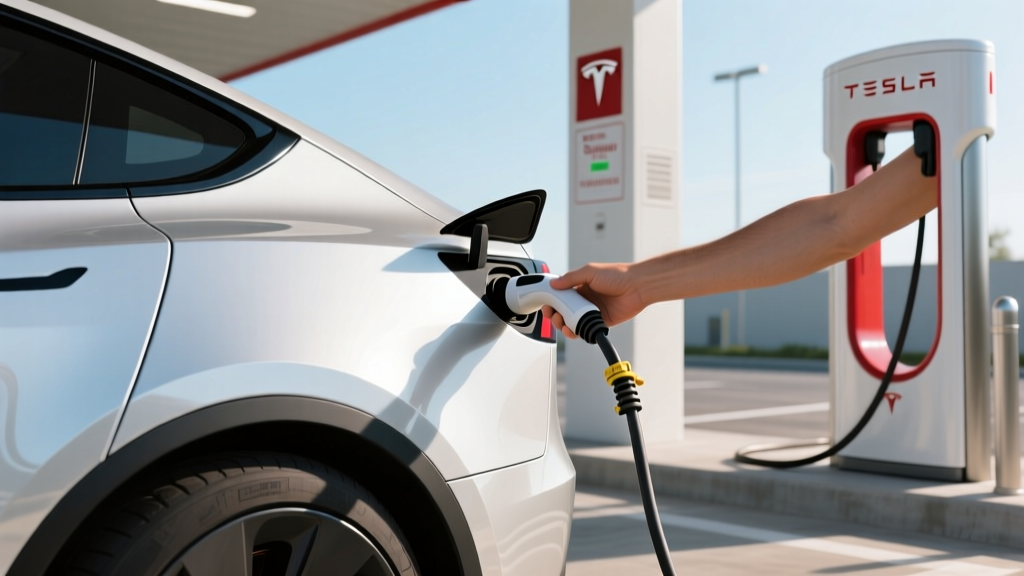
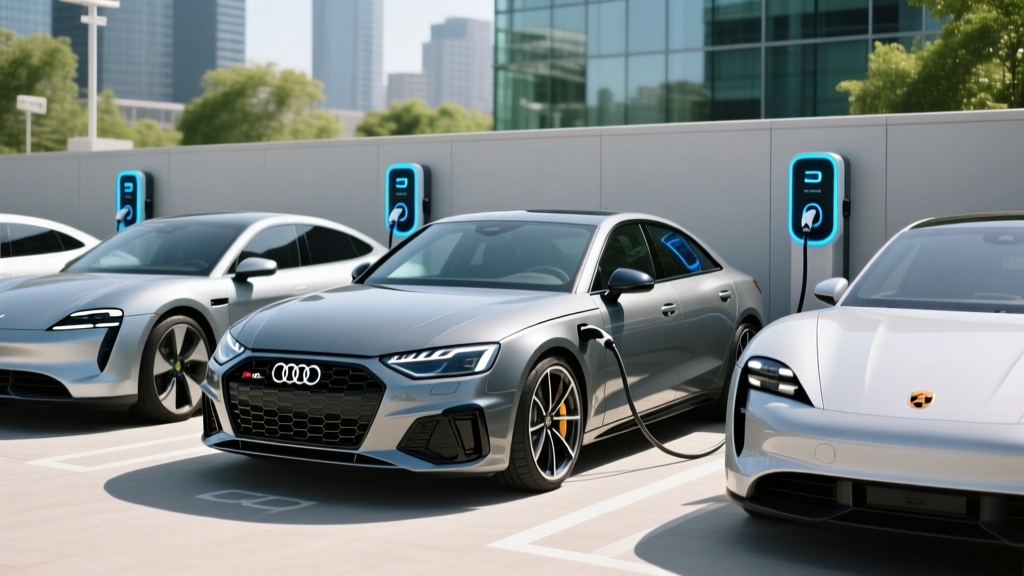
If you're buying a 2026 Audi (such as the Q6 e-tron or A6 e-tron), note that Audi has adopted NACS for North American models. Owners of older CCS-equipped Audis (e-tron GT, Q4 e-tron from 2022–2024) can purchase a CCS-to-NACS adapter for Supercharger access.
Cost Per Mile: Supercharged S4 vs. EV Charging in 2026
This is where the rubber meets the road — or where the electrons meet the battery. Let's compare the real per-mile operating cost of the supercharged S4 against EV charging at various rate scenarios.
Cost Per Mile: Audi S4 3.0T vs. EV Charging Scenarios
| Scenario | Rate / Price | Vehicle Efficiency | Cost Per Mile |
|---|---|---|---|
| Audi S4 (premium gas, national avg) | $4.35/gal (91 octane) | 21 MPG combined | $0.207 |
| Audi S4 (premium gas, CA/NY avg) | $5.40/gal | 21 MPG combined | $0.257 |
| EV home charging (off-peak utility rate) | $0.13/kWh | 3.5 mi/kWh (typical sedan) | $0.037 |
| EV home charging (high-cost state avg) | $0.25/kWh | 3.5 mi/kWh | $0.071 |
| EV public Level 2 (network avg) | $0.35/kWh | 3.5 mi/kWh | $0.100 |
| EV DC fast charge (network avg) | $0.48/kWh | 3.5 mi/kWh | $0.137 |
| EV DC fast charge (peak pricing) | $0.65/kWh | 3.5 mi/kWh | $0.186 |
The takeaway: Even at the most expensive DC fast-charging rates, an EV costs less per mile than the supercharged S4 on premium fuel. At home off-peak rates ($0.13/kWh), the EV's per-mile cost is roughly one-fifth of the S4's. Over 15,000 miles per year, that's a fuel savings of $2,550 annually ($0.207 vs. $0.037 per mile).
Over five years, the home-charging EV owner saves roughly $12,750 in fuel alone compared to the S4 — enough to offset a meaningful portion of the EV's purchase price or home charger installation.
Level 2 Home Charger Recommendations for 2026
Not all Level 2 chargers are equal. Here are three proven units with specific specs, chosen for reliability, smart features, and value.
Emporia Vue Level 2 EV Charger
| Power Output | 48A / 11.5 kW (hardwired) or 40A / 9.6 kW (NEMA 14-50) |
| Connector | J1772 (NACS version available) |
| Cable Length | 24 feet |
| Smart Features | Wi-Fi, energy monitoring via Emporia app, solar integration, scheduled charging, utility demand-response compatible |
| Price | ~$399 |
| Best For | Budget-conscious buyers who want full smart features and energy tracking |
ChargePoint Home Flex
| Power Output | Configurable 16A–50A / up to 12 kW (adjustable to match your circuit) |
| Connector | J1772 (NACS adapter included in 2026 refresh) |
| Cable Length | 23 feet |
| Smart Features | Wi-Fi, ChargePoint app scheduling, Alexa/Google integration, flexible amperage dial |
| Price | ~$649 |
| Best For | Owners who want adjustable amperage to match different circuit sizes without buying a new unit |
Tesla Wall Connector
| Power Output | 48A / 11.5 kW hardwired |
| Connector | NACS native (J1772 adapter available for non-Tesla EVs) |
| Cable Length | 24 feet |
| Smart Features | Wi-Fi, OTA updates, power sharing (link multiple units on one circuit), load management |
| Price | ~$475 |
| Best For | Tesla owners or multi-EV households wanting power-sharing across two cars on a single 60A circuit |
Charging Time Examples: 10–80% by Battery Size
Real-world charging times depend on battery capacity, vehicle charge acceptance rate, and the charger's output. Here are representative 10–80% times for common 2026 EVs on both Level 2 and DC fast charging.
| Vehicle | Battery (kWh) | Level 2 Time (10–80%) | DC Fast Time (10–80%) | Peak DC Rate |
|---|---|---|---|---|
| Tesla Model Y Long Range | 75 kWh (usable) | ~5.5 hrs @ 11.5 kW | ~22 min | 250 kW |
| Hyundai Ioniq 5 Long Range | 77.4 kWh | ~5.5 hrs @ 11.5 kW | ~18 min (800V) | 240 kW |
| Ford Mustang Mach-E Extended | 91 kWh | ~6.5 hrs @ 11.5 kW | ~32 min | 150 kW |
| Chevrolet Equinox EV | 85 kWh | ~6 hrs @ 11.5 kW | ~28 min | 190 kW |
| BMW i4 eDrive40 | 81.5 kWh | ~6 hrs @ 11.5 kW | ~31 min | 200 kW |
Cold-weather caveat: Battery chemistry slows significantly below 32°F. Expect 10–80% DC fast-charge times to increase by 30–50% in freezing weather unless the vehicle actively preconditioning its battery (most 2026 models do this automatically when you navigate to a charger). Level 2 home charging times are less affected because the slower rate generates less thermal stress.
Safety, Code, and Smart Installation Practices
EV chargers draw significant continuous current — up to 48 amps for hours at a time. Here's what safe, code-compliant installation requires:
- Dedicated circuit: Your EV charger must have its own breaker — never share with another appliance. NEC 625.40 requires an individual branch circuit for EVSE.
- GFCI protection: Required for all outdoor receptacles (NEC 210.8). Many hardwired EVSEs have built-in ground-fault protection, which is why hardwired installs are often preferred over plug-in.
- Outdoor rating: If your charger is outside, it must be rated NEMA 4 (weather-resistant). All major chargers listed above carry this rating.
- Wire gauge: A 50-amp circuit requires 6 AWG copper wire (THHN in conduit or NM-B Romex where permitted). A 60-amp circuit requires 4 AWG. Your electrician will size accordingly.
- Surge protection: Recommended for areas with frequent lightning or grid instability. A whole-home surge protector ($200–$400 installed) protects your EVSE and vehicle.
For detailed electrical code requirements, reference the National Electrical Code (NFPA 70), Article 625 — Electric Vehicle Charging System Equipment.
Frequently Asked Questions
How much does it cost to install a home EV charger?
A standard Level 2 home charger installation costs between $950 and $2,600 in homes with an existing 200-amp electrical panel. This includes the EVSE hardware ($350–$750), electrician labor ($400–$1,200), materials ($150–$400), and permit ($50–$250). Homes requiring a panel upgrade from 100A to 200A should budget an additional $1,500–$3,500, bringing the total to $2,450–$6,100.
How fast will each charging level add range?
Level 1 (120V) adds 3–5 miles per hour — suitable for plug-in hybrids with small batteries. Level 2 (240V) at 48 amps adds roughly 35–40 miles per hour, easily replenishing a daily commute overnight. DC fast charging at 150+ kW can add 150–400+ miles per hour, enabling 10–80% charges in 18–35 minutes depending on the vehicle.
Which connector/charger is compatible with my EV?
For 2026 models, NACS (Tesla's connector, now SAE J3400) is the dominant standard adopted by Ford, GM, Hyundai, Kia, BMW, Mercedes, Rivian, Volvo, and others. CCS1 remains on some legacy models. For home Level 2 charging, all EVs accept J1772 AC charging (or NACS with an adapter). Check your vehicle's charge port before purchasing a charger — most chargers are available in both J1772 and NACS versions.
How much does charging cost per mile vs gas?
At the national average home electricity rate of $0.13/kWh and a typical EV efficiency of 3.5 miles/kWh, home charging costs roughly $0.037 per mile. The supercharged Audi S4 at 21 MPG combined on $4.35/gal premium fuel costs $0.207 per mile — roughly 5.6 times more per mile. Even the most expensive public DC fast charging ($0.48–$0.65/kWh) comes in at $0.137–$0.186 per mile, still below the S4's fuel cost.
What electrical upgrades might I need?
The most common upgrade is a panel capacity increase from 100A or 150A to 200A, costing $1,500–$3,500. Your electrician will perform a NEC Article 220 load calculation to determine available capacity. Other potential upgrades include replacing outdated Federal Pacific or Zinsco panels (safety hazards), upgrading service entrance wiring, or adding a sub-panel in a detached garage. Homes with existing 200A panels typically need no upgrade for a single 50A EV circuit.