Why the Audi A6 3.0 TFSI Supercharged Still Comes Up in EV Conversations
The Audi A6 3.0 TFSI supercharged (produced roughly between 2009 and 2018 across the C7 and early C7.5 generations) was a benchmark sport sedan before electrification went mainstream. Its 3.0-liter supercharged V6 produced 310–333 hp depending on model year, delivered smooth torque through a ZF 8-speed automatic, and achieved an EPA-rated 20 city / 29 highway / 24 combined MPG in later variants. For many current owners, it remains a daily driver. For others considering the jump to an electrified vehicle, it's the baseline they want to beat.
This guide uses the A6 3.0 TFSI supercharged as a real-world comparison point to explain how modern plug-in hybrid (PHEV) and battery-electric (BEV) charging works in 2026 — covering home installation costs, charging speeds, connector standards, and what you'll actually spend per mile. If you're cross-shopping your A6 against something like the 2026 Audi A6 TFSI e (PHEV) or a full BEV, the charging infrastructure you'll need is the same.
Charging Levels Explained: Speeds, Range Added, and Real-World Times
Every electrified vehicle — whether a PHEV with a 14 kWh battery or a long-range BEV with a 100 kWh pack — charges at one of three levels. Understanding these is essential before you budget for home equipment or plan road trips.
| Level | Voltage | Power (kW) | Miles of Range per Hour | Typical Use |
|---|---|---|---|---|
| Level 1 | 120V AC | 1.0–1.4 kW | 3–5 mi/hr | Overnight trickle; PHEV top-ups |
| Level 2 | 240V AC | 3.3–19.2 kW | 12–75 mi/hr | Home daily charging; workplace; public AC |
| DC Fast Charge | 400–800V DC | 50–350 kW | 150–1,200+ mi/hr (peak) | Road trips; highway corridors |
Charging Time Examples by Battery Size
Real charging times depend on battery capacity (in kWh), the vehicle's onboard charger limit (for AC charging), and the DC fast-charge curve. Here's what 10–80% charging looks like across common battery sizes in 2026:
- PHEV (15–20 kWh battery): Level 2 at 7.2 kW reaches 80% in roughly 1.5–2 hours. DC fast charging (if equipped) takes 20–30 minutes.
- Mid-size BEV (65–75 kWh battery, e.g., Tesla Model Y, Hyundai Ioniq 5): Level 2 at 11.5 kW reaches 80% in ~4.5–5.5 hours. DC fast at 250 kW peaks takes 10–80% in ~18–25 minutes.
- Large BEV (100+ kWh battery, e.g., Ford F-150 Lightning Extended Range): Level 2 at 11.5 kW reaches 80% in ~7–8 hours. DC fast at 150+ kW takes 10–80% in ~35–45 minutes.
How Much Does It Cost to Install a Home EV Charger?
This is the most common question from new EV buyers, and the answer varies enormously depending on your home's electrical panel, the distance from panel to garage or driveway, and local permit requirements. Here's a realistic breakdown for a Level 2 (240V) home charger installation in 2026:
| Component | Low Estimate | High Estimate | Notes |
|---|---|---|---|
| Level 2 Charger (Equipment) | $300 | $700 | 32A–48A smart charger; hardwired or NEMA 14-50 plug |
| Electrician Labor | $500 | $2,000 | Depends on run length, wall type, conduit needs |
| Electrical Permit | $50 | $300 | Varies by municipality; some areas bundle with inspection |
| Panel Upgrade (if needed) | $1,500 | $4,000 | Upgrading from 100A to 200A service; common in pre-1990 homes |
| Total (no panel upgrade) | $850 | $3,000 | Most homes with 200A service and nearby panel |
| Total (with panel upgrade) | $2,350 | $7,000 | Older homes or high-demand panels |
Electrical Requirements for Level 2 Charging
A typical Level 2 home charger requires a 240V dedicated circuit on a breaker rated 125% of the charger's continuous draw. For a 48-amp charger (the most common high-power residential unit), you need a 60-amp breaker. For a 40-amp charger, a 50-amp breaker. The circuit must be dedicated — sharing it with other appliances risks tripping and violates National Electrical Code (NEC) Article 625.
Do you need a panel upgrade? If your home has a 100-amp main service panel (common in homes built before 1990), adding a 40–60 amp EV circuit may push your total load beyond safe capacity. A licensed electrician will perform a load calculation per NEC Article 220. Many utility companies offer free or subsidized panel upgrades for EV adopters — check with your local provider before paying full price.
Safety and Code Considerations
- GFCI Protection: NEC 2020 and later require GFCI (Ground Fault Circuit Interrupter) protection for outdoor EV outlets. Hardwired chargers with built-in ground-fault detection may satisfy this without a separate GFCI breaker, which can cost $100–$200 extra.
- Outdoor Rating: If your charger mounts outside, it must carry a NEMA 4 or NEMA 4X rating for weather resistance. All major chargers sold in 2026 meet this, but verify the rating if purchasing older stock.
- Cable Management: For wall-mounted units, ensure the cable doesn't stretch across a walkway. A 25-foot cable covers most garage-to-car distances; some units offer 18-foot options for tighter spaces.
- Permit and Inspection: Nearly all jurisdictions require an electrical permit for EV charger installation. Skipping this risks insurance claim denial if an electrical fire occurs. The inspection typically happens within 1–2 weeks of installation.
Which Connector Is Compatible with My EV?
The connector landscape shifted dramatically between 2023 and 2026. Here's where each standard stands for 2026 model-year vehicles:
| Connector | Brands Using It | Adapter Needed for Tesla Superchargers? |
|---|---|---|
| NACS (North American Charging Standard) | Tesla, Ford, GM, Rivian, Volvo, Polestar, Mercedes-Benz, Nissan (2025+), Hyundai/Kia (2025+), BMW (2026+) | No — native NACS port |
| CCS1 (Combined Charging System) | Volkswagen, Audi (non-Porsche), Stellantis, Honda, some legacy models | Yes — CCS-to-NACS adapter (~$150–$200) required for Supercharger access |
| CHAdeMO | Nissan Leaf (legacy), Mitsubishi Outlander PHEV (older) | Effectively obsolete for new vehicles; limited DC network support |
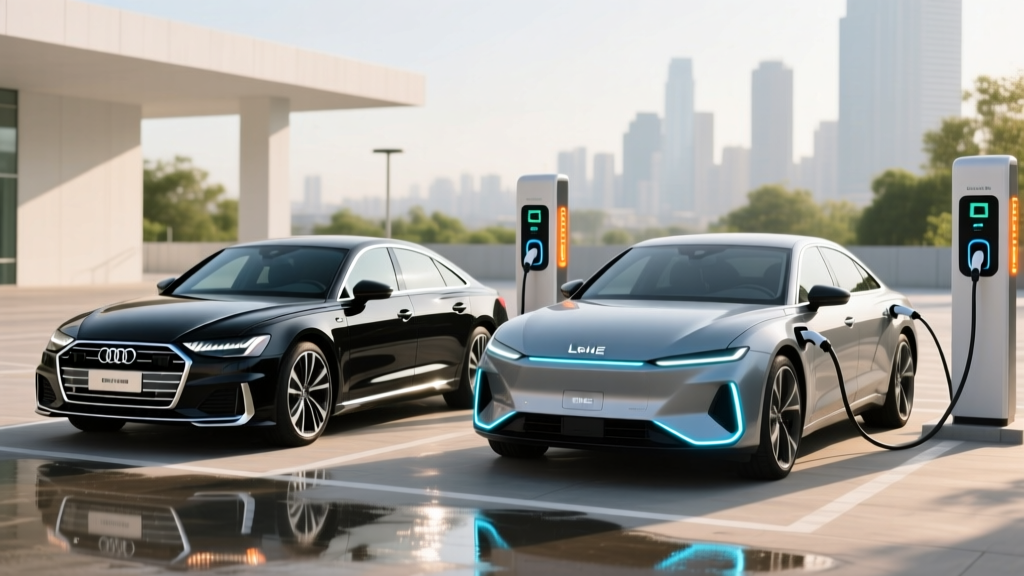
If you're driving an Audi with a CCS1 port (including the current A6 TFSI e PHEV or Q8 e-tron), you can charge at Electrify America, EVgo, and most non-Tesla DC fast networks natively. To access the Tesla Supercharger network — which in 2026 remains the largest and most reliable DC fast-charging network in North America with over 30,000 stalls — you'll need a CCS-to-NACS adapter. Tesla sells one for approximately $199, and third-party options from Lectron and Akeera are available for $149–$179.
For Level 2 home charging, all modern EVs and PHEVs use the J1772 connector (or NACS, which integrates J1772 signaling). Any Level 2 charger you buy will work with any EV — the connector is universal at Level 2. Tesla Wall Connectors include a J1772 adapter in the box.
How Much Does Charging Cost Per Mile vs. Gas?
This is where the comparison to your Audi A6 3.0 TFSI supercharged gets concrete. That car's EPA combined rating of 24 MPG means at $3.50/gallon (a reasonable 2026 national average for premium, which the A6 requires), you're spending approximately $0.146 per mile on fuel.
| Scenario | Rate | Cost Per Mile | Annual Cost (12,000 mi) |
|---|---|---|---|
| Audi A6 3.0 TFSI Supercharged | $3.50/gal premium, 24 MPG | $0.146 | $1,752 |
| Home Level 2 (national avg electricity) | $0.17/kWh, 3.5 mi/kWh | $0.049 | $588 |
| Home Level 2 (off-peak TOU rate) | $0.09/kWh, 3.5 mi/kWh | $0.026 | $312 |
| Public Level 2 (network pricing) | $0.35/kWh, 3.5 mi/kWh | $0.100 | $1,200 |
| DC Fast Charge (public) | $0.48/kWh, 3.0 mi/kWh | $0.160 | $1,920 |
The math is clear: home charging is dramatically cheaper than gasoline, saving $1,100–$1,400 annually compared to the supercharged A6. However, if you rely exclusively on DC fast charging at public stations, you could actually spend more per mile than gasoline. This is why home charging access is the single most important factor in EV ownership economics.
For PHEV owners (like those with an Audi A6 TFSI e), the calculation splits: your first 25–35 miles each day run on cheap electricity, and longer trips burn gasoline at the vehicle's hybrid MPG rating. Most PHEV owners report covering 60–80% of their annual miles on electricity.
2026 Equipment Recommendations: Level 2 Home Chargers
Based on reliability, smart features, connector options, and value, here are four Level 2 chargers that dominate the 2026 residential market:
Emporia Level 2 EV Charger
- Power: 48A (11.5 kW) hardwired / 40A (9.6 kW) NEMA 14-50
- Connector: J1772 (universal); NACS adapter included
- Cable: 24 ft
- Smart Features: Wi-Fi, energy monitoring, solar integration, TOU scheduling via app
- Price: ~$399
- Best For: Budget-conscious buyers who want full smart features
ChargePoint Home Flex
- Power: Up to 50A (12 kW) hardwired; configurable 16–50A
- Connector: J1772 (23 ft cable)
- Cable: 23 ft
- Smart Features: Wi-Fi, Alexa integration, ChargePoint network account, amperage adjustment
- Price: ~$599
- Best For: Flexibility in homes with varying circuit capacities
Tesla Wall Connector
- Power: 48A (11.5 kW) hardwired
- Connector: NACS native; J1772 adapter included in box
- Cable: 24 ft
- Smart Features: Wi-Fi, OTA updates, power sharing between two units, Tesla app
- Price: ~$475
- Best For: Tesla owners or NACS-native vehicles; cleanest aesthetics
Grizzl-E Smart
- Power: 40A (9.6 kW) NEMA 14-50 / hardwired
- Connector: J1772 (24 ft cable)
- Cable: 24 ft
- Smart Features: Wi-Fi, OCPP protocol, load balancing, extreme cold rated (-40°C)
- Price: ~$549
- Best For: Cold-climate durability; open protocol for utility programs
All four units are NEMA 4 rated for outdoor installation, UL-listed for safety, and compatible with the federal Residential Clean Energy Credit — which in 2026 covers up to 30% of charger equipment and installation costs (capped at $1,000) under the alternative fuel infrastructure credit. Check IRS.gov for current eligibility rules, as income and location-based restrictions may apply.
The A6 3.0 TFSI Supercharged vs. Modern Electrified Audi: What Changes
If you're considering retiring your supercharged A6 for an electrified Audi, here's what the transition means in practical terms:
- 2026 Audi A6 TFSI e (PHEV): Approximately 17.9 kWh battery, EPA-estimated ~33 miles of electric-only range, 299 combined hp (2.0T + electric motor), and an EPA combined 50 MPGe when factoring in electric operation. MSRP starts around $64,900. You'd charge at home nightly on Level 2 (100% in ~2.5 hours at 7.2 kW) and never need DC fast charging for daily use.
- 2026 Audi Q6 e-tron (BEV): 94.4 kWh usable battery (NMC chemistry), EPA-estimated 308 miles range, 422 hp (quattro), and DC fast charging at up to 270 kW (10–80% in ~21 minutes). MSRP starts around $63,800. This vehicle requires a full home Level 2 setup and uses the NACS connector natively.
Neither vehicle replicates the supercharged V6's linear torque delivery or the C7 chassis's mechanical refinement. But both eliminate $1,200–$1,700 in annual fuel costs (assuming primarily home charging), reduce maintenance spend (no supercharger belt, no oil changes on the BEV), and offer superior torque-fill response at low speeds.
Frequently Asked Questions
How much does it cost to install a home EV charger?
For most homes with a 200-amp electrical panel and a nearby installation location, expect $850–$3,000 total (equipment + electrician + permit). If your home needs a panel upgrade from 100A to 200A service, add $1,500–$4,000. Always get a load calculation from a licensed electrician before committing.
How fast will each charging level add range?
Level 1 (120V) adds 3–5 miles per hour — adequate for PHEVs with small batteries but impractical for BEVs. Level 2 (240V, 48A) adds 30–45 miles per hour for most BEVs and fully charges a PHEV in 1.5–3 hours. DC fast charging adds 150–1,200 miles per hour at peak rates, but sustained sessions average 10–80% in 18–45 minutes depending on battery size and peak kW capability.
Which connector/charger is compatible with my EV?
For Level 2 home charging, all EVs use J1772 or NACS (which includes J1772 signaling) — any Level 2 charger works with any vehicle. For DC fast charging, check your vehicle's port: NACS is now used by Tesla, Ford, GM, Rivian, Hyundai/Kia (2025+), and most major brands. CCS1 remains on Volkswagen, some Audis, and Stellantis vehicles. CHAdeMO is effectively discontinued for new vehicles.
How much does charging cost per mile vs gas?
Home charging at the national average electricity rate ($0.17/kWh) costs approximately $0.049 per mile — about one-third the cost of fueling a 24 MPG vehicle on premium gasoline at $3.50/gallon ($0.146/mile). Off-peak time-of-use rates can push home charging below $0.03/mile. Public DC fast charging at $0.48/kWh can exceed gasoline costs at $0.16/mile or more.
What electrical upgrades might I need?
The most common upgrade is a panel replacement from 100A to 200A service ($1,500–$4,000). You may also need a new conduit run if your panel is far from the charger location, a GFCI breaker for outdoor installations ($100–$200), or a sub-panel if your main panel has no available breaker slots. Some utilities offer free smart panel upgrades or rebates for EV-ready wiring — contact your provider before hiring an electrician.
Sources: EPA Fuel Economy for MPG and MPGe data; IRS Residential Clean Energy Credit for charger tax credit rules; manufacturer specifications from Audi USA.