The Short Answer: Are Superchargers Free?
For the vast majority of Tesla owners in 2026, Tesla Superchargers are not free. Tesla phased out its legacy free-unlimited-Supercharging program years ago, and today nearly every Tesla on the road pays per kWh (or per minute in a few jurisdictions) when using the Supercharger network. Typical rates range from $0.25 to $0.58 per kWh depending on location, time of day, and whether you're charging during peak or off-peak hours.
There are narrow exceptions — some older Model S and Model X vehicles purchased before 2017 carry transferable or non-transferable free Supercharging credits, and Tesla occasionally runs limited-time promotions for new vehicle deliveries or referral rewards. But if you're buying a new Model 3, Model Y, Cybertruck, or any post-2017 used Tesla, plan on paying for every session.
This guide breaks down what Superchargers actually cost, how they compare to other public DC fast charging networks, what you'll spend charging at home, and how all of it stacks up against gasoline on a per-mile basis.
Understanding EV Charging Levels: Speed and Cost at a Glance
Before comparing costs, it's essential to understand the three charging levels available to EV owners. Note that kW (kilowatts) measures the rate of power delivery — how fast energy flows into your battery — while kWh (kilowatt-hours) measures total energy stored. Think of kW as water flow rate and kWh as the total volume in the tank.
| Level | Voltage | Max Power (kW) | Miles of Range Added Per Hour | Typical Use Case |
|---|---|---|---|---|
| Level 1 | 120V AC | 1.0–1.9 kW | 3–5 miles | Overnight trickle; PHEVs and light daily use |
| Level 2 | 240V AC | 7.2–19.2 kW | 20–60 miles | Home daily charging; workplace; destination |
| DC Fast Charging | 400–800V DC | 50–350+ kW | 150–1,000+ miles (peak rate) | Road trips; rapid top-ups; Supercharger network |
Real-world caveat: Those "miles per hour" figures assume a sustained peak rate. DC fast chargers follow a charge curve — they deliver peak power only at low states of charge (typically 10–40% SoC), then taper significantly above 80%. A 250 kW Tesla Supercharger might sustain 250 kW for only 5–8 minutes before stepping down to 150 kW, then 100 kW, then 50 kW as the battery fills. That's why manufacturers quote 10–80% charge times rather than 0–100%.
How Much Does Public DC Fast Charging Actually Cost?
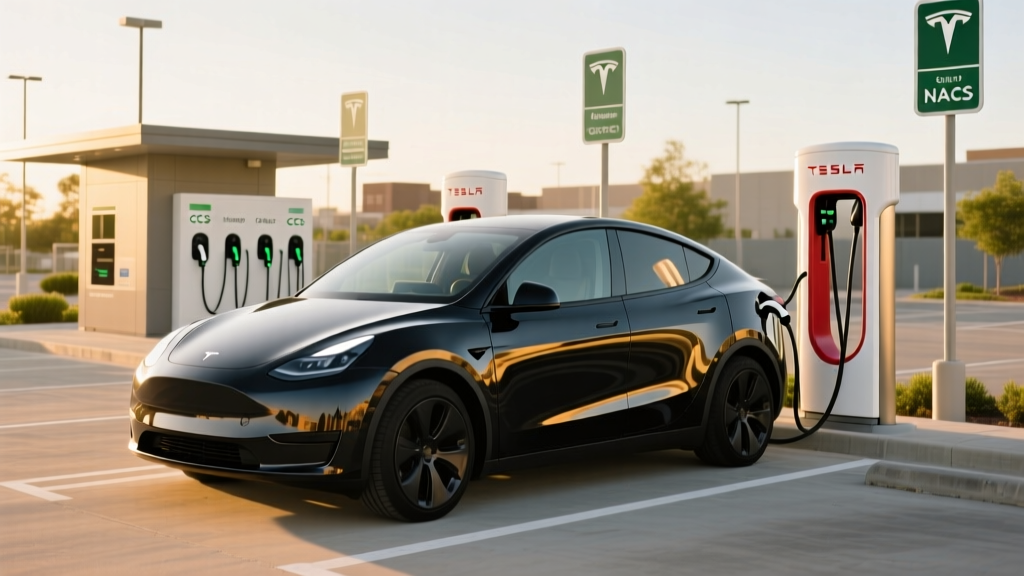
Tesla's Supercharger network is generally among the more affordable DC fast charging options, though it's no longer the bargain it was in 2018 when rates hovered around $0.13/kWh in some markets. Here's what you can expect to pay across major networks in 2026:
- Tesla Supercharger: $0.25–$0.58/kWh (varies by location and time-of-use pricing)
- Electrify America: $0.39–$0.57/kWh (Idle fee of $0.40/min after session completes)
- EVgo: $0.36–$0.53/kWh (membership plans can reduce rates)
- ChargePoint (DC fast): $0.35–$0.60/kWh (set by station owner)
Idle fees are a critical hidden cost. Tesla charges up to $1.00 per minute if your vehicle remains plugged in after charging completes and the station is at least 50% occupied. Electrify America and EVgo impose similar penalties. Always monitor your session via the app.
Example session cost: Charging a Tesla Model Y Long Range (75 kWh usable battery, EPA-rated 330 miles) from 10–80% requires roughly 52.5 kWh. At a Supercharger rate of $0.38/kWh, that session costs approximately $19.95 and adds ~230 miles of range.
Home Level 2 Charging: Installation Costs and Electrical Requirements
Home charging is where EV ownership economics shine — but installation costs vary enormously based on your home's electrical infrastructure. Here's what's involved.
Electrical Requirements
A standard home Level 2 charger requires a dedicated 240V circuit. The most common setup is a NEMA 14-50 outlet on a 50-amp breaker, which safely delivers 40 amps continuous (NEC code requires circuits rated at 125% of continuous load). This provides up to 9.6 kW of charging power. Higher-output chargers may require a 60-amp or 80-amp breaker for 48A or 64A continuous draw, respectively.
Panel Upgrade Considerations
This is where costs can spike. If your home has a 100-amp electrical panel (common in pre-1990 construction), adding a 50-amp EV circuit may exceed your panel's capacity — especially if you already run electric range, dryer, and HVAC. A licensed electrician will perform a load calculation to determine whether a panel upgrade to 200 amps is necessary. Panel upgrades typically cost $1,500–$4,000 depending on your utility and local code requirements.
Newer homes with 200-amp panels usually accommodate a 50-amp EV circuit without upgrades, provided the existing load allows it.
Permits and Inspections
Most jurisdictions require an electrical permit for EV charger installation, typically costing $50–$250. The work must pass inspection to ensure code compliance. Skipping the permit risks insurance coverage denial in the event of an electrical fire and may create issues during a home sale.
| Cost Component | Simple Install (Panel Adjacent, No Upgrade) | Complex Install (Long Run or Panel Upgrade) |
|---|---|---|
| Level 2 Charger (Equipment) | $350–$700 | $350–$700 |
| Electrical Permit | $50–$150 | $100–$250 |
| Electrician Labor + Materials (conduit, wire, outlet) | $400–$1,200 | $1,500–$3,500 |
| Panel Upgrade (if needed) | $0 | $1,500–$4,000 |
| Total Estimated Cost | $800–$2,050 | $3,450–$8,450 |
Federal incentive: The Alternative Fuel Vehicle Refueling Property Credit (IRS Form 8911) covers 30% of home charger equipment and installation costs up to $1,000, subject to income limits and census-tract eligibility. Consult a tax professional for your specific situation.
Connector Compatibility: NACS, CCS, and CHAdeMO
The connector landscape has shifted dramatically since 2023, when Ford, GM, Rivian, and nearly every major automaker adopted Tesla's North American Charging Standard (NACS) for their vehicles. Here's where things stand for 2026 model-year vehicles:
| Connector | Brands Using It (2026 Models) | Adapter Needed? |
|---|---|---|
| NACS (Tesla) | Tesla (all), Ford, GM, Rivian, Volvo, Polestar, Mercedes-Benz, Hyundai, Kia, BMW, Lucid (new models) | CCS-to-NACS adapters available for legacy CCS vehicles (~$150–$250) |
| CCS1 | Legacy models pre-2025, some Stellantis vehicles, Volkswagen ID.4 (2024 and earlier) | NACS-to-CCS adapter needed for Supercharger access |
| CHAdeMO | Nissan Leaf (discontinued after 2025 model year); effectively a legacy standard | No adapter available; CHAdeMO stations increasingly rare |
If you own a CCS-equipped vehicle from the 2023–2025 model years, most automakers now offer or endorse a NACS-to-CCS adapter that grants access to Tesla Superchargers. Ford provides one free to original owners of the F-150 Lightning and Mustang Mach-E; aftermarket options from Lectron and A2Z run $150–$250. Verify that your vehicle's manufacturer has formally approved Supercharger access for your specific model before purchasing an adapter.
Cost Per Mile: EV Charging vs. Gasoline
This is where EV ownership pays dividends — but the savings depend heavily on where and when you charge.
| Scenario | Rate | Vehicle Efficiency | Cost Per Mile |
|---|---|---|---|
| Home Level 2 (national avg. electricity, 2026) | $0.17/kWh | 3.5 mi/kWh (Tesla Model Y) | $0.049 |
| Home Level 2 (off-peak TOU rate, e.g., California) | $0.12/kWh | 3.5 mi/kWh | $0.034 |
| Home Level 2 (high-cost state, e.g., Hawaii) | $0.42/kWh | 3.5 mi/kWh | $0.120 |
| Tesla Supercharger (average) | $0.38/kWh | 3.5 mi/kWh | $0.109 |
| Electrify America (average) | $0.48/kWh | 3.5 mi/kWh | $0.137 |
| Gasoline vehicle (30 MPG combined, $3.40/gal) | $3.40/gallon | 30 MPG | $0.113 |
| Gasoline vehicle (25 MPG combined, $3.40/gal) | $3.40/gallon | 25 MPG | $0.136 |
The takeaway is clear: home charging is almost always cheaper than gasoline, often by a factor of 2–3x. Public DC fast charging at networks like Electrify America can actually exceed the per-mile cost of an efficient gas car, which is why home Level 2 installation is the single highest-ROI upgrade an EV owner can make.
For a driver covering 12,000 miles annually in a Model Y, home charging at the national average costs roughly $588/year in electricity. The equivalent gasoline vehicle at 28 MPG and $3.40/gallon costs $1,457/year — a savings of $869 per year, or $4,345 over five years, before factoring in reduced EV maintenance.
Charging Time Benchmarks for Common EV Battery Sizes
Charge times depend on battery capacity (kWh), the vehicle's onboard charger rating (for Level 2), and the DC fast charge curve. Here are representative 2026 benchmarks:
| Vehicle | Battery (kWh usable) | Level 2 at 11.5 kW (10–100%) | DC Fast 10–80% | Peak DC kW |
|---|---|---|---|---|
| Tesla Model 3 Long Range | 75 | ~7 hours | ~22 min (250 kW Supercharger) | 250 kW |
| Tesla Model Y Long Range | 75 | ~7 hours | ~24 min (250 kW Supercharger) | 250 kW |
| Hyundai Ioniq 5 (Long Range) | 77.4 | ~7.5 hours (10.9 kW onboard) | ~18 min (350 kW charger) | 240 kW |
| Ford F-150 Lightning (Extended) | 131 | ~12 hours | ~41 min (150+ kW charger) | 150 kW |
| Chevrolet Equinox EV | 85 | ~7.5 hours (11.5 kW onboard) | ~28 min (150+ kW charger) | 150 kW |
Real-world charging curve reality: That 18-minute 10–80% figure for the Ioniq 5 requires a 350 kW-capable station and a battery preconditioned to optimal temperature. On a 150 kW charger, expect 28–32 minutes. In cold weather without preconditioning, add 30–50% to those times. Always use your vehicle's navigation-based preconditioning feature when routing to a DC fast charger.
Recommended Home Level 2 Chargers
Not all Level 2 chargers are equal. Here are proven picks with the specs that matter:
Tesla Wall Connector (Gen 4)
- Power Output: Up to 11.5 kW (48A on 60A breaker)
- Connector: NACS (native Tesla plug)
- Cable Length: 24 feet
- Smart Features: Wi-Fi, over-the-air updates, load sharing with second unit, Powerwall integration
- Price: ~$475
- Best For: Tesla owners; non-Tesla NACS vehicles (2025+ models with native NACS port)
ChargePoint Home Flex
- Power Output: Configurable 16A–50A (3.8–12 kW), adjustable to match your circuit
- Connector: J1772 (standard for non-Tesla); NACS adapter included in newer versions
- Cable Length: 23 feet
- Smart Features: Wi-Fi, app scheduling, Alexa integration, detailed energy tracking
- Price: ~$550–$650
- Best For: Multi-EV households, flexible amperage for older panels
Grizzl-E Smart
- Power Output: Up to 10 kW (40A on 50A breaker)
- Connector: J1772 (NACS adapter available separately)
- Cable Length: 24 feet
- Smart Features: Wi-Fi, OCPP-compatible, adjustable amperage via DIP switches
- Price: ~$449
- Best For: Budget-conscious buyers, outdoor installations (rated -40°F to 122°F), Canadian-built durability
Emporia Level 2 EV Charger
- Power Output: Up to 11.5 kW (48A on 60A breaker)
- Connector: J1772 (NACS version available)
- Cable Length: 24 feet
- Smart Features: Wi-Fi, solar integration with Emporia Vue energy monitor, scheduled charging, load management
- Price: ~$399
- Best For: Solar-equipped homes, energy monitoring enthusiasts, best value-to-power ratio
Safety, Electrical Code, and Installation Best Practices
EV charging draws sustained high current for hours — more than any other household appliance. Proper installation isn't optional.
- Dedicated circuit: Your EV charger must be on its own dedicated breaker. Sharing a circuit with other loads is a code violation and a fire hazard.
- GFCI protection: The 2023 NEC (National Electrical Code) requires GFCI protection for EV charging outlets in garages and all outdoor locations. Hardwired chargers with built-in ground-fault protection may satisfy this requirement without an external GFCI breaker.
- Outdoor rating: If installing outside, ensure the charger carries a NEMA 4 (weatherproof) rating. The Tesla Wall Connector, ChargePoint Home Flex, and Grizzl-E are all rated for outdoor use.
- Wire gauge: A 50-amp circuit requires minimum 6 AWG copper wire (THHN in conduit or NM-B/Romex where permitted). Your electrician will size wire based on run length to account for voltage drop on runs exceeding 50 feet.
- Hardwired vs. plug-in: Hardwired installations eliminate the NEMA 14-50 receptacle (a known failure point under sustained high load if low-quality) and may allow higher amperage without GFCI breaker requirements. Plug-in offers portability if you move homes.
Frequently Asked Questions
Do any Tesla vehicles still get free Supercharging?
A small number of pre-2017 Model S and Model X vehicles carry free Supercharging benefits. Some are transferable to subsequent owners; others are tied to the original owner only. Tesla occasionally offers promotional free Supercharging miles (e.g., 10,000 free miles) for new vehicle referrals or end-of-quarter delivery incentives. Check the vehicle's Tesla app account or window sticker for specific entitlements before relying on them.
Can non-Tesla vehicles use Tesla Superchargers?
Yes, but with limitations. Tesla has opened select Supercharger stations to non-Tesla EVs through its "Open Supercharging" program. CCS-equipped vehicles need a Tesla-approved NACS adapter, and access is limited to participating stations — not the entire network. As of 2026, Ford, GM, Rivian, and other NACS-adopting brands are gaining broader access as they ship vehicles with native NACS ports. Check the Tesla app's "Charge Your Non-Tesla EV" section for compatible stations near you.
How much does it cost to install a home EV charger?
A straightforward installation with a 200-amp panel, short conduit run, and no panel upgrade typically costs $800–$2,050 all-in (charger, permit, electrician labor, and materials). If your home needs a panel upgrade from 100A to 200A, or the run from panel to garage is long, expect $3,450–$8,450. Always get three quotes from licensed electricians and verify they include permit costs.
Is it cheaper to charge at home or at a Supercharger?
Home charging is almost always cheaper. At the 2026 national average residential electricity rate of ~$0.17/kWh, home charging a Model Y costs roughly $0.049/mile. At a Supercharger averaging $0.38/kWh, the same vehicle costs $0.109/mile — more than double. Over 12,000 annual miles, that's a difference of about $720/year favoring home charging.
What happens if I charge to 100% at a Supercharger and don't move my car?
Tesla charges idle fees of up to $1.00 per minute when a station is at 50%+ occupancy and your vehicle has finished charging but remains plugged in. At 100% occupancy, the fee doubles. Electrify America charges $0.40/minute idle fees. Set a charge limit in your vehicle app and move your car promptly.
Will a Supercharger damage my battery over time?
Frequent DC fast charging causes marginally more battery degradation than Level 2 charging due to higher heat generation. However, modern battery thermal management systems (liquid cooling) mitigate this significantly. Data from the Department of Energy suggests that even with regular DC fast charging, most EV batteries retain 90%+ of original capacity after 100,000 miles. For daily driving, prioritize home Level 2 charging and reserve Superchargers for road trips — this is the optimal longevity strategy.