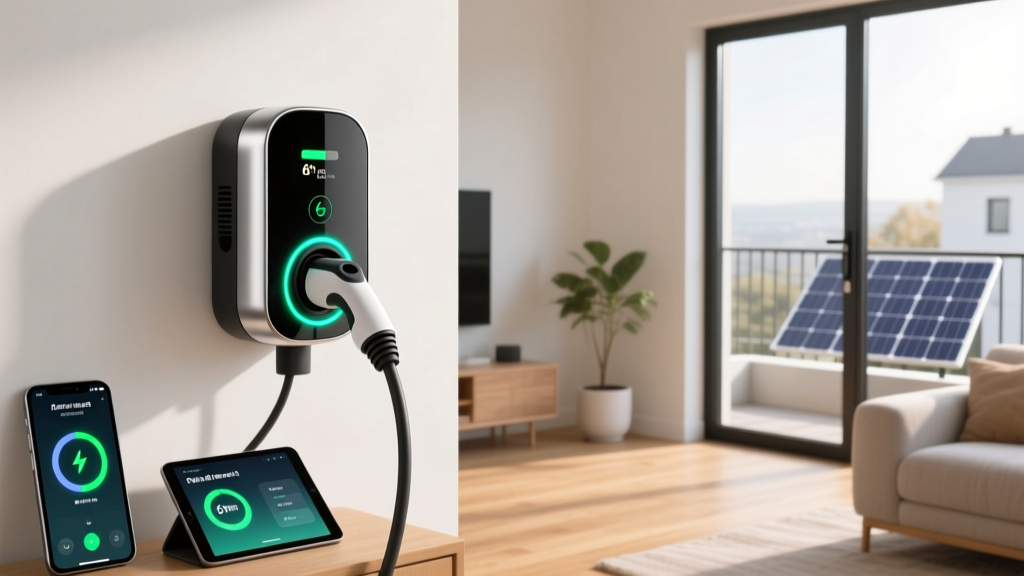
The home EV charger market has matured rapidly, and what enthusiasts and industry watchers are calling the 6th gen charger represents the latest leap in residential charging hardware. These next-generation Level 2 units deliver faster throughput, smarter energy management, and tighter integration with solar and home battery systems — but the real question for most EV owners is whether upgrading makes financial and practical sense. This guide breaks down exactly what 6th generation chargers offer, what your home's electrical system needs to support them, and how they compare to the public charging network in real-world cost and convenience.
Charging Levels Explained: Speeds, kW, and Miles Per Hour
Before evaluating any charger, you need to understand the three charging tiers and what they deliver in practice. The critical distinction: kW (kilowatts) measures power — how fast energy flows into your battery. kWh (kilowatt-hours) measures energy — the total capacity of your battery. A 10 kW charger filling a 75 kWh battery is like a hose filling a tank: the hose width (kW) determines fill speed, the tank size (kWh) determines how long it takes.
| Level | Voltage | Power (kW) | Miles Added/Hour | Typical Use |
|---|---|---|---|---|
| Level 1 | 120V AC | 1.2–1.9 kW | 3–5 mi/hr | Overnight trickle, PHEVs, emergencies |
| Level 2 | 240V AC | 3.3–19.2 kW | 12–75 mi/hr | Home daily charging, workplace |
| DC Fast (Level 3) | 400–800V DC | 50–350+ kW | 150–1,000+ mi/hr | Road trips, highway corridors |
A 6th gen home charger typically operates at Level 2, delivering between 11.5 kW and 19.2 kW — enough to fully replenish most EV batteries in 4 to 8 hours. For context, a Tesla Model Y with a 75 kWh (usable) battery gains roughly 44 miles of range per hour of charging on a 48-amp (11.5 kW) Level 2 circuit, or about 58 miles per hour on a 60-amp (14.4 kW) circuit. That overnight session while you sleep delivers a full battery by morning.
What Defines a 6th Gen Charger?
The term "6th gen charger" isn't an official industry standard — it's an enthusiast and installer shorthand for the latest wave of smart Level 2 hardware that arrived in 2025–2026. These units share several defining characteristics:
- Higher amperage support: 60A to 80A circuits (delivering 14.4 kW to 19.2 kW), up from the 32A–48A norm of previous generations
- Native NACS connectors: With Tesla opening the Supercharger network and the industry standardizing on NACS (North American Charging Standard), 6th gen units ship with the J3400 (NACS) plug as standard or offer seamless CCS-to-NACS adapter integration
- Dynamic load management: Real-time amperage adjustment based on household electrical demand — preventing panel overload without requiring a service upgrade
- OCPP 2.0.1+ compliance: Open Charge Point Protocol enables charger-agnostic app control, utility demand-response programs, and multi-vehicle power sharing on a single circuit
- Solar and battery integration: Direct communication with home solar inverters and battery storage (e.g., Tesla Powerwall, Enphase) to prioritize renewable energy for EV charging
- Wi-Fi 6 / Ethernet / Thread connectivity: Reliable OTA firmware updates, scheduling, and energy-use dashboards
If your current Level 2 charger is a 32A or 40A unit from 2020–2023, a 6th gen charger can cut your overnight charging time by 30–50% — meaningful if you drive a large-battery EV like the Ford F-150 Lightning (131 kWh extended range) or the Rivian R1S (149 kWh Max Pack).
Home Installation: Electrical Requirements and Costs
The single biggest variable in home charging setup isn't the charger itself — it's your home's electrical panel. Here's what a 6th gen charger installation actually requires and costs.
Electrical Requirements
Most 6th gen chargers rated for 48A continuous draw require a 60-amp dedicated circuit on a 240V supply. Units rated for 64A continuous need an 80A circuit. The National Electrical Code (NEC) requires that continuous loads (anything running 3+ hours, which includes EV charging) use only 80% of a circuit breaker's rated capacity. So a 48A charger needs a 60A breaker; a 64A charger needs an 80A breaker.
Homes built after 2000 typically have 200A electrical service panels with spare capacity for a dedicated EV circuit. Older homes with 100A or 150A panels may need a panel upgrade to 200A — a significant added cost. A licensed electrician will perform a load calculation (NEC Article 220) to determine whether your panel can handle the additional draw.
Installation Cost Breakdown
| Component | Simple Install (panel nearby) | Complex Install (panel upgrade) |
|---|---|---|
| Charger hardware (Level 2, 48A–80A) | $400–$750 | $400–$750 |
| Electrical permit | $50–$200 | $50–$200 |
| Electrician labor (run 240V circuit) | $300–$800 | $500–$1,500 |
| Panel upgrade (100A → 200A), if needed | — | $1,500–$4,000 |
| Conduit/wiring (long runs, 50+ ft) | $100–$300 | $300–$800 |
| Total estimated cost | $850–$2,050 | $2,750–$7,250 |
The wide range reflects real-world variability: a garage charger mounted 10 feet from a 200A panel with available breaker slots is a straightforward $850–$1,200 job. A charger on the far side of the house from a maxed-out 100A panel in a 1970s home can exceed $5,000 once the panel upgrade and long wire run are factored in.
Pro tip: Some 6th gen chargers with dynamic load management (like the Emporia V2X or Enel X Way Pro) can share an existing high-amperage circuit (e.g., a dryer outlet) without a panel upgrade, reducing costs substantially. Always get at least two quotes from licensed electricians, and confirm they have specific EV charger installation experience.
Connector Compatibility: NACS, CCS1, and CHAdeMO
The connector landscape has consolidated significantly since 2024, when Ford, GM, Rivian, Volvo, and most major automakers committed to adopting NACS (the Tesla-designed connector, now standardized as SAE J3400). By the 2026 model year, nearly all new EVs sold in North America ship with a native NACS charge port.
| Connector | Brands Using It (Native) | Adapter Needed? |
|---|---|---|
| NACS (J3400) | Tesla, Ford, GM, Rivian, Volvo, Polestar, Hyundai, Kia (2025+), Mercedes-Benz (2026+) | None for new EVs; CCS vehicles need CCS-to-NACS adapter |
| CCS1 | Older VW ID.4, BMW iX (pre-2025), some Stellantis EVs | NACS-to-CCS adapter for Supercharger access |
| CHAdeMO | Nissan Leaf (legacy, discontinued 2025) | Limited public infrastructure; CHAdeMO-to-NACS adapters rare |
For home charging, Level 2 connectors have also shifted to NACS. If you own a pre-2025 EV with a CCS port, most 6th gen chargers either include a CCS adapter in the box or support one as an accessory. The key spec to check: ensure the charger's connector matches your vehicle's charge port, or budget $100–$200 for a quality adapter rated for your charger's full amperage.
Sources: SAE International J3400 standard defines the NACS connector specification.
Cost to Charge: Home vs. Public vs. Gas Per Mile
The economics of EV charging remain one of the strongest arguments for home charging — but the gap narrows considerably when you rely exclusively on public DC fast chargers. Here's a real-world breakdown based on 2026 average rates.
| Scenario | Rate | Cost for 75 kWh Battery | Cost Per Mile (3.5 mi/kWh) |
|---|---|---|---|
| Home Level 2 (national avg. residential) | $0.16/kWh | $12.00 | $0.046/mi |
| Home Level 2 (off-peak TOU rate) | $0.08/kWh | $6.00 | $0.023/mi |
| Public Level 2 (ChargePoint, EVgo L2) | $0.25–$0.39/kWh | $18.75–$29.25 | $0.071–$0.111/mi |
| DC Fast Charging (Electrify America, Tesla Supercharger) | $0.32–$0.56/kWh | $24.00–$42.00 | $0.091–$0.160/mi |
| Gasoline (avg. $3.40/gal, 28 MPG combined) | $3.40/gal | — | $0.121/mi |
At national average electricity rates, home charging costs roughly $0.04–$0.05 per mile — about one-third the cost of gasoline at $3.40/gallon. With a time-of-use (TOU) plan and overnight charging, that drops to $0.02–$0.03 per mile. Public DC fast charging, however, can match or exceed gasoline costs in some markets, particularly Electrify America and EVgo stations in urban centers charging $0.48–$0.56/kWh during peak hours.
The math is clear: home charging is where EV ownership economics shine. A 6th gen Level 2 charger that fills your battery overnight at off-peak rates delivers the lowest possible cost per mile and eliminates the need for most public charging except on road trips.
Charging Time Examples: 10–80% for Common Battery Sizes
The 10–80% metric matters because charging above 80% state of charge (SoC) slows dramatically — the battery management system (BMS) tapers current to protect cell health. Here's what to expect from a 6th gen 48A (11.5 kW) and 80A (19.2 kW) Level 2 charger on popular 2026 EVs:
- Tesla Model Y Long Range (75 kWh usable): 10–80% in ~4.5 hours at 11.5 kW; ~2.7 hours at 19.2 kW
- Ford F-150 Lightning Extended Range (131 kWh usable): 10–80% in ~7.9 hours at 11.5 kW; ~4.8 hours at 19.2 kW
- Hyundai Ioniq 5 (77.4 kWh usable): 10–80% in ~4.7 hours at 11.5 kW; ~2.8 hours at 19.2 kW
- Chevrolet Equinox EV (85 kWh usable): 10–80% in ~5.1 hours at 11.5 kW; ~3.1 hours at 19.2 kW
For most owners driving 30–50 miles daily, even a 48A charger replenishes a day's driving in 1.5–2.5 hours. The 80A option matters most for high-mileage drivers and large-battery trucks/SUVs that need a full recharge overnight.
Equipment Picks: Top 6th Gen Home Chargers for 2026
ChargePoint Home Flex (2nd Gen / 2025 Refresh)
- Power output: Up to 19.2 kW (80A circuit, 64A continuous)
- Connector: Native NACS (J3400); CCS adapter available
- Cable length: 23 feet
- Smart features: Wi-Fi, app scheduling, Alexa/Google Home, utility demand-response, OCPP 2.0.1
- Price: $649–$699
- Best for: High-amperage homes wanting maximum Level 2 speed
Emporia V2X Smart EV Charger
- Power output: Up to 11.5 kW (60A circuit, 48A continuous); configurable down to 16A
- Connector: NACS native (2025+ models)
- Cable length: 24 feet
- Smart features: Solar integration, load management, energy monitoring, V2H-ready (vehicle-to-home with compatible EVs), Wi-Fi + Ethernet
- Price: $399–$449
- Best for: Solar-equipped homes and budget-conscious buyers wanting smart features
Tesla Wall Connector (4th Gen)
- Power output: Up to 11.5 kW (60A circuit, 48A continuous)
- Connector: NACS native
- Cable length: 24 feet
- Smart features: Wi-Fi, OTA updates, power sharing (up to 6 units on one circuit), Tesla app integration
- Price: $475
- Best for: Tesla owners wanting the simplest plug-and-charge experience
Enel X Way JuiceBox Pro (2026)
- Power output: Up to 19.2 kW (80A circuit, 64A continuous)
- Connector: NACS native; CCS adapter included
- Cable length: 25 feet
- Smart features: OCPP 2.0.1, dynamic load management, commercial/residential dual-use, utility integration
- Price: $699–$749
- Best for: Multi-EV households and homes with complex electrical setups
Safety, Code, and Installation Best Practices
EV charging draws sustained high current for hours — more like running an electric furnace than plugging in a phone. Proper installation isn't optional; it's a fire-safety necessity.
- Dedicated circuit: Your EV charger must be on its own dedicated breaker — never shared with other appliances. A 60A or 80A breaker with appropriately gauged wire (6 AWG for 60A, 4 AWG for 80A copper) is standard.
- GFCI protection: NEC 2023 and later require ground-fault circuit interrupter (GFCI) protection for all EV charging outlets. Most 6th gen hardwired chargers have built-in GFCI; plug-in units require a GFCI breaker.
- Outdoor rating: If your charger mounts outdoors, verify it carries a NEMA 4 (weatherproof) or IP65+ rating. All major 6th gen chargers are rated for outdoor installation, but the connector holster should shield the plug from rain and debris.
- Permit and inspection: Virtually all jurisdictions require an electrical permit for a new 240V circuit. Your electrician pulls the permit; a local inspector verifies the work meets code. Skipping this step can void homeowner's insurance coverage for electrical fires.
- Hardwired vs. plug-in: Hardwired installations (no plug, direct wire to the unit) are preferred for 60A+ circuits because NEMA 14-50 receptacles rated for continuous EV-duty cycling are expensive ($75–$150 for industrial-grade) and can overheat if consumer-grade outlets are used. Most 6th gen chargers support both configurations.
Reference: National Fire Protection Association — NEC Article 625 covers electric vehicle charging system requirements.
Frequently Asked Questions
How much does it cost to install a home EV charger?
A straightforward Level 2 installation with a 200A panel and short wire run typically costs $850–$2,050 total (equipment + electrician + permit). Homes needing a panel upgrade from 100A to 200A should budget $2,750–$7,250. Always get multiple quotes from licensed electricians experienced with EV charger installs.
How fast will each charging level add range?
Level 1 (120V) adds 3–5 miles per hour. Level 2 at 48A (11.5 kW) adds roughly 35–44 miles per hour depending on vehicle efficiency. Level 2 at 64A (19.2 kW, the 6th gen high-power tier) adds 55–75 miles per hour. DC fast charging adds 150–1,000+ miles per hour but is not practical or necessary for daily home use.
Which connector/charger is compatible with my EV?
For 2025–2026 model year EVs, most brands now use NACS (J3400). If your EV has a CCS1 port (older VW, BMW, some Stellantis models), you'll need a NACS-to-CCS adapter for newer chargers, or choose a charger that includes a CCS adapter. CHAdeMO (Nissan Leaf) infrastructure is declining; plan to use adapters or legacy chargers.
How much does charging cost per mile vs. gas?
Home Level 2 charging at the national average residential rate ($0.16/kWh) costs about $0.046 per mile — roughly 38% of the cost of gasoline at $3.40/gallon in a 28 MPG vehicle ($0.121/mile). Off-peak TOU rates drop home charging to $0.023/mile. Public DC fast charging at $0.48/kWh costs $0.137/mile — comparable to or exceeding gasoline.
What electrical upgrades might I need?
Homes with 200A service panels and available breaker slots typically need no upgrades beyond the dedicated circuit. Homes with 100A or 150A panels, or panels already near capacity, may require a panel upgrade ($1,500–$4,000). Some 6th gen chargers with dynamic load management can avoid a panel upgrade by sharing capacity with existing circuits — ask your electrician about this option.
Is a 6th gen charger worth upgrading from my existing Level 2 unit?
If your current charger is 32A or 40A and you drive a large-battery EV (100+ kWh) or regularly need full overnight charges, upgrading to a 48A–80A 6th gen unit meaningfully reduces charge time. If your current 48A charger reliably fills your battery overnight and you're satisfied, the upgrade offers diminishing returns until your hardware reaches end-of-life. The strongest upgrade case is for EV owners adding solar, where 6th gen solar-integration features optimize charging to coincide with peak production.
For the latest federal incentive information on home charging equipment, consult IRS §30C Alternative Fuel Vehicle Refueling Property Credit, which may cover up to $1,000 of home charger hardware and installation through 2032, subject to income and census-tract eligibility requirements.