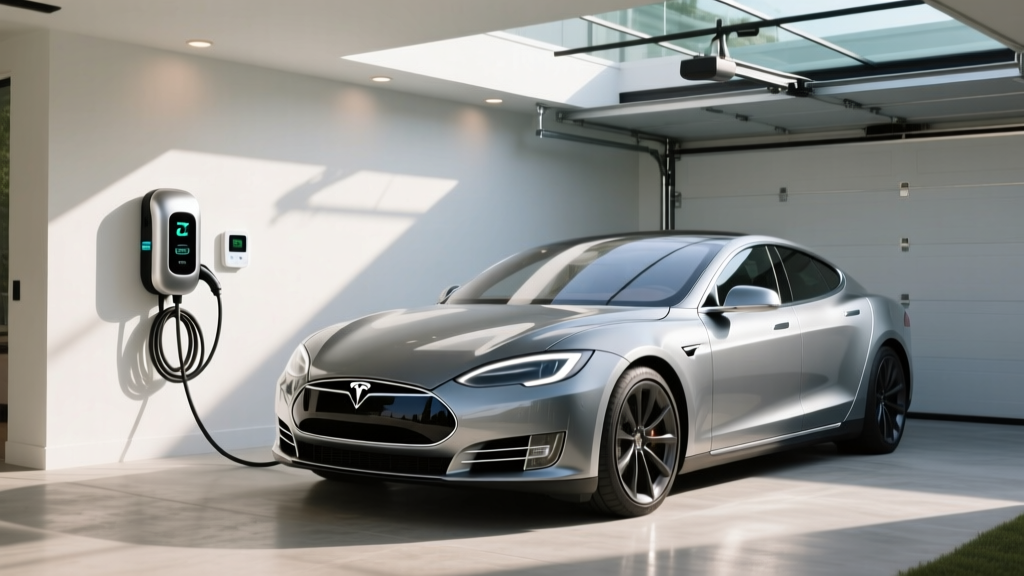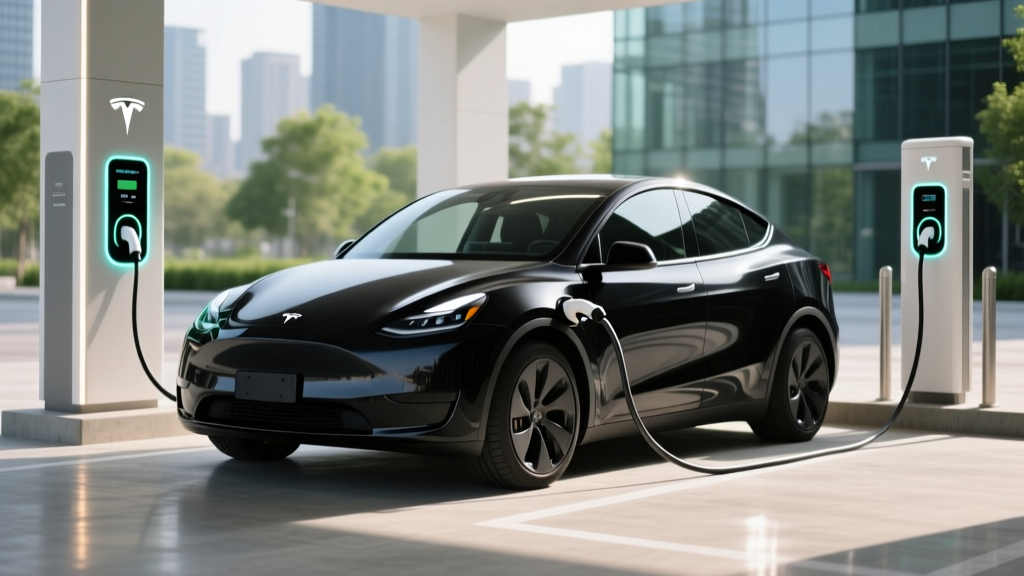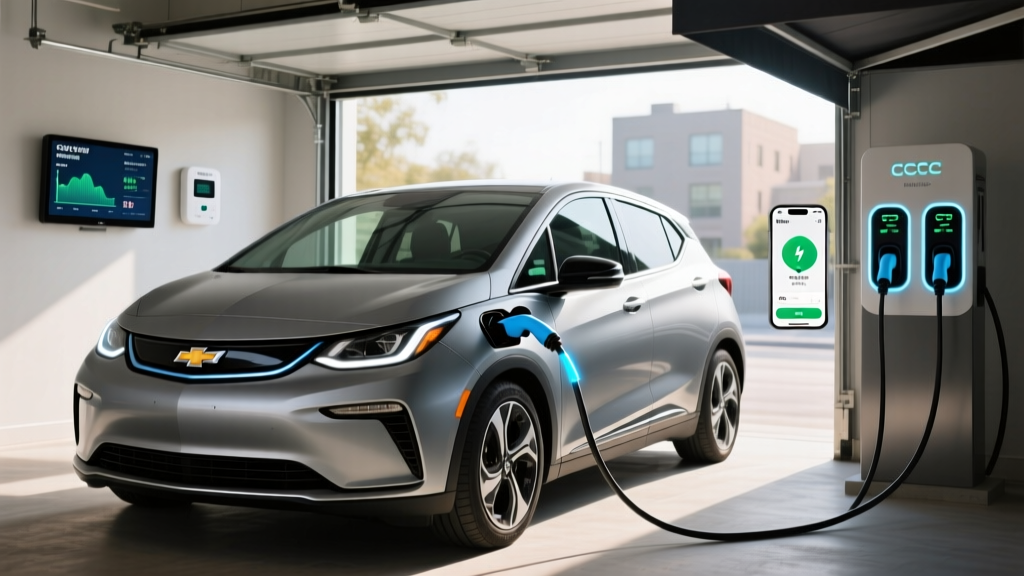
The 2027 Chevrolet Bolt EV returns with a refreshed platform, a larger battery, and a critical hardware change: a native NACS (North American Charging Standard) charge port. For new and prospective owners, understanding the 2027 Chevy Bolt EV charging ecosystem — from overnight home replenishment to road-trip DC fast charging — is essential for maximizing convenience and minimizing cost.
This guide covers every charging scenario you'll encounter, with exact kW rates, time estimates, installation costs, and real-world considerations that spec sheets gloss over.
2027 Chevy Bolt EV Battery and Charging Specs at a Glance
Before we break down each charging level, here are the core numbers that determine how and how fast the 2027 Bolt EV charges. The new-generation Bolt uses an updated Ultium-based battery pack with NMC (nickel manganese cobalt) chemistry, a meaningful step up from the previous generation's LG Chem pouch cells.
| Specification | Value |
|---|---|
| Battery Capacity (usable) | ~65 kWh (estimated) |
| Battery Chemistry | NMC (Ultium-based) |
| EPA Range (est.) | ~260–280 miles |
| Charge Port | NACS (native) |
| Max DC Fast Charge Rate | ~115–130 kW (peak) |
| Max Level 2 AC Charge Rate | 11.5 kW (48A) |
| Level 1 AC Charge Rate | 1.4 kW (12A @ 120V) |
| 10–80% DC Fast Charge (est.) | ~30–35 minutes |
| 0–60 mph | ~6.5 seconds (est.) |
| Base MSRP (est.) | ~$28,000–$30,000 |
kW (kilowatts) measures power — the rate at which electricity flows into your car, like water pressure from a hose. kWh (kilowatt-hours) measures energy — the total amount of electricity stored in the battery, like gallons in a tank. A 65 kWh battery charged at 11.5 kW takes roughly 5.6 hours from empty to full. Never confuse the two when comparing chargers or electricity bills.
Charging Levels Explained: Speeds in kW and Miles Per Hour
Every 2027 Bolt EV owner will interact with three charging tiers. Here's how they stack up in real-world terms.
| Level | Power (kW) | Voltage / Amperage | Miles of Range Added Per Hour | Best For |
|---|---|---|---|---|
| Level 1 (120V household) | ~1.4 kW | 120V / 12A | ~4–5 mi/hr | Emergency top-ups, low-mileage drivers |
| Level 2 (240V home/public) | 7.2–11.5 kW | 240V / 30–48A | ~25–40 mi/hr | Daily home charging, workplace, shopping centers |
| DC Fast Charging | 50–130 kW | 200–500V DC | ~150–250 mi/hr (at peak) | Road trips, rapid replenishment |
Level 1 uses a standard 120V household outlet. The included mobile charging cord delivers roughly 1.4 kW, adding about 4–5 miles of range per hour. If you drive 30 miles a day and can plug in for 10 hours overnight, Level 1 can technically keep up — but it's painfully slow for anything beyond that. A full 0–100% charge takes over 46 hours.
Level 2 is the practical standard for daily charging. A 240V circuit — the same type your electric dryer uses — delivers between 7.2 kW (on a 30A circuit) and 11.5 kW (on a 60A circuit supporting 48A continuous). At 11.5 kW, the Bolt's ~65 kWh battery goes from empty to full in roughly 5.5–6 hours. Most owners plug in each evening and wake up to a full battery.
DC Fast Charging bypasses the car's onboard charger and feeds direct current straight to the battery. The 2027 Bolt is expected to peak around 115–130 kW. That's a significant improvement over the outgoing Bolt's 55 kW cap, which was its biggest road-trip weakness. However, peak rate is not sustained rate — expect the charge curve to taper significantly above 60–70% State of Charge (SoC).
The Bolt's peak 115–130 kW rate typically holds only between roughly 10–40% SoC. From 40–60%, expect ~80–100 kW. Above 70%, the rate drops sharply to protect battery health — often below 40 kW. This is why manufacturers quote 10–80% times rather than 0–100%. Plan road-trip stops to leave at ~80% rather than waiting for a full charge; the last 20% can take as long as the first 60%.
Home Charger Installation: Electrical Requirements and Costs
Installing a Level 2 home charger is the single highest-impact upgrade for Bolt EV ownership. Here's what's involved electrically and financially.
Electrical Requirements
The 2027 Bolt EV's onboard charger accepts up to 11.5 kW (48 amps continuous). Per the National Electrical Code (NEC), continuous loads require a circuit rated at 125% of the draw — meaning you need a 60-amp, 240-volt dedicated circuit to unlock the full 11.5 kW rate. If your electrical panel doesn't have spare capacity, you may need a panel upgrade.
For a more modest 7.2 kW (32A continuous), a 40-amp circuit suffices. This still adds roughly 25 miles of range per hour — enough for most daily driving.
Panel Upgrade Considerations
Homes built before the 1990s often have 100-amp service panels. Adding a 60A EV circuit to an already-loaded 100A panel may require upgrading to 200-amp service — a significant expense. Newer homes with 200A panels usually have sufficient headroom, but a licensed electrician must perform a load calculation to confirm.
Installation Cost Breakdown
| Component | Cost Range | Notes |
|---|---|---|
| Level 2 Charger (hardware) | $300–$700 | Depends on brand, power output, smart features |
| Electrician labor (standard install) | $500–$1,500 | Varies by run length, wall type, conduit needs |
| Electrical permit | $50–$200 | Required in most jurisdictions; varies by locality |
| Panel upgrade (if needed) | $1,500–$3,500 | 100A → 200A service upgrade; not always required |
| Total (no panel upgrade) | $850–$2,400 | Typical scenario for homes with adequate panel capacity |
| Total (with panel upgrade) | $2,350–$5,900 | Older homes or high-load households |
Always get at least two quotes from licensed electricians. Ask specifically about the load calculation, conduit run length, and whether the quote includes the permit fee. Some utilities offer rebates of $200–$500 for home charger installations — check with your local provider before scheduling work.
Connector Compatibility: NACS, CCS, and Adapter Needs
The 2027 Chevy Bolt EV is expected to ship with a native NACS charge port, aligning with GM's announced transition to the Tesla-originated standard. This is a major shift from the previous Bolt's CCS1 port and fundamentally changes the public charging landscape for Bolt owners.
| Connector | Native Support? | Adapter Needed? | Network Access |
|---|---|---|---|
| NACS (Tesla-style) | Yes (native port) | No | Tesla Supercharger, Electrify America (new stalls), EVgo, many others |
| CCS1 | No | Yes — NACS-to-CCS adapter | Legacy Electrify America, some ChargePoint and EVgo stalls |
| CHAdeMO | No | Not practical (no common adapter) | Largely deprecated in the US |
| J1772 (Level 2 public) | Adapter included | NACS-to-J1772 adapter (usually included) | Public Level 2 stations, workplaces, hotels |
The native NACS port means Bolt owners gain direct access to the Tesla Supercharger network — the most reliable and extensive DC fast-charging network in North America, with over 25,000 stalls in the US alone. For legacy CCS1 stations, GM is expected to include or offer a NACS-to-CCS adapter, though charging speeds through an adapter may be slightly reduced.
For home Level 2 charging, most NACS-equipped wall connectors will plug directly into the Bolt. If you already own a J1772 home charger from a previous EV, a simple J1772-to-NACS adapter (typically $100–$150) allows continued use without rewiring.
Cost to Charge: Home, Public, and DC Fast Scenarios
Electricity pricing varies dramatically by context. Here's what the 2027 Bolt EV owner can expect to pay per kWh and per mile across common charging scenarios, using the estimated ~65 kWh battery.
| Scenario | Avg Cost/kWh | Full Charge Cost (0–100%) | Cost Per Mile |
|---|---|---|---|
| Home (off-peak utility rate) | $0.08–$0.14 | $5.20–$9.10 | $0.02–$0.03 |
| Home (standard residential avg) | $0.16 | $10.40 | $0.04 |
| Public Level 2 (networked) | $0.25–$0.40 | $16.25–$26.00 | $0.06–$0.10 |
| DC Fast Charging (Tesla Supercharger avg) | $0.28–$0.36 | $18.20–$23.40 | $0.07–$0.09 |
| DC Fast Charging ( Electrify America / peak) | $0.35–$0.48 | $22.75–$31.20 | $0.08–$0.12 |
| Gasoline equivalent (28 MPG avg, $3.40/gal) | — | $32.80 | $0.12 |
The economics are clear: home charging during off-peak hours delivers fuel costs roughly one-quarter to one-third what a comparable 28 MPG gas car costs per mile. Even public DC fast charging at premium rates typically undercuts or matches gasoline on a per-mile basis.
Many utilities offer time-of-use (TOU) plans that drop rates to $0.06–$0.10/kWh between 10 PM and 6 AM. Programming your charger or the Bolt's built-in scheduled charging feature to start during these windows maximizes savings. According to fueleconomy.gov, the Bolt's efficiency is expected to land around 115–120 MPGe combined, translating to roughly 28–30 kWh per 100 miles driven.
Recommended Home Chargers for the 2027 Chevy Bolt EV
With a native NACS port, the Bolt is compatible with a growing range of NACS-equipped wall connectors. Here are three well-regarded options across price points.
Tesla Wall Connector (NACS)
- Power Output: Up to 11.5 kW (48A)
- Connector: NACS (native)
- Cable Length: 24 ft
- Smart Features: Wi-Fi, OTA updates, power sharing between units
- Price: ~$475
- Verdict: Best value for NACS-equipped EVs. No app required for basic use; plug and charge.
ChargePoint Home Flex (NACS)
- Power Output: Up to 12 kW (50A) — Bolt will draw max 11.5 kW
- Connector: NACS (2025+ models)
- Cable Length: 23 ft
- Smart Features: Wi-Fi, ChargePoint app, scheduling, Alexa integration
- Price: ~$650
- Verdict: Excellent app experience and scheduling. Ideal if you use ChargePoint's public network.
Emporia Vue Smart EV Charger (NACS)
- Power Output: Up to 11.5 kW (48A)
- Connector: NACS
- Cable Length: 24 ft
- Smart Features: Wi-Fi, energy monitoring, solar integration, load management
- Price: ~$400
- Verdict: Best budget smart charger. Energy dashboard shows exact kWh and cost per session.
For a 60A circuit installation, choose a charger rated for 48A continuous. If your electrician recommends a 40A circuit instead, any of the above units can be configured (via DIP switch or app) to limit output to 32A — still delivering ~25 miles of range per hour, which covers most daily needs.
Safety, Code, and Permit Considerations
EV charger installation isn't a DIY project. The NEC and local building codes impose specific requirements that protect your home and your warranty.
- Dedicated circuit: Your Level 2 charger must be on its own dedicated breaker — not shared with other appliances. A 60A charger needs a 60A breaker; a 32A charger needs a 40A breaker.
- GFCI protection: NEC 2020 and later require GFCI (Ground Fault Circuit Interrupter) protection for EV charging outlets. Hardwired chargers often have GFCI built in; receptacle-based installs may require a GFCI breaker, which adds $40–$80.
- Outdoor rating: If your charger is installed outdoors (garage-exterior wall, carport, driveway), it must carry a NEMA 4 or IP55+ weather resistance rating. All three chargers recommended above meet this standard.
- Permit and inspection: Most jurisdictions require an electrical permit for a new 240V circuit. The inspection ensures correct wire gauge, breaker sizing, and grounding. Skipping the permit risks insurance claim denial in the event of an electrical fire.
- Wire gauge: A 60A circuit typically requires 6 AWG copper wire (THHN in conduit) or 4 AWG NM-B (Romex) depending on installation method. Your electrician will determine the correct specification.
The NHTSA's EV safety guidance provides additional context on charging system safety standards. Always hire a licensed electrician who is familiar with EV charger installations — not all general electricians stay current on NEC Article 625, which governs EV charging equipment.
Public DC Fast Charging: What to Expect on Road Trips
The 2027 Bolt's native NACS port and improved DC fast-charge rate transform its road-trip viability compared to the previous generation's notoriously slow 55 kW charging.
Charging Time Examples (Estimated)
| Scenario | Charger Type | Estimated Time |
|---|---|---|
| 10–80% SoC | 150+ kW DCFC (e.g., Tesla V3 Supercharger) | ~30–35 minutes |
| 10–80% SoC | 50 kW DCFC | ~60–70 minutes |
| 20–80% SoC (Level 2, 11.5 kW) | Home or public Level 2 | ~3.5 hours |
| 0–100% SoC (Level 2, 11.5 kW) | Home Level 2 | ~5.5–6 hours |
| Overnight top-up (30% used) | Home Level 2, 7.2 kW | ~2 hours |
For road-trip planning, the practical approach is to arrive at a DC fast charger at ~10–15% SoC and leave at 80%. That 10–80% session at a 150 kW+ Supercharger stall should take roughly 30–35 minutes — enough time for a meal break. Apps like A Better Routeplanner (ABRP) can model your specific route with the Bolt's estimated charge curve.
In cold weather (below 32°F), expect DC fast-charge times to increase by 15–30% unless you precondition the battery. The Bolt's battery thermal management system will precondition automatically when you navigate to a charging station via the infotainment system — always use this feature in cold weather to avoid painfully slow initial charge rates.
2027 Chevy Bolt EV Charging FAQ
How much does it cost to install a home EV charger for the 2027 Bolt?
Expect $850–$2,400 for a standard installation (charger hardware + electrician labor + permit) if your electrical panel has sufficient capacity. If a panel upgrade from 100A to 200A is needed, total costs can reach $2,350–$5,900. Always get a professional load calculation first.
How fast will each charging level add range to the Bolt EV?
Level 1 (120V) adds roughly 4–5 miles per hour. Level 2 (240V at 11.5 kW) adds about 38–40 miles per hour. DC fast charging at peak rate can add 150–250 miles per hour, though the rate tapers significantly above 60–70% SoC.
Which connector is compatible with the 2027 Chevy Bolt EV?
The 2027 Bolt has a native NACS port. It plugs directly into Tesla Superchargers and new NACS-equipped public stations. For legacy CCS1 stations, a NACS-to-CCS adapter is needed. For J1772 public Level 2 chargers, a J1772-to-NACS adapter (typically included with the vehicle) is required.
How much does charging the Bolt EV cost per mile vs gas?
Home charging at off-peak rates costs approximately $0.02–$0.03 per mile. Even public DC fast charging at $0.35/kWh costs roughly $0.08–$0.09 per mile. A comparable 28 MPG gas car at $3.40/gallon costs about $0.12 per mile. Home charging saves $0.09–$0.10 per mile — roughly $1,080–$1,200 annually at 12,000 miles/year.
What electrical upgrades might I need for a Level 2 charger?
You need a dedicated 240V circuit — either 40A (for 7.2 kW charging) or 60A (for full 11.5 kW). If your home's electrical panel is already near capacity (common with 100A service in older homes), a panel upgrade to 200A may be required. A licensed electrician must perform a load calculation to determine this.
Does the 2027 Bolt EV qualify for the federal EV tax credit?
The IRS §30D Clean Vehicle Credit offers up to $7,500 for qualifying new EVs, but eligibility depends on MSRP caps ($55,000 for cars), buyer income limits ($150,000 single / $300,000 joint), and battery critical-mineral and component sourcing requirements. As of 2026, the Bolt's estimated ~$28,000–$30,000 MSRP falls well under the cap, but final sourcing compliance for the 2027 model year has not been confirmed by GM. The credit can now be transferred to the dealer as a point-of-sale discount. Consult a tax professional for your specific eligibility.