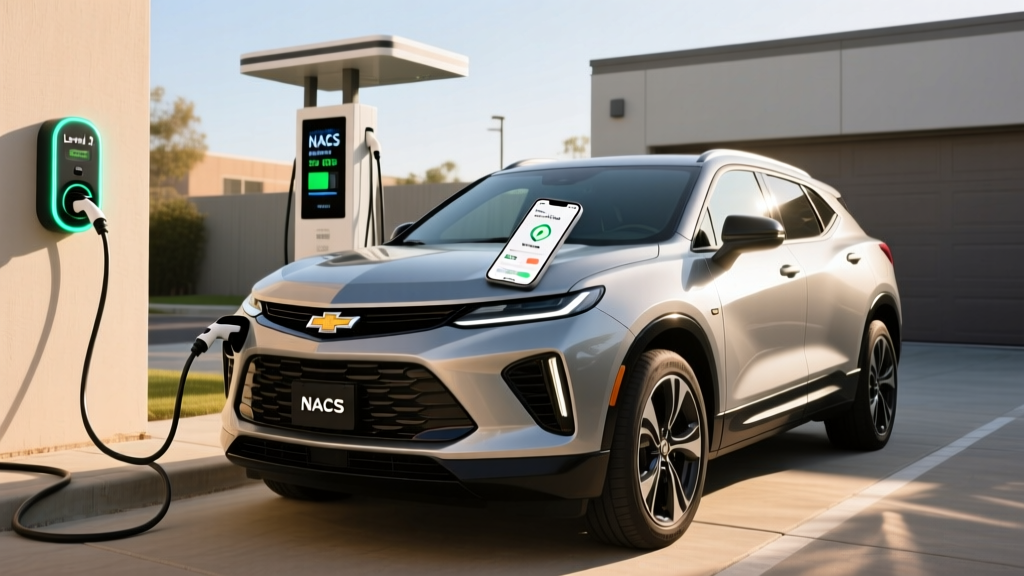
The 2027 Chevrolet Blazer EV ships from the factory with a native North American Charging Standard (NACS) port, eliminating the need for adapters at Tesla Superchargers and the growing network of NACS-equipped public stations. But knowing your vehicle's connector is only the first step — understanding charging speeds, home installation requirements, and real-world costs determines whether EV ownership is seamless or frustrating. This guide breaks down every charging scenario for the 2027 Blazer EV with exact numbers.
2027 Chevy Blazer EV: Battery and Charging Specifications
Before plugging in, you need the baseline specs. The 2027 Blazer EV rides on GM's Ultium platform with an NMC (nickel manganese cobalt) lithium-ion battery pack. Here are the key figures that govern your charging experience:
| Specification | Value |
|---|---|
| Battery Capacity (usable) | 102 kWh |
| Battery Chemistry | NMC (Ultium) |
| EPA Range | 324 miles |
| Real-World Range (highway/cold) | ~260–290 miles |
| Max DC Fast Charge Rate | 190 kW (peak) |
| 10–80% DC Fast Charge Time | ~32 minutes |
| Onboard Charger (Level 2) | 11.5 kW / 48A |
| Charging Port | NACS (native) |
| EPA Efficiency | 87 MPGe combined |
| Base MSRP (2LT FWD) | $44,600 |
Real-world range note: The EPA's 324-mile estimate assumes mixed driving. Expect roughly 260–290 miles on sustained highway trips at 70+ mph, and 20–30% range reduction in sub-freezing temperatures due to cabin heating and increased battery resistance. Always plan road trips around 250 miles of usable range to preserve a safety buffer.
Charging Levels Explained: Speeds and Range Added Per Hour
Every EV owner uses three charging tiers. Here's how each applies to the 2027 Blazer EV's 102 kWh pack:
| Level | Power Source | Max kW | Miles of Range Added Per Hour | Best For |
|---|---|---|---|---|
| Level 1 | 120V household outlet | 1.4 kW | ~4 miles/hr | Emergency / overnight trickle |
| Level 2 | 240V (home or public) | 11.5 kW (vehicle-limited) | ~34 miles/hr | Daily home charging |
| DC Fast Charging | 480V+ public station | 190 kW (peak) | ~200+ miles in 10 min (at peak) | Road trips |
Level 1 reality check: Plugging into a standard 120V outlet delivers roughly 4 miles of range per hour. Fully recharging the Blazer EV's 102 kWh battery from empty would take over 70 hours. Level 1 is viable only for PHEVs or as an emergency top-off — not for daily BEV use.
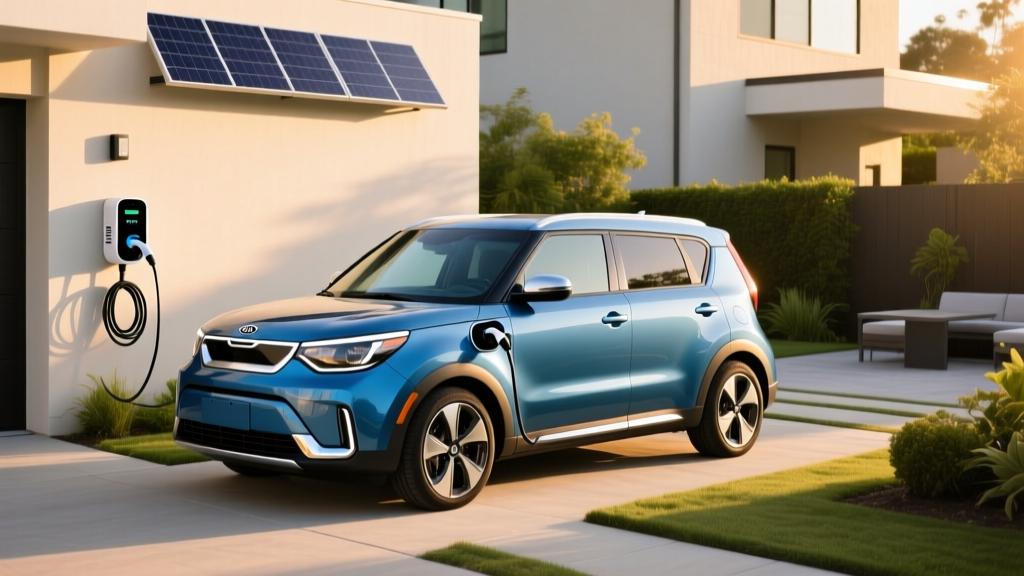
Level 2 is your daily workhorse. With the Blazer EV's 11.5 kW onboard charger, a properly configured 240V/48A home circuit adds roughly 34 miles of range per hour. A typical overnight session (8 hours) replenishes approximately 270 miles — more than enough for daily driving and most commutes.
DC fast charging and the charge curve: The Blazer EV peaks at 190 kW, but that rate only holds between roughly 10–40% State of Charge (SoC). Above 60%, the charge rate tapers significantly to protect battery health. A 10–80% session takes approximately 32 minutes at a 190+ kW station. Charging from 80–100% can add another 25–30 minutes — which is why road-trip strategy targets 80% and moves on.
Home Level 2 Charger Installation: Requirements and Costs
Installing a Level 2 home charger is the single biggest ownership setup task. Here's what the 2027 Blazer EV requires:
Electrical Requirements
- Circuit: Dedicated 60-amp breaker (to deliver 48 continuous amps per NEC 80% rule)
- Voltage: 240V (same as an electric dryer or oven)
- Wire gauge: 6 AWG copper (or 4 AWG aluminum for longer runs)
- Outlet vs. hardwired: Hardwired is preferred for 48A+ circuits; NEMA 14-50 outlets are acceptable at 40A (delivering 9.6 kW)
Does Your Panel Need an Upgrade?
This is the cost variable most buyers overlook. If your home has a 100-amp electrical panel — common in homes built before 1990 — adding a 60-amp EV circuit may exceed your panel's capacity. Signs you may need an upgrade:
- Panel is 100A or less
- Few or no open breaker slots
- Existing heavy loads: electric heat, hot tub, double oven, electric dryer
- Utility service drop is undersized
A panel upgrade from 100A to 200A typically costs $1,500–$3,000. Homes with an existing 200A panel and open slots usually need no upgrade. Have a licensed electrician perform a load calculation before committing to equipment.
Installation Cost Breakdown
| Component | Cost Range |
|---|---|
| Level 2 Charger (hardware) | $400–$750 |
| Electrical permit | $50–$250 |
| Electrician labor (standard install, panel to garage <30 ft) | $500–$1,200 |
| Panel upgrade (if needed: 100A → 200A) | $1,500–$3,000 |
| Total (no panel upgrade) | $950–$2,200 |
| Total (with panel upgrade) | $2,450–$5,200 |
Factors that push costs higher: long wire runs (over 50 feet from panel to charger), conduit requirements through finished walls, trenching for detached garages, and local code requirements for GFCI breakers on 240V EV circuits (which add $100–$200 in breaker cost).
Safety and Code Considerations
- Dedicated circuit: Your EV charger must have its own breaker — never share a circuit with other appliances.
- GFCI protection: NEC 2020+ requires GFCI on 240V receptacles used for EV charging in garages. Hardwired installations may be exempt in some jurisdictions — check local code.
- Outdoor rating: If your charger mounts outside (carport, driveway), ensure it carries a NEMA 4 or IP65 weather rating.
- Permit and inspection: Most jurisdictions require a permit and post-installation inspection. Skipping this can void homeowner's insurance coverage for electrical fires.
Connector Compatibility: NACS, CCS, and Adapters
The 2027 Blazer EV's native NACS port is a significant advantage. Here's how it connects to every major network:
| Connector / Network | Compatible? | Adapter Needed? |
|---|---|---|
| NACS (Tesla Supercharger, Electrify America NACS stalls) | Yes — native | No |
| CCS1 (legacy Electrify America, EVgo, ChargePoint DC stations) | Yes | NACS-to-CCS adapter (GM provides or ~$200 aftermarket) |
| CHAdeMO (Nissan Leaf-era stations) | No | No practical adapter exists; avoid |
| J1772 (Level 2 public stations) | Yes | NACS-to-J1772 adapter (included with vehicle or ~$100) |
| Tesla Destination Chargers (Level 2) | Yes — native NACS | No |
Practical advice: Keep a NACS-to-J1772 adapter in your frunk or cargo area at all times. Public Level 2 stations at hotels, shopping centers, and workplaces overwhelmingly use J1772 connectors. The DC fast charging landscape is rapidly converting to NACS, but CCS1 stations remain common through 2026–2027, making a NACS-to-CCS adapter essential for road trips in areas with limited NACS DC infrastructure.
Charging Cost Per Mile: Home vs. Public vs. Gas
The economic case for the Blazer EV depends heavily on where you charge. Here's a realistic cost breakdown using the Blazer EV's efficiency of approximately 2.9 miles/kWh (87 MPGe combined):
| Scenario | Cost per kWh | Cost per Mile | Cost for 300-Mile Trip |
|---|---|---|---|
| Home (off-peak utility rate) | $0.12 | $0.041 | $12.41 |
| Home (average US residential) | $0.17 | $0.059 | $17.59 |
| Public Level 2 (ChargePoint, EVgo) | $0.25–$0.39 | $0.086–$0.134 | $25.90–$40.34 |
| DC Fast Charging (Tesla Supercharger, EA) | $0.32–$0.48 | $0.110–$0.166 | $33.10–$49.66 |
| Gas SUV equivalent (25 MPG, $3.40/gal) | — | $0.136 | $40.80 |
The takeaway: Home charging at off-peak rates makes the Blazer EV roughly 70% cheaper per mile than a comparable gas SUV. Public DC fast charging narrows or eliminates that advantage — on some networks, it can actually cost more per mile than gasoline. This is why home Level 2 access is the single most important factor in EV ownership satisfaction and economics.
Check whether your utility offers time-of-use (TOU) rates or dedicated EV charging plans. Many utilities offer rates as low as $0.06–$0.09/kWh for overnight charging between 10 PM and 6 AM, reducing your cost per mile to under $0.03.
Recommended Home Level 2 Chargers for the Blazer EV
With a native NACS port, the 2027 Blazer EV pairs directly with NACS-connector chargers. Here are top picks based on power output, build quality, and smart features:
Emporia Vue Level 2 (NACS)
- Power: 11.5 kW / 48A
- Cable length: 24 ft
- Smart features: Wi-Fi, scheduling, energy monitoring, solar integration
- Price: ~$449
- Best for: Budget-conscious buyers wanting full smart features
ChargePoint Home Flex (NACS)
- Power: Up to 12 kW / 50A (adjustable)
- Cable length: 23 ft
- Smart features: Wi-Fi, app scheduling, Alexa, load sharing
- Price: ~$599
- Best for: Established ecosystem, flexible amperage
Tesla Wall Connector (NACS)
- Power: 11.5 kW / 48A
- Cable length: 24 ft
- Smart features: Wi-Fi, OTA updates, power sharing, load management
- Price: ~$475
- Best for: Native NACS match, proven reliability, clean design
Grizzl-E Smart (NACS)
- Power: 11.5 kW / 48A
- Cable length: 24 ft
- Smart features: OCPP, app control, extreme cold rating (-40°F)
- Price: ~$549
- Best for: Cold climates, rugged outdoor installs
Editor's pick for the Blazer EV: The Tesla Wall Connector offers the cleanest NACS integration, robust firmware updates, and competitive pricing. If your home has solar panels, the Emporia Vue's real-time energy monitoring and solar-aware scheduling provide tangible utility. Regardless of brand, ensure the charger you select supports at least 48A to fully utilize the Blazer EV's 11.5 kW onboard charger.
DC Fast Charging on the Road: Networks and Strategy
The Blazer EV's native NACS port unlocks Tesla's Supercharger network — over 25,000 stalls across North America as of 2026 — plus the expanding NACS deployments from Electrify America, EVgo, and others. Here's what to expect:
- Tesla Supercharger V3/V4 (NACS): Up to 250 kW available; the Blazer EV will accept its peak of ~190 kW. Expect 10–80% in approximately 32 minutes at V3+ stalls.
- Electrify America NACS stalls: Rollout ongoing through 2026–2027; 350 kW capable stations will still be limited by the Blazer's 190 kW acceptance rate.
- CCS1 legacy stations: Use your NACS-to-CCS adapter. Speeds vary widely (50–150 kW at older stations).
Road trip charging strategy: Precondition the battery by entering your charging stop into the navigation system 15–20 minutes before arrival. The Blazer EV's thermal management system will warm the battery to optimal temperature, enabling faster charge acceptance. Arrive at chargers with 10–15% SoC for the fastest charge curve, and depart at 80% — the time cost of charging from 80–100% rarely justifies the additional range gained.
Frequently Asked Questions
How much does it cost to install a home EV charger for the 2027 Blazer EV?
A standard Level 2 installation with an existing 200A panel and short wire run costs $950–$2,200 including the charger, permit, and electrician labor. If your home requires a panel upgrade from 100A to 200A, add $1,500–$3,000, bringing the total to $2,450–$5,200. Always get a load calculation from a licensed electrician before purchasing equipment.
How fast will each charging level add range to the Blazer EV?
Level 1 (120V) adds approximately 4 miles per hour. Level 2 (240V/48A) adds approximately 34 miles per hour — an 8-hour overnight session replenishes around 270 miles. DC fast charging at peak (190 kW) can add over 200 miles in roughly 15 minutes, though the charge rate tapers significantly above 60% SoC.
Which connector is compatible with the 2027 Blazer EV?
The Blazer EV uses a native NACS connector, plugging directly into Tesla Superchargers and NACS-equipped public stations without an adapter. For legacy CCS1 DC stations, you'll need a NACS-to-CCS adapter. For public Level 2 J1772 stations, a NACS-to-J1772 adapter is required (often included with the vehicle). CHAdeMO stations are not compatible.
How much does charging the Blazer EV cost per mile compared to gas?
Home charging at the US average residential rate of $0.17/kWh costs approximately $0.059/mile. Off-peak rates can drop this to $0.03–$0.04/mile. A comparable gas SUV at 25 MPG and $3.40/gallon costs $0.136/mile. Public DC fast charging at $0.35–$0.48/kWh ranges from $0.12–$0.17/mile, potentially exceeding gasoline costs on some networks.
What electrical upgrades might I need for a home charger?
Homes with a 200-amp panel and available breaker slots typically need no upgrades — just a new 60A dedicated circuit. Homes with 100A panels, limited breaker space, or heavy existing electrical loads (electric heat, hot tub, double oven) may require a panel upgrade to 200A, costing $1,500–$3,000. Older homes may also need service drop upgrades from the utility. A licensed electrician's load calculation is the definitive answer.
Does the 2027 Blazer EV qualify for the federal EV tax credit?
Federal §30D tax credit eligibility depends on MSRP caps ($80,000 for SUVs), buyer income limits ($150K single / $300K joint), battery component sourcing, and critical mineral requirements. As of 2026, many GM Ultium vehicles qualify for partial or full credit, but rules change frequently. Check the latest eligibility list at IRS.gov and consult a tax professional. The credit can be transferred to the dealer at point of sale for an instant price reduction.
Sources: Chevrolet Blazer EV specifications, fueleconomy.gov (EPA efficiency data), IRS §30D clean vehicle credit.