Why the 2026 Range Rover Plug-In Hybrid Demands a Proper Charging Strategy
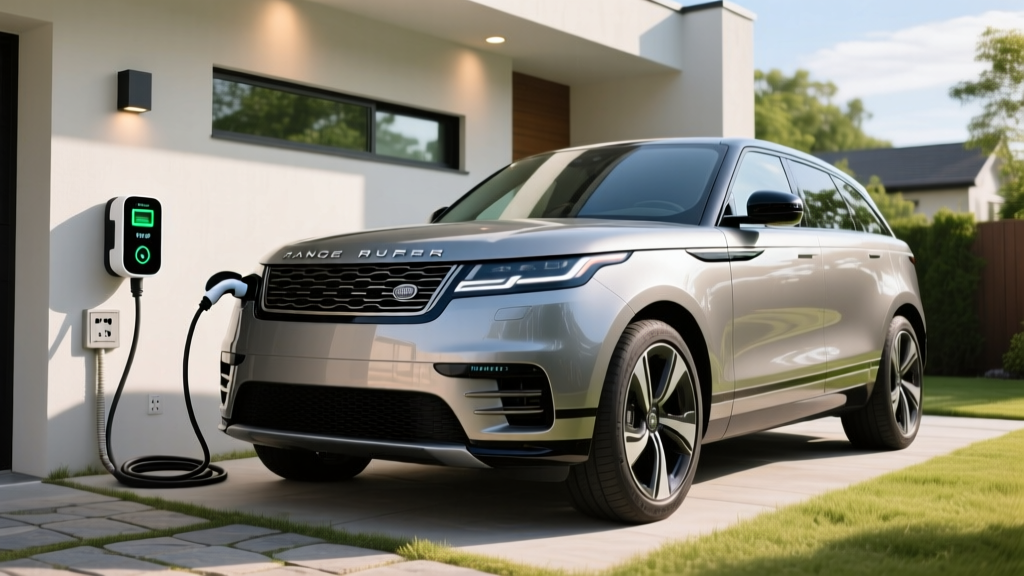
The 2026 Range Rover Plug-In Hybrid (PHEV) pairs a 3.0-liter inline-six with an electric motor and a usable battery capacity of approximately 23.1 kWh (31.8 kWh gross), delivering an EPA-estimated 48 miles of electric-only range. That is enough to cover most daily commutes on electricity alone — but only if you charge consistently. Owners who rely solely on the gasoline engine forfeit the efficiency advantage and pay a premium at the pump for a 5,500-pound luxury SUV.
This guide walks through exactly what it takes to charge the 2026 Range Rover PHEV at home, on the road, and how to size your electrical system, pick the right equipment, and understand the real cost per mile compared to gasoline. We will also clarify the single most common EV confusion: kW (kilowatts) measures power — how fast energy flows, while kWh (kilowatt-hours) measures energy — the total amount stored. Think of kW as the width of a pipe and kWh as the size of the tank.
Charging Levels Explained: How Fast Can You Add Range?
The 2026 Range Rover PHEV supports AC charging via its onboard charger, rated at up to 7.2 kW. It does not have a DC fast-charging port, which is typical for PHEVs with smaller batteries. Here is what each level delivers:
| Charging Level | Voltage / Amperage | Power (kW) | Miles of Range Added Per Hour | 0–100% Time (23.1 kWh Usable) |
|---|---|---|---|---|
| Level 1 (Standard Outlet) | 120V / 12A | ~1.4 kW | ~3–4 miles | ~17–19 hours |
| Level 2 (Home / Public AC) | 240V / 32A | 7.2 kW (max onboard) | ~18–22 miles | ~3.5–4 hours |
| DC Fast Charging | N/A | Not supported | N/A | N/A |
Level 1 charging from a standard 120V household outlet will fully replenish the battery overnight but is impractical if you drive more than 20–25 miles round trip daily. Level 2 at 240V is the practical standard for PHEV ownership, restoring the full battery in roughly 3.5 hours — easily done while you sleep or during a workday parked at a workplace charger.
Home Charger Installation: Electrical Requirements, Costs, and Gotchas
Installing a Level 2 home charger for your Range Rover PHEV requires a dedicated 240V circuit. Here is the electrical spec breakdown:
- Voltage: 240V (split-phase residential service)
- Amperage: A 40-amp circuit is standard for a 32A continuous-draw charger (National Electrical Code requires circuits rated at 125% of continuous load). For a 48A charger, you need a 60-amp circuit.
- Wiring: 8 AWG copper for 40A; 6 AWG for 50A; 4 AWG for 60A — your electrician will size based on run length and local code.
- Dedicated circuit: The charger must be on its own breaker — not shared with a dryer, oven, or HVAC system.
How Much Does It Cost to Install a Home EV Charger?
Installation costs vary significantly based on your home's electrical panel capacity, the distance from the panel to the charging location, and local permit fees. Here is a realistic breakdown:
| Cost Component | Simple Install (Panel Nearby, No Upgrade) | Complex Install (Long Run or Panel Upgrade) |
|---|---|---|
| Level 2 Charger Equipment | $350–$700 | $500–$800 |
| Electrician Labor (2–4 hrs simple / 6–10 hrs complex) | $300–$600 | $900–$2,000 |
| Electrical Permit | $50–$150 | $50–$200 |
| Panel Upgrade (100A → 200A service, if needed) | $0 (not required) | $1,500–$3,500 |
| Conduit, Wiring, and Misc. Materials | $50–$150 | $200–$600 |
| Total Estimated Cost | $750–$1,600 | $3,150–$7,100 |
What Electrical Upgrades Might I Need?
The most expensive variable is your electrical panel. Homes built before 1990 often have 100-amp service. Adding a 40-amp EV circuit to an already-loaded 100A panel may exceed its capacity, triggering a mandatory upgrade to 200-amp service — a $1,500–$3,500 job that includes a new panel, utility coordination, and inspection. A licensed electrician will perform a load calculation per NEC Article 220 to determine whether your panel can handle the additional draw. Do not skip this step: an overloaded panel is a fire risk and will fail inspection.
Other potential upgrades include replacing a Federal Pacific or Zinsco panel (known safety hazards that many jurisdictions now require replaced), adding a sub-panel if your garage is detached, or trenching conduit for a long outdoor run.
Connector Compatibility: What Plugs Into the 2026 Range Rover PHEV?
The 2026 Range Rover Plug-In Hybrid sold in North America uses a J1772 connector for AC Level 1 and Level 2 charging. This is the universal standard for non-Tesla AC charging. Here is how the connector landscape breaks down:
| Connector Type | Used For | Range Rover PHEV Compatible? | Adapter Needed? |
|---|---|---|---|
| J1772 | Level 1 & Level 2 AC charging | Yes — native port | No |
| NACS (Tesla) | Tesla Level 2 & DC Fast Charging | AC: Yes, with adapter. DC: Not applicable (no DC port) | Tesla-to-J1772 adapter (~$100–$150) |
| CCS1 (Combined Charging System) | DC Fast Charging (most non-Tesla networks) | No — PHEV has no DC port | N/A |
| CHAdeMO | DC Fast Charging (legacy Nissan, Mitsubishi) | No | N/A |
Since the Range Rover PHEV is AC-only, your primary concern is J1772 compatibility. Virtually every public Level 2 charger in the U.S. (ChargePoint, EVgo Level 2 stations, Blink, and workplace chargers) provides a J1772 plug. If you own a Tesla Wall Connector at home, you will need a Tesla-to-J1772 adapter to charge the Range Rover.
Cost to Charge: Electricity vs Gasoline Per Mile
One of the strongest arguments for plugging in your PHEV nightly is the fuel cost savings. The 2026 Range Rover PHEV achieves approximately 21 MPG combined when running on gasoline alone, and consumes roughly 33–35 kWh per 100 miles in electric mode. Here is a cost comparison:
| Scenario | Rate | Cost Per Mile (Electric) | Cost Per Mile (Gasoline at 21 MPG) |
|---|---|---|---|
| Home Charging (Off-Peak / Time-of-Use) | $0.12/kWh | $0.04 | $0.18 (at $3.75/gal) |
| Home Charging (Standard Residential Avg.) | $0.17/kWh | $0.06 | $0.18 (at $3.75/gal) |
| Public Level 2 (ChargePoint, etc.) | $0.30/kWh | $0.10 | $0.18 (at $3.75/gal) |
| Gasoline Only (No Plugging In) | $3.75/gallon | N/A | $0.18 |
At off-peak home rates, you pay roughly 4 cents per mile on electricity versus 18 cents on gasoline — a 78% reduction. Even at public Level 2 rates, electricity is still nearly half the cost of gasoline per mile. Over 12,000 miles of annual driving with 70% electric operation, that translates to approximately $1,100–$1,400 in annual fuel savings versus driving exclusively on gas.
Check whether your utility offers an EV-specific time-of-use (TOU) rate plan. Charging between 10 PM and 6 AM at super-off-peak rates (often $0.08–$0.12/kWh) maximizes savings. According to the U.S. Department of Energy's fueleconomy.gov, PHEV owners who charge at home typically save $500–$1,500 annually on fuel.
Recommended Level 2 Chargers for the 2026 Range Rover PHEV
Since the Range Rover's onboard charger maxes out at 7.2 kW (32 amps at 240V), you do not need a 48-amp charger to get full speed — but buying a 40A or 48A unit provides future-proofing if you add a full BEV later. Here are top picks:
ChargePoint Home Flex
- Power Output: Up to 12 kW (50A) — adjustable via DIP switches to match your circuit
- Connector: J1772 (native, perfect for Range Rover PHEV)
- Cable Length: 23 feet
- Smart Features: Wi-Fi, app scheduling, Alexa integration, energy tracking, TOU optimization
- NEMA Rating: NEMA 4 (indoor/outdoor rated)
- Price: ~$550–$650
- Best For: Most Range Rover PHEV owners; flexible amperage means you can install on a 40A or 50A circuit
Emporia Vue Level 2 Charger
- Power Output: Up to 11.5 kW (48A)
- Connector: J1772
- Cable Length: 24 feet
- Smart Features: Wi-Fi, app with solar integration, real-time energy monitoring, scheduled charging, pairs with Emporia whole-home energy monitor
- NEMA Rating: NEMA 4
- Price: ~$400–$500
- Best For: Budget-conscious buyers who want robust smart features and solar-aware charging
Tesla Wall Connector (with J1772 Adapter)
- Power Output: Up to 11.5 kW (48A)
- Connector: NACS (requires Tesla-to-J1772 adapter for Range Rover)
- Cable Length: 24 feet
- Smart Features: Wi-Fi, over-the-air updates, load sharing (two units on one circuit), Power Sharing for multi-EV garages
- NEMA Rating: NEMA 3R (outdoor rated)
- Price: ~$475 (charger) + ~$100–$150 (adapter)
- Best For: Households that also own a Tesla and want one charger for both vehicles
For the Range Rover PHEV specifically, the ChargePoint Home Flex is the strongest overall pick: native J1772 means no adapter needed, adjustable amperage lets your electrician set it to match your available circuit, and the app's scheduling feature automates off-peak charging to minimize electricity costs.
Safety and Electrical Code Considerations
EV charging draws sustained high current for hours — a load profile unlike anything else in your home. Safety is non-negotiable:
- Dedicated circuit: NEC 625.41 requires EVSE (Electric Vehicle Supply Equipment) to be on a dedicated branch circuit. Never share the breaker with other appliances.
- GFCI protection: NEC 2020 and later requires GFCI (Ground Fault Circuit Interrupter) protection for outdoor receptacles and some jurisdictions extend this to indoor garage outlets. Hardwired chargers often have built-in ground-fault protection, but confirm with your electrician and local inspector.
- Outdoor rating: If your charger is mounted outside or in an unsealed garage, it must carry a NEMA 4 or NEMA 4X rating to withstand rain, dust, and hose-directed water.
- Cable management: A 23–24 foot cable is long enough for most garage layouts, but plan the charger location so the cable does not stretch across a walkway — a trip hazard and potential cable-damage point.
- Permit and inspection: Nearly all jurisdictions require a permit for a new 240V circuit. The inspection verifies wire gauge, breaker sizing, grounding, and GFCI compliance. Skipping the permit voids homeowner's insurance coverage for any electrical fire originating from the unpermitted work.
- Hardwired vs plug: Hardwired chargers (directly connected to junction box) eliminate the 240V receptacle and are generally preferred for 40A+ circuits. NEMA 14-50 plug-in installations are acceptable up to 50A but require a quality industrial-grade receptacle (Hubbell or Bryant brand, ~$80–$120) — cheap receptacles have been linked to melting under sustained EV charging loads.
Federal Tax Credits and Incentives for Home Charging
Under IRS §30C, the Alternative Fuel Vehicle Refueling Property Credit provides a tax credit of up to 30% of the cost of home EV charging equipment and installation, capped at $1,000. This applies to the charger hardware and the electrician's labor for the dedicated circuit.
Key eligibility details for 2026:
- The credit applies to both the equipment and installation costs.
- Your home must be located in an eligible census tract (non-urbanized areas or low-income communities as defined by the IRS). Check the IRS §30C page for the current tract lookup tool.
- This is a non-refundable credit — it reduces your tax liability to zero but does not generate a refund beyond that.
- State and utility incentives may stack on top. Many utilities offer $250–$500 rebates for installing a smart Level 2 charger, and some states provide additional credits. Confirm with your local utility and state energy office.
Note: The §30D new clean vehicle credit (up to $7,500) applies to the vehicle itself, not the charger. The 2026 Range Rover PHEV's eligibility for §30D depends on MSRP caps ($80,000 for SUVs), buyer income limits ($300,000 joint / $150,000 single), and battery critical-mineral sourcing requirements. Given the Range Rover's MSRP exceeding $110,000, it does not qualify for the §30D vehicle credit. Consult a tax professional for your specific situation.
Public Charging: Where and How to Charge on the Road
Because the 2026 Range Rover PHEV lacks DC fast charging, public charging is limited to Level 2 AC stations. This is an important practical limitation: you cannot use Electrify America, EVgo, or Tesla Supercharger DC stalls to quickly top up on a road trip.
Where Level 2 public charging is practical for this PHEV:
- Destination charging: Hotels, shopping centers, and restaurants with Level 2 chargers (ChargePoint, Blink) — ideal because you are parked for 1–4 hours anyway.
- Workplace charging: If your employer offers Level 2 access, a full workday easily replenishes the battery.
- Opportunity charging: Grocery stores and gyms where a 45–90 minute stop adds 12–20 miles of electric range.
On long highway trips, the Range Rover PHEV operates as a conventional hybrid once the battery depletes, achieving approximately 21 MPG combined. Plan fuel stops as you would with any gasoline vehicle — the electric range is a daily-commute benefit, not a road-trip one.
Frequently Asked Questions
How much does it cost to install a home EV charger for the 2026 Range Rover PHEV?
A straightforward Level 2 installation with adequate panel capacity typically costs $750–$1,600 (equipment, electrician, and permit). If your home needs a 200-amp panel upgrade, costs can reach $3,150–$7,100. Always get a load calculation from a licensed electrician before committing.
How fast will each charging level add range?
Level 1 (120V) adds about 3–4 miles of range per hour. Level 2 at 240V and 32A (7.2 kW) adds approximately 18–22 miles per hour, fully recharging the 23.1 kWh usable battery in about 3.5–4 hours. The Range Rover PHEV does not support DC fast charging.
Which connector and charger is compatible with my 2026 Range Rover PHEV?
The Range Rover PHEV uses a J1772 connector for all AC charging. Any J1772 Level 2 charger (ChargePoint, Emporia, JuiceBox) will plug in natively. A Tesla Wall Connector requires a Tesla-to-J1772 adapter. CCS1 and CHAdeMO connectors are for DC fast charging, which this PHEV does not support.
How much does charging cost per mile vs gasoline?
At home off-peak rates ($0.12/kWh), electricity costs approximately $0.04 per mile versus $0.18 per mile on gasoline at $3.75/gallon and 21 MPG combined. Even at public Level 2 rates ($0.30/kWh), electricity costs about $0.10 per mile — nearly half the cost of gasoline.
What electrical upgrades might I need for a Level 2 charger?
The most common upgrade is a panel capacity increase from 100A to 200A service ($1,500–$3,500), required when your existing panel cannot accommodate a new 40A circuit. Other potential needs include replacing outdated Federal Pacific or Zinsco panels, adding a sub-panel for detached garages, or upgrading wiring for long conduit runs. Your electrician will determine requirements during a load calculation.
Does the 2026 Range Rover PHEV qualify for any charging tax credits?
The vehicle itself does not qualify for the §30D credit due to its MSRP exceeding the $80,000 SUV cap. However, the home charger installation may qualify for the §30C Alternative Fuel Vehicle Refueling Property Credit — 30% of equipment and installation costs, capped at $1,000 — if your home is in an eligible census tract. Check current IRS rules and consult a tax professional.
Can I charge the Range Rover PHEV at a Tesla Supercharger?
No. Tesla Superchargers provide DC fast charging, and the Range Rover PHEV has no DC charging port. You can use Tesla's Level 2 Wall Connector at home (with an adapter), and some Tesla Destination Chargers at hotels are Level 2 AC — but you will still need a J1772 adapter.
Bottom line: the 2026 Range Rover Plug-In Hybrid rewards owners who install a Level 2 home charger with roughly 40 miles of daily electric driving at a fraction of gasoline cost. Budget $1,000–$2,000 for a standard installation, choose a quality J1772 charger like the ChargePoint Home Flex, and schedule your charging during off-peak hours to maximize savings. For the electrical work, always hire a licensed electrician, pull the required permits, and verify your panel capacity before breaking ground.