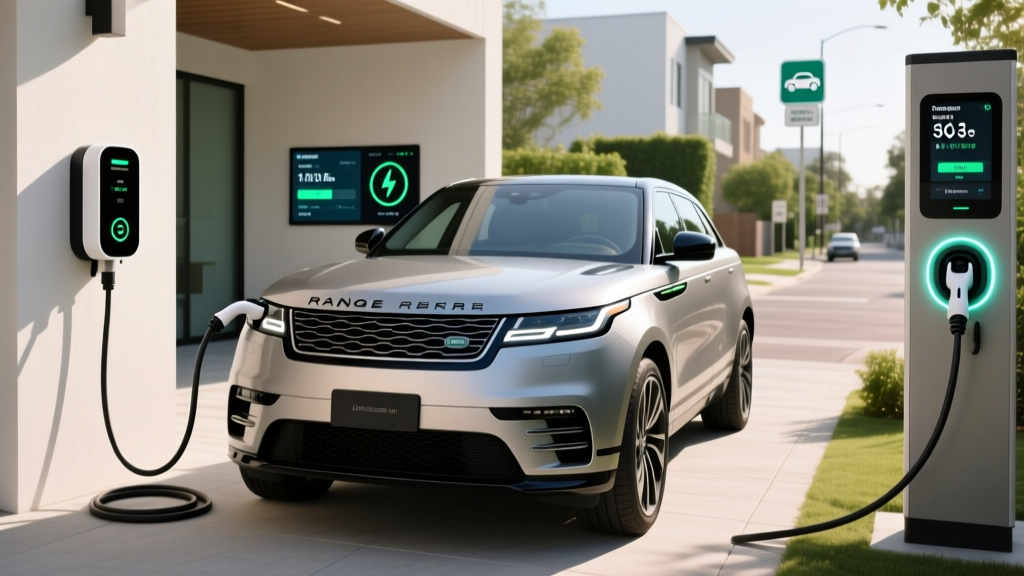
The 2026 Range Rover EV marks Jaguar Land Rover's first all-electric flagship, riding on the modular MLA-Flex architecture and packing an estimated 117 kWh (usable) battery. For a luxury SUV of this size and ambition, charging infrastructure is the make-or-break ownership factor. This guide breaks down exactly how to charge the 2026 Range Rover EV at home, on public networks, and via DC fast chargers — with real numbers, real costs, and real-world expectations.
2026 Range Rover EV: Key Charging Specs at a Glance
Before we get into infrastructure, here are the vehicle-side numbers that dictate your charging strategy. Note: Land Rover has announced the Range Rover EV but final EPA certification figures are preliminary as of early 2026. The specs below reflect JLR's published data and industry estimates.
| Spec | Value |
|---|---|
| Battery capacity (usable, est.) | ~117 kWh (NMC chemistry) |
| EPA range (est.) | ~300–320 miles |
| Real-world highway range | ~250–280 miles (cold weather: ~220 miles) |
| Max DC fast charge rate | ~200+ kW (peak) |
| 10–80% DC fast charge time | ~30–35 minutes (est.) |
| Level 2 onboard charger | 11 kW (single-phase) / 22 kW (three-phase, market-dependent) |
| Charge port / connector | CCS1 (US) / NACS adapter expected |
| Base MSRP (est.) | ~$120,000+ |
| Federal §30D tax credit | Unlikely — exceeds MSRP cap ($80,000 for SUVs) |
Charging Levels Explained: Speeds and Range Added Per Hour
EV charging is measured in kW (kilowatts), which represents power — the rate at which energy flows into the battery. The battery itself stores energy measured in kWh (kilowatt-hours). Think of kW as the flow rate of a hose and kWh as the size of the bucket. Here's how each level performs with the Range Rover EV's ~117 kWh pack:
| Level | Power (kW) | Voltage/Amps | Miles of Range/Hour | Full Charge Time (est.) |
|---|---|---|---|---|
| Level 1 (120V) | 1.4–1.9 kW | 120V / 12–16A | ~4–6 mi/hr | 60+ hours (impractical) |
| Level 2 (240V) | 7.2–11.5 kW | 240V / 30–48A | ~22–35 mi/hr | 10–14 hours (0–100%) |
| DC Fast Charging | 50–200+ kW | 400V+ DC | ~150–500+ mi/hr | ~30–35 min (10–80%) |
Key takeaway for Range Rover EV owners: Level 2 at home is your daily workhorse. A 48A Level 2 station delivers roughly 11 kW to the vehicle, adding about 33 miles of range per hour — enough to fully replenish overnight. DC fast charging is for road trips, and the ~200 kW peak rate means you can add roughly 180 miles in 20 minutes under optimal conditions.
Home Level 2 Charger Installation: Requirements, Costs, and Gotchas
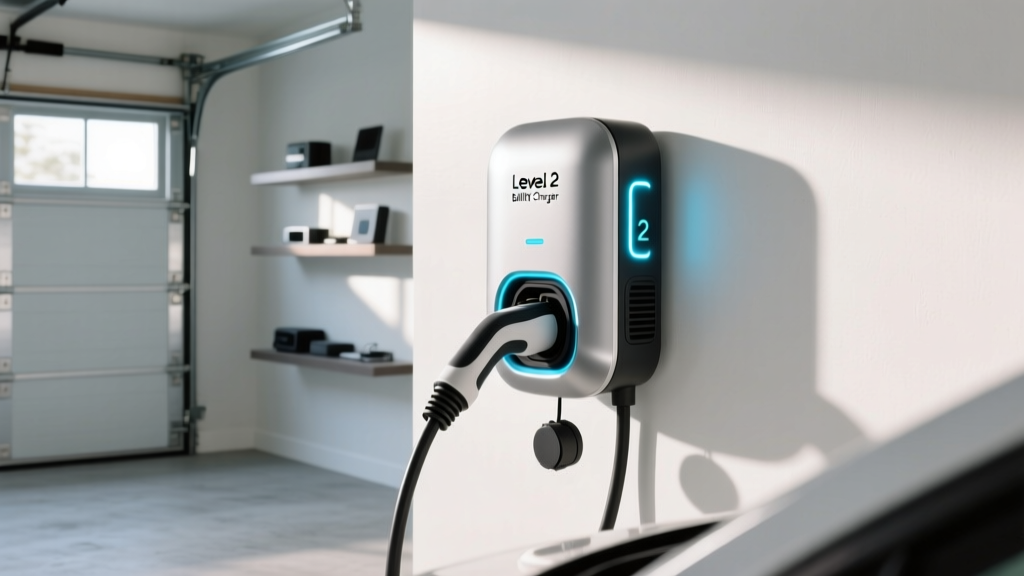
For a vehicle with a 117 kWh battery, a robust home Level 2 setup is essentially mandatory. Trickle-charging on 120V Level 1 would take days to fill this pack.
Electrical Requirements
A 48-amp Level 2 charger requires a dedicated 60-amp, 240V circuit (the National Electrical Code requires circuits to be rated at 125% of the continuous load, so 48A × 1.25 = 60A). This circuit runs from your main electrical panel to the charger location using appropriately gauged copper wire (typically 6 AWG for runs under 50 feet).
Panel upgrade reality check: Most homes built before 2010 have 100A or 150A main panels. Adding a 60A dedicated circuit may consume 30–40% of your panel's remaining capacity. If your panel is already near capacity (common with electric ranges, dryers, and HVAC), you may need a panel upgrade to 200A ($1,500–$3,500) or a smart load-management system like the SPAN panel or a charger with built-in load sharing.
| Component | Cost Range | Notes |
|---|---|---|
| Level 2 charger hardware | $400–$750 | 48A smart charger (Wi-Fi enabled) |
| Electrician labor (standard install) | $600–$1,500 | Assumes panel within 30 ft of charger location |
| Permit & inspection | $50–$250 | Varies by municipality; required for code compliance |
| Electrical panel upgrade (if needed) | $1,500–$3,500 | 200A service upgrade for older homes |
| Total (no panel upgrade) | $1,050–$2,500 | Typical scenario for newer homes |
| Total (with panel upgrade) | $2,550–$6,000 | Older homes with 100A/150A panels |
Always hire a licensed electrician and pull a permit. Unpermitted work can void homeowner's insurance coverage and create fire risk with a continuous 48A load.
Safety and Code Considerations
- Dedicated circuit: Never share the charger circuit with other appliances. EV charging is a continuous load (3+ hours), which demands its own breaker.
- GFCI protection: NEC 2020 and later require GFCI protection for outdoor receptacles. Hardwired chargers sidestep this requirement and are generally preferred for reliability.
- Outdoor rating: If mounting outside, ensure the charger carries a NEMA 4 or IP65 rating for weather resistance.
- Cable management: For a heavy luxury SUV, plan cable routing to avoid tripping hazards and protect the cable from being driven over.
Recommended Home Level 2 Chargers for the Range Rover EV
With an 11 kW onboard charger, you want a 48A station to maximize throughput. Here are three proven options:
ChargePoint Home Flex
- Power: Up to 12 kW (50A), adjustable down to 16A
- Connector: J1772 (NACS adapter available)
- Cable length: 23 ft
- Smart features: Wi-Fi, app scheduling, Alexa, load sharing
- Price: ~$550
Emporia Level 2 EV Charger
- Power: Up to 11.5 kW (48A)
- Connector: J1772
- Cable length: 24 ft
- Smart features: Wi-Fi, energy monitoring via Emporia Vue, solar integration
- Price: ~$400
Tesla Wall Connector (with NACS-to-J1772 adapter)
- Power: Up to 11.5 kW (48A)
- Connector: NACS native (requires adapter for CCS/J1772 vehicles)
- Cable length: 24 ft
- Smart features: Wi-Fi, OTA updates, power sharing between units
- Price: ~$475 (charger) + ~$200 (adapter)
Connector Compatibility: NACS, CCS, and Adapters
The 2026 Range Rover EV ships with a CCS1 charge port in the US market. However, the charging landscape has shifted heavily toward NACS (North American Charging Standard), led by Tesla's Supercharger network opening to non-Tesla vehicles. Here's what you need to know:
| Connector | Used By | Range Rover EV Compatibility |
|---|---|---|
| CCS1 | Electrify America, EVgo, most non-Tesla DC networks | Native — direct plug-in |
| NACS (Tesla) | Tesla Superchargers, upcoming Rivian, Ford, GM stations | Via NACS-to-CCS adapter (expected from JLR or aftermarket) |
| CHAdeMO | Legacy Nissan Leaf, older public stations | Not compatible — no adapter available |
| J1772 (Level 2 AC) | All public Level 2 stations, home chargers | Native — standard AC port |
Adapter strategy: Purchase a NACS-to-CCS DC adapter (expected retail: $200–$300) to access Tesla Superchargers, which currently offer the most reliable and widespread DC fast charging network in the US. See Tesla's Supercharger page for non-Tesla access availability in your area.
Charging Cost: Home vs. Public vs. Gas Comparison
One of the strongest arguments for EV ownership is fuel-cost savings. With the Range Rover EV's ~117 kWh pack, here's what charging costs look like across scenarios:
| Scenario | Rate ($/kWh) | Full Charge Cost | Cost per Mile (est.) |
|---|---|---|---|
| Home off-peak (utility TOU plan) | $0.08–$0.12 | $9.36–$14.04 | $0.03–$0.05 |
| Home standard rate | $0.14–$0.18 | $16.38–$21.06 | $0.05–$0.07 |
| Public Level 2 (ChargePoint, etc.) | $0.25–$0.40 | $29.25–$46.80 | $0.10–$0.16 |
| DC Fast Charging (Electrify America) | $0.35–$0.55 | $40.95–$64.35 | $0.14–$0.22 |
| Comparable gas SUV (18 MPG, $3.60/gal) | — | — | $0.20 |
At home on an off-peak rate, the Range Rover EV costs roughly $0.04/mile to "fuel" — a fraction of the $0.20/mile a comparable gas-powered Range Rover would cost. Even on public DC fast chargers, you're breaking even or saving modestly. The real savings come from consistent home charging.
For a driver covering 12,000 miles annually, home charging saves roughly $1,500–$1,900 per year versus gasoline at current prices, according to fueleconomy.gov eGallon calculations.
DC Fast Charging: Real-World Expectations and Charge Curve Reality
The 2026 Range Rover EV's ~200+ kW peak DC fast charge rate is impressive on paper, but understanding the charge curve is critical for trip planning.
What is a charge curve? DC fast chargers don't deliver peak power for the entire session. Battery management systems throttle charge rate as the battery fills to prevent heat damage and lithium plating. A typical session looks like this:
- 10–30% SoC: Peak rate (~200 kW) — fastest charging window
- 30–60% SoC: Sustained high rate (~150–180 kW)
- 60–80% SoC: Taper begins (~100–130 kW)
- 80–100% SoC: Sharp taper (~30–50 kW) — avoid charging past 80% on road trips
Preconditioning matters: If the Range Rover EV's navigation system routes you to a DC fast charger, the thermal management system will precondition the battery to optimal temperature (~25–35°C) for maximum charge acceptance. Without preconditioning (e.g., pulling into a random charger), expect 20–30% slower initial charge rates, especially in cold weather.
Road trip charging strategy: Plan stops at 10–80% SoC windows. A 10–80% session should take approximately 30–35 minutes at a 200+ kW station. For a 600-mile trip, expect two charging stops of ~30 minutes each — adding roughly one hour to your total travel time.
Frequently Asked Questions
How much does it cost to install a home EV charger for the 2026 Range Rover EV?
A typical 48A Level 2 home installation runs $1,050–$2,500 if your electrical panel has sufficient capacity. If you need a 200A panel upgrade (common in older homes), total cost can reach $2,550–$6,000. Always get a quote from a licensed electrician who will perform a load calculation on your panel first.
How fast will each charging level add range to the Range Rover EV?
Level 1 (120V) adds roughly 4–6 miles per hour — impractical for a 117 kWh pack. Level 2 (240V, 48A) adds approximately 30–35 miles per hour, fully charging overnight in 10–14 hours. DC fast charging at 200 kW can add up to 180+ miles in 20 minutes, with 10–80% in roughly 30–35 minutes.
Which connector is compatible with the 2026 Range Rover EV?
The US-market Range Rover EV uses CCS1 for DC fast charging and J1772 for Level 2 AC. To access Tesla Superchargers, you'll need a NACS-to-CCS adapter. CHAdeMO is not compatible.
How much does charging the Range Rover EV cost per mile versus gas?
Home charging on off-peak rates costs approximately $0.03–$0.05 per mile. A comparable gas Range Rover at 18 MPG and $3.60/gallon costs about $0.20 per mile. Annual savings for 12,000 miles of driving: roughly $1,500–$1,900.
What electrical upgrades might I need for a home charger?
A 48A charger requires a dedicated 60A, 240V circuit. If your home's main panel is 100A or 150A and already near capacity, you may need a panel upgrade to 200A ($1,500–$3,500). Alternatively, smart load-management systems can share capacity between the charger and other appliances without a panel upgrade. A licensed electrician should perform a load calculation per NEC Article 220 — see NFPA's NEC resources for code details.
Does the 2026 Range Rover EV qualify for the federal EV tax credit?
Almost certainly not. The IRS §30D credit caps eligible SUVs at $80,000 MSRP, and the Range Rover EV is expected to start well above $120,000. Additionally, buyer income limits ($300,000 joint / $150,000 individual AGI) and battery-sourcing requirements apply. Consult IRS.gov §30D guidelines or a tax professional for your specific situation.
Bottom Line: Charging the Range Rover EV Is Manageable — If You Plan Ahead
The 2026 Range Rover EV's massive 117 kWh battery demands a serious home charging setup. Budget $1,500–$3,000 for a professional 48A Level 2 installation (more if your panel needs upgrading), invest in a quality smart charger, and secure a NACS adapter for Tesla Supercharger access. On home power, you'll fuel this luxury flagship for pennies per mile compared to its gas counterpart. On road trips, the ~200 kW DC fast charge capability keeps stops reasonable at 30–35 minutes. The Range Rover EV won't be cheap to buy, but with the right charging infrastructure, it will be surprisingly affordable to run day-to-day.