2026 Nissan Leaf Range: EPA Sticker vs. Real-World Expectations
The 2026 Nissan Leaf continues with two battery configurations that define its range envelope. The standard Leaf S ships with a 40 kWh usable battery pack (NMC chemistry) rated at 149 miles EPA, while the Leaf SV Plus packs a 60 kWh battery earning a 212-mile EPA estimate. These figures have held steady since the refresh cycle, but real-world results tell a more nuanced story that every prospective buyer should understand before signing a lease or purchase agreement.
• Leaf S (40 kWh): EPA 149 mi | Real-world highway ~120-130 mi | Cold-weather ~100-115 mi
• Leaf SV Plus (60 kWh): EPA 212 mi | Real-world highway ~175-190 mi | Cold-weather ~145-165 mi
Real-world figures based on 70 mph sustained highway driving; cold-weather assumes 20-30°F with cabin heat. Source: fueleconomy.gov
Nissan's battery thermal management relies on passive air cooling rather than the active liquid cooling found in competitors like the Chevrolet Bolt or Hyundai Kona Electric. This design choice keeps weight and cost down but means sustained DC fast charging sessions and extreme ambient temperatures can accelerate charge-curve taper. On hot summer days, you may see peak charge rates drop earlier than the battery's state of charge would suggest.
Charging Levels Explained: Speeds, Power, and Range Added
Understanding the difference between kilowatts (kW) — the rate of power delivery — and kilowatt-hours (kWh) — the total energy stored in the battery — is essential. Think of kW as the width of the pipe and kWh as the size of the tank. A wider pipe fills the tank faster, but the tank size determines how far you can drive.
| Charging Level | Power (kW) | Voltage / Amps | Miles of Range Added per Hour | Typical Use Case |
|---|---|---|---|---|
| Level 1 (120V) | 1.2–1.4 kW | 120V / 12A | ~4–5 mi/hr | Overnight trickle, emergency top-off |
| Level 2 (240V) | 3.3 kW (S) / 7.2 kW (SV Plus) | 240V / 16–32A | 12–25 mi/hr | Home daily charging, workplace |
| DC Fast (CHAdeMO) | Up to 50 kW (S) / 100 kW (SV Plus) | 200–450V DC | ~90–180 mi/hr (peak) | Road trips, highway corridors |
The Leaf S's onboard charger maxes out at 3.3 kW on Level 2, meaning even if you plug into a 48-amp home station, you'll only pull 3.3 kW — roughly 12 miles of range per hour. The SV Plus upgrades to a 7.2 kW onboard charger, cutting Level 2 times roughly in half. This is a critical trim-level distinction that affects daily usability.
2026 Nissan Leaf Charging Times: 10-80% and Full Charge
| Scenario | Leaf S (40 kWh) | Leaf SV Plus (60 kWh) |
|---|---|---|
| Level 1 (120V, 1.4 kW) 10–80% | ~20 hours | ~30 hours |
| Level 2 (240V, 3.3 kW) 10–80% | ~8.5 hours | ~14.5 hours* |
| Level 2 (240V, 7.2 kW) 10–80% | N/A (3.3 kW max) | ~6.5 hours |
| DC Fast 10–80% (peak rate) | ~40–50 min (50 kW) | ~45–60 min (100 kW peak, tapering) |
*SV Plus on a 3.3 kW circuit; 7.2 kW requires a compatible Level 2 station and the SV Plus trim's upgraded onboard charger.
The Leaf's DC fast-charging curve is where passive thermal management shows its limitations. The SV Plus may peak near 100 kW at a low state of charge but typically tapers to 50-60 kW by 50% SoC and drops further above 70%. Plan for 45-60 minutes for a 10-80% DC fast session on a road trip — slower than the 18-25 minute sessions you'd see in an Ioniq 5 or Model Y, but adequate for the Leaf's price bracket and intended use as a commuter vehicle.
Connector Compatibility: CHAdeMO in a NACS World
The 2026 Nissan Leaf remains one of the last mainstream EVs using the CHAdeMO DC fast-charging connector. The North American Charging Standard (NACS), developed by Tesla and now adopted by Ford, GM, Hyundai, and most major automakers, has become the dominant connector for new vehicles. This creates a practical reality Leaf owners must navigate.
| Connector Type | Use | Leaf Compatibility | Adapter Needed? |
|---|---|---|---|
| J1772 | Level 1 & Level 2 AC | ✅ Native | No — included with vehicle |
| CHAdeMO | DC Fast Charging | ✅ Native | No — built into vehicle |
| CCS1 | DC Fast Charging | ❌ Not compatible | No reliable adapter available |
| NACS (Tesla) | DC Fast & Level 2 | ❌ Not compatible | CHAdeMO-to-NACS adapters limited; verify availability |
For Level 2 home and public AC charging, the Leaf's J1772 inlet works universally — every public Level 2 station and home charger with a J1772 plug is compatible. The challenge is DC fast charging: CHAdeMO stations are declining as networks prioritize CCS1 and NACS. Before buying a Leaf, check your local DC fast-charging infrastructure using apps like PlugShare to confirm CHAdeMO availability along your typical routes.
Nissan has not announced a NACS transition for the Leaf as of early 2026. If CHAdeMO infrastructure access is a concern in your region, this is a factor worth weighing against the Leaf's otherwise strong value proposition.
Home Charger Installation: Costs, Electrical Requirements, and Upgrades
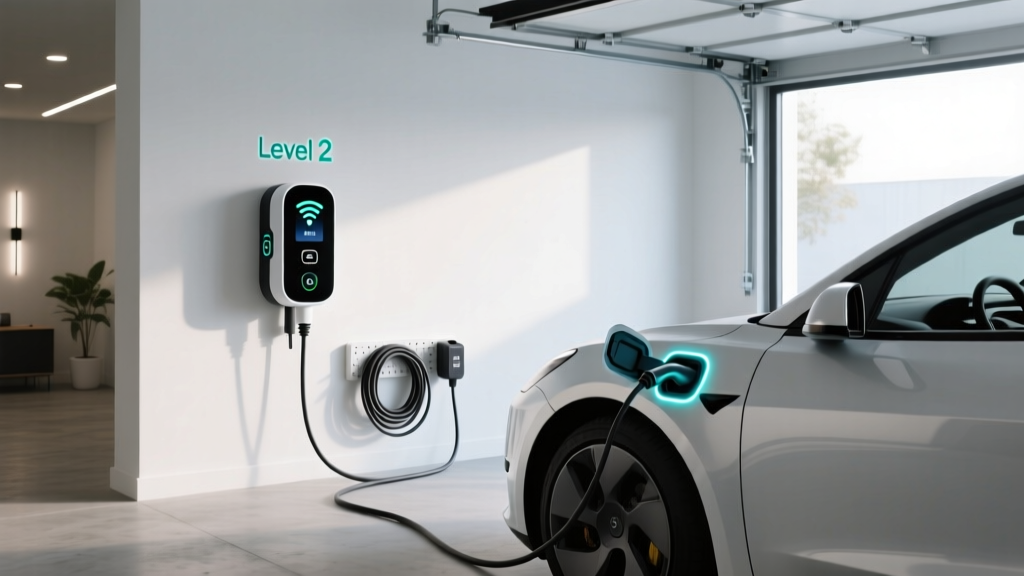
Installing a dedicated Level 2 home charger is the single biggest quality-of-life upgrade for any Leaf owner. Here's what the project actually entails — and what it costs.
Electrical Requirements
A Level 2 charger for the Leaf SV Plus (7.2 kW onboard charger) requires a 240-volt circuit. The most common setup is a NEMA 14-50 outlet on a 50-amp breaker, which safely delivers up to 40 amps continuous (electrical code requires circuits to be rated at 125% of continuous load, so 40A continuous = 50A breaker). The Leaf S, limited to 3.3 kW, can run on a 20-amp breaker / 16-amp circuit, but most installers recommend the 50-amp setup for future-proofing.
Panel Upgrade Reality
Homes with 100-amp electrical service or panels already near capacity may require a panel upgrade to 200 amps before adding a 50-amp EV circuit. This is the single largest variable in installation cost. Signs you may need an upgrade: your panel has no open breaker slots, you run multiple high-draw appliances simultaneously (electric dryer, oven, HVAC), or your home is older with original wiring.
| Component | Low Estimate | High Estimate | Notes |
|---|---|---|---|
| Level 2 Charger (Equipment) | $350 | $700 | 32A–48A smart chargers; see recommendations below |
| Electrician Labor | $500 | $2,000 | Depends on run length, conduit, panel location |
| Electrical Permit | $50 | $250 | Varies by municipality |
| Panel Upgrade (if needed) | $1,500 | $4,000 | 100A → 200A service upgrade |
| Total (no panel upgrade) | $900 | $2,950 | Most homes with 200A service |
| Total (with panel upgrade) | $2,400 | $6,950 | Older homes or high-load panels |
Always hire a licensed electrician and pull a permit. Unpermitted EV charger installations can void home insurance claims and create fire hazards. The National Electrical Code (NEC Article 625) governs EV charging equipment, and your installer should follow it precisely. Source: NFPA NEC
Recommended Home Chargers for the 2026 Nissan Leaf
ChargePoint Home Flex — Best Overall
- Power: Up to 12 kW (50A) — Leaf SV Plus will draw 7.2 kW max
- Connector: J1772 (native Leaf compatibility)
- Cable Length: 23 feet
- Smart Features: Wi-Fi, scheduling, Alexa/Google integration, energy tracking
- Price:~$549
- Why for Leaf: Adjustable amperage (16A–50A) lets you match your circuit; UL-listed; works with utility time-of-use programs to charge during off-peak rates
Emporia Level 2 EV Charger — Best Budget
- Power: Up to 11.5 kW (48A)
- Connector: J1772
- Cable Length: 24 feet
- Smart Features: Wi-Fi, solar integration, scheduling, load management
- Price: ~$399
- Why for Leaf: Lowest-cost smart charger with load management — useful if your panel is tight on capacity without needing a full upgrade
Grizzl-E Smart — Best for Outdoor / Cold Climate
- Power: Up to 10 kW (40A)
- Connector: J1772
- Cable Length: 24 feet
- Smart Features: OCPP, app scheduling, extreme temperature rated (-40°F to 122°F)
- Price: ~$449
- Why for Leaf: NEMA 4 outdoor rating; built in Canada for harsh winters; ideal if your charger mounts on an exterior wall or unheated garage
For the Leaf S (3.3 kW onboard charger), any of these chargers will work but you'll only draw 3.3 kW regardless of the station's rated output. The investment still makes sense — it future-proofs for your next EV, which will likely accept higher Level 2 rates.
Cost to Charge: Home vs. Public vs. Gas Comparison
| Charging Scenario | Rate ($/kWh) | Cost to Add 150 mi (SV Plus) | Cost Per Mile |
|---|---|---|---|
| Home Off-Peak (utility TOU) | $0.08–$0.12 | $3.00–$4.50 | $0.02–$0.03 |
| Home Standard Rate | $0.14–$0.18 | $5.25–$6.75 | $0.035–$0.045 |
| Public Level 2 (ChargePoint, etc.) | $0.20–$0.35 | $7.50–$13.10 | $0.05–$0.087 |
| DC Fast (CHAdeMO station) | $0.30–$0.48 | $11.25–$18.00 | $0.075–$0.12 |
| Gasoline Baseline (30 MPG, $3.40/gal) | — | $17.00 | $0.113 |
The Leaf SV Plus consumes approximately 30 kWh per 100 miles (rated ~111 MPGe combined per fueleconomy.gov). At home off-peak rates, you're paying roughly $0.025 per mile — a quarter of what a comparable 30 MPG gas car costs at current fuel prices. Even at the most expensive DC fast-charging rates, the Leaf still undercuts gasoline on a per-mile basis, though the margin narrows.
For annual driving of 12,000 miles with 80% home charging at $0.13/kWh and 20% public DC fast at $0.40/kWh, your yearly fuel cost lands around $540. A comparable gasoline vehicle at 30 MPG and $3.40/gallon would cost $1,360. That's roughly $820 in annual fuel savings — enough to offset the home charger installation in 1-3 years depending on your setup.
Safety, Electrical Code, and Best Practices
EV charging infrastructure is governed by NEC Article 625 and local building codes. Key requirements and best practices for your Leaf home charger installation:
- Dedicated Circuit: Your Level 2 charger must be on its own dedicated breaker — never shared with other appliances.
- GFCI Protection: NEC 2020+ requires GFCI protection for all EV charging outlets. Your electrician should install a GFCI breaker or use a charger with built-in ground-fault protection.
- Outdoor Rating: If mounting outside, use a NEMA 4-rated charger and an in-use weatherproof cover for the outlet. The Grizzl-E and ChargePoint Home Flex both carry outdoor ratings.
- Cable Management: A 24-foot cable is standard, but plan your parking position so the cable doesn't stretch across a walkway. Wall-mounted cable holsters prevent trip hazards.
- Load Management: If your panel is near capacity but you want to avoid a $2,000+ upgrade, smart chargers like the Emporia offer load-sharing features that throttle charging when other household circuits are in heavy use.
- Utility Rebates: Many utilities offer $250–$1,000 rebates for Level 2 charger installation, especially if you enroll in a time-of-use rate plan. Check with your local provider before installing.
Frequently Asked Questions
How much does it cost to install a home EV charger for the 2026 Nissan Leaf?
Expect $900–$2,950 for a standard installation (equipment + electrician + permit) if your electrical panel has capacity. If your home needs a 200-amp panel upgrade, total costs range from $2,400 to $6,950. Get at least two quotes from licensed electricians and always pull a permit.
How fast will each charging level add range to the Leaf?
Level 1 (120V) adds roughly 4-5 miles per hour. Level 2 (240V) adds 12 mi/hr on the Leaf S (3.3 kW) or 25 mi/hr on the SV Plus (7.2 kW). DC fast charging on CHAdeMO can add up to 180 miles per hour at peak rates, but expect tapering — a realistic 10-80% session takes 40-60 minutes.
Which connector and charger is compatible with my 2026 Nissan Leaf?
For Level 1 and Level 2 AC charging, the Leaf uses the J1772 connector — universally compatible with all public Level 2 stations and home chargers. For DC fast charging, the Leaf uses CHAdeMO. This is a legacy standard being phased out by CCS1 and NACS, so verify CHAdeMO station availability in your area before relying on DC fast charging for road trips.
How much does charging the Leaf cost per mile vs. gas?
Home charging at average rates ($0.13/kWh) costs approximately $0.035 per mile. A comparable 30 MPG gasoline vehicle at $3.40/gallon costs $0.113 per mile. That's a 69% per-mile savings with the Leaf when charging at home. Public DC fast charging narrows the gap but still undercuts gasoline.
What electrical upgrades might I need for a Level 2 charger?
You need a dedicated 240V circuit — typically a 50-amp breaker with a NEMA 14-50 outlet. If your electrical panel lacks open slots, is rated below 150 amps, or is already near capacity with existing appliances, you may need a panel upgrade to 200-amp service. This adds $1,500–$4,000 but is non-negotiable for safety and code compliance.
Does the 2026 Nissan Leaf qualify for federal tax credits?
Federal §30D tax credit eligibility depends on MSRP caps, buyer income limits, battery component sourcing, and critical mineral requirements per current IRS rules. The Leaf's Japan-built battery sourcing has historically complicated credit eligibility. Always verify current-year rules at IRS.gov and consult a tax professional before relying on credit availability. Point-of-sale transfer is available if you qualify.