The 2026 Tesla Model Y Long Range AWD carries an EPA-estimated 320 miles of range from its ~75 kWh (usable) LFP/NMC battery pack, with the Performance trim rated at approximately 295 miles. But the sticker number only tells half the story. On a 75°F day driving 65 mph, you'll see close to 300 real-world miles. Push 80 mph in winter, and that 2026 Model Y range can drop to 220–240 miles. The good news? The Model Y's charging architecture — now standard with the NACS connector — makes replenishing those miles faster and more accessible than almost any other EV on the road.
This guide breaks down exactly how to charge a 2026 Model Y at home and on the road, what electrical work your house might need, what it costs per mile compared to gasoline, and which home charging equipment delivers the best value.
Understanding Charging Levels: How Fast Each Adds Range to Your Model Y
EV charging is measured in kilowatts (kW), which represents the rate of power delivery — think of it as how fast water flows through a hose. The battery capacity is measured in kilowatt-hours (kWh), which is the total volume of energy stored. Confusing these two is the single most common EV mistake. A 48-amp Level 2 charger delivering 11.5 kW will add roughly 44 miles of range to your Model Y per hour of charging.
| Level | Voltage | Power (kW) | Miles of Range / Hour | Typical Use Case |
|---|---|---|---|---|
| Level 1 | 120V | 1.0–1.4 kW | 3–5 mi/hr | Overnight trickle, emergency top-off |
| Level 2 (16A) | 240V | 3.8 kW | ~14 mi/hr | Basic home outlet or portable charger |
| Level 2 (32A) | 240V | 7.7 kW | ~29 mi/hr | Mid-tier wall connector |
| Level 2 (48A) | 240V | 11.5 kW | ~44 mi/hr | Full-speed home charging (recommended) |
| DC Fast (V3 Supercharger) | DC | Up to 250 kW peak | ~1,000+ mi/hr (peak) | Road trips, rapid top-ups |
| DC Fast (V4 Supercharger) | DC | Up to 350 kW peak | ~1,200+ mi/hr (peak) | Newer Tesla stations, fastest available |
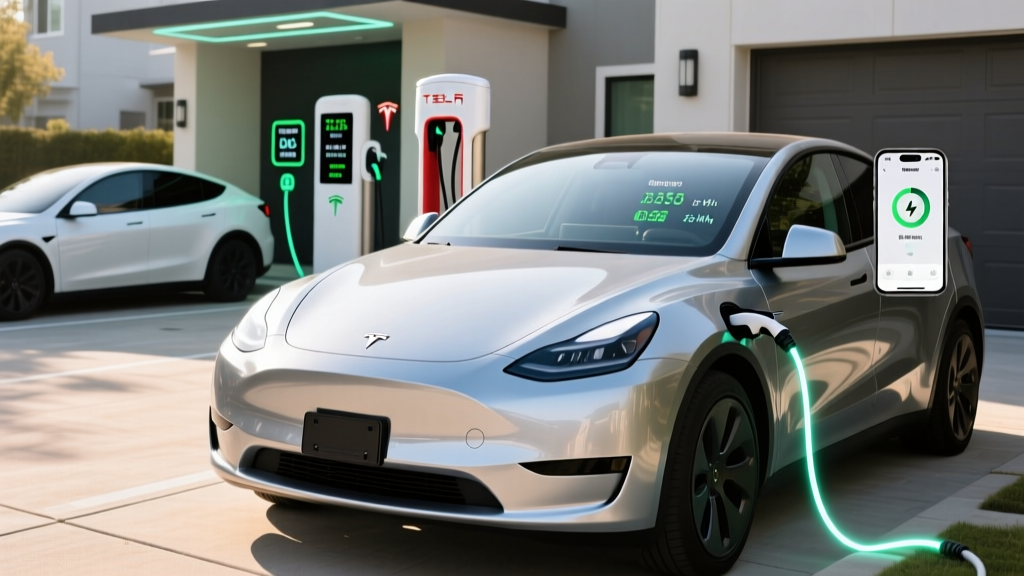
Real-world DC fast charging note: The Model Y peaks at 250 kW only at a low state of charge (SoC), typically between 5–20%. Above 50% SoC, the charge curve tapers significantly. A 10–80% session on a V3 Supercharger takes approximately 25–28 minutes. Expect the average sustained rate across that session to be closer to 110–130 kW, not the 250 kW peak.
Home Charger Installation: Electrical Requirements & Total Cost Breakdown
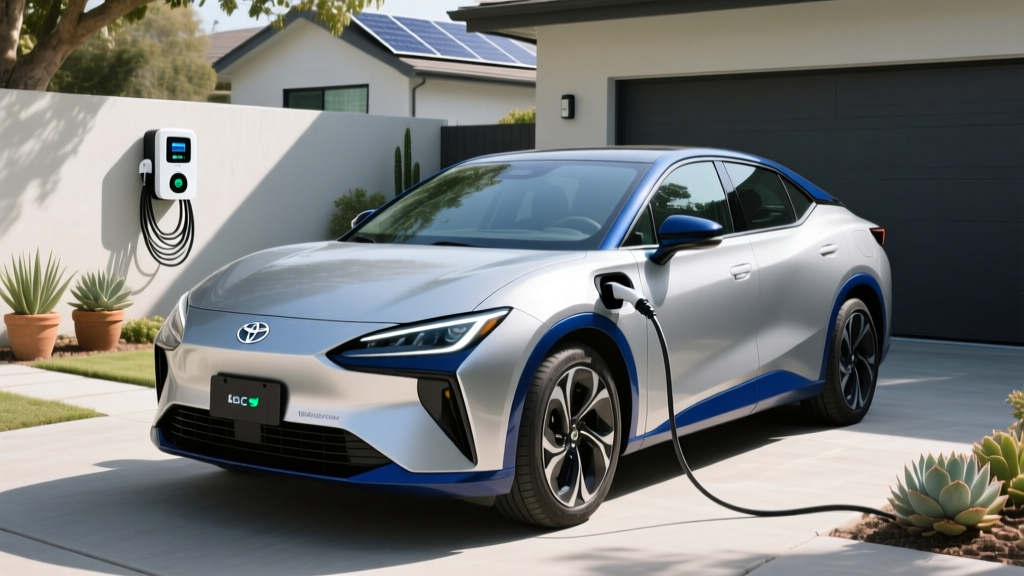
Installing a Level 2 home charger for your 2026 Model Y requires a dedicated 240V circuit, similar to what powers an electric dryer or oven. The most common setup is a NEMA 14-50 outlet on a 50-amp breaker (which supports up to 40 amps continuous draw per the 80% NEC rule) or a hardwired 60-amp breaker for 48-amp continuous charging.
What Your Electrical Panel Needs
Before any installation, assess your home's electrical panel. A modern 200-amp panel with available breaker slots can usually accommodate a 50A or 60A circuit without issue. Older homes with 100-amp service or panels already near capacity may require:
- Panel upgrade: Moving from 100A to 200A service typically costs $1,500–$3,500 including permit and utility coordination.
- Load management device: If a full panel upgrade isn't feasible, devices like the Emporia SmartLoad or Tesla Wall Connector with load-sharing can dynamically limit charger draw based on real-time household usage ($150–$300 for the device).
- Sub-panel installation: If the charger location is far from the main panel (e.g., detached garage), a sub-panel may be needed ($400–$800).
| Component | Cost Range | Notes |
|---|---|---|
| Level 2 Charger Equipment | $250–$700 | Depends on brand, power output, smart features |
| Electrician Labor (standard install) | $400–$1,200 | Varies by run length, wall type, conduit needs |
| Electrical Permit | $50–$250 | Required in most jurisdictions; varies by city/county |
| Panel Upgrade (if needed) | $1,500–$3,500 | Only if existing panel lacks capacity |
| Conduit & Wiring (long runs) | $200–$800 | Over 30 ft runs or through masonry add cost |
| Total (no panel upgrade) | $700–$2,150 | Most homes with 200A service |
| Total (with panel upgrade) | $2,200–$5,650 | Older homes or high-load situations |
Always hire a licensed electrician and pull a permit. Unpermitted work can void home insurance coverage and create fire risk. The National Electrical Code (NEC) Article 625 governs EV charging installations and your electrician should be familiar with it.
Connector Compatibility: NACS, CCS1, and What the 2026 Model Y Uses
The 2026 Tesla Model Y comes equipped with the North American Charging Standard (NACS) connector as native hardware — no adapter required for Tesla Superchargers or the rapidly growing network of NACS-equipped public chargers from Electrify America, EVgo, and others.
| Connector | Compatibility | Adapter Needed? | Network Examples |
|---|---|---|---|
| NACS (native) | Full native support | No | Tesla Supercharger, Electrify America (new stations), EVgo, Rivian Adventure Network |
| CCS1 | Supported via adapter | Yes — NACS-to-CCS adapter (~$150–$200) | Older Electrify America, ChargePoint, non-Tesla DC fast stations |
| CHAdeMO | Not supported | N/A — no reliable adapter exists | Nissan Leaf-era stations (being phased out) |
| J1772 (Level 2 AC) | Supported via adapter | Yes — included with vehicle or ~$50 aftermarket | Public Level 2 stations, workplaces, hotels |
Practical tip: Carry a NACS-to-CCS adapter in your frunk. While NACS is becoming the dominant standard by 2026, many existing public DC fast chargers still have CCS1 cables, especially in rural areas. Tesla sells an official adapter, and third-party options from brands like Lectron are also available.
Cost to Charge: Home Electricity vs. Public DC Fast vs. Gasoline
One of the strongest ownership arguments for the Model Y is fuel cost savings. Here's how the numbers break down across different charging scenarios, using the 2026 Model Y's EPA efficiency of approximately 28 kWh/100 miles (roughly 120 MPGe combined).
| Scenario | Rate | Cost per Mile | Annual Cost (12,000 mi) |
|---|---|---|---|
| Home (off-peak utility rate) | $0.09/kWh | $0.025 | $300 |
| Home (national avg residential) | $0.17/kWh | $0.048 | $576 |
| Public Level 2 (network pricing) | $0.25–$0.40/kWh | $0.070–$0.112 | $840–$1,344 |
| DC Fast Charging (Supercharger avg) | $0.28–$0.42/kWh | $0.078–$0.118 | $936–$1,416 |
| Gasoline SUV (25 MPG avg, $3.40/gal) | $3.40/gallon | $0.136 | $1,632 |
Even at public DC fast-charging rates, the Model Y costs roughly 30–50% less per mile than a comparable gasoline SUV. If you charge primarily at home on off-peak rates, the savings are dramatic — $300/year versus $1,632 for gas. Over five years of ownership, that's a potential $6,600 fuel savings, assuming a mix of 80% home and 20% public charging.
Time-of-use (TOU) tip: Many utilities offer EV-specific TOU plans with rates as low as $0.05–$0.09/kWh during overnight hours (typically 12 AM–6 AM). Schedule your Model Y's charging via the Tesla app to start during these windows for maximum savings.
Charging Time Examples: 10–80% Sessions for the Model Y's 75 kWh Battery
The 2026 Model Y's ~75 kWh usable battery means a 10–80% session requires approximately 52.5 kWh of energy. Here's what that looks like across different charger types:
- Level 1 (1.4 kW): ~37 hours — not practical for a 10–80% session; best for overnight trickle adding 30–40 miles.
- Level 2, 32A (7.7 kW): ~7 hours — a full overnight charge from near-empty to 80%.
- Level 2, 48A (11.5 kW): ~4.5 hours — wake up to a full battery every morning with evening plug-in.
- V3 Supercharger (250 kW peak): ~25–28 minutes (10–80%) — the charge curve tapers from ~250 kW at low SoC to ~60 kW near 80%.
- V4 Supercharger (350 kW peak): ~18–22 minutes (10–80%) — available at select newer stations; the Model Y's onboard architecture can accept higher peak rates on 2026 models.
Preconditioning matters: If you navigate to a Supercharger in the Tesla navigation system, the car automatically preconditions the battery — warming it to optimal temperature for faster charging. In cold weather (below 40°F), preconditioning can reduce your 10–80% time by 5–10 minutes compared to arriving with a cold battery.
Recommended Home Charging Equipment for the 2026 Model Y
Not all Level 2 chargers are equal. Here are the top picks for pairing with a 2026 Model Y, selected for NACS compatibility, build quality, and smart features.
Tesla Wall Connector (Gen 4)
- Power Output: Up to 11.5 kW (48A) on a 60A circuit
- Connector: Native NACS — no adapter needed
- Cable Length: 24 feet
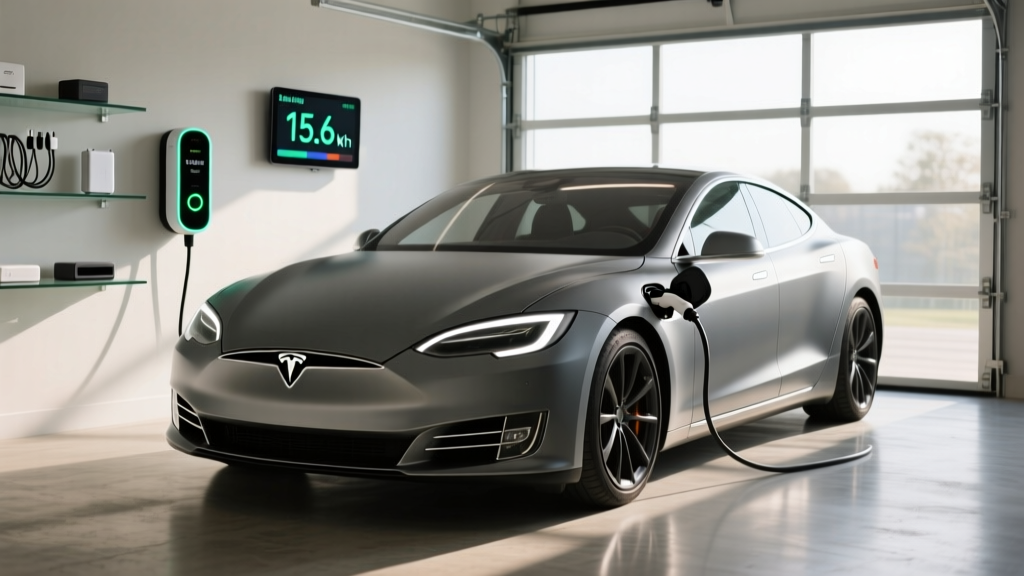
- Smart Features: Wi-Fi, OTA updates, load sharing with other Wall Connectors, Tesla app integration, scheduling
- Price: ~$475
- Verdict: The default choice for Tesla owners. Seamless integration, fastest Level 2 speeds your Model Y can accept, and the ability to share a single circuit between two units if you own multiple EVs.
Emporia Level 2 EV Charger
- Power Output: Up to 11.5 kW (48A)
- Connector: J1772 (NACS adapter included) or NACS version available
- Cable Length: 24 feet
- Smart Features: Energy monitoring, solar integration, TOU scheduling via Emporia app, load management
- Price: ~$399
- Verdict: Best value for households with solar panels or those wanting detailed energy tracking. The load-management feature can avoid a panel upgrade.
ChargePoint Home Flex
- Power Output: Configurable up to 12 kW (50A) on a 60A circuit
- Connector: J1772 (NACS adapter required) or NACS version
- Cable Length: 23 feet
- Smart Features: Alexa integration, ChargePoint app scheduling, flexible amperage settings
- Price: ~$549–$699
- Verdict: Good for multi-EV households with mixed brands. Adjustable amperage means you can dial it down if your panel can't support 48A.
Safety, Code, and Installation Best Practices
EV charging draws sustained high current for hours — this is fundamentally different from short-burst appliances. Follow these safety requirements:
- Dedicated circuit: Your Level 2 charger must have its own dedicated breaker. Never share a circuit with other high-draw appliances.
- GFCI protection: NEC 2023 and later require GFCI protection for outdoor EV outlets. Hardwired installations may have different requirements — your electrician will advise based on local code.
- Outdoor rating: If your charger is mounted outside or in an unenclosed carport, ensure it carries a NEMA 4 or IP65 weather rating. All three chargers recommended above are outdoor-rated.
- Cable management: Use a wall-mounted cable organizer to prevent trip hazards and connector damage. Never let the cable rest on the ground where it can be driven over.
- Breaker sizing: Continuous loads (like EV charging) can only use 80% of a breaker's rated capacity. A 50A breaker supports 40A continuous; a 60A breaker supports 48A continuous. Never undersize the breaker.
Frequently Asked Questions
How much does it cost to install a home EV charger for my 2026 Model Y?
For most homes with a 200-amp panel and a short wiring run, expect $700–$2,150 total (equipment, electrician, and permit). Homes needing a panel upgrade should budget $2,200–$5,650. Get at least two quotes from licensed electricians and verify they pull a permit.
How fast will each charging level add range to the Model Y?
Level 1 adds 3–5 miles per hour. Level 2 at 48 amps adds approximately 44 miles per hour. DC fast charging at a V3 Supercharger can add up to 200 miles in about 15 minutes at peak rate, though the charge curve tapers significantly above 50% SoC.
Which connector is compatible with the 2026 Model Y?
The 2026 Model Y uses NACS natively. For CCS1 public chargers, you'll need a NACS-to-CCS adapter (~$150–$200). A J1772 adapter (typically included with the car) handles public Level 2 AC stations. CHAdeMO is not supported.
How much does charging cost per mile compared to gas?
Home charging at the national average ($0.17/kWh) costs about $0.048/mile. A comparable gasoline SUV at 25 MPG and $3.40/gallon costs $0.136/mile. That's a 65% savings per mile with home charging. Even public DC fast charging at $0.35/kWh ($0.098/mile) beats gasoline.
What electrical upgrades might I need for a home charger?
If your home has a 200-amp panel with available slots, you likely need nothing beyond the dedicated circuit. Homes with 100-amp service, full panels, or older wiring may need a panel upgrade ($1,500–$3,500), a load-management device ($150–$300), or a sub-panel for detached garages ($400–$800). An electrician's load calculation will determine this during the initial assessment.
Will the 2026 Model Y's real-world range match the EPA sticker?
The EPA rates the Long Range AWD at approximately 320 miles. In real-world mixed driving at moderate temperatures and speeds under 70 mph, expect 280–310 miles. Sustained highway driving at 80 mph reduces this to roughly 250–270 miles. In cold weather (below 30°F), plan for 220–260 miles due to battery heating demands and reduced regenerative braking efficiency. These figures are consistent with fueleconomy.gov data and independent testing.
Does the 2026 Model Y qualify for the federal EV tax credit?
The federal §30D tax credit offers up to $7,500, but eligibility depends on MSRP caps ($80,000 for SUVs), buyer income limits ($300K joint / $150K single), battery critical-mineral sourcing requirements, and point-of-sale transfer rules. The Tesla Model Y has historically qualified for partial or full credit depending on the model year and sourcing rules. Check the latest requirements at IRS.gov and confirm with a tax professional before purchase, as sourcing rules have tightened for 2026.