Why the 2026 Ioniq 5's Charging System Demands a Proper Home Setup
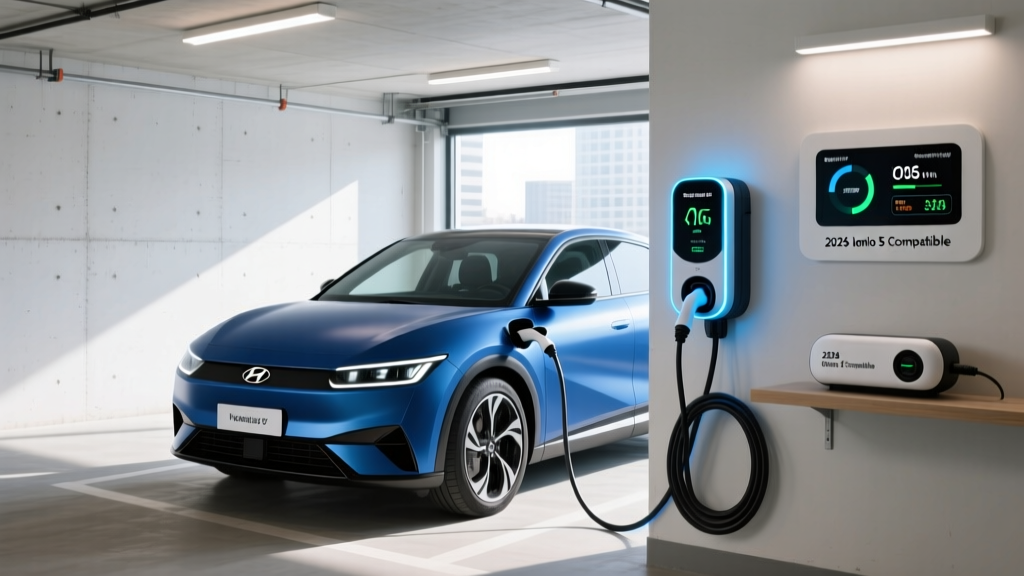
The 2026 Hyundai Ioniq 5 remains one of the most compelling electric crossovers on the market, with an EPA-estimated range of up to 303 miles on the Long Range RWD trim and a blistering 10–80% DC fast-charge time of approximately 18 minutes on a 350 kW charger. But those headline numbers only materialize if your charging infrastructure — at home and on the road — is set up correctly. A Level 1 wall outlet will take days to refill its 84 kWh (usable) battery. A properly installed Level 2 home charger, by contrast, adds roughly 30–35 miles of range per hour and fully replenishes the Ioniq 5 overnight.
This guide breaks down exactly what you need to charge a 2026 Ioniq 5 at home and in public, with real numbers for costs, speeds, electrical requirements, and equipment. Whether you're a new owner or shopping for your first EV charger, the data below will help you avoid expensive mistakes — like undersizing your circuit or buying a charger that can't deliver the Ioniq 5's full 10.9 kW Level 2 acceptance rate.
EPA estimate: 303 mi (Long Range RWD), 260 mi (Standard Range RWD), 290 mi (Long Range AWD)
Real-world expectation: ~250–270 mi highway at 70 mph; ~220–240 mi in freezing temperatures with cabin heat. The Ioniq 5's heat pump (standard on Long Range trims) mitigates cold-weather loss better than most competitors, but expect 15–25% reduction below 32°F.
Battery: 84 kWh usable (Long Range, NMC chemistry), 63 kWh usable (Standard Range)
Charging Levels Explained: Speeds, kW, and Miles Per Hour for the Ioniq 5
Before buying equipment, understand the three charging levels and what each delivers to the Ioniq 5's battery. Remember: kW (kilowatts) measures power — the rate at which energy flows. kWh (kilowatt-hours) measures energy — the total capacity of the battery. A 10 kW charger running for one hour delivers 10 kWh of energy.
| Level | Voltage | Max Power (kW) | Miles of Range Added Per Hour (Ioniq 5 LR) | 0–100% Full Charge Time (84 kWh) |
|---|---|---|---|---|
| Level 1 (standard outlet) | 120V / 12A | ~1.4 kW | ~4–5 mi/hr | ~60+ hours |
| Level 2 (home/public AC) | 240V / 48A | 10.9 kW (Ioniq 5 onboard limit) | ~30–35 mi/hr | ~8 hours |
| DC Fast Charging | 400V–800V DC | Up to 240 kW peak (350 kW capable on NACS adapter) | N/A (measured in minutes) | 10–80% in ~18 min at 350 kW |
The Ioniq 5's 800V battery architecture is its standout feature. While most EVs in this price class max out at 150–175 kW on DC fast chargers, the Ioniq 5 can accept up to 240 kW natively (and up to 350 kW via the NACS port on 2025+ models equipped with the Tesla Supercharger adapter). This means on a 350 kW Electrify America or Tesla Supercharger stall, the Ioniq 5 sustains high charge rates longer, reaching 80% in roughly 18 minutes. However, the charge curve tapers significantly above 80% — going from 80% to 100% can take nearly as long as 10% to 80%. For battery longevity, daily charging to 80% is recommended.
Home Charger Installation: Electrical Requirements, Costs, and Panel Upgrades
Installing a Level 2 home charger is the single highest-impact upgrade for EV ownership. Here's what's required for a 2026 Ioniq 5, which accepts up to 10.9 kW on Level 2 (240V at 45.4A).
Circuit and Electrical Requirements
To deliver the Ioniq 5's full 10.9 kW Level 2 rate, you need a dedicated 240V / 60-amp circuit (a 48A continuous load requires a circuit rated at 125% of the load per NEC code, hence 60A). This typically uses 6 AWG copper wire. If you're willing to accept a slightly slower charge, a 240V / 50-amp circuit (40A continuous, delivering ~9.6 kW) is a common and slightly cheaper alternative that still adds ~28–30 miles per hour.
Panel Upgrade Considerations
Many homes built before 2000 have 100-amp electrical panels. Adding a 60-amp EV circuit to an already-loaded 100A panel may require a panel upgrade to 200 amps, which is a significant additional cost. Homes with 200A service usually have sufficient headroom. Your electrician will perform a load calculation per NEC Article 220 to determine if your panel can handle the additional draw.
| Cost Component | Typical Range | Notes |
|---|---|---|
| Level 2 charger (hardware) | $350–$700 | Varies by brand, power output, smart features |
| Electrician labor (standard install) | $500–$1,500 | Depends on run length from panel to garage |
| Electrical permit | $50–$200 | Required in most jurisdictions; varies by locality |
| Panel upgrade (if needed) | $1,500–$3,500 | 100A → 200A upgrade; not always required |
| Total (no panel upgrade) | $900–$2,400 | Most common scenario for newer homes |
| Total (with panel upgrade) | $2,400–$5,900 | Older homes with 100A service |
Federal incentive note: The IRS residential clean energy credit (25C) covers 30% of home EV charger equipment and installation costs, up to $1,000, through 2032. This is separate from the §30D vehicle purchase credit. Check irs.gov for current-year eligibility and income limits.
Connector Compatibility: NACS, CCS, and the Ioniq 5
The 2026 Hyundai Ioniq 5 is available with the NACS (North American Charging Standard) port — the Tesla-designed connector now adopted by most major automakers. Earlier model years (2022–2024) shipped with CCS1. Here's what you need to know:
| Connector | Used By | Ioniq 5 Compatibility | Adapter Needed? |
|---|---|---|---|
| NACS (Tesla) | Tesla, 2025+ Hyundai/Kia, Ford, GM, Rivian, others | Native on 2025+ Ioniq 5 (NACS trim option) | No — direct plug at Tesla Superchargers |
| CCS1 | Most non-Tesla EVs (2022–2024 Ioniq 5) | Native on 2022–2024 models | NACS-to-CCS adapter for Tesla Superchargers (~$200–$250) |
| CHAdeMO | Nissan Leaf (legacy) | Not compatible | N/A — CHAdeMO networks are being phased out |
For Level 2 home charging, all EVs (regardless of DC fast-charge connector) use the J1772 standard. If your Ioniq 5 has a NACS port, you'll need a NACS-to-J1772 adapter for home Level 2 charging — or purchase a Level 2 charger with a NACS connector built in (increasingly available from ChargePoint, Emporia, and others in 2025–2026).
Cost to Charge: Home vs. Public vs. Gas — Per-Mile Breakdown
One of the strongest ownership arguments for the Ioniq 5 is fuel cost savings. The Long Range AWD model achieves a combined 110 MPGe (source: fueleconomy.gov), meaning it uses roughly 30 kWh per 100 miles of driving.
| Scenario | Rate | Cost Per 100 Miles | Cost Per Mile |
|---|---|---|---|
| Home charging (off-peak utility rate) | $0.12/kWh | $3.60 | $0.036 |
| Home charging (national avg. residential) | $0.17/kWh | $5.10 | $0.051 |
| Public Level 2 (e.g., ChargePoint) | $0.30/kWh | $9.00 | $0.090 |
| DC Fast Charging (Electrify America) | $0.48/kWh | $14.40 | $0.144 |
| Tesla Supercharger (avg.) | $0.35/kWh | $10.50 | $0.105 |
| Gasoline car (28 MPG combined, $3.40/gal) | $3.40/gal | $12.14 | $0.121 |
At national average residential electricity rates, charging the Ioniq 5 at home costs roughly half what a comparable gas-powered crossover (like a Toyota RAV4 at 28 MPG combined) costs in fuel. Even DC fast charging on road trips is competitive with gasoline per mile. The savings multiply over a 5-year ownership period: at 12,000 miles/year, home charging saves approximately $4,200–$5,100 versus gasoline over five years.
Best Level 2 Home Chargers for the 2026 Ioniq 5
The Ioniq 5 accepts up to 10.9 kW on Level 2 (48A continuous at 240V). To unlock that full rate, choose a charger rated at 48A or higher. Below are three tested recommendations across price tiers:
Emporia Vue Level 2 Charger — Best Value
- Power output: 48A / 11.5 kW max (240V)
- Connector: J1772 (NACS adapter included)
- Cable length: 24 ft
- Smart features: Wi-Fi, app scheduling, energy monitoring, solar integration
- Price: ~$399
- Why it works: Delivers full 10.9 kW to the Ioniq 5; energy monitoring pairs well with solar owners; UL-listed.
ChargePoint Home Flex — Best Smart Charger
- Power output: Configurable 16A–50A / up to 12 kW (240V)
- Connector: J1772 or NACS (selectable at purchase)
- Cable length: 23 ft
- Smart features: Wi-Fi, Alexa/Google integration, scheduled charging, charge history
- Price: ~$649
- Why it works: Configurable amperage means you can set it to 48A for a 60A circuit or 40A for a 50A circuit; excellent app; NACS option available.
Grizzl-E Smart — Most Durable
- Power output: 40A / 9.6 kW (240V)
- Connector: J1772
- Cable length: 24 ft
- Smart features: Wi-Fi, OCPP-compatible, app control
- Price: ~$449
- Why it works: Built in Canada for extreme cold (-40°F rated); IP67 outdoor-rated; slightly lower output (9.6 kW vs. 10.9 kW max) but extremely robust for outdoor/garage installs in cold climates.
DC Fast Charging the Ioniq 5: What to Expect on Road Trips
The Ioniq 5's 800V architecture delivers class-leading DC fast-charge speeds, but real-world results depend on charger availability, battery temperature, and state of charge.
- At a 350 kW charger (e.g., Electrify America, Tesla Supercharger V4): 10–80% in ~18 minutes. The Ioniq 5 sustains ~200+ kW from 10% to ~55% SoC, then tapers to ~150 kW through 70%, and drops further above 80%.
- At a 150 kW charger (common CCS stations): 10–80% in ~25–30 minutes. The Ioniq 5 will use the full 150 kW available through most of the curve.
- At a 50 kW charger (older CHAdeMO/CCS stations): 10–80% in ~70–80 minutes. Avoid these unless necessary.
Preconditioning matters: The Ioniq 5 will precondition its battery when you navigate to a DC fast charger via the built-in navigation. This warms the battery to optimal temperature for faster charging. In cold weather (below 40°F), preconditioning can reduce 10–80% charge time by 5–8 minutes. Always navigate to the charger rather than just driving there — the car needs the heads-up to start thermal management.
Safety and Code Requirements for Home EV Charging
EV charger installation is electrical work that must comply with the National Electrical Code (NEC) and your local jurisdiction. Key requirements:
- Dedicated circuit: Your Level 2 charger must be on its own dedicated circuit — not shared with other appliances.
- GFCI protection: NEC 2020 and later require GFCI protection for EV charging outlets (not hardwired units). Hardwiring your charger avoids the GFCI breaker requirement and eliminates a common source of nuisance tripping.
- Outdoor rating: If installing outdoors, the charger must be rated for outdoor use (IP65 or higher). All three chargers recommended above meet this standard.
- Permit and inspection: Most municipalities require an electrical permit and post-installation inspection. Your electrician will typically handle this. Do not skip the permit — it's required for the federal 25C tax credit and protects your home insurance coverage.
- Licensed electrician: Always use a licensed electrician. EV charging circuits carry sustained high current for hours — improper wiring is a fire risk. Get at least two quotes and verify the electrician has EV charger installation experience.
Frequently Asked Questions
How much does it cost to install a home EV charger for the Ioniq 5?
Expect $900–$2,400 for a standard installation (charger + electrician + permit) if your electrical panel has sufficient capacity. If your home needs a 100A-to-200A panel upgrade, total costs can reach $2,400–$5,900. The federal 25C credit covers 30% of equipment and installation, up to $1,000.
How fast will each charging level add range to the 2026 Ioniq 5?
Level 1 (120V standard outlet): ~4–5 miles per hour. Level 2 (240V, 48A): ~30–35 miles per hour. DC fast charging: 10–80% in ~18 minutes at a 350 kW station, adding roughly 180+ miles in that window.
Which connector is compatible with my 2026 Ioniq 5?
The 2026 Ioniq 5 is available with either NACS or CCS1 depending on trim and production date. For Level 2 home charging, all EVs use J1772 — if your car has NACS, you'll need a NACS-to-J1772 adapter or a NACS-equipped home charger. For DC fast charging, NACS-equipped Ioniq 5s can use Tesla Superchargers directly; CCS1 models need a NACS-to-CCS adapter for Supercharger access.
How much does charging the Ioniq 5 cost per mile vs. gas?
At the national average residential electricity rate of $0.17/kWh, home charging costs ~$0.051 per mile. A comparable gas crossover at 28 MPG and $3.40/gallon costs ~$0.121 per mile. Home charging saves roughly 58% per mile; even public DC fast charging at $0.48/kWh ($0.144/mi) is competitive with gasoline.
What electrical upgrades might I need for a Level 2 charger?
You'll need a dedicated 240V circuit (50A or 60A). If your home has a 100-amp electrical panel that is already heavily loaded, you may need a panel upgrade to 200 amps ($1,500–$3,500). Homes built after 2000 with 200A service typically need no panel upgrade. A licensed electrician will perform a load calculation to determine your specific needs.