The 2025 Tesla Model 3 Long Range AWD pairs a ~79 kWh usable NMC battery with a NACS charge port and up to 250 kW peak DC fast-charging capability. EPA-rated at 341 miles, it's one of the most efficient sedans on the market — but your actual charging experience depends entirely on the infrastructure you set up at home and the networks you use on the road. This guide covers every charging scenario Model 3 Long Range owners face, from garage wiring to public Supercharger math.
2025 Tesla Model 3 Long Range AWD: Charging Specs at a Glance
| Spec | Value |
|---|---|
| Battery (usable) | ~79 kWh, NMC chemistry |
| EPA Range | 341 miles |
| Real-World Highway (70 mph) | ~285–310 miles |
| Cold-Weather Range (20°F) | ~240–270 miles |
| Charge Port | NACS (native Tesla) |
| Peak DC Fast Charge | 250 kW |
| 10–80% DC Fast Time | ~25–30 minutes |
| Max Level 2 AC Charge | 11.5 kW (48A onboard) |
| Level 1 (120V) Charge | ~1.4 kW (~3–4 mi/hr) |
| Efficiency | 132 MPGe combined / 25 kWh/100mi |
| Base MSRP | $47,740 (before incentives) |
Charging Levels Explained: kW, Miles per Hour, and What They Mean
Before evaluating equipment, understand the three charging tiers. A critical distinction: kW (kilowatts) measures power — how fast energy flows. kWh (kilowatt-hours) measures energy — how much the battery stores. Think of kW as the hose diameter and kWh as the bucket size.
| Level | Voltage | Power (kW) | Miles Added/Hour | Best For |
|---|---|---|---|---|
| Level 1 | 120V AC | 1.0–1.4 kW | 3–4 mi/hr | Overnight top-offs, emergencies |
| Level 2 | 240V AC | 7.2–11.5 kW | 25–44 mi/hr | Daily home charging |
| DC Fast | 400V+ DC | 50–250 kW | 150–1,000+ mi/hr (peak) | Road trips, rapid top-ups |
For a 79 kWh battery, Level 1 adds roughly 14 miles overnight (10 hours). Level 2 at 11.5 kW fully replenishes the pack in about 7 hours. DC fast charging from 10–80% takes roughly 25–30 minutes at a 250 kW Supercharger — but only if the battery is preconditioned (the car does this automatically when you navigate to a Supercharger).
Home Charger Installation: Electrical Requirements and Costs
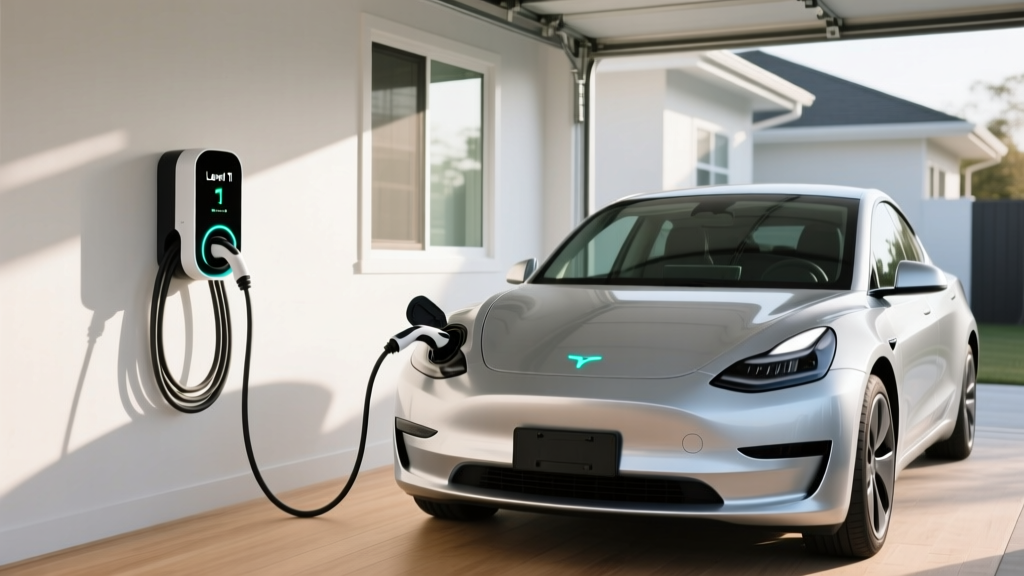
The 2025 Model 3 Long Range accepts up to 11.5 kW on Level 2, which requires a 240V circuit rated for at least 60 amps (EV chargers are continuous loads, so the circuit must be rated 125% above the charger's max draw — a 48A charger needs a 60A breaker).
What Your Electrical Panel Needs
- Panel capacity: Most modern homes have 200A service. Adding a 60A EV circuit is usually feasible, but older homes with 100A panels may require an upgrade ($1,500–$3,500).
- Dedicated circuit: The charger must have its own breaker — no sharing with dryers or ovens.
- Wire gauge: 6 AWG copper for a 60A circuit; 4 AWG for runs over 50 feet to minimize voltage drop.
- GFCI protection: NEC 2020+ requires GFCI breakers for EV outlets in garages. Hardwired chargers bypass this requirement.
- Permit: Most jurisdictions require an electrical permit ($50–$200) and inspection.
Installation Cost Breakdown
| Component | Cost Range |
|---|---|
| Level 2 Charger (hardware) | $400–$750 |
| Electrician labor (standard install) | $500–$1,500 |
| Permit & inspection | $50–$200 |
| Panel upgrade (if needed) | $1,500–$3,500 |
| Total (no panel upgrade) | $950–$2,450 |
| Total (with panel upgrade) | $2,450–$5,950 |
Costs vary by region, panel location relative to the garage, and whether you choose hardwired or NEMA 14-50 outlet installation. A hardwired setup avoids the GFCI breaker requirement and is marginally safer; an outlet gives you portability. Get at least three quotes from licensed electricians — and confirm they pull a permit. Unpermitted work can void home insurance claims.
Connector Compatibility: NACS, CCS, and Adapter Needs
The 2025 Model 3 Long Range AWD ships with a native NACS (North American Charging Standard) port — the Tesla connector now adopted by Ford, GM, Rivian, Hyundai, and most major automakers. This means seamless access to the entire Tesla Supercharger network (20,000+ stalls in North America) without adapters.
| Connector | Compatibility | Adapter Needed? |
|---|---|---|
| NACS (Tesla) | Native — direct plug | No |
| CCS1 | Requires adapter | Yes — Tesla CCS Adapter (~$175) |
| CHAdeMO | Requires adapter (discontinued) | Yes — limited availability, used market only |
| J1772 (Level 2) | Requires adapter | Yes — included with vehicle |
For public DC fast charging outside the Supercharger network (Electrify America, EVgo, Ionity), you'll need the Tesla CCS adapter. Most new non-Tesla chargers deployed in 2025–2026 now include NACS cables, reducing adapter dependency — but CCS remains common at older installations.
Charging Cost: Home vs. Public vs. Gas
The Model 3 Long Range's 25 kWh/100mi efficiency makes it one of the cheapest vehicles to fuel. Here's how costs compare across scenarios:
| Scenario | Rate | Cost per 100 Miles | Cost per Mile |
|---|---|---|---|
| Home (off-peak utility rate) | $0.12/kWh | $3.00 | $0.03 |
| Home (average US rate) | $0.17/kWh | $4.25 | $0.04 |
| Public Level 2 (ChargePoint, etc.) | $0.30/kWh | $7.50 | $0.08 |
| DC Fast (Supercharger avg) | $0.32/kWh | $8.00 | $0.08 |
| DC Fast (Electrify America) | $0.48/kWh | $12.00 | $0.12 |
| Gas car (30 MPG, $3.50/gal) | — | $11.67 | $0.12 |
At home off-peak rates, the Model 3 costs 75% less per mile than a 30 MPG gas car. Even at DC fast-charger rates, you're breaking even or beating gasoline. The savings compound: driving 12,000 miles/year at home rates saves roughly $800–$1,000 annually vs. gas.
Recommended Home Chargers for the Model 3 Long Range
Tesla Wall Connector
- Power: 11.5 kW (48A)
- Connector: NACS (native)
- Cable: 24 ft
- Smart Features: Wi-Fi, OTA updates, load sharing
- Price: $475
Verdict: Best integration with Tesla vehicles. Supports power sharing between two units on one circuit. No app needed — plug and charge.
ChargePoint Home Flex
- Power: Up to 12 kW (50A, configurable)
- Connector: J1772 (use Tesla adapter) or NACS
- Cable: 23 ft
- Smart Features: App scheduling, Alexa, energy tracking
- Price: $699
Verdict: Best for multi-EV households or renters who want portability. NACS version now available.
Emporia Vue EV Charger
- Power: 11.5 kW (48A)
- Connector: J1772 or NACS
- Cable: 24 ft
- Smart Features: Solar integration, energy monitoring
- Price: $399
Verdict: Budget pick with solid app and solar-aware charging. Good for homes with rooftop panels.
Safety, Code, and Installation Best Practices
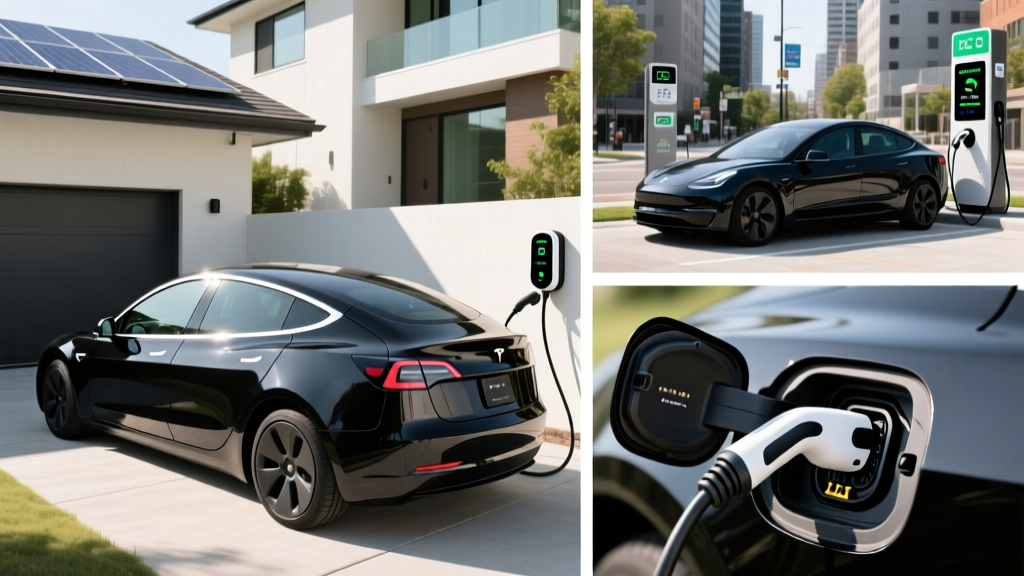
- Hardwired vs. outlet: Hardwired chargers are safer and avoid GFCI nuisance trips. Outlets (NEMA 14-50) offer portability but require a GFCI breaker in most jurisdictions.
- Outdoor rating: If installing outside, ensure the charger is NEMA 4 rated (weatherproof). The Tesla Wall Connector and ChargePoint Home Flex both qualify.
- Cable management: Use a wall-mounted holster to keep cables off the ground and prevent trip hazards.
- Load calculation: A licensed electrician will perform a load calculation to ensure your panel can handle the EV circuit plus existing loads. If you're near capacity, a panel upgrade or load-management device (like the Emporia Smart Load Center) may be required.
- Inspection: Always get the work inspected. Failed inspections are rare with licensed electricians but protect you from fire risk and insurance disputes.
FAQ: 2025 Model 3 Long Range Charging Questions
How much does it cost to install a home EV charger?
A standard Level 2 installation (charger + electrician + permit) costs $950–$2,450 if your panel has capacity. Homes needing a panel upgrade should budget $2,450–$5,950 total.
How fast will each charging level add range?
Level 1 adds 3–4 miles per hour. Level 2 at 11.5 kW adds ~44 miles per hour. DC fast charging at 250 kW can add 200+ miles in 15 minutes (10–50% SoC), but tapers significantly above 80%.
Which connector is compatible with my Model 3?
The 2025 Model 3 Long Range uses NACS natively. For CCS public chargers, you'll need the Tesla CCS adapter (~$175). A J1772 adapter is included with the car for Level 2 public stations.
How much does charging cost per mile vs. gas?
At home off-peak rates ($0.12/kWh), the Model 3 costs $0.03/mile — 75% less than a 30 MPG gas car at $3.50/gallon ($0.12/mile). Even DC fast charging at $0.32/kWh costs $0.08/mile, still cheaper than gas.
What electrical upgrades might I need?
If your home has a 200A panel with spare capacity, no upgrade is needed. Homes with 100A service or panels near capacity may need a panel upgrade ($1,500–$3,500) or a load-management device.
Does the Model 3 qualify for the federal tax credit?
As of 2026, the Model 3 Long Range AWD qualifies for up to $7,500 under IRS §30D, subject to buyer income caps ($150K single / $300K joint), MSRP limits ($55K for sedans), and battery sourcing requirements. The credit can be transferred to the dealer at point of sale as a purchase-price reduction. Confirm eligibility with your tax professional.
Sources: EPA Fuel Economy, Tesla Model 3 Specifications, IRS Clean Vehicle Credits.