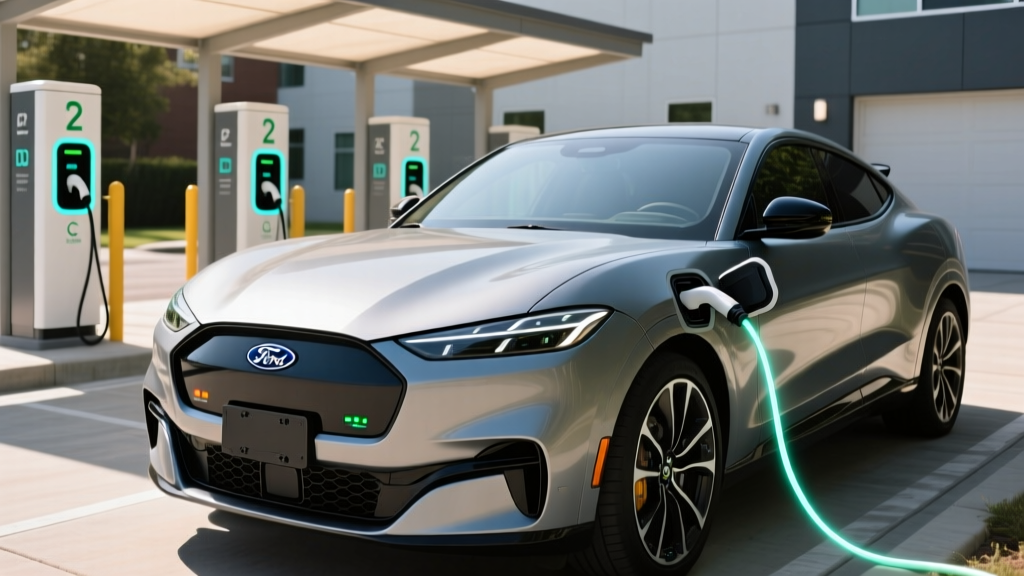
The 2025 Ford Mustang Mach-E arrives with a critical hardware change: a native NACS (North American Charging Standard) port, replacing the CCS1 connector used on 2021–2024 models. This shift unlocks direct access to Tesla Superchargers without an adapter, fundamentally altering the public-charging experience for Mach-E owners. Whether you're setting up a home Level 2 station or planning cross-country road trips, understanding the Mach-E's charging architecture — from its 150 kW DC fast-charging peak to its 10.5 kW onboard AC charger — is essential for realistic expectations and budget planning.
This guide covers every charging scenario you'll encounter with the 2025 Mach-E, including exact speeds, installation costs, connector compatibility, and real-world per-mile costs compared to a gas-powered SUV.
2025 Mustang Mach-E Battery Sizes and EPA Range
Before discussing charging speeds, you need to know what you're filling. The 2025 Mach-E offers two usable battery capacities across its lineup:
| Trim / Battery | Usable Capacity | Chemistry | EPA Range | Real-World Expectation |
|---|---|---|---|---|
| Select / Premium (Standard Range) | 75.7 kWh | NMC (Nickel Manganese Cobalt) | 250 mi (RWD) / 230 mi (AWD) | ~200–220 mi highway; ~170–190 mi in cold weather |
| Premium / GT (Extended Range) | 98.8 kWh | NMC | 320 mi (RWD) / 290 mi (AWD) | ~260–280 mi highway; ~220–240 mi in cold weather |
Real-world range drops 15–25% at sustained highway speeds above 70 mph and an additional 10–20% in freezing temperatures, even with the Mach-E's heat pump. These figures come from consistent owner reporting and independent testing; always plan trips around the real-world numbers, not the EPA sticker.
Charging Levels Explained: Speeds and Range Added
EV charging operates across three tiers. The critical distinction: kW (kilowatts) measures power — the rate of energy delivery, like water pressure from a hose. kWh (kilowatt-hours) measures energy — the total amount stored, like gallons in a tank. A 10 kW charger delivering power for 10 hours provides 100 kWh of energy.
| Level | Voltage | Max Power (kW) | Miles of Range Added Per Hour | Typical Use Case |
|---|---|---|---|---|
| Level 1 | 120V AC | 1.2–1.9 kW | 3–5 mi/hr | Overnight top-up, emergency, low-mileage drivers |
| Level 2 | 240V AC | Up to 10.5 kW (Mach-E onboard limit) | 25–35 mi/hr | Home daily charging, workplace, public AC stations |
| DC Fast Charge | 400V DC | Up to 150 kW peak | ~180–220 mi in first 20 min (tapering) | Road trips, highway corridor charging |
The Mach-E's onboard AC charger maxes out at 10.5 kW. Even if you install a 48-amp (11.5 kW) home charger, the car will only draw 10.5 kW. This matters when selecting equipment — overspending on a higher-output Level 2 unit won't speed up your Mach-E.
DC Fast Charging: 10–80% Times and the Charge Curve
Ford quotes a 10–80% DC fast-charge time of approximately 39 minutes for the Extended Range battery and roughly 31 minutes for the Standard Range pack when connected to a 150 kW (or higher) station. But peak kW is not sustained kW, and understanding the charge curve is essential for trip planning.
Charge Curve Reality: The Extended Range Mach-E peaks near 150 kW between roughly 15–40% State of Charge (SoC). Above 60%, the rate tapers to ~80 kW, and above 80%, it drops below 40 kW to protect battery health. Charging from 80–100% on DC fast charging can take as long as 10–80%. For road trips, plan 10–80% stops and move on — don't wait for a full charge.
At a 50 kW DC fast charger (still common at older stations), expect 10–80% in roughly 75–90 minutes for the Extended Range pack. Always check the station's rated output before detouring.
Home Charger Installation: Electrical Requirements and Costs
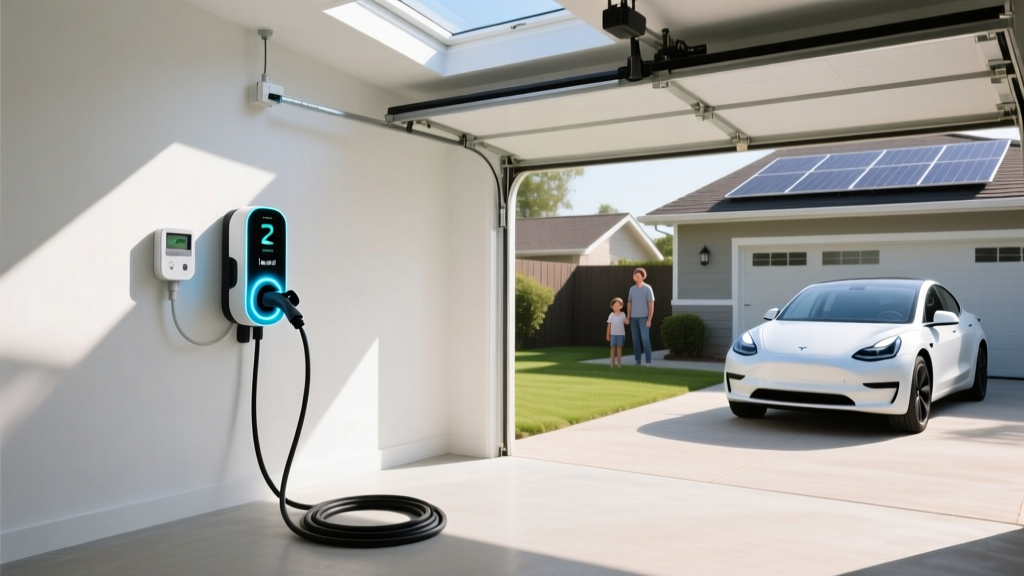
Most Mach-E owners will install a Level 2 home charger. Here's what the electrical infrastructure requires and what it costs.
Electrical Requirements
- Circuit: Dedicated 50-amp, 240V circuit (for a 40-amp continuous charger) or 60-amp circuit (for a 48-amp charger)
- Wire gauge: 6 AWG copper for 50A; 4 AWG for 60A runs over 50 feet
- Breaker: Double-pole, appropriately rated
- Outlet vs. hardwired: NEMA 14-50 outlet offers portability; hardwired avoids GFCI nuisance tripping and is often required by local code for outdoor installations
Panel Capacity
A typical home EV charger adds 40–48 amps of continuous load. If your electrical panel is 100A or 150A and already near capacity (common in older homes with electric heating, dryers, and ranges), you may need a panel upgrade to 200A, which adds $1,500–$3,500 to the project. A licensed electrician will perform a load calculation before quoting.
| Cost Component | Typical Range | Notes |
|---|---|---|
| Level 2 Charger (Equipment) | $400–$750 | Smart WiFi-enabled units; basic units from $250 |
| Electrician Labor | $500–$1,500 | Depends on run length, wall type, conduit needs |
| Electrical Permit | $50–$250 | Varies by municipality; required in most jurisdictions |
| Panel Upgrade (if needed) | $1,500–$3,500 | Only if existing panel lacks capacity |
| Total (no panel upgrade) | $950–$2,500 | Most homes with 200A service |
| Total (with panel upgrade) | $2,450–$6,000 | Older homes with 100–150A panels |
Get at least two quotes from licensed electricians. Verify they pull a permit — unpermitted work can void home insurance and create safety hazards. For a detailed breakdown of national installation averages, refer to data from the U.S. Department of Energy's home charging resources.
Connector Compatibility: NACS, CCS1, and Adapters
The 2025 Mach-E is the first model year to ship with a native NACS charge port, matching Tesla's connector standard. This is a significant change from the CCS1 port on 2021–2024 models.
| Connector Type | 2025 Mach-E Compatibility | Network Access |
|---|---|---|
| NACS (native port) | ✅ Built-in | Tesla Superchargers, Electrify America (newer stations), Rivian Adventure Network, and growing NACS-native networks |
| CCS1 | ⚠️ Requires NACS-to-CCS adapter | Legacy Electrify America, EVgo, ChargePoint DC stations with CCS cables |
| CHAdeMO | ❌ No adapter available; effectively obsolete | Nissan Leaf-era stations; increasingly rare |
| J1772 (Level 2 AC) | ⚠️ Requires NACS-to-J1772 adapter or NACS-native L2 charger | Public Level 2 stations, older home chargers |
If you're upgrading from a 2021–2024 Mach-E with CCS1, your existing CCS-based home charger will need an adapter or replacement. Ford includes a mobile charger with the vehicle that supports both 120V (Level 1) and 240V (Level 2) via a NACS connector. For public CCS1 stations still in service, Ford offers an official NACS-to-CCS adapter — expect to pay roughly $150–$200. The Tesla Supercharger network, now accessible to NACS-equipped Fords via the FordPass app, provides over 25,000 fast-charging stalls across the U.S.
Recommended Home Chargers for the Mach-E
Since the Mach-E caps AC charging at 10.5 kW (approximately 44 amps at 240V), a 48-amp charger is the optimal match. Going higher provides no benefit; going lower wastes potential speed.
| Charger Model | Max Output | Connector | Cable Length | Smart Features | Approx. Price |
|---|---|---|---|---|---|
| Tesla Wall Connector (J3400/NACS) | 11.5 kW (48A) | NACS native | 24 ft | WiFi, OTA updates, load sharing, power metering | $475 |
| ChargePoint Home Flex (NACS version) | 12 kW (50A) | NACS native | 23 ft | WiFi, Alexa, scheduling, energy reports | $650 |
| Emporia Level 2 Smart Charger | 11.5 kW (48A) | NACS or J1772 | 24 ft | WiFi, solar integration, real-time cost tracking | $400 |
| Ford Connected Charge Station | 10.5 kW (44A) | NACS native | 25 ft | FordPass integration, scheduled charging | $700 |
The Tesla Wall Connector offers the best value: it's NACS-native (no adapter needed), delivers more than enough power for the Mach-E's 10.5 kW ceiling, and costs under $500. The Emporia is the budget pick with robust app features, while Ford's own station provides the tightest FordPass integration if you prefer OEM ecosystem alignment.
Cost to Charge: Home, Public, and DC Fast Charging vs. Gas
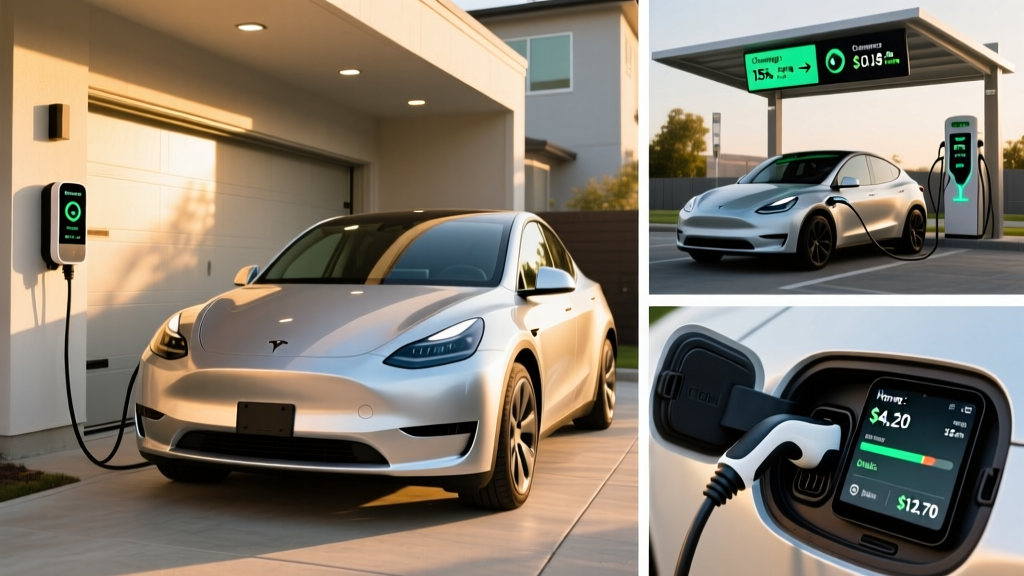
Electricity pricing varies enormously by location, utility rate plan, and whether you're charging at home or on the road. Here's a realistic cost breakdown for the 2025 Mach-E Extended Range (98.8 kWh usable, ~280 real-world highway miles).
| Charging Scenario | Avg. $/kWh | Cost for Full Charge (98.8 kWh) | Cost Per Mile (~280 mi) | Equiv. Gas MPG at $3.50/gal |
|---|---|---|---|---|
| Home (off-peak utility rate) | $0.08–$0.12 | $7.90–$11.86 | $0.03–$0.04 | 88–117 MPG |
| Home (standard residential avg.) | $0.14–$0.18 | $13.83–$17.78 | $0.05–$0.06 | 58–70 MPG |
| Public Level 2 (workplace, mall) | $0.20–$0.35 | $19.76–$34.58 | $0.07–$0.12 | 29–50 MPG |
| DC Fast Charging (road trip) | $0.35–$0.55 | $34.58–$54.34 | $0.12–$0.19 | 18–29 MPG |
For context, a comparable gas-powered midsize SUV averaging 25 combined MPG at $3.50/gallon costs $0.14 per mile. Home-charged Mach-E owners spend roughly one-quarter to one-third that amount. Even DC fast charging on road trips is cost-competitive with gas in most markets.
The national residential average is approximately $0.16/kWh according to EIA data. If your utility offers time-of-use (TOU) rates, scheduling overnight charges between 11 PM and 6 AM can slash your per-mile cost to under $0.04. Check with your utility — many now offer dedicated EV rate plans.
Safety and Code Considerations
EV charging draws sustained high current for hours — far longer than a dryer or oven cycle. Proper installation is non-negotiable.
- Dedicated circuit: Your EV charger must have its own breaker — never share a circuit with other high-draw appliances.
- GFCI protection: The 2020 NEC requires GFCI protection for 240V receptacles in garages. However, GFCI breakers can nuisance-trip with some EV chargers. Hardwired installations bypass this issue entirely and are increasingly recommended by electricians.
- Outdoor rating: If your charger is installed outside, ensure the unit carries a NEMA 4 or IP65 rating for weather resistance. The Tesla Wall Connector and ChargePoint Home Flex are both outdoor-rated.
- Cable management: Use a holster or cable retractor to prevent tripping hazards and keep the connector clean. Avoid running cables across driveways or walkways.
- Permit and inspection: Most jurisdictions require an electrical permit and post-installation inspection. This protects you legally and ensures the work meets code. Per the National Electrical Code (NEC/NFPA 70), Article 625 governs EV charging equipment specifically.
Frequently Asked Questions
How much does it cost to install a home EV charger for the 2025 Mach-E?
Expect $950–$2,500 for a standard installation on a 200A panel, including a $400–$750 smart charger, $500–$1,500 in electrician labor, and $50–$250 for a permit. If your home needs a panel upgrade from 100A/150A to 200A, add $1,500–$3,500, bringing the total to $2,450–$6,000.
How fast will each charging level add range to the Mach-E?
Level 1 (120V) adds roughly 3–5 miles per hour — adequate only for low-mileage drivers. Level 2 (240V, up to 10.5 kW) adds 25–35 miles per hour, easily refilling overnight. DC fast charging at 150 kW adds approximately 50–70 miles in the first 10 minutes, tapering significantly above 60% SoC.
Which connector does the 2025 Mach-E use?
The 2025 model year ships with a native NACS port. This provides direct access to Tesla Superchargers without an adapter. For legacy CCS1 public stations, you'll need a NACS-to-CCS adapter (approximately $150–$200 from Ford or third-party suppliers). CHAdeMO is not supported.
How much does charging the Mach-E cost per mile compared to gas?
At the national residential average of ~$0.16/kWh, home charging costs about $0.05–$0.06 per mile — roughly one-third the $0.14/mile cost of a 25 MPG gas SUV at $3.50/gallon. With off-peak utility rates ($0.08–$0.12/kWh), costs drop to $0.03–$0.04 per mile. DC fast charging on road trips ($0.35–$0.55/kWh) is roughly cost-neutral with gas.
What electrical upgrades might I need for a home charger?
The most common upgrade is a panel capacity increase from 100A or 150A to 200A, needed if your existing panel is near its load limit. Other potential upgrades include adding a sub-panel (for long wire runs to a detached garage), upgrading service entrance wiring, or replacing a Federal Pacific or Zinsco panel (known safety hazards in pre-1990 homes). A licensed electrician's load calculation will determine what's needed.
Can I use my old CCS1 home charger with the 2025 NACS Mach-E?
Not directly for DC fast charging. For Level 2 home charging, you can use a CCS1-to-NACS adapter on the vehicle side, but the cleaner solution is replacing the J1772/CCS connector head or installing a new NACS-native charger like the Tesla Wall Connector. Most smart chargers are hardwired or plug into a NEMA 14-50, so swapping the unit is straightforward for an electrician.