Understanding the 2022 Polestar 2 Range and Charging Needs
If you own or are shopping for a used 2022 Polestar 2, knowing how to charge it efficiently is just as important as knowing how far it can go. The 2022 Polestar 2 was sold in two battery configurations, and the range difference between them is substantial. Getting the most from your Polestar 2 means matching the right charging setup — at home and on the road — to its specific battery chemistry and charging architecture.
- Standard Range Single Motor (69 kWh, LFP): EPA 249 miles — expect ~210–230 miles highway, ~185–200 miles in freezing weather.
- Long Range Single Motor (78 kWh, NMC): EPA 270 miles — expect ~230–250 miles highway, ~200–215 miles in freezing weather.
- Long Range Dual Motor (78 kWh, NMC): EPA 260 miles — expect ~220–240 miles highway, ~190–210 miles in freezing weather.
Source: fueleconomy.gov
These real-world numbers reflect a 10–15% reduction for sustained highway speeds (70–80 mph) and an additional 15–25% loss in sub-freezing temperatures. The Long Range models use an NMC (nickel manganese cobalt) battery built on the Volvo/Polestar CMA platform, while the Standard Range uses an LFP (lithium iron phosphate) pack. LFP batteries tolerate regular 100% charging better than NMC, which affects your daily charging strategy — more on that below.
Charging Levels Explained: How Fast Will Each Add Range to a Polestar 2?
Before we break down equipment and costs, the single most important distinction in EV charging is between kW (kilowatts) and kWh (kilowatt-hours). kW measures the rate of charging — like the flow rate of a hose. kWh measures the total energy stored in the battery — like the size of the tank. A 78 kWh battery charged at 11 kW takes roughly 7 hours from empty; charged at 150 kW DC, it can reach 80% in about 30 minutes. Never confuse the two.
| Level | Voltage | Power (kW) | Miles of Range per Hour | Typical Use Case |
|---|---|---|---|---|
| Level 1 | 120V | 1.0–1.4 kW | 3–5 mi/hr | Emergency / overnight trickle (adds ~30–40 mi in 10 hrs) |
| Level 2 | 240V | 7.2–11.5 kW | 25–40 mi/hr | Home daily charging, workplace |
| DC Fast Charge | 400V DC | Up to 150 kW peak | ~200–600 mi/hr (varies by SoC) | Road trips, rapid top-ups |
The 2022 Polestar 2 has an onboard AC charger rated at 11 kW (three-phase) or 7.2 kW (single-phase, common in US homes with a 32A circuit). On DC fast charging, the Long Range model peaks at approximately 150 kW, while the Standard Range peaks around 135 kW. However, peak rates are only sustained briefly — typically between 10% and 40% State of Charge (SoC). Above 80%, charging tapers sharply to protect the battery, which is why 10–80% times are the industry standard metric.
| Configuration | Battery (Usable kWh) | Level 2 (7.2 kW) 10–80% | DC Fast (150 kW peak) 10–80% |
|---|---|---|---|
| Standard Range SM | 67 kWh | ~6.5 hours | ~32 minutes |
| Long Range SM | 75 kWh | ~7.3 hours | ~35 minutes |
| Long Range DM | 75 kWh | ~7.3 hours | ~35 minutes |
Connector Compatibility: What Plug Does the 2022 Polestar 2 Use?
The 2022 Polestar 2 sold in North America uses the CCS1 (Combined Charging System) connector for both Level 2 AC and DC fast charging. It does not have a native NACS (Tesla) port. However, as of 2025–2026, Polestar has enabled Tesla Supercharger access for Polestar 2 owners using a CCS-to-NACS adapter. This adapter is sometimes provided by Polestar or available for purchase (~$200–$300).
| Connector Type | Native Support? | Adapter Needed? | Notes |
|---|---|---|---|
| CCS1 (J1772 + DC pins) | Yes | No | Standard for AC Level 2 and DC fast charging |
| NACS (Tesla Supercharger) | No | Yes — CCS-to-NACS adapter | Access to Tesla Supercharger network enabled via adapter + Polestar app |
| CHAdeMO | No | Not available | CHAdeMO is effectively legacy in the US; no viable adapter exists |
For home Level 2 charging, any J1772 connector (the top portion of CCS1) will work natively. Most home chargers sold in the US come with a J1772 plug, so you simply plug in directly. For public DC fast charging, look for CCS-equipped stations from networks like Electrify America, EVgo, and ChargePoint. With the NACS adapter, Tesla Superchargers become available as well — a significant expansion of your road-trip network.
Home Charger Installation: Electrical Requirements and Costs
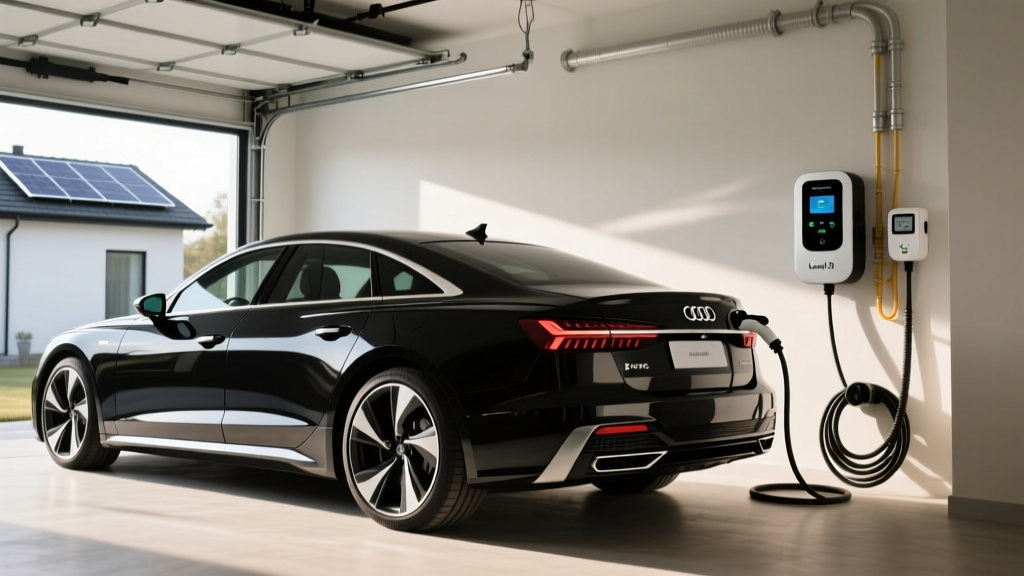
Installing a Level 2 home charger is the single biggest quality-of-life upgrade for any Polestar 2 owner. You'll wake up every morning with a full (or near-full) battery, and your cost per mile drops dramatically compared to public charging. But installation costs vary widely depending on your home's electrical panel.
Electrical Requirements
A typical Level 2 charger for the Polestar 2 requires a 240V dedicated circuit. The circuit amperage determines your charging speed:
- 40A circuit (delivers ~32A continuous / 7.7 kW) — sufficient for most daily needs, adds ~28 miles of range per hour.
- 50A circuit (delivers ~40A continuous / 9.6 kW) — faster, adds ~35 miles of range per hour.
- 60A circuit (delivers ~48A continuous / 11.5 kW) — maxes out the Polestar 2's single-phase onboard charger, adds ~40 miles of range per hour.
The National Electrical Code (NEC) requires that continuous loads (like EV charging) use only 80% of a circuit's rated capacity. A 40A circuit therefore delivers a maximum continuous 32A.
Do You Need a Panel Upgrade?
Many older homes have 100A main electrical panels. Adding a 40–60A dedicated circuit may push total load beyond the panel's capacity, especially if you already run electric range, dryer, and HVAC. A licensed electrician will perform a load calculation to determine if your panel can handle the new circuit. If not, a panel upgrade to 200A typically costs $1,500–$3,500 before the charger circuit is even installed. Homes built after 2000 usually have 200A panels and can accommodate a Level 2 circuit without an upgrade.
| Component | Low Estimate | High Estimate | Notes |
|---|---|---|---|
| Level 2 Charger (Equipment) | $350 | $700 | Smart Wi-Fi chargers with 25ft cable |
| Electrician Labor (standard install) | $500 | $1,500 | Depends on distance from panel to garage/driveway |
| Electrical Permit | $50 | $200 | Varies by municipality |
| Circuit Breaker + Wiring | $100 | $400 | 6 AWG copper for 50A; longer runs cost more |
| Panel Upgrade (if needed) | $1,500 | $3,500 | Only if existing panel can't support new load |
| Total (no panel upgrade) | $1,000 | $2,800 | Most homes with 200A panel |
| Total (with panel upgrade) | $2,500 | $6,300 | Older homes with 100A panel |
Safety and Code Considerations
- Dedicated circuit: EV chargers must be on their own dedicated breaker — never shared with other appliances.
- GFCI protection: NEC 2020+ requires GFCI (Ground Fault Circuit Interrupter) protection for outdoor receptacles. Many hardwired chargers have built-in GFCI, but plug-in units on a NEMA 14-50 outlet may need a GFCI breaker (~$50–$100 extra).
- Outdoor rating: If your charger is mounted outside or in an open carport, ensure it carries a NEMA 4 rating (weatherproof). Most major chargers (ChargePoint, Emporia, Wallbox) meet this standard.
- Hardwired vs. plug-in: Hardwired installations (no outlet) are generally more reliable, avoid GFCI breaker nuisance trips, and are required for circuits above 50A in some jurisdictions. Plug-in (NEMA 14-50) offers portability if you move.
Cost to Charge: Home vs. Public vs. Gas
One of the strongest ownership arguments for the Polestar 2 is the fuel cost savings — but only if you charge primarily at home. Public DC fast charging has become expensive enough in many markets that it approaches or exceeds the cost of gasoline on a per-mile basis.
| Charging Scenario | Price | Cost per Mile (Polestar 2 at 3.0 mi/kWh) | Gas Equivalent (30 MPG at $3.50/gal) |
|---|---|---|---|
| Home (off-peak utility rate) | $0.12/kWh | $0.040/mile | $0.117/mile |
| Home (average US rate) | $0.17/kWh | $0.057/mile | $0.117/mile |
| Public Level 2 (network) | $0.30/kWh | $0.100/mile | $0.117/mile |
| DC Fast Charge (Electrify America) | $0.48/kWh | $0.160/mile | $0.117/mile |
| DC Fast Charge (Tesla Supercharger) | $0.35/kWh | $0.117/mile | $0.117/mile |
At home on an off-peak rate, the Polestar 2 costs roughly $0.04 per mile — about one-third the cost of a 30 MPG gas sedan. But at a high-priced DC fast charger ($0.48/kWh), you're actually paying more per mile than gasoline. This is why home charging is the economic foundation of EV ownership. If you can't charge at home, a PHEV may be a more cost-effective choice.
The 2022 Polestar 2 Long Range Single Motor achieves approximately 107 MPGe combined per the EPA, which translates to roughly 3.0 miles per kWh. The Dual Motor is slightly less efficient at about 99 MPGe (~2.8 mi/kWh). The Standard Range is similar to the Long Range SM in efficiency.
Recommended Home Chargers for the Polestar 2
Here are three proven Level 2 chargers well-suited to the Polestar 2's 7.2–11.5 kW onboard charging capability. All use the J1772 connector native to the Polestar 2.
Emporia Vue Smart EV Charger
- Power Output: Up to 48A (11.5 kW on 60A circuit)
- Connector: J1772 (24 ft cable)
- Smart Features: Wi-Fi, app scheduling, solar integration, energy monitoring, load management
- Price: ~$399
- Best for: Budget-conscious buyers who want full smart features and solar pairing
ChargePoint Home Flex
- Power Output: Configurable 16–50A (up to 12 kW on 60A circuit)
- Connector: J1772 (23 ft cable)
- Smart Features: Wi-Fi, Alexa integration, app scheduling, ChargePoint network account
- Price: ~$649
- Best for: Users already in the ChargePoint ecosystem; adjustable amperage for panel-limited homes
Wallbox Pulsar Plus
- Power Output: Up to 48A (11.5 kW on 60A circuit)
- Connector: J1772 (25 ft cable)
- Smart Features: Wi-Fi + Bluetooth, app control, Power Sharing (two chargers on one circuit), Eco-Smart solar mode
- Price: ~$599
- Best for: Compact form factor, two-EV households with Power Sharing
Any of these chargers will max out the Polestar 2's onboard AC charger when installed on a 60A/48A continuous circuit. If your panel can only support a 40A circuit, configure the charger to 32A — you'll still get ~7.7 kW, which fully replenishes the Long Range battery overnight in about 8–9 hours.
Public Charging Tips for Polestar 2 Owners
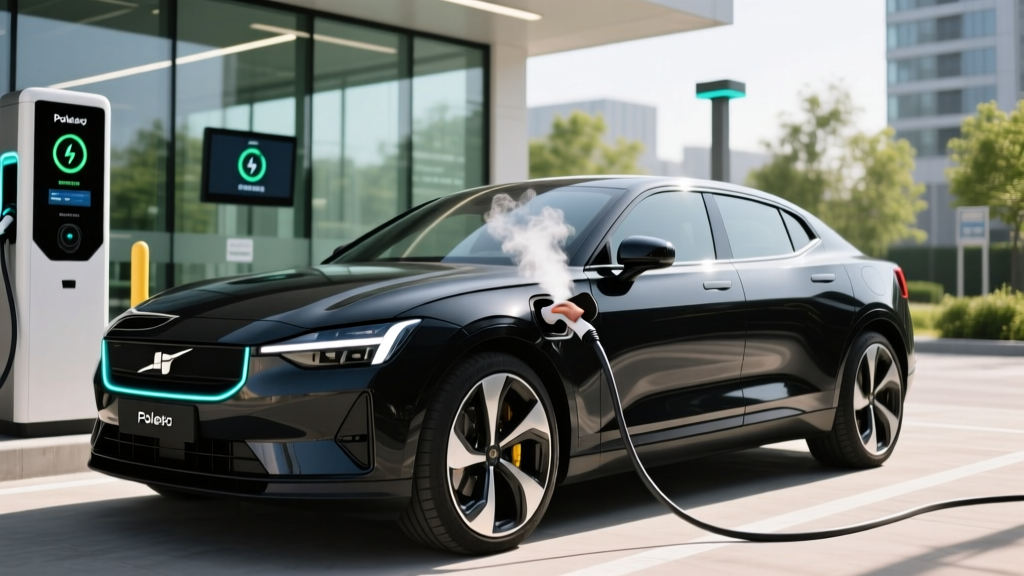
The Polestar 2's CCS1 port gives you access to the majority of non-Tesla DC fast charging networks. With the optional CCS-to-NACS adapter, you also gain access to Tesla's Supercharger network — which, as of 2026, remains the most reliable and widely deployed fast-charging infrastructure in North America.
Maximizing DC Fast Charging Speed
- Precondition the battery. Use the Polestar app or in-car navigation to route to your charging station. The Polestar 2 will warm the battery to optimal temperature (~95°F) before you arrive, enabling faster charge acceptance. Without preconditioning, especially in cold weather, your peak charge rate may drop from 150 kW to 80–100 kW.
- Charge between 10–80%. The charge curve tapers sharply above 80%. Charging from 80% to 100% on DC fast can take as long as the 10–80% portion. For road trips, plan shorter stops at 10–80% rather than waiting for a full charge.
- Use Plug & Charge where available. Electrify America and some other networks support Plug & Charge with the Polestar 2 — authentication and billing happen automatically when you plug in, no app or RFID card needed.
Charging Strategy: LFP vs. NMC Daily Habits
If you own the Standard Range Polestar 2 with the LFP battery, you can — and should — charge to 100% regularly. LFP chemistry degrades less at high SoC compared to NMC, and periodic 100% charges help the battery management system (BMS) recalibrate cell balance. Polestar recommends charging LFP to 100% at least once per week.
If you own a Long Range model with NMC chemistry, daily charging to 80–90% is optimal for long-term battery health. Set the charge limit in the Polestar app or vehicle settings. Reserve 100% charges for road trips where you'll be departing immediately. NMC batteries degrade faster when held at 100% SoC for extended periods, especially in hot climates.
The 2022 Polestar 2's high-voltage battery is covered by an 8-year / 100,000-mile warranty (whichever comes first), which guarantees the battery will retain at least 70% of its original capacity. Real-world degradation data from similar Volvo/Polestar NMC packs shows approximately 5–8% capacity loss over the first 100,000 miles under normal use — well within warranty thresholds. Source: Polestar specifications.
Frequently Asked Questions
How much does it cost to install a home EV charger for a Polestar 2?
Expect $1,000–$2,800 for a standard Level 2 installation in a home with a 200A panel (equipment + electrician + permit). If your home has an older 100A panel that needs upgrading, total costs can reach $2,500–$6,300. Always get a load calculation from a licensed electrician before committing.
How fast will each charging level add range to my 2022 Polestar 2?
Level 1 (120V) adds about 3–5 miles per hour — essentially an overnight trickle. Level 2 (240V, 40A circuit) adds roughly 28 miles per hour. DC fast charging at peak (150 kW) can add 150+ miles in 15 minutes, but the rate tapers significantly above 80% SoC.
Which connector and charger is compatible with my 2022 Polestar 2?
The 2022 Polestar 2 uses CCS1 natively. For home Level 2 charging, any J1772 charger works. For DC fast charging, use CCS-equipped stations. For Tesla Supercharger access, you need a CCS-to-NACS adapter (available from Polestar or third-party suppliers).
How much does charging a Polestar 2 cost per mile compared to gas?
At home on average electricity rates ($0.17/kWh), the Polestar 2 costs about $0.057 per mile — roughly half the cost of a 30 MPG gas car at $3.50/gallon ($0.117/mile). However, public DC fast charging at $0.48/kWh costs about $0.16/mile, which is actually more expensive than gas. Home charging is essential for EV economics.
What electrical upgrades might I need for a home charger?
If your home has a 200A panel (common in homes built after 2000), you likely need only a new dedicated 40–60A breaker and wiring run. If you have a 100A panel, a load calculation may require a panel upgrade to 200A ($1,500–$3,500). Homes with existing high-draw appliances (electric range, dryer, heat pump) are more likely to need an upgrade. Consult a licensed electrician for a definitive assessment.
Does the 2022 Polestar 2 qualify for the federal EV tax credit?
The 2022 Polestar 2 was eligible for up to $7,500 under the pre-IRA rules at the time of purchase. For used purchases in 2026, the IRS §25E used-EV credit offers up to $4,000 (or 30% of the sale price, whichever is lower) if the vehicle is purchased from a dealer for $25,000 or less, the buyer meets income caps ($75K single / $150K joint), and other requirements apply. Check current IRS guidance, as rules are subject to legislative change.