Charging the 2022 Tesla Model S Long Range: What Owners Need to Know
The 2022 Tesla Model S Long Range remains one of the most capable electric sedans on the road, with an EPA-estimated 405 miles of range from its ~100 kWh battery pack (NMC chemistry). But owning an EV with this much capacity means understanding exactly how to replenish it efficiently — whether you're plugging in overnight at home or pulling up to a Supercharger on a road trip.
This guide breaks down every charging scenario for the 2022 Model S Long Range: what equipment you need, what it costs to install, how fast each level adds range, and how your per-mile fuel cost compares to a gas equivalent. We'll also cover the electrical upgrades that catch some homeowners off guard.
EPA estimate: 405 miles. Real-world expectation: ~320–360 miles on highway trips at 70+ mph; ~280–310 miles in freezing temperatures. The Model S Long Range's heat pump helps mitigate cold-weather loss compared to older EVs, but plan for a 15–25% reduction in winter highway driving.
Charging Levels Explained: Speeds in kW and Miles Per Hour
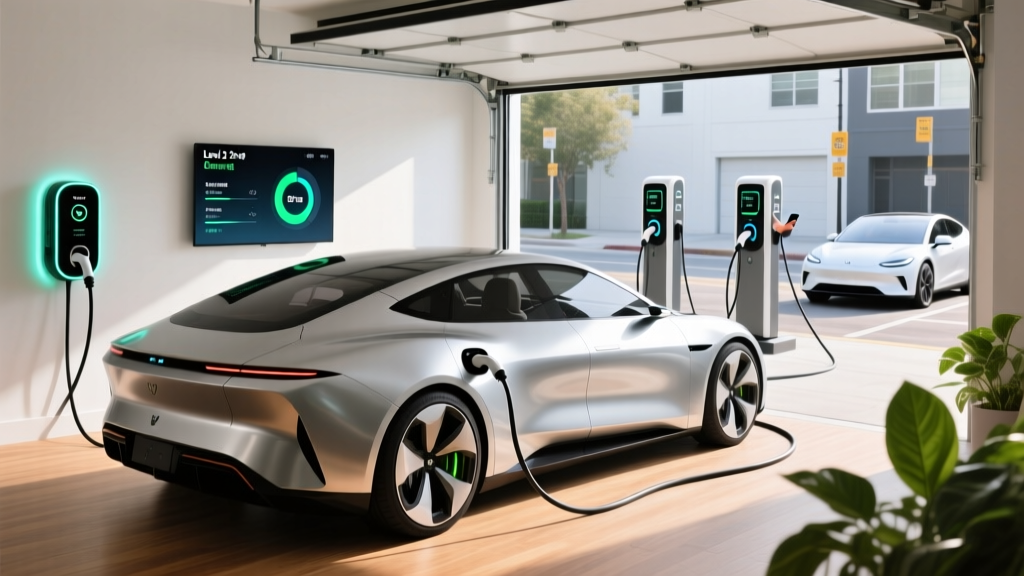
Before we get into equipment, let's clarify the three charging levels available to Model S Long Range owners. Remember: kW (kilowatts) measures power — how fast energy flows into the battery. kWh (kilowatt-hours) measures energy — the total capacity of the battery, like gallons in a fuel tank. The 2022 Model S Long Range has roughly 100 kWh of usable capacity.
| Level | Voltage | Max Power (kW) | Miles of Range Added Per Hour | Typical Use Case |
|---|---|---|---|---|
| Level 1 | 120V AC | ~1.4 kW | ~3–5 mi/hr | Emergency trickle; not practical for daily use with a 100 kWh pack |
| Level 2 | 240V AC | Up to 11.5 kW (48A) | ~30–44 mi/hr | Home daily charging; full overnight replenishment |
| DC Fast Charging | 400V+ DC | Peak ~250 kW (V3 Supercharger) | ~1,000+ mi/hr (at peak) | Road trips; 10–80% in ~25–30 minutes |
The 2022 Model S Long Range supports up to 250 kW peak on Tesla V3 Superchargers and accepts up to 11.5 kW on Level 2 (via its onboard charger, rated at 48 amps). At a Level 2 rate of 11.5 kW, a full charge from 0–100% takes roughly 9–10 hours. In practice, most owners charge between 20% and 80% overnight, which takes about 5–6 hours at full Level 2 speed.
Home Charger Installation: Electrical Requirements and Costs
Installing a dedicated Level 2 home charger is the single highest-impact upgrade for EV ownership. For the Model S Long Range's large battery, you want the fastest practical Level 2 connection to avoid multi-day charging cycles.
Electrical Requirements
To deliver the Model S's maximum 11.5 kW (48A continuous), you need a 60-amp dedicated circuit on a 240V supply. The National Electrical Code (NEC) requires that continuous loads (like EV charging) use no more than 80% of a circuit's rated capacity — hence 48A continuous on a 60A breaker.
If your electrical panel has sufficient spare capacity (typically 200-amp service with available breaker slots), installation is straightforward. However, homes with 100-amp service or panels already near capacity may require a panel upgrade to 200 amps, which significantly increases cost.
| Component | Typical Cost Range | Notes |
|---|---|---|
| Level 2 EV charger (hardware) | $400–$700 | Tesla Wall Connector, ChargePoint Home Flex, etc. |
| Electrician labor (standard install) | $500–$1,500 | Depends on run length from panel to garage/driveway |
| Electrical permit | $50–$200 | Varies by municipality; required in most jurisdictions |
| Panel upgrade (if needed) | $1,500–$3,500 | 100A → 200A service; older homes often need this |
| Total (no panel upgrade) | $950–$2,400 | Most common scenario for homes with 200A service |
| Total (with panel upgrade) | $2,450–$5,900 | Significant but adds home value and capacity |
Key considerations: Hire a licensed electrician who has EV charger experience. The circuit must be dedicated (not shared with other appliances). For outdoor installations, ensure the charger carries a NEMA 4 or NEMA 4X rating for weather resistance. A GFCI breaker is required by NEC 2020+ for outdoor receptacles, though hardwired chargers (like the Tesla Wall Connector) avoid the need for a GFCI breaker in many jurisdictions — check local code.
Federal Tax Credit for Home Charging Equipment
The IRS §30C Alternative Fuel Vehicle Refueling Property Credit covers up to 30% of home charger hardware and installation costs, capped at $1,000. This credit has income limits and is subject to eligibility based on census-tract qualifications. Consult a tax professional to confirm your eligibility — rules change, and this credit is separate from the §30D vehicle purchase credit.
Connector Compatibility: NACS, CCS, and Adapters
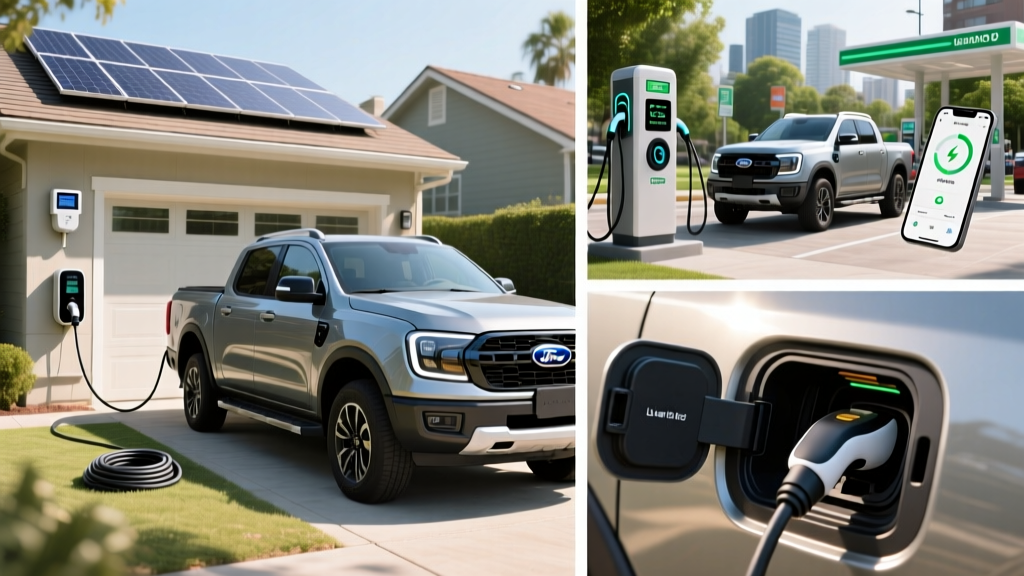
The 2022 Tesla Model S Long Range uses Tesla's proprietary connector (now standardized as NACS — North American Charging Standard) for both Level 2 AC and DC fast charging. This is a significant advantage in 2026, as the Tesla Supercharger network — now the largest and most reliable DC fast-charging network in North America — natively supports this connector.
| Connector Type | 2022 Model S Long Range | Adapter Needed? | Notes |
|---|---|---|---|
| NACS (Tesla) | ✅ Native | No | All Tesla Superchargers and Destination Chargers |
| CCS1 | ❌ Not native | Yes — Tesla CCS Adapter (~$175–$250) | Needed for Electrify America, EVgo, and other non-Tesla DC networks |
| CHAdeMO | ❌ Not native | Yes — third-party adapter (limited availability) | Largely legacy; most new DC stations use CCS1 or NACS |
| J1772 (Level 2 public) | ❌ Not native | Yes — Tesla J1772 Adapter (included with vehicle) | Needed for public Level 2 stations (ChargePoint, Blink, etc.) |
Tesla includes a J1772 adapter with every Model S. The CCS adapter is available directly from Tesla or third-party suppliers and is essential if you plan to use non-Tesla DC fast-charging networks. As of 2026, many new charging stations from Electrify America and EVgo are adding NACS connectors, but CCS1 remains widely available.
Charging Cost Per Mile: Home vs. Public vs. Gas
One of the strongest ownership arguments for the Model S Long Range is fuel cost savings — but the actual savings depend heavily on where you charge. Let's break it down using the Model S's real-world efficiency of approximately 3.0 miles per kWh (or ~33 kWh per 100 miles on mixed driving, per fueleconomy.gov).
| Charging Scenario | Cost per kWh | Cost per 100 Miles | Cost per Mile |
|---|---|---|---|
| Home (off-peak utility rate) | $0.10–$0.14 | $3.30–$4.62 | $0.033–$0.046 |
| Home (average US residential) | $0.16–$0.18 | $5.28–$5.94 | $0.053–$0.059 |
| Tesla Supercharger (V3) | $0.28–$0.36 | $9.24–$11.88 | $0.092–$0.119 |
| Public DC fast (Electrify America) | $0.35–$0.48 | $11.55–$15.84 | $0.116–$0.158 |
| Gas equivalent (30 MPG, $3.50/gal) | — | $11.67 | $0.117 |
The takeaway: If you charge primarily at home on off-peak rates, the Model S Long Range costs roughly $0.03–$0.05 per mile — about one-third the cost of a 30 MPG gas car at $3.50/gallon. Even on Tesla Superchargers, you're roughly at parity with gas. The savings shrink significantly if you rely exclusively on public DC fast charging at premium rates.
For a driver covering 12,000 miles per year, home charging at $0.14/kWh yields an annual fuel cost of approximately $552, compared to $1,400 for a 30 MPG gas car. That's roughly $850 in annual savings before any maintenance differences (EVs eliminate oil changes, spark plugs, and exhaust-system repairs).
DC Fast Charging: Real-World Speeds and the Charge Curve
The 2022 Model S Long Range peaks at approximately 250 kW on a V3 Supercharger — but it does not sustain that rate for the entire session. Like all lithium-ion batteries, the charge curve tapers significantly as the state of charge (SoC) rises.
Here's what a typical Supercharger session looks like when arriving at ~10% SoC:
- 10–30% SoC: Peak ~250 kW; fastest portion of the curve
- 30–50% SoC: Sustained ~150–200 kW
- 50–80% SoC: Tapers to ~60–100 kW
- 80–100% SoC: Drops below ~30 kW; not recommended for road-trip stops
10–80% time: approximately 25–30 minutes on a V3 Supercharger under optimal conditions (warm battery, preconditioned via navigation routing to the station).
Critical tip: Always navigate to a Supercharger using the car's built-in navigation. This triggers battery preconditioning — the thermal management system warms the pack to the ideal temperature for fast charging. Without preconditioning, especially in cold weather, peak charge rates can be 30–50% lower, adding 10–15 minutes to your stop.
Recommended Home Charging Equipment for the Model S Long Range
Given the Model S's 48A onboard charger, you want a Level 2 station capable of delivering at least 48 amps on a 60-amp circuit. Here are the top picks for 2026:
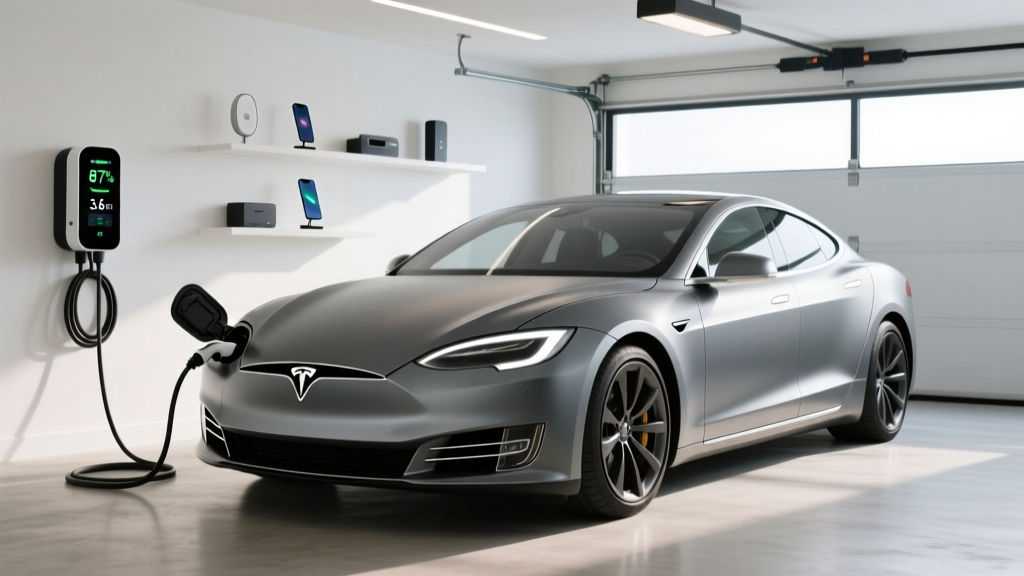
Tesla Wall Connector (Gen 3)
- Power output: Up to 11.5 kW (48A)
- Connector: NACS (native Tesla)
- Cable length: 24 feet
- Smart features: Wi-Fi, OTA updates, power sharing between multiple units, access control
- Price: ~$475
- Verdict: Best seamless integration for Tesla owners. Load-sharing lets you install two units on one 60A circuit. No app required — plug and charge.
ChargePoint Home Flex
- Power output: Up to 12 kW (50A), configurable down to 16A
- Connector: J1772 (use included Tesla adapter) or NACS version available
- Cable length: 23 feet
- Smart features: Wi-Fi, ChargePoint app with scheduling, energy tracking, Alexa integration
- Price: ~$550–$650
- Verdict: Best for multi-EV households with mixed connector needs. Flexible amperage lets you match your circuit capacity.
Grizzl-E Smart
- Power output: Up to 10 kW (40A)
- Connector: J1772 (Tesla adapter needed)
- Cable length: 24 feet
- Smart features: Optional Wi-Fi module, basic app, rugged outdoor build
- Price: ~$400–$450
- Verdict: Budget-friendly and extremely durable (NEMA 4X rated). Slightly lower amperage means ~20% slower charging than the Tesla Wall Connector, but still practical for overnight use.
For Model S Long Range owners who want maximum Level 2 speed, the Tesla Wall Connector is the obvious first choice — native connector, full 48A support, and no adapter hassle. If you also own or plan to own a non-Tesla EV, the ChargePoint Home Flex offers more flexibility.
Safety, Code Compliance, and Installation Best Practices
EV charging draws sustained high current for hours — this is not the same as plugging in a dryer. Follow these non-negotiable safety guidelines:
- Dedicated circuit: Your Level 2 charger must be on its own dedicated breaker. Never share the circuit with other appliances.
- Hardwired vs. plug-in: Hardwired installations (no plug) are preferred for 48A+ chargers. If using a plug, a NEMA 14-60 receptacle rated for 50A is common, but limits you to 40A continuous (9.6 kW). Hardwired allows the full 48A.
- Wire gauge: A 60A circuit requires 6 AWG copper wire (or 4 AWG aluminum) for runs up to ~100 feet. Longer runs may need thicker wire to prevent voltage drop. Your electrician will calculate this.
- GFCI protection: Required for outdoor receptacles per NEC 2020+. Hardwired chargers may not require a GFCI breaker in all jurisdictions, but confirm with your local inspector.
- Outdoor rating: If your charger is mounted outside, ensure it carries at minimum a NEMA 4 rating (weather-resistant). The Tesla Wall Connector and Grizzl-E are both outdoor-rated.
- Permit and inspection: Most municipalities require an electrical permit and post-installation inspection. Skipping this can void insurance coverage in the event of a fault.
Frequently Asked Questions
How much does it cost to install a home EV charger for the 2022 Model S Long Range?
Expect $950–$2,400 for a standard installation (charger hardware + electrician labor + permit) if your home already has 200-amp electrical service. If a panel upgrade from 100A to 200A is needed, total costs can range from $2,450 to $5,900. The IRS §30C credit may offset up to $1,000 of these costs.
How fast will each charging level add range to my Model S?
Level 1 (120V): approximately 3–5 miles of range per hour — impractical for daily use. Level 2 (240V, 48A): approximately 30–44 miles per hour, enough to fully recharge overnight. DC Fast Charging (V3 Supercharger, peak 250 kW): 10–80% in roughly 25–30 minutes, adding up to 200 miles in 15 minutes at peak rate.
Which connector and charger is compatible with the 2022 Model S Long Range?
The Model S uses the NACS (Tesla) connector natively. This works at all Tesla Superchargers and Destination Chargers without an adapter. For non-Tesla public Level 2 stations (J1772), use the included Tesla J1772 adapter. For non-Tesla DC fast chargers (CCS1), purchase a Tesla CCS adapter (~$175–$250). CHAdeMO adapters exist but are increasingly irrelevant as that standard phases out.
How much does charging cost per mile compared to gas?
At home on off-peak electricity ($0.10–$0.14/kWh), the Model S Long Range costs roughly $0.03–$0.05 per mile. A comparable gas sedan at 30 MPG and $3.50/gallon costs about $0.12 per mile. Even on Tesla Superchargers ($0.28–$0.36/kWh), you're at roughly $0.09–$0.12 per mile — at or below gas parity. Over 12,000 miles/year, home charging saves $800–$1,000 annually vs. gas.
What electrical upgrades might I need before installing a Level 2 charger?
The most common upgrade is a panel capacity increase from 100 amps to 200 amps, required if your existing panel is near its load limit. This costs $1,500–$3,500. You may also need additional breaker slots, a new conduit run from the panel to your garage or driveway, or a sub-panel if the charger is far from the main service. A licensed electrician can perform a load calculation to determine what's needed — get this assessment before purchasing equipment.
Does the 2022 Model S Long Range support V4 Superchargers?
Yes. While the 2022 Model S Long Range peaks at ~250 kW (V3 rates), it can connect to V4 Supercharger stalls. V4 cabinets currently deliver up to 250 kW to existing Tesla vehicles; higher rates are expected with future vehicle-side hardware updates. The connector is the same NACS standard.