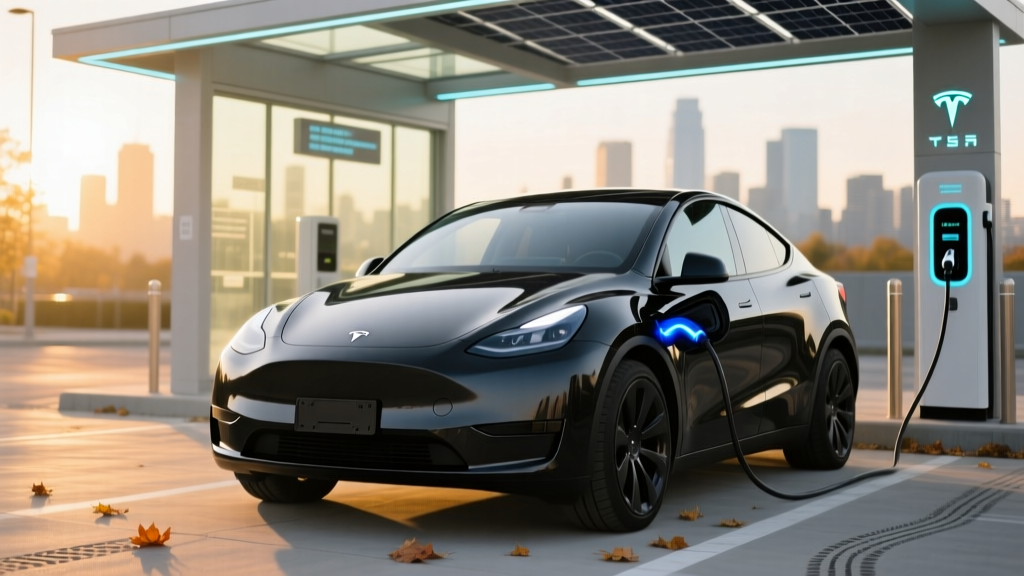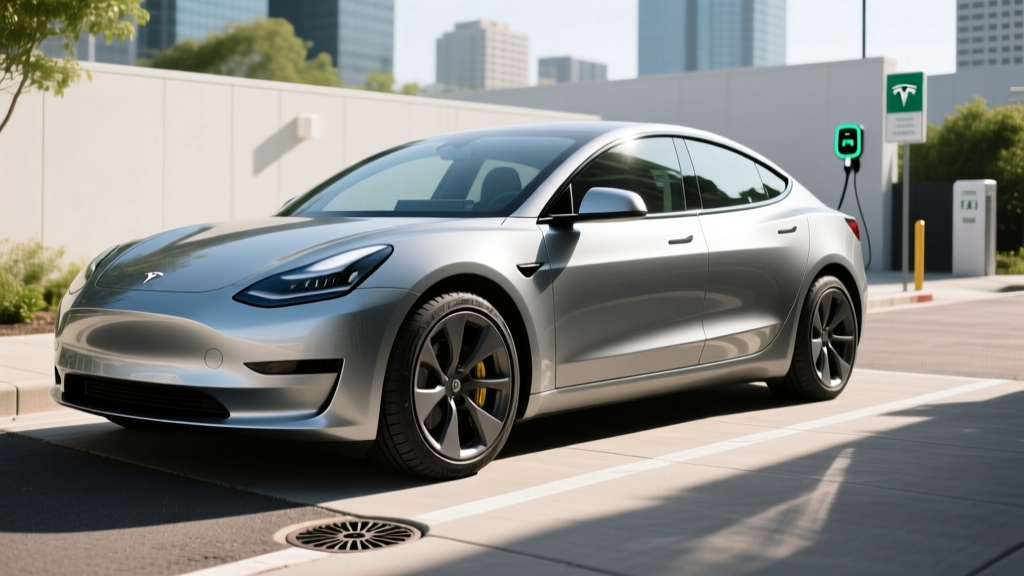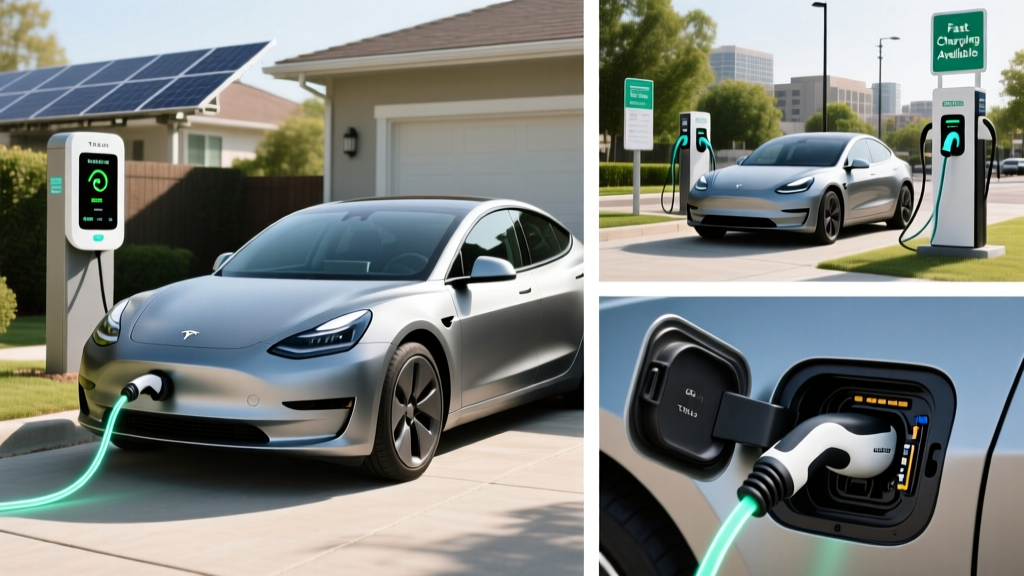
The 2021 Tesla Model 3 Long Range AWD remains one of the most popular used EVs on the road in 2026, thanks to its EPA-rated 353 miles of range, dual-motor all-wheel drive, and access to Tesla's Supercharger network. But whether you just purchased one or are evaluating a listing, understanding exactly how to charge it — at home, on the road, and what it all costs — is the difference between seamless ownership and daily frustration.
This guide breaks down every charging scenario for the 2021 Model 3 LR AWD, from a standard 120V wall outlet to a 250 kW DC fast charger, with exact numbers for speed, cost, and installation requirements.
2021 Tesla Model 3 Long Range AWD: Key Charging Specs
Before plugging in anywhere, you need to know what's under the floor. The 2021 Model 3 Long Range AWD uses an 82 kWh battery pack (approximately 75 kWh usable) with NMC (nickel-manganese-cobalt) chemistry. Tesla's onboard charger accepts up to 11.5 kW on Level 2 AC, and the pack can peak at 250 kW on DC fast charging.
| Spec | Value |
|---|---|
| EPA Range | 353 miles |
| Battery (Usable) | ~75 kWh (NMC) |
| Max AC Charge (Level 2) | 11.5 kW / 48A |
| Max DC Fast Charge | 250 kW peak |
| 10–80% DC Fast Charge | ~27 minutes (at V3 Supercharger) |
| Connector | NACS (Tesla proprietary) |
| 0–60 mph | 4.2 seconds |
| Horsepower | 346 hp (combined) |
| MPGe (combined) | 134 MPGe |
Charging Levels Explained: How Fast Will Each Add Range?
EV charging comes in three tiers. Understanding the difference between kW (power — the rate of energy delivery) and kWh (energy — the battery's total capacity) is essential. Think of kW as how wide the hose is, and kWh as the size of the tank you're filling.
| Level | Voltage | Max Power (kW) | Miles of Range Added Per Hour | Typical Use Case |
|---|---|---|---|---|
| Level 1 (120V) | 120V AC | ~1.4 kW | ~3–5 mi/hr | Emergency / overnight trickle |
| Level 2 (240V) | 240V AC | Up to 11.5 kW | ~37–44 mi/hr | Home daily charging |
| DC Fast Charging | 400V DC | Up to 250 kW | ~1,000+ mi/hr (at peak) | Road trips, rapid top-ups |
Level 1 uses a standard household outlet with Tesla's included Mobile Connector. At roughly 1.4 kW, you'll add about 3–5 miles of range per hour — enough for low-mileage commuters doing 30–40 miles daily, but painfully slow for a full recharge (over 50 hours from empty).
Level 2 is the home charging standard. With a 240V circuit and a wall connector delivering up to 48 amps, the Model 3 LR AWD pulls its maximum 11.5 kW, adding roughly 44 miles of range per hour. A full charge from 10% to 100% takes about 7–8 hours — ideal for overnight.
DC Fast Charging at a Tesla V3 Supercharger (250 kW) can take the battery from 10% to 80% in approximately 27 minutes. However, charge speed is not linear. The battery accepts peak power only at low states of charge (SoC); above 50%, the rate tapers significantly, and above 80%, it slows dramatically to protect cell longevity. This is called the charge curve, and it means the last 20% can take as long as the first 60%.
Home Charger Installation: Electrical Requirements and Costs
Installing a dedicated Level 2 home charger is the single most impactful upgrade for daily EV ownership. Here's what the 2021 Model 3 LR AWD requires.
Electrical Requirements
To deliver the Model 3's maximum 11.5 kW / 48A, you need a 240V circuit rated at 60 amps (electrical code requires the circuit breaker to be rated at 125% of the continuous load — 48A × 1.25 = 60A). The wiring must be 6 AWG copper or 4 AWG aluminum.
If your electrical panel has insufficient capacity (common in homes built before 2000 with 100A service), you may need a panel upgrade to 200A — a significant added cost. A licensed electrician can assess your panel's available amperage during a site visit.
Installation Cost Breakdown
| Item | Low Estimate | High Estimate | Notes |
|---|---|---|---|
| Level 2 Charger Equipment | $400 | $700 | Tesla Wall Connector, ChargePoint, Emporia |
| Electrician Labor (240V run) | $500 | $2,000 | Depends on distance from panel to garage |
| Permit & Inspection | $50 | $300 | Varies by municipality |
| Panel Upgrade (if needed) | $1,500 | $4,000 | 100A → 200A service upgrade |
| Total (no panel upgrade) | $950 | $3,000 | Most homes with 200A service |
| Total (with panel upgrade) | $2,450 | $7,000 | Older homes with 100A service |
Most homeowners with a modern 200A panel and a garage within 30 feet of the breaker box will spend between $1,200 and $2,200 total. The federal Alternative Fuel Vehicle Refueling Property Credit (IRS Form 8911) may cover up to 30% of installation costs (capped at $1,000 for residential), subject to income limits and census-tract eligibility. Consult a tax professional for your specific situation.
Safety and Code Considerations
- Dedicated circuit: Your Level 2 charger must be on its own dedicated breaker — never shared with other appliances.
- GFCI protection: NEC 2020 and later require GFCI protection for all EV charging outlets (hardwired units may be exempt depending on local code).
- Outdoor rating: If mounting outside, ensure the charger is NEMA 4 rated for weather resistance. The Tesla Wall Connector and Emporia Vista both carry NEMA 4 ratings.
- Cable management: Keep the charging cable off the ground to prevent tripping hazards and insulation damage. Many wall connectors include built-in cable holsters.
Connector Compatibility: NACS, CCS, and Adapters
The 2021 Tesla Model 3 Long Range AWD uses the Tesla proprietary connector, now formally standardized as NACS (North American Charging Standard). In 2026, NACS has become the dominant connector in North America, adopted by Ford, GM, Rivian, Volvo, and most other automakers.
| Connector Type | Native Support? | Adapter Needed? | Notes |
|---|---|---|---|
| NACS (Tesla) | Yes — native | None | Superchargers, Tesla Wall Connector, Destination Chargers |
| CCS1 | No | Tesla CCS Adapter (~$175) | Required for Electrify America, EVgo, and other CCS networks |
| CHAdeMO | No | Aftermarket adapter (~$300–$400) | Largely obsolete; not recommended |
| J1772 (Level 2 public) | No | Tesla J1772 Adapter (included with car) | For public Level 2 stations (ChargePoint, etc.) |
Tesla includes a J1772 adapter with every Model 3. For DC fast charging on non-Tesla networks, you'll need to purchase the Tesla CCS Adapter separately. Tesla's official CCS adapter supports up to 250 kW and is essential for road trips through areas with limited Supercharger coverage.
As of 2026, many third-party networks (Electrify America, EVgo) have begun adding NACS cables to new stations, but CCS1 remains widespread. Carrying both adapters is the safest strategy for long-distance travel.
Charging Cost Per Mile: Home vs. Public vs. Gas
One of the strongest ownership arguments for the 2021 Model 3 LR AWD is its low per-mile fueling cost — but only if you charge smartly. Here's a realistic breakdown.
The Model 3 LR AWD consumes approximately 25 kWh per 100 miles (or 0.25 kWh/mile), per EPA data.
| Charging Scenario | Price per kWh | Cost per Mile | Annual Cost (12,000 mi) |
|---|---|---|---|
| Home (off-peak utility rate) | $0.12/kWh | $0.030 | $360 |
| Home (average US rate) | $0.17/kWh | $0.043 | $510 |
| Tesla Supercharger (average) | $0.32/kWh | $0.080 | $960 |
| Electrify America (average) | $0.48/kWh | $0.120 | $1,440 |
| Gas car (28 MPG avg, $3.40/gal) | — | $0.121 | $1,457 |
The takeaway: charging at home on off-peak rates costs roughly one-quarter what a comparable gas sedan costs per mile. Even exclusive Supercharger use undercuts gasoline on a per-mile basis. However, relying entirely on premium-priced public DC fast chargers like Electrify America can approach gas-car costs — making home charging the economic cornerstone of EV ownership.
Recommended Home Chargers for the Model 3 LR AWD
Not all Level 2 chargers are equal. The Model 3 LR AWD can accept up to 48A / 11.5 kW, so pairing it with an undersized charger wastes charging potential. Here are three chargers that match the car's capabilities.
Tesla Wall Connector
- Power Output: Up to 11.5 kW (48A)
- Connector: NACS (native Tesla)
- Cable Length: 24 feet
- Smart Features: Wi-Fi, OTA updates, power sharing between units, load management
- Price: ~$475
- Verdict: The obvious default for Tesla owners. Seamless integration, fastest Level 2 speed, and no adapter needed.
Emporia Vue + Vista Charger
- Power Output: Up to 11.5 kW (48A)
- Connector: NACS (2025+ models) or J1772
- Cable Length: 24 feet
- Smart Features: Energy monitoring, solar integration, circuit-sharing, scheduling via app
- Price: ~$500–$600 (charger + energy monitor)
- Verdict: Best for solar-equipped homes or those wanting granular energy tracking. The bundled Emporia Vue panel monitor enables smart load management without a panel upgrade.
ChargePoint Home Flex
- Power Output: Up to 12 kW (50A) — configurable down to 16A
- Connector: NACS (2025+ models) or J1772
- Cable Length: 23 feet
- Smart Features: Alexa integration, scheduling, charging history, flexible amperage settings
- Price: ~$550–$650
- Verdict: Most versatile option. The adjustable amperage (16A–50A) lets you install on a smaller circuit today and upgrade later. Requires J1772-to-NACS adapter for the 2021 Model 3 unless you get the newer NACS-terminated model.
DC Fast Charging in Practice: Superchargers and Beyond
The 2021 Model 3 LR AWD's 250 kW peak charge rate is only achievable under specific conditions: a low state of charge (below 20%), a warm battery (preconditioned), and a V3 or V4 Tesla Supercharger stall.
Here's what a typical DC fast charge session looks like in practice:
- 10% → 30%: Peak rate of ~220–250 kW; approximately 5–7 minutes
- 30% → 50%: Sustained ~150–180 kW; approximately 7–8 minutes
- 50% → 80%: Tapering from ~100 kW to ~50 kW; approximately 12–14 minutes
- 80% → 100%: Slow trickle below 25 kW; approximately 25–30 minutes (avoid unless necessary)
Battery preconditioning matters. When you navigate to a Supercharger using the Tesla navigation system, the car automatically warms the battery pack to its optimal charging temperature (approximately 95°F/35°C). Without preconditioning — for example, arriving at a Supercharger in cold weather without navigation routing — peak charge rates can drop to 100–120 kW, nearly doubling your charge time. Always route through the car's nav for the fastest sessions.
Tesla's Supercharger network in 2026 includes over 20,000 V3/V4 stalls across North America, with pricing typically ranging from $0.25 to $0.40/kWh depending on location and time of day. Non-Tesla EVs can now access many Supercharger stations via the Magic Dock NACS adapter built into newer stalls, but Tesla owners always have native plug-and-charge access with no adapter required.
Frequently Asked Questions
How much does it cost to install a home EV charger for a 2021 Tesla Model 3?
Most homeowners spend between $1,200 and $2,200 for a complete Level 2 installation (Tesla Wall Connector + electrician + permit) when no panel upgrade is needed. Homes with older 100A electrical service may need a panel upgrade to 200A, adding $1,500–$4,000. The federal Alternative Fuel Vehicle Refueling Property Credit can offset up to 30% of costs (max $1,000) if you qualify.
How fast will each charging level add range to my Model 3 Long Range?
Level 1 (120V) adds approximately 3–5 miles per hour. Level 2 (240V, 48A) adds approximately 37–44 miles per hour — enough to fully recharge overnight. DC fast charging at a Tesla V3 Supercharger adds over 1,000 miles per hour at peak rate, delivering a 10–80% charge in about 27 minutes.
Which connector and charger are compatible with my 2021 Tesla Model 3?
Your Model 3 uses the NACS (Tesla) connector natively. This works with all Tesla Superchargers, Tesla Wall Connectors, and Tesla Destination Chargers. For CCS-based public DC fast chargers (Electrify America, EVgo), you'll need the Tesla CCS Adapter (~$175). For public Level 2 J1772 stations, use the J1772 adapter included with your vehicle.
How much does charging cost per mile compared to gas?
Charging at home on an average US electricity rate ($0.17/kWh), the 2021 Model 3 LR AWD costs about $0.043 per mile. A comparable gas sedan at 28 MPG and $3.40/gallon costs $0.121 per mile — nearly three times more. Even Tesla Supercharging at $0.32/kWh ($0.080/mile) remains cheaper than gasoline.
What electrical upgrades might I need for a home charger?
You'll need a dedicated 240V circuit rated at 60 amps (for 48A continuous charging). If your panel is already near capacity — common in homes with electric HVAC, water heaters, and dryers on 100A service — an upgrade to 200A service may be required. A licensed electrician can perform a load calculation to determine if your panel has headroom. Some utilities offer rebates for panel upgrades paired with EV charger installations.