The 2021 Tesla Model 3 Standard Range Plus (SR+) remains one of the most popular used EVs on the road. With a 50 kWh usable LFP (lithium iron phosphate) battery and EPA-rated 263 miles of range, it's an efficient daily driver. But if you've just picked one up — or are considering one — you need a clear picture of how to charge it, what it costs, and what equipment makes sense. This guide walks through every charging scenario for the 2021 Model 3 SR+, from a standard wall outlet to DC fast charging on a road trip.
2021 Model 3 Standard Range Plus: Charging Specs at a Glance
Before diving into levels and costs, here are the hard numbers that define the charging experience for this specific model year and trim. Tesla switched the SR+ to an LFP battery (supplied by CATL) for the 2021 model year, which changes the charging recommendations compared to earlier NMC versions.
| Spec | Value |
|---|---|
| Battery Chemistry | LFP (Lithium Iron Phosphate) |
| Usable Battery Capacity | 50 kWh (60 kWh gross) |
| EPA Range | 263 miles |
| Real-World Highway Range (70 mph) | ~220–240 miles |
| Cold-Weather Range (20°F, city mix) | ~180–200 miles |
| Max DC Fast Charge Rate | 170 kW peak |
| 10–80% DC Fast Charge Time | ~25–30 minutes |
| Max Level 2 AC Charge Rate | 11 kW (48A onboard charger) |
| Level 2 Miles Per Hour (estimated) | ~37–40 mi/hr at 11 kW |
| Connector | NACS (Tesla proprietary) |
| EPA Efficiency | 142 MPGe combined (24 kWh/100mi) |
Charging Levels Explained: How Fast Will Each Level Add Range?
Understanding the three charging levels is essential. The key distinction: kW (kilowatts) measures power — the rate of energy delivery, like water pressure from a hose. kWh (kilowatt-hours) measures energy — the total amount stored in the battery, like the size of the tank. A higher kW charge rate fills your 50 kWh battery faster.
| Level | Power Source | Max kW | Miles Added Per Hour | 0–100% Time (50 kWh) | Best For |
|---|---|---|---|---|---|
| Level 1 | 120V household outlet | ~1.4 kW | ~4–5 mi/hr | ~35–40 hours | Emergency / overnight trickle |
| Level 2 (Home) | 240V, 40A circuit | 9.6 kW | ~32 mi/hr | ~5.5 hours | Daily home charging |
| Level 2 (Max) | 240V, 48A+ circuit | 11 kW | ~37–40 mi/hr | ~4.5 hours | Fastest home AC charging |
| DC Fast | Public DC station | 170 kW peak | N/A (session-based) | 10–80% in ~25–30 min | Road trips, quick top-ups |
Level 1 uses a standard 120V outlet and the Tesla Mobile Connector. It adds roughly 4–5 miles of range per hour. For the 2021 SR+ with its 263-mile EPA range, a full charge from empty would take over 35 hours. This is only practical as an emergency backup or for very low-mileage drivers who can leave the car plugged in overnight (10–12 hours yields ~45–55 miles).
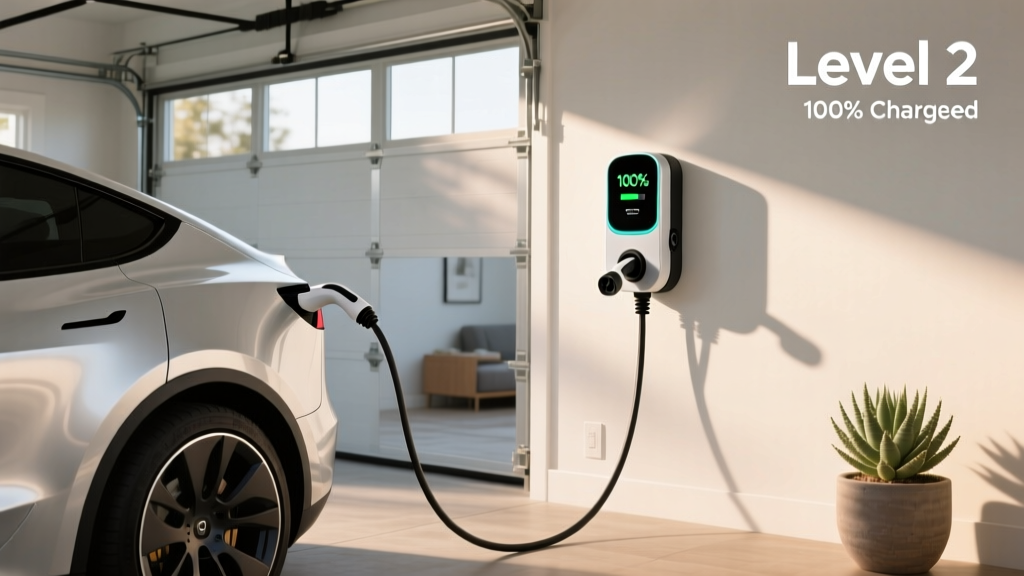
Level 2 is the standard for home charging. On a 240V/40A circuit (like a dryer outlet), you'll get about 9.6 kW into the car, adding roughly 32 miles of range per hour. The 2021 Model 3 SR+ has an 11 kW onboard charger, so if your circuit supports 48A or higher (a 60A breaker), you can push the full 11 kW — about 37–40 miles per hour. An overnight charge easily replenishes a full day's driving.
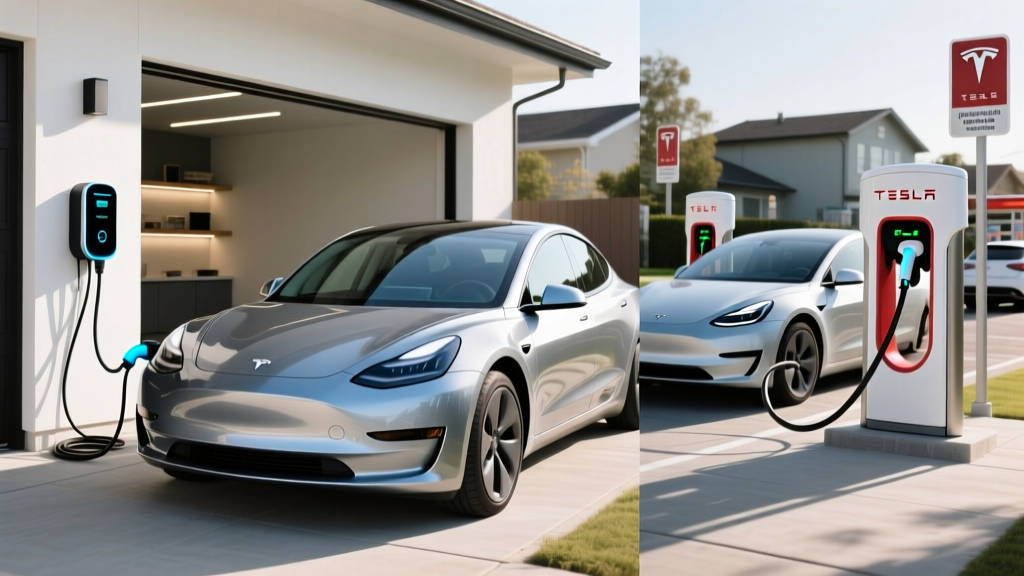
DC Fast Charging bypasses the onboard charger entirely and feeds DC power directly into the battery. The 2021 SR+ peaks at around 170 kW on a Tesla Supercharger V3, but like all EVs, the charge rate follows a curve — it starts high at low state of charge and tapers significantly above 60–70%. Expect the 10–80% session to take 25–30 minutes on a V3 Supercharger. On slower 50–100 kW DC chargers, plan for 40–60 minutes.
Home Charger Installation: Electrical Requirements and Cost Breakdown
Installing a Level 2 home charger for your 2021 Model 3 SR+ is the single most impactful upgrade for daily EV ownership. Here's what's involved electrically and financially.
Electrical Requirements
- Circuit: A dedicated 60A breaker (for 48A continuous charging) or 50A breaker (for 40A continuous) on a 240V circuit. The 2021 SR+ can accept up to 11 kW / 48A, so a 60A circuit maximizes your charge speed.
- Wire: 6 AWG copper (for 50A) or 4 AWG copper (for 60A), run from your electrical panel to the charger location.
- Panel Capacity: Your home's electrical panel must have enough spare capacity. Most 200A panels can handle a 60A EV circuit. Older 100A panels often require a panel upgrade ($1,500–$3,000) or a load-management device.
- Permit: Nearly all jurisdictions require an electrical permit for a new 240V circuit. This is non-negotiable for code compliance and insurance.
Home Level 2 Charger Installation Cost Breakdown
| Item | Low Estimate | High Estimate | Notes |
|---|---|---|---|
| Level 2 Charger (Equipment) | $250 | $700 | Tesla Wall Connector ~$475; third-party smart chargers $400–$700 |
| Electrician Labor | $500 | $2,000 | Depends on wire run length, wall/floor penetration, conduit |
| Materials (wire, conduit, breaker) | $150 | $500 | Longer runs = more wire and conduit |
| Electrical Permit | $50 | $200 | Varies by municipality |
| Panel Upgrade (if needed) | $1,500 | $3,500 | Only if existing panel lacks capacity — older homes |
| Total (no panel upgrade) | $950 | $3,400 | Most homes fall in the $1,200–$2,200 range |
| Total (with panel upgrade) | $2,450 | $6,900 | Significant but adds home value |
Most 2021 Model 3 SR+ owners with a modern 200A panel and a garage or carport near the panel will spend $1,200–$2,200 for a complete Level 2 installation. If you have a 240V dryer or range outlet near your parking spot, an electrician can sometimes install a splitter or add a dedicated outlet (NEMA 14-50) for less — roughly $400–$800 — letting you use the Tesla Mobile Connector with the appropriate adapter instead of a wall-mounted unit.
Safety and Code Considerations
- Dedicated Circuit: NEC code requires EV chargers to be on a dedicated circuit — no sharing with other appliances. Continuous loads (like EV charging) can only use 80% of a breaker's rating, so a 50A breaker supports 40A continuous charging.
- GFCI Protection: The 2020 NEC update (adopted by most states by 2026) requires GFCI protection for 240V EV charging outlets. Hardwired chargers (like the Tesla Wall Connector) typically have built-in ground fault protection and may not require an external GFCI breaker — your electrician will determine this based on local code.
- Outdoor Rating: If your charger is installed outside, ensure it's rated for outdoor use (NEMA 4 or IP65). The Tesla Wall Connector and most quality Level 2 chargers carry outdoor ratings.
- Load Management: If your panel is near capacity, devices like the Emporia Smart Load Manager or Tesla's built-in load-sharing can dynamically reduce charge rate when other home loads spike, avoiding a costly panel upgrade.
Connector Compatibility: NACS, CCS, and What You Need to Know
The 2021 Tesla Model 3 SR+ uses Tesla's proprietary connector, which in late 2022 was formally renamed the NACS (North American Charging Standard). By 2026, NACS has become the dominant EV charging connector in North America, adopted by Ford, GM, Rivian, Hyundai, and most other manufacturers.
| Connector Type | Compatibility | Adapter Needed? | Notes |
|---|---|---|---|
| NACS (Tesla) | Native — direct plug | No | All Tesla Superchargers and Tesla Wall Connectors |
| CCS1 | With adapter | Yes — Tesla CCS Adapter (~$175–$250) | Required for non-Tesla DC fast chargers (Electrify America, EVgo CCS stalls) |
| CHAdeMO | With adapter | Yes — Tesla CHAdeMO Adapter (~$400+) | Largely obsolete network; only needed in limited regions |
| J1772 (Level 2 public) | With adapter | Yes — Tesla J1772 Adapter (included with car) | Standard for public Level 2 stations (ChargePoint, Blink) |
Key takeaway: Your 2021 Model 3 SR+ came with a J1772-to-Tesla adapter in the glove box (or trunk). For public DC fast charging outside the Tesla Supercharger network, you'll want to purchase the Tesla CCS Adapter. By 2026, many Supercharger stations have been opened to non-Tesla vehicles, but your Model 3 uses the native Tesla connector at all Supercharger stalls — no adapter needed there.
When shopping for a home Level 2 charger, choose one with a native NACS/Tesla connector to avoid needing the J1772 adapter every session. The Tesla Wall Connector ships with NACS. Third-party chargers like the Emporia Vue or ChargePoint Home Flex now offer NACS cable options.
Cost to Charge: Home vs. Public vs. Gas Comparison
One of the strongest ownership arguments for the 2021 Model 3 SR+ is fuel cost savings. With an EPA efficiency of 24 kWh/100 miles (142 MPGe combined, per fueleconomy.gov), the cost per mile depends heavily on where and when you charge.
| Scenario | Rate | Cost Per 100 Miles | Cost Per Mile |
|---|---|---|---|
| Home — Off-Peak (utility TOU rate) | $0.09/kWh | $2.16 | $0.022 |
| Home — Standard Rate (national avg) | $0.17/kWh | $4.08 | $0.041 |
| Public Level 2 (ChargePoint, etc.) | $0.25–$0.39/kWh | $6.00–$9.36 | $0.060–$0.094 |
| Tesla Supercharger (avg 2026) | $0.28–$0.36/kWh | $6.72–$8.64 | $0.067–$0.086 |
| Non-Tesla DC Fast (EA, EVgo) | $0.35–$0.55/kWh | $8.40–$13.20 | $0.084–$0.132 |
| Gas Sedan (30 MPG, $3.40/gal) | $3.40/gallon | $11.33 | $0.113 |
At home on an off-peak utility rate, the Model 3 SR+ costs roughly 2.2 cents per mile — about one-fifth the cost of a 30 MPG gas sedan at $3.40/gallon. Even on a standard residential rate, you're paying about 4 cents per mile. The savings erode on public DC fast chargers at peak pricing, where costs can approach or briefly exceed gas — but the vast majority of EV charging (80%+) happens at home.
Annual fuel cost estimate: At 12,000 miles/year, 85% home charging (off-peak), and 15% public Supercharging, your annual electricity cost is roughly $420–$480. The equivalent gas sedan spends $1,360. That's $880–$940 in annual fuel savings.
DC Fast Charging on the Road: Charge Curve and 10–80% Times
The 2021 Model 3 SR+ peaks at approximately 170 kW on a Tesla Supercharger V3 (350 kW-capable stall). However, peak rate is only part of the story. The charge curve — how the rate changes as the battery fills — determines your actual session time.
Here's a realistic DC fast charging profile for the 50 kWh LFP battery:
- 10–30% SoC: ~150–170 kW peak — fastest charging segment
- 30–50% SoC: ~120–150 kW — still fast, beginning of taper
- 50–70% SoC: ~80–110 kW — moderate taper
- 70–80% SoC: ~50–70 kW — significant taper
- 80–100% SoC: ~20–30 kW — very slow; avoid charging above 80% on road trips unless necessary
10–80% session time: approximately 25–30 minutes on a V3 Supercharger. On a 150 kW V2 Supercharger, expect 35–40 minutes. On a 50 kW CHAdeMO or CCS station (with adapter), plan for 60–70 minutes for the same 10–80% session.
Best Home Chargers for the 2021 Model 3 Standard Range Plus
With a NACS connector and 11 kW max AC charge rate, the 2021 SR+ pairs well with several home chargers. Here are top picks based on power output, features, and value:
Tesla Wall Connector (Gen 3)
- Power Output: Up to 11.5 kW (48A)
- Connector: Native NACS — no adapter needed
- Cable Length: 24 feet
- Smart Features: Wi-Fi for firmware updates, power-sharing with second unit, access control
- Price: ~$475
- Verdict: Best overall for Tesla owners. Clean integration, native connector, and supports the SR+'s full 11 kW onboard charger. No app-based scheduling (use the Tesla app/car instead).
Emporia Level 2 EV Charger (NACS version)
- Power Output: Up to 11.5 kW (48A)
- Connector: NACS (available since late 2024)
- Cable Length: 24 feet
- Smart Features: Energy monitoring via Emporia app, solar integration, TOU scheduling, load management
- Price: ~$399
- Verdict: Best value smart charger. Energy monitoring is excellent for tracking charging costs. Solar-aware scheduling can optimize for rooftop panels.
ChargePoint Home Flex (NACS cable option)
- Power Output: Up to 12 kW (50A, adjustable down)
- Connector: NACS cable available (previously J1772 only)
- Cable Length: 23 feet
- Smart Features: ChargePoint app with scheduling, Alexa/Google integration, detailed session history
- Price: ~$599–$699
- Verdict: Best for app power-users. Flexible amperage setting is useful if your circuit is limited to 40A. Slightly pricier than competitors.
Tesla Mobile Connector (Included/Accessory)
- Power Output: Up to 7.2 kW (32A) on NEMA 14-50; ~1.4 kW on 120V
- Connector: Native NACS
- Cable Length: 20 feet
- Smart Features: None — basic charger, no app or scheduling
- Price: ~$200 (if purchased separately; was included with new vehicles)
- Verdict: Adequate for budget installs with a NEMA 14-50 outlet. Slower than a Wall Connector (7.2 kW vs 11 kW), but functional for overnight charging. Good as a portable backup.
What Electrical Upgrades Might You Need?
Not every home is ready for a Level 2 charger on day one. Here are the most common upgrade scenarios for 2021 Model 3 SR+ owners:
Panel Upgrade
If your home has a 100A electrical panel (common in homes built before 1990), adding a 60A EV circuit may push total load beyond safe limits. An electrician will perform a load calculation (per NEC Article 220) to determine if your panel can handle the additional draw. If not, a panel upgrade to 200A typically costs $1,500–$3,500 depending on your utility connection and local labor rates.
Load Management Alternative
Before committing to a panel upgrade, consider a smart load management system. Devices like the Emporia Smart Load Manager or the Tesla Wall Connector's built-in load sharing can dynamically reduce EV charge rate when other high-draw appliances (HVAC, electric oven, dryer) are running. This may allow you to install a Level 2 charger on a 100A panel without an upgrade — though your maximum charge rate may be capped at 32A or 40A instead of 48A.
240V Outlet Installation (NEMA 14-50)
If you prefer not to hardwire a charger, a NEMA 14-50 outlet (240V, 50A) is the standard EV outlet. It requires a 50A breaker and 6 AWG wire. This lets you use the Tesla Mobile Connector or any plug-in Level 2 charger. Ensure the outlet is installed with the correct orientation and a GFCI breaker if required by your local 2020/2023 NEC adoption.
Conduit and Wire Run
If your parking spot is far from the electrical panel (50+ feet), wire costs increase significantly. Long outdoor runs require conduit (PVC or EMT), which adds material and labor. Budget an extra $300–$800 for runs over 50 feet.
Frequently Asked Questions
How much does it cost to install a home EV charger for the 2021 Model 3 Standard Range Plus?
Most homeowners spend $1,200–$2,200 for a complete Level 2 installation (charger + electrician + permit + materials) assuming no panel upgrade is needed. If your panel requires an upgrade from 100A to 200A, total costs can reach $3,000–$5,500. The Tesla Wall Connector itself costs about $475; the bulk of the expense is electrician labor and materials.
How fast will each charging level add range to my 2021 Model 3 SR+?
Level 1 (120V) adds about 4–5 miles per hour. Level 2 (240V, 48A) adds about 37–40 miles per hour — enough to fully recharge overnight. DC fast charging at a Tesla Supercharger V3 adds roughly 150 miles in 15 minutes at low state of charge, with a 10–80% session taking 25–30 minutes.
Which connector and charger is compatible with my 2021 Model 3 SR+?
Your car uses the NACS (Tesla) connector natively. For home charging, the Tesla Wall Connector with its native NACS cable is the simplest option. For public Level 2 stations with J1772 connectors, use the included Tesla-to-J1772 adapter. For non-Tesla DC fast chargers (CCS1), you'll need the Tesla CCS Adapter (~$175–$250).
How much does charging cost per mile compared to gas?
At home on off-peak electricity ($0.09/kWh), the 2021 Model 3 SR+ costs about 2.2 cents per mile. On a standard rate ($0.17/kWh), it's about 4 cents per mile. A comparable 30 MPG gas sedan at $3.40/gallon costs about 11.3 cents per mile. Home charging saves $700–$940 annually at 12,000 miles/year.
What electrical upgrades might I need for a Level 2 charger?
You need a dedicated 240V circuit (50A or 60A breaker). If your home has a 100A electrical panel, you may need a panel upgrade ($1,500–$3,500) or a smart load management system to avoid overloading the panel. Long wire runs (50+ feet from panel to charger) add $300–$800 in conduit and wire costs. A licensed electrician should perform a load calculation before installation.
Can I charge the 2021 Model 3 SR+ to 100% daily?
Yes. Tesla specifically recommends charging LFP batteries to 100% at least once per week to maintain accurate state-of-charge estimation. Set your daily charge limit to 100% for home Level 2 charging. This is one advantage of the LFP chemistry in the 2021 SR+ over earlier NMC Model 3 variants, which were typically limited to 80–90% daily.
Does the 2021 Model 3 SR+ qualify for any EV tax credits?
As a used vehicle, the 2021 Model 3 SR+ may qualify for the Used Clean Vehicle Credit under IRS §25E, which provides up to $4,000 (30% of sale price, capped at $4,000) for qualifying used EVs purchased from a dealer for $25,000 or less. Income caps apply ($75,000 single / $150,000 joint filers). The original $7,500 new-vehicle credit (§30D) no longer applies. Verify eligibility with a tax professional, as rules are subject to change.
For official EPA efficiency and range data, see the 2021 Tesla Model 3 Standard Range Plus listing on fueleconomy.gov. For current federal EV tax credit rules, consult the IRS Clean Vehicle Credits page.