2020 Tesla Model Y Long Range: Charging Essentials at a Glance
The 2020 Tesla Model Y Long Range remains one of the most popular used EVs on the road. With an EPA-rated 326 miles of range, a usable battery capacity of approximately 75 kWh (NMC chemistry), and native access to the Tesla Supercharger network via the NACS connector, it's a strong daily driver and road-trip vehicle. But whether you just bought one or are optimizing ownership, understanding exactly how to charge it — and what it costs — is the difference between seamless EV ownership and frustrating compromises.
| EPA Range | 326 miles |
| Real-World Range (highway, 70 mph) | ~270–290 miles; ~230–250 miles in freezing weather |
| Battery (usable) | ~75 kWh, NMC (nickel manganese cobalt) |
| Max DC Fast Charge Rate | 250 kW peak (V3 Supercharger) |
| 10–80% DC Fast Charge | ~27 minutes (at V3 Supercharger with preconditioning) |
| Max Level 2 (AC) Charge Rate | 11.5 kW (48A onboard charger) |
| Connector | NACS (native Tesla); CCS1 via adapter |
| Efficiency | 121 MPGe combined / 28 kWh/100mi (fueleconomy.gov) |
Charging Levels Explained: Level 1, Level 2, and DC Fast Charging
Before we get into costs and equipment, a critical distinction: kW (kilowatts) measures power — the rate at which energy flows into your battery. kWh (kilowatt-hours) measures energy — the total capacity of your battery, like gallons in a fuel tank. Your 2020 Model Y Long Range has a ~75 kWh battery. Charging speed is measured in kW.
| Level | Power Source | Max Power (kW) | Miles of Range Added Per Hour | Full Charge Time (0–100%) |
|---|---|---|---|---|
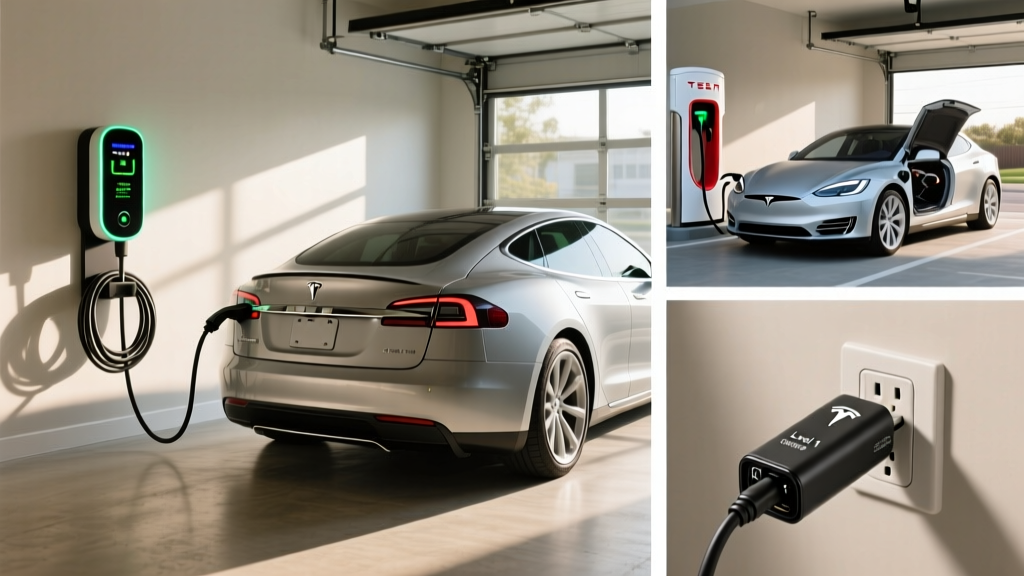
| Level 1 | 120V household outlet | 1.0–1.4 kW | 3–5 miles/hr | ~60–75 hours |
| Level 2 | 240V (dryer-style outlet or hardwired) | 7.2–11.5 kW | 25–44 miles/hr | ~7–11 hours |
| DC Fast Charging | 480V+ commercial station | Up to 250 kW (V3 Supercharger) | Up to ~1,000 miles/hr (peak) | 10–80% in ~27 min |
Level 1 is emergency-only for a 75 kWh battery. If you plug into a standard 120V outlet using Tesla's included Mobile Connector, you'll gain roughly 3–5 miles of range per hour. That's enough if you drive under 30 miles daily and can leave it plugged in for 10+ hours overnight, but it's impractical for most owners.
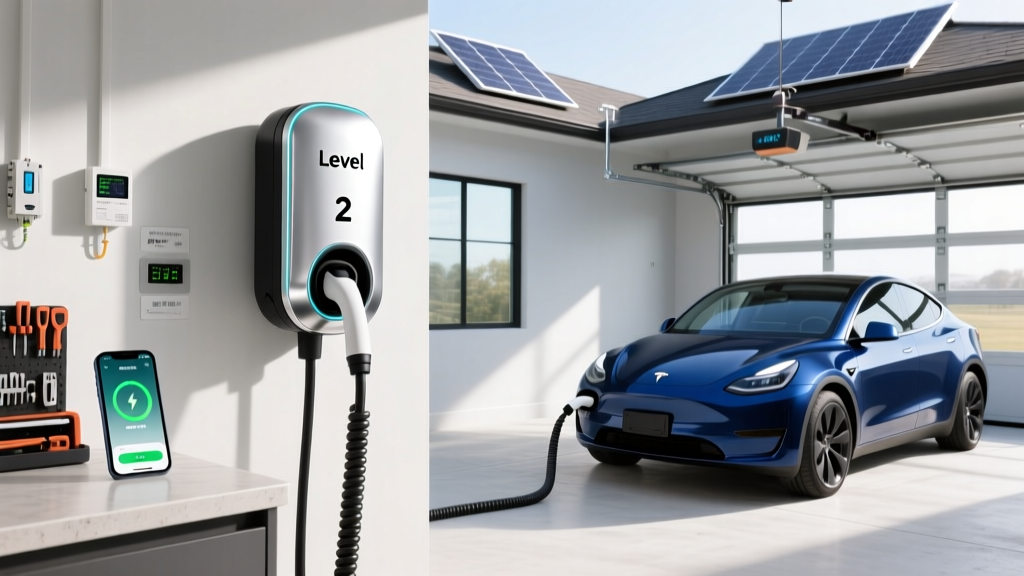
Level 2 is the home-charging standard. The 2020 Model Y Long Range has an 11.5 kW onboard charger (48 amps), meaning it can accept up to 11.5 kW from a 60-amp circuit (48A continuous). A 48A Level 2 charger adds roughly 44 miles of range per hour — enough to fully replenish overnight. This is the setup we recommend for every Model Y owner with garage or driveway access.
DC Fast Charging is for road trips. At a Tesla V3 Supercharger, the Model Y Long Range peaks at 250 kW, but only at a low state of charge (SoC). The charging curve tapers significantly above 50–60% SoC. Expect 10–80% in roughly 27 minutes if the battery is preconditioned (the car does this automatically when you navigate to a Supercharger). Above 80%, charging slows dramatically — a 80–100% top-off can take an additional 25+ minutes. Plan to charge to 80% and move on.
Home Charger Installation: Electrical Requirements and Costs
Installing a Level 2 home charger for your 2020 Model Y Long Range requires a dedicated 240V circuit. Here's what's involved electrically:
- Circuit: 60-amp dedicated breaker (to deliver 48A continuous to the car, per NEC 80% rule)
- Wire: 6 AWG copper (or 4 AWG aluminum) for a 60A circuit, run through conduit if exposed
- Outlet option: NEMA 14-50 (240V/50A receptacle) — allows charger portability but limits you to 40A continuous (9.6 kW) on a 50A breaker
- Hardwired option: Directly wired to a 60A breaker for full 48A (11.5 kW) — no outlet, but maximum speed
- GFCI protection: Required by NEC 2020+ for receptacle-based EV circuits in garages; hardwired units typically have built-in GFCI
- Permit: Most jurisdictions require an electrical permit for new 240V circuits ($50–$200 depending on locality)
How Much Does It Cost to Install a Home EV Charger?
Installation costs vary enormously based on your home's electrical panel capacity, the distance from the panel to the charger location, and whether you need a panel upgrade. Here's a realistic breakdown:
| Component | Simple Install (panel nearby, no upgrade) | Moderate Install (50–100 ft run) | Complex Install (panel upgrade needed) |
|---|---|---|---|
| Charger equipment (Level 2, 48A) | $400–$650 | $400–$650 | $400–$650 |
| Electrician labor (2–4 hrs @ $100–$175/hr) | $200–$500 | $500–$1,200 | $1,000–$2,500 |
| Materials (wire, conduit, breaker) | $50–$150 | $200–$600 | $300–$800 |
| Electrical panel upgrade (100A→200A) | N/A | N/A | $1,500–$3,500 |
| Permit and inspection | $50–$150 | $75–$200 | $100–$250 |
| TOTAL ESTIMATE | $700–$1,450 | $1,175–$2,650 | $3,300–$7,700 |
Connector Compatibility: NACS, CCS1, and Adapter Options
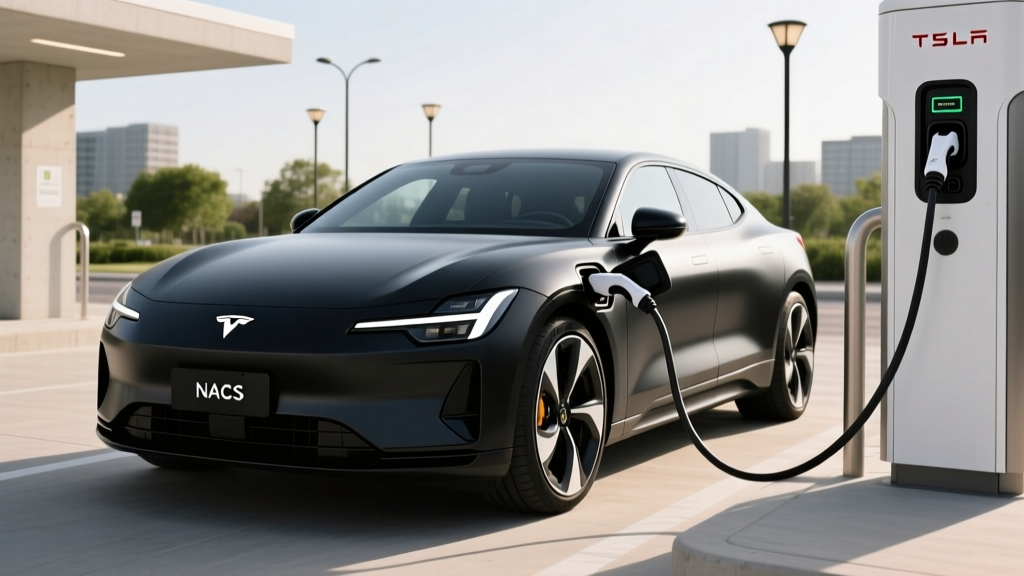
The 2020 Tesla Model Y Long Range was built with Tesla's proprietary connector, now officially designated NACS (North American Charging Standard). As of 2026, NACS has been adopted by Ford, GM, Rivian, Volvo, BMW, and most other major automakers, making it the dominant EV connector in North America.
| Connector | 2020 Model Y Compatibility | Notes |
|---|---|---|
| NACS (Tesla) | Native — no adapter needed | Works with all Tesla Superchargers (V2 and V3) and Tesla Wall Connectors. Also works with the growing number of non-Tesla NACS stations (e.g., Electrify America NACS stalls rolling out 2025–2026). |
| CCS1 | Requires Tesla CCS Adapter (~$175–$250) | Needed for Electrify America, EVgo, and other CCS-only public DC fast chargers. Charges at up to ~150 kW via adapter (less than native 250 kW on Supercharger). |
| CHAdeMO | Not compatible; no reliable adapter | CHAdeMO is effectively deprecated in the US. Avoid reliance on CHAdeMO-only stations. |
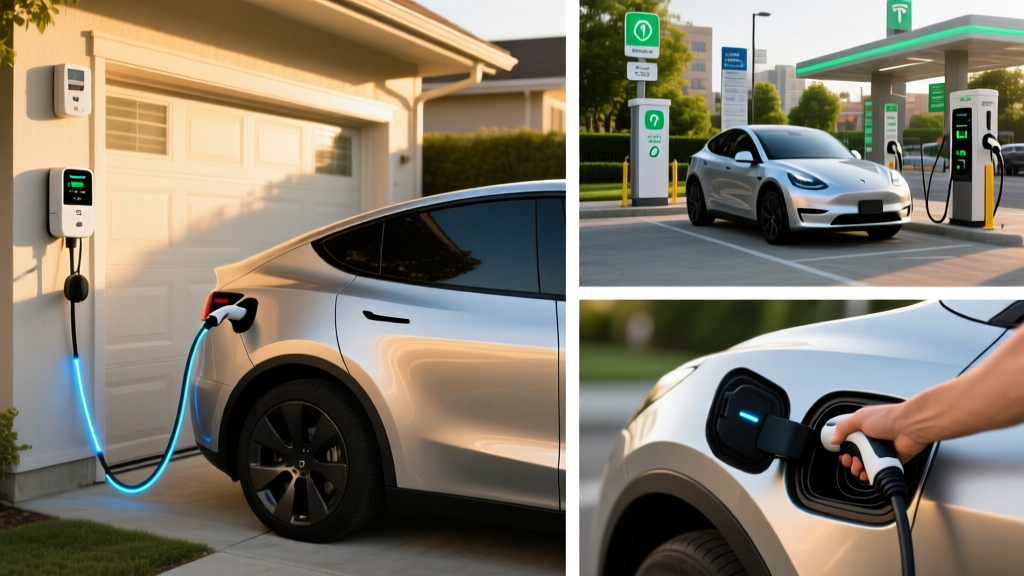
| J1772 (Level 2 AC) | Tesla Mobile Connector includes J1772 adapter | For non-Tesla Level 2 public chargers (ChargePoint, Blink, etc.). Charges at up to 11.5 kW. |
Adapter recommendation: Buy the official Tesla CCS1-to-NACS adapter from Tesla's shop. Third-party adapters exist but vary in safety certification. Keep it in your frunk for road trips where Superchargers aren't available.
Charging Cost: Home vs. Public vs. Gas Comparison
One of the biggest ownership advantages of the 2020 Model Y Long Range is fuel cost savings — but only if you charge smart. Here's what you'll actually pay:
| Charging Scenario | $/kWh | Cost for Full 75 kWh Charge | Cost Per Mile (at 28 kWh/100mi) |
|---|---|---|---|
| Home (off-peak utility rate) | $0.08–$0.14 | $6.00–$10.50 | $0.022–$0.039 |
| Home (standard rate, no TOU plan) | $0.14–$0.20 | $10.50–$15.00 | $0.039–$0.056 |
| Public Level 2 (ChargePoint, etc.) | $0.20–$0.35 | $15.00–$26.25 | $0.056–$0.098 |
| Tesla Supercharger (V3 DCFC) | $0.25–$0.40 | $18.75–$30.00 | $0.070–$0.112 |
| Non-Tesla DCFC (Electrify America) | $0.35–$0.55 | $26.25–$41.25 | $0.098–$0.154 |
| Gasoline equivalent (25 MPG @ $3.50/gal) | $3.50/gal | ~$45.50 (equivalent distance) | $0.140 |
The takeaway: Home charging on an off-peak rate delivers roughly 75% savings per mile compared to gasoline. Even Tesla Supercharging is typically 20–50% cheaper per mile than gas. The savings shrink when you rely exclusively on expensive public DC fast chargers, which is why home Level 2 charging is the economic backbone of EV ownership.
For a driver covering 12,000 miles per year: home charging at $0.12/kWh costs approximately $4,032 annually. The equivalent gas cost at 25 MPG and $3.50/gallon is $6,720. That's roughly $2,688 in annual fuel savings — or over $13,000 across five years of ownership.
Level 2 Home Charger Recommendations for the Model Y
The 2020 Model Y Long Range can accept up to 11.5 kW (48A) on Level 2. To take full advantage, you need a 48-amp charger on a 60-amp circuit. Here are our top picks based on real-world reliability, smart features, and value:
Tesla Wall Connector (Gen 3)
- Power Output: Up to 11.5 kW (48A)
- Connector: NACS (native Tesla)
- Cable Length: 24 feet
- Smart Features: Wi-Fi for OTA firmware updates, power-sharing with second unit, load management
- Price: ~$475
- Verdict: Best value for Tesla owners. Clean integration, full 48A support, sleek design. No app-based scheduling (use the car's built-in scheduler instead).
ChargePoint Home Flex
- Power Output: Up to 12 kW (50A, configurable down to 16A)
- Connector: J1772 (NACS adapter included) or NACS version
- Cable Length: 23 feet
- Smart Features: Wi-Fi, app-based scheduling, Alexa integration, detailed energy tracking
- Price: ~$550–$700
- Verdict: Best for multi-EV households or those wanting app control. The NACS version eliminates adapter needs. Slightly pricier but excellent build quality.
Emporia Level 2 EV Charger
- Power Output: Up to 11.5 kW (48A)
- Connector: J1772 (NACS adapter included) or NACS
- Cable Length: 24 feet
- Smart Features: Wi-Fi, app scheduling, integrates with Emporia Vue energy monitor for solar-aware charging
- Price: ~$350–$400
- Verdict: Budget pick with surprisingly robust smart features. Ideal if you have solar panels and want to charge only on excess production.
Grizzl-E Smart
- Power Output: Up to 10 kW (40A)
- Connector: J1772 or NACS
- Cable Length: 24 feet
- Smart Features: OCPP-compatible, app control, adjustable amperage
- Price: ~$450–$550
- Verdict: Built like a tank in Canada. Rated for extreme cold (-40°F). Not the fastest at 40A, but indestructible and great for outdoor installs in harsh climates.
Safety, Electrical Code, and Installation Best Practices
EV charging places a sustained high-draw load on your home's electrical system — far more continuous than a dryer or oven. Proper installation is non-negotiable for safety:
- Dedicated circuit: Your EV charger must be on its own dedicated breaker — never shared with other appliances. A 48A charger requires a 60A breaker (NEC 125% continuous load rule).
- GFCI protection: The 2020 NEC (Article 625.54) requires GFCI protection for all EV receptacles in residential garages. Hardwired chargers like the Tesla Wall Connector have built-in ground-fault protection, which is why many electricians prefer hardwiring.
- Outdoor rating: If your charger is installed outside, ensure it carries a NEMA 4 (or IP65+) weather rating. All chargers listed above are outdoor-rated.
- Permit and inspection: Most US jurisdictions require a permit for new 240V circuits. The inspection ensures wire gauge, breaker sizing, and grounding meet code. Skipping the permit risks insurance denial if an electrical fire occurs.
- Use a licensed electrician: EV charger installation is not a DIY project. Improper wire sizing or loose connections under sustained 40–48A loads create fire risk. Verify your electrician has EV charger installation experience.
Frequently Asked Questions
How fast will each charging level add range to my 2020 Model Y Long Range?
Level 1 (120V) adds 3–5 miles per hour. Level 2 at 48A (240V) adds roughly 44 miles per hour. DC fast charging at a V3 Supercharger peaks at roughly 1,000 miles per hour of equivalent rate, but the charge curve tapers — expect 10–80% in about 27 minutes with a preconditioned battery.
Can I charge my 2020 Model Y at non-Tesla public chargers?
Yes. For Level 2 public chargers (J1772 connector), use the J1772 adapter included with Tesla's Mobile Connector. For non-Tesla DC fast chargers (CCS1), you'll need the Tesla CCS adapter (sold separately, ~$175–$250 from Tesla). You cannot use CHAdeMO stations.
What electrical upgrades might I need for a home Level 2 charger?
If your home has a 100-amp electrical panel and significant existing electric loads (electric heat, dryer, oven, water heater), you may need a panel upgrade to 200 amps — costing $1,500–$3,500. If your panel is already 200A with available capacity, you likely only need a new 60A breaker and wire run. Have a licensed electrician perform a load calculation before committing to equipment.
How much does charging cost per mile compared to gas?
Home charging at $0.12/kWh costs approximately $0.034 per mile in the Model Y Long Range (at 28 kWh/100mi). A comparable gas SUV at 25 MPG with $3.50/gallon fuel costs $0.14 per mile. That's roughly a 75% savings per mile when charging at home. Even Supercharging at $0.35/kWh ($0.098/mile) is about 30% cheaper than gas.
Should I charge to 100% every night?
No. The 2020 Model Y Long Range uses an NMC battery, which degrades faster when regularly held at 100% SoC. Tesla recommends setting your daily charge limit to 80–90%. Reserve 100% charges for road trips when you need maximum range. This practice can significantly extend long-term battery health — per Tesla's official battery care guidance.
Does the 2020 Model Y Long Range qualify for any tax credits as a used EV purchase?
Under IRS §30D rules, the Used Clean Vehicle Credit offers up to $4,000 (or 30% of the sale price, whichever is lower) for qualifying used EVs purchased from a dealer. The vehicle must be at least two model years old (the 2020 Model Y qualifies), the sale price must be $25,000 or less, and buyer income must not exceed $75,000 (single) / $150,000 (married filing jointly). Verify current eligibility with a tax professional, as rules are subject to legislative changes.
Is preconditioning important for DC fast charging?
Critically important. The Model Y's battery management system must warm the NMC cells to an optimal temperature (~85–95°F) before the battery can accept peak charge rates. When you navigate to a Supercharger in the car's navigation, it automatically begins preconditioning 10–20 minutes before arrival. Without preconditioning — for example, if you drive to a charger without using navigation — your initial charge rate may be limited to 50–100 kW even at a 250 kW station, adding significant time to your stop.