Understanding the 2020 Tesla Model X Long Range Plus Battery and Charging Architecture
The 2020 Tesla Model X Long Range Plus carries a 100 kWh battery pack (approximately 95 kWh usable) using NMC (nickel-manganese-cobalt) chemistry. EPA-rated range sits at 371 miles — the highest of any Model X variant Tesla has produced. In real-world highway driving at 70 mph with climate control running, expect approximately 290–320 miles depending on temperature and elevation. In sub-freezing conditions, that number can drop to 250–280 miles due to increased cabin heating demand and battery impedance.
This model uses Tesla's proprietary NACS (North American Charging Standard) connector — now the dominant EV connector in North America. It supports DC fast charging at up to 250 kW on V3 Superchargers, and AC Level 2 charging at up to 11.5 kW (48A) through its onboard charger. Understanding these figures — and the difference between kW (power, the rate of energy transfer) and kWh (energy, the capacity of your battery) — is essential for planning your charging setup.
Charging Levels Explained: Speeds, Times, and What Each Delivers
There are three charging tiers available to Model X Long Range Plus owners. Each serves a different use case — from overnight topping off to cross-country travel.
| Charging Level | Voltage / Amperage | Power (kW) | Miles of Range Added Per Hour | Best Use Case |
|---|---|---|---|---|
| Level 1 (Standard Outlet) | 120V / 12A | ~1.4 kW | ~3–4 miles/hr | Emergency top-off, low-mileage days |
| Level 2 (Home / Destination) | 240V / 48A (max) | Up to 11.5 kW | ~30–35 miles/hr | Daily home charging, overnight full charge |
| DC Fast Charging (Supercharger V3) | DC / up to 250 kW | Up to 250 kW peak | ~1,000+ miles/hr (peak) | Road trips, rapid replenishment |
Level 1 charging from a standard household outlet adds roughly 3–4 miles of range per hour. Fully replenishing a depleted 100 kWh pack would take approximately 65–70 hours — impractical as a primary strategy but useful for maintaining charge if you drive fewer than 30 miles per day.
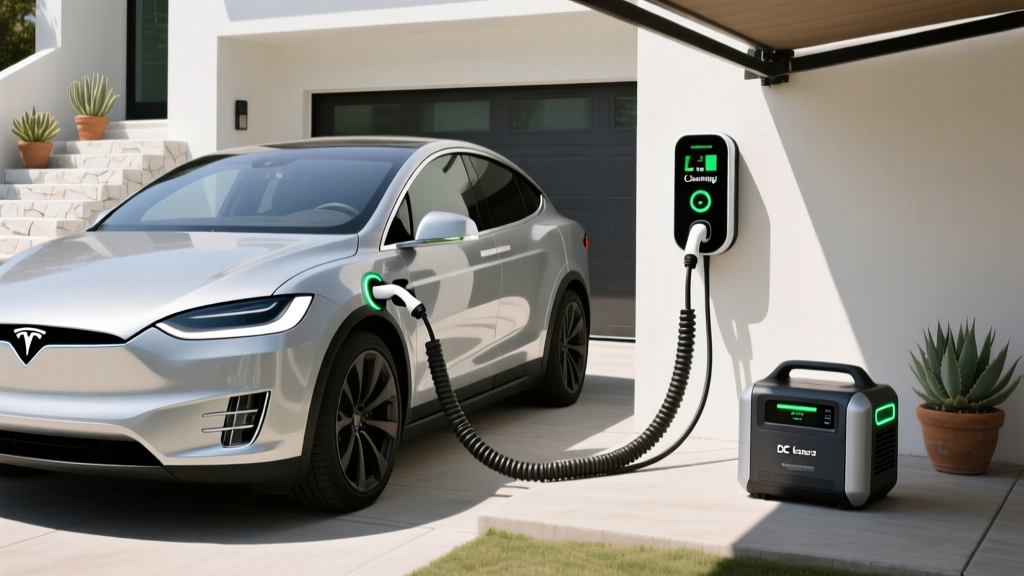
Level 2 charging is the backbone of daily EV ownership. The Model X Long Range Plus onboard charger accepts up to 11.5 kW (48 amps at 240V). At this rate, a full charge from near-empty takes roughly 9–10 hours. A more typical scenario — recharging from 20% to 80% — takes about 5.5 hours, easily accomplished overnight.
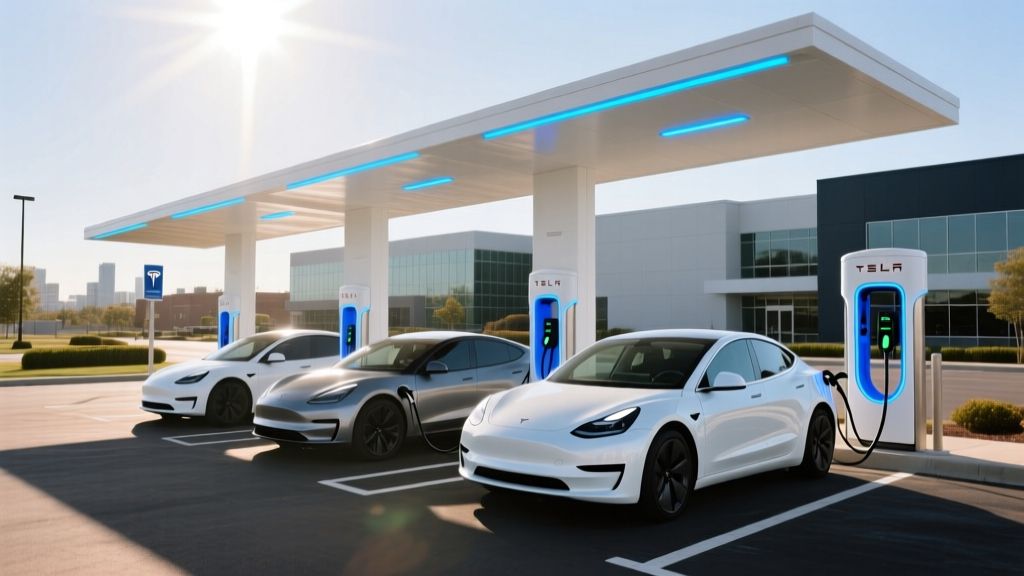
DC Fast Charging on a Tesla V3 Supercharger delivers up to 250 kW peak. However, peak rate is not sustained rate. The Model X Long Range Plus charges fastest between 10% and 40% state of charge (SoC), where it can sustain 200–250 kW. Above 60%, the charge curve tapers significantly to protect the NMC battery. A 10–80% session typically takes 35–45 minutes. Plan road-trip stops around 15–25 minute sessions that bring you from 10% to 50–60% — this is faster than waiting for 80%.
Home Charger Installation: Electrical Requirements, Costs, and Upgrades
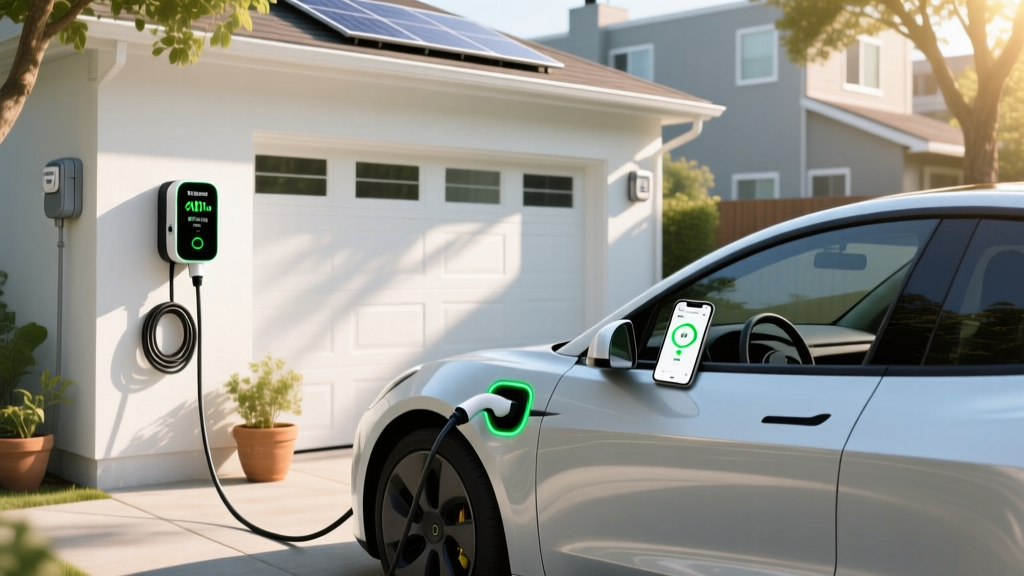
Installing a Level 2 home charger for the Model X Long Range Plus requires a dedicated 240V circuit. To take full advantage of the vehicle's 11.5 kW onboard charger, you need a 60-amp breaker (which delivers 48 amps of continuous charge current, per the National Electrical Code 80% rule for continuous loads).
Electrical requirements at a glance:
- Voltage: 240V (split-phase, standard US residential)
- Breaker size: 60A for full 48A charging; 50A for 40A charging (9.6 kW); 40A for 32A charging (7.7 kW)
- Wire gauge: 6 AWG copper for 60A; 8 AWG for 40A (confirm with your electrician)
- Dedicated circuit: Required — do not share with other appliances
- GFCI protection: Required by NEC 2020+ for EV receptacles (hardwired chargers may not require a separate GFCI breaker depending on local code)
How Much Does It Cost to Install a Home EV Charger?
Installation cost varies enormously based on your electrical panel's capacity, the distance from panel to charger location, and whether conduit runs are straightforward or require trenching/wall penetration.
| Cost Component | Simple Install (panel nearby, no upgrade) | Moderate Install (long run, minor upgrades) | Complex Install (panel upgrade needed) |
|---|---|---|---|
| EV Charger Equipment | $400–$650 | $400–$650 | $400–$650 |
| Electrician Labor | $300–$600 | $600–$1,500 | $1,000–$2,500 |
| Electrical Panel Upgrade (if needed) | $0 | $0 | $1,500–$3,500 |
| Permit & Inspection | $50–$150 | $50–$200 | $100–$300 |
| Conduit / Wiring Materials | $50–$150 | $150–$400 | $200–$600 |
| Total Estimated Cost | $800–$1,550 | $1,200–$2,750 | $3,200–$7,550 |
Panel upgrade reality: Homes built before 2000 often have 100A or 150A main panels. Adding a 60A EV circuit may push total calculated load beyond your panel's rating, requiring an upgrade to 200A service. This is the single biggest variable in home charger installation cost. Have a licensed electrician perform a load calculation before committing to a specific circuit size.
If a panel upgrade is cost-prohibitive, you can install a 40A or even 30A circuit and still gain meaningful overnight charging. At 32A (7.7 kW), you'll add roughly 22 miles of range per hour — enough to fully replenish a daily commute of 60–80 miles in under 4 hours.
For authoritative guidance on electrical safety and code requirements, refer to the NFPA 70 National Electrical Code and consult a licensed electrician for your final installation specifications.
Connector Compatibility: NACS, Adapters, and Public Charging Networks
The 2020 Model X Long Range Plus was built with Tesla's proprietary connector, which has since been standardized as NACS (North American Charging Standard, SAE J3400). This is now the dominant connector in North America, and as of 2026, virtually all new EVs sold in the US ship with NACS.
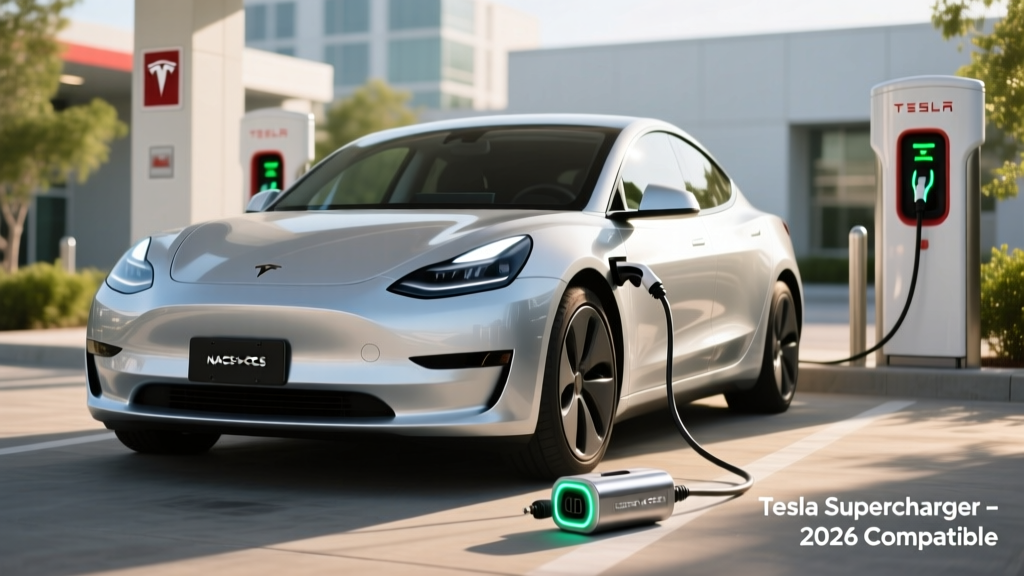
Your Model X can charge natively at any Tesla Supercharger and Tesla Destination Charger without adapters. For public non-Tesla networks that still use CCS1 connectors, you will need a Tesla-to-CCS adapter (Tesla sells an official CCS Combo 2 adapter for approximately $250, and third-party options from brands like A2Z and Lectron are available for $150–$200). CHAdeMO charging — largely legacy at this point — requires a separate CHAdeMO adapter that Tesla no longer actively sells but is available on the secondary market.
| Connector Type | Native Support? | Adapter Needed? | Network Examples |
|---|---|---|---|
| NACS (Tesla) | Yes — native | No | Tesla Supercharger, Tesla Destination, Electrify America (2025+), Rivian Adventure Network |
| CCS1 | No | Yes — Tesla CCS Adapter (~$175–$250) | Electrify America (legacy stalls), EVgo, ChargePoint DC |
| CHAdeMO | No | Yes — CHAdeMO adapter (secondary market) | Limited legacy stations, mostly discontinued |
| J1772 (Level 2) | No | Yes — included J1772 adapter (comes with car) | ChargePoint L2, Blink, public Level 2, workplace chargers |
The Model X ships with a J1772-to-NACS adapter in the glove box or trunk, allowing you to use any public Level 2 charger. For DC fast charging outside the Supercharger network, the CCS adapter is the most valuable accessory you can buy — it unlocks Electrify America, EVgo, and other networks when Supercharger coverage has gaps.
Charging Cost: Per-Mile Economics vs. Gasoline
One of the strongest ownership arguments for the Model X Long Range Plus is fuel cost savings. Here's how charging costs break down across scenarios, using a realistic consumption figure of 33 kWh per 100 miles (approximately 3.0 miles/kWh — a reasonable real-world average for this 5,000+ lb SUV).
| Charging Scenario | Cost per kWh | Cost per 100 Miles | Cost per Mile |
|---|---|---|---|
| Home — off-peak utility rate | $0.08–$0.13 | $2.64–$4.29 | $0.026–$0.043 |
| Home — standard residential rate | $0.14–$0.18 | $4.62–$5.94 | $0.046–$0.059 |
| Public Level 2 (ChargePoint, etc.) | $0.25–$0.40 | $8.25–$13.20 | $0.083–$0.132 |
| Tesla Supercharger V3 | $0.28–$0.42 | $9.24–$13.86 | $0.092–$0.139 |
| Non-Tesla DC Fast (EA, EVgo) | $0.35–$0.55 | $11.55–$18.15 | $0.116–$0.182 |
| Gasoline equivalent (25 MPG SUV at $3.50/gal) | — | $14.00 | $0.140 |
The bottom line: Home charging at off-peak rates delivers fuel costs at roughly 3–4 cents per mile — about one-quarter the cost of a comparable gasoline SUV. Even Tesla Supercharging averages below gasoline cost in most regions. However, frequent use of premium-priced non-Tesla DC fast chargers can approach or exceed gasoline cost per mile. The economics strongly favor home charging as your primary strategy.
For the latest electricity rate data by state, the U.S. Energy Information Administration (EIA) publishes monthly average residential electricity prices.
Recommended Home Charging Equipment for the Model X Long Range Plus
To maximize the Model X's 11.5 kW onboard charger, pair it with a hardwired Level 2 station capable of at least 48 amps. Here are three proven options across budget tiers:
Tesla Wall Connector (Gen 4)
- Power Output: Up to 11.5 kW (48A at 240V)
- Connector: NACS (native — no adapter needed)
- Cable Length: 24 feet
- Smart Features: Wi-Fi, OTA firmware updates, load sharing between multiple units, Power-Share with Tesla Powerwall
- Price: ~$475
- Verdict: The default choice for Tesla owners. Seamless integration, cleanest installation, and full-speed charging.
ChargePoint Home Flex (NACS version)
- Power Output: Up to 12 kW (50A at 240V) — configurable via DIP switches
- Connector: NACS (2025+ models) or J1772 (with adapter)
- Cable Length: 23 feet
- Smart Features: Wi-Fi, ChargePoint app scheduling, Alexa integration, energy tracking
- Price: ~$550–$650
- Verdict: Best third-party option if you want a robust app experience or have non-Tesla EVs in the household.
Emporia Vue EV Charger
- Power Output: Up to 11.5 kW (48A at 240V)
- Connector: NACS (2025+ models) or J1772
- Cable Length: 24 feet
- Smart Features: Integration with Emporia energy monitoring, solar-aware charging, time-of-use scheduling
- Price: ~$400–$500
- Verdict: Best value pick, especially if you have solar panels or want whole-home energy monitoring alongside EV charging.
Key buying advice: For a 2020 Model X Long Range Plus, the Tesla Wall Connector is the strongest recommendation. It requires no adapter, supports the full 48A the vehicle can accept, and receives firmware updates directly from Tesla. Hardwire installation (rather than a NEMA 14-50 plug) eliminates the GFCI breaker requirement in many jurisdictions and provides a more reliable connection for sustained high-amperage use.
Safety, Code Compliance, and Outdoor Installation
EV charging involves sustained high-current draw — often 8+ hours at 48 amps. This places demands on your electrical system that differ from typical household loads. Key safety considerations:
- Dedicated circuit: Your Level 2 charger must have its own dedicated breaker. Sharing a circuit with a dryer, oven, or HVAC system creates tripping and fire risk.
- GFCI protection: The NEC (2020 edition and later) requires GFCI protection for EV charging receptacles (NEMA 14-50 outlets). Hardwired installations may be exempt from this requirement in some jurisdictions — check local code. Note that nuisance GFCI trips are a known issue with some breaker brands when paired with EV chargers; hardwiring avoids this.
- Outdoor rating: If your charger is installed outdoors (garage exterior, carport, driveway), ensure the unit carries a NEMA 4 or NEMA 4X rating for weather resistance. The Tesla Wall Connector and ChargePoint Home Flex are both rated for outdoor use.
- Cable management: A 24-foot cable draped across a garage floor is a trip hazard. Install a cable holster or retractable reel to keep the cord organized.
- Permit and inspection: Most jurisdictions require an electrical permit for EV charger installation. The inspection ensures proper wire gauge, breaker sizing, and grounding. Skipping the permit can void homeowner's insurance coverage for electrical fires. Typical permit fees range from $50 to $300.
- Utility notification: Some utilities require notification when installing an EV charger and may offer time-of-use (TOU) rate plans that significantly reduce charging costs. Check with your provider — programs like PG&E's EV-A rate or Con Edison's EV rate in New York can cut home charging costs by 30–50% during off-peak hours.
Charging Time Examples: Real Scenarios for a 100 kWh Pack
Here are practical charging time estimates for the Model X Long Range Plus across common scenarios, accounting for real-world charge curve behavior:
- Overnight home charge (20% to 80%, Level 2 at 11.5 kW): Approximately 5.5 hours. Plug in at 11 PM, reach 80% by 4:30 AM.
- Daily commute replenishment (30 miles used, Level 2 at 11.5 kW): Approximately 1 hour. The car replaces ~33 miles of range per hour at full power.
- Road trip Supercharger stop (10% to 60%, V3 at 250 kW peak): Approximately 18–22 minutes. This is the sweet spot for fast charging — you add ~185 miles of range before the curve tapers hard.
- Road trip Supercharger stop (10% to 80%, V3): Approximately 35–45 minutes. The 60–80% segment adds 15–20 minutes due to taper. Only wait this long if your next stop is more than 200 miles away.
- Level 1 emergency top-off (12 hours overnight): Adds approximately 36–48 miles of range. Sufficient for short commutes but not a sustainable daily strategy.
Pro tip: Use the Tesla app or in-car scheduler to set charging to begin during off-peak utility hours (typically 12 AM–6 AM). This can reduce your home charging cost by 30–50% compared to charging during evening peak demand.
Frequently Asked Questions
How fast will each charging level add range to my Model X Long Range Plus?
Level 1 (120V) adds about 3–4 miles per hour. Level 2 (240V at 48A) adds approximately 30–35 miles per hour. DC fast charging on a V3 Supercharger can add up to 175 miles in 15 minutes at peak rate, though the average across a full session is lower due to charge curve taper above 60% SoC.
Do I need a panel upgrade to charge at home?
Possibly. If your home has a 100A or 150A main panel and you already have high-draw appliances (electric oven, dryer, HVAC), adding a 60A EV circuit may exceed your panel's calculated load. A licensed electrician will perform a NEC Article 220 load calculation to determine this. If an upgrade is needed, expect $1,500–$3,500 additional cost. Alternatively, install a smaller 30A or 40A circuit that still provides adequate overnight charging without a panel upgrade.
Which public charging networks can I use without an adapter?
The Tesla Supercharger network and Tesla Destination Chargers are natively compatible. As of 2026, Electrify America and several other networks have begun adding NACS connectors to new stations, but many legacy stalls still use CCS1. Carry a Tesla CCS adapter ($175–$250) for maximum public charging flexibility. The included J1772 adapter covers all public Level 2 stations.
How much does charging cost per mile compared to gasoline?
Home charging at average residential rates ($0.14/kWh) costs approximately $0.05 per mile — about one-third the cost of a 25 MPG gasoline SUV at $3.50/gallon ($0.14/mile). Tesla Supercharging averages $0.09–$0.14 per mile depending on region, roughly matching or slightly undercutting gasoline. The savings are most dramatic with home charging, especially on time-of-use plans.
Is it safe to charge my Model X in the rain or snow?
Yes. The NACS connector and Tesla Wall Connector are designed for outdoor use in all weather. The connector is sealed when mated to the vehicle, and the charging handshake will not begin until a safe connection is confirmed. Ensure your outdoor charger carries a NEMA 4 rating and that the cable is not submerged in standing water.
Should I charge to 100% daily or limit to 80%?
For daily use, Tesla recommends setting the charge limit to 80–90% for NMC batteries to maximize long-term battery health. Charge to 100% only when you need maximum range for a road trip, and begin the trip shortly after reaching full charge. The Model X Long Range Plus uses NMC chemistry, which degrades faster when held at 100% SoC for extended periods compared to LFP batteries found in some Tesla models.
What is the battery warranty on the 2020 Model X Long Range Plus?
Tesla covers the battery and drive unit for 8 years or 150,000 miles, whichever comes first, with a minimum 70% capacity retention guarantee. If your battery degrades below 70% of its original capacity within this period, Tesla will repair or replace it. According to Tesla's warranty documentation, this covers defects and abnormal degradation but not damage from accidents, flooding, or unauthorized modifications.
For official efficiency and range data, refer to the U.S. EPA Fuel Economy Guide for the 2020 Tesla Model X Long Range Plus. Federal tax incentives do not apply to used vehicle purchases of this model year under the new-vehicle §30D credit, but the IRS Used Clean Vehicle Credit (up to $4,000) may apply if purchased from a dealer and income thresholds are met — consult a tax professional for eligibility.