Why This Charging Guide Exists for the 2020 Tesla Model X Long Range
The 2020 Tesla Model X Long Range (previously called "Long Range Plus" for part of the model year) remains one of the most capable electric SUVs on the road, with an EPA-estimated 328 miles of range and a 100 kWh battery pack (approximately 95 kWh usable). But owning one in 2026 means navigating a charging landscape that has shifted dramatically since it rolled off the Fremont line. Tesla's North American Charging Standard (NACS) has become the industry default, public networks have expanded, and home charging equipment is more powerful and affordable than ever.
This guide gives you exact numbers — charge speeds in kilowatts (kW), energy capacity in kilowatt-hours (kWh), installation costs, and real-world charging times — so you can set up your Model X for daily driving and road trips without guesswork.
Charging Levels Explained: How Fast Does Each Add Range?
EV charging happens at three distinct levels. The critical distinction: kW (kilowatts) measures power — how fast energy flows into the battery. kWh (kilowatt-hours) measures energy — how much the battery holds. Your 2020 Model X Long Range has roughly 95 kWh of usable battery capacity.
| Level | Voltage | Power (kW) | Miles of Range Added per Hour | Best Use Case |
|---|---|---|---|---|
| Level 1 | 120V AC | 1.0–1.4 kW | 3–5 mi/hr | Overnight trickle, emergencies |
| Level 2 | 240V AC | 7.2–19.2 kW | 22–58 mi/hr | Daily home charging, workplace |
| DC Fast Charging | 400V+ DC | 50–250 kW | 150–520 mi/hr (peak) | Road trips, rapid top-ups |
For the 2020 Model X Long Range specifically:
- Level 1 (120V): Adds roughly 4 miles of range per hour. A full charge from 10% takes over 24 hours — impractical for daily use but fine for occasional top-offs if you drive under 30 miles daily.
- Level 2 (240V, 48A): The Model X's onboard charger accepts up to 11.5 kW (48 amps on a 60-amp circuit). At this rate, you add approximately 35 miles of range per hour, and a 10–80% charge completes in roughly 6 hours.
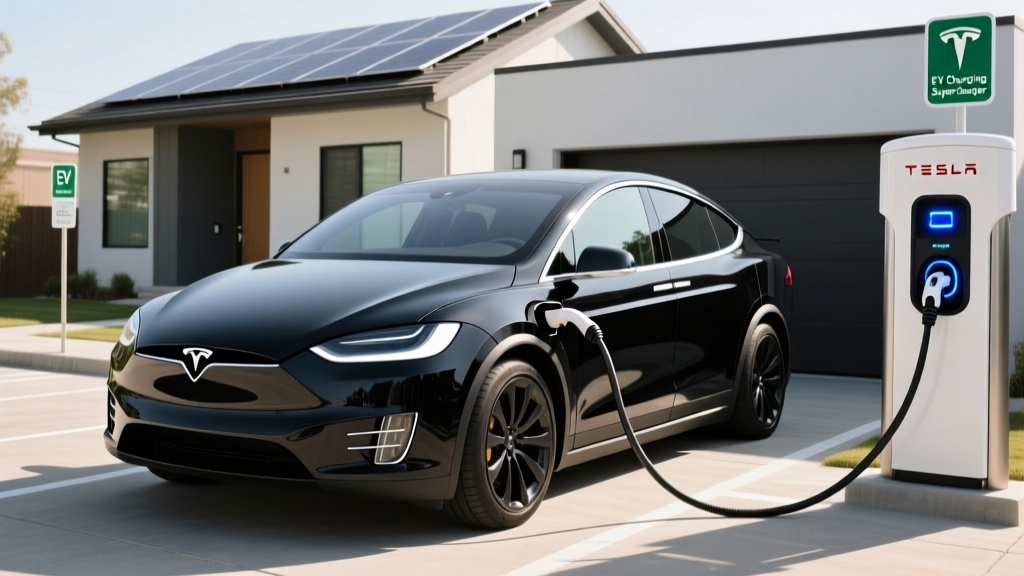
- DC Fast Charging (Supercharger V3): The 2020 Model X Long Range peaks at approximately 150 kW on a V3 Supercharger (250 kW-capable V3 stalls will negotiate down to the vehicle's max). Expect a 10–80% charge in approximately 35–40 minutes, though the charge curve tapers significantly above 60% state of charge.
Home Charger Installation: Electrical Requirements and Costs
Installing a Level 2 home charger is the single biggest upgrade most Model X owners make. Here is exactly what the electrical work involves and what you should budget.
Electrical Requirements for the 2020 Model X
To maximize the Model X's 11.5 kW onboard charger, you need a 240V, 60-amp dedicated circuit (which delivers 48 amps continuous to the vehicle, per the National Electrical Code's 80% rule for continuous loads). A 50-amp circuit (40A continuous, 9.6 kW) is the next most common option and still delivers roughly 29 miles of range per hour — sufficient for most daily driving.
What Electrical Upgrades Might You Need?
Many homes built before 2000 have 100-amp or 150-amp electrical panels. Adding a 60-amp EV circuit may require:
- Panel upgrade to 200 amps: Common in older homes. Costs $1,500–$3,500 depending on your utility and local codes.
- Load calculation: A licensed electrician will perform a NEC Article 220 load calculation to determine if your existing panel has capacity. If your home has electric heat, an electric oven, and an electric dryer, headroom may be tight.
- Sub-panel installation: If the main panel is full, a sub-panel near the garage adds $500–$1,200.
- Conduit and wiring run: The distance from your panel to the charger location drives cost. Runs over 50 feet require thicker (more expensive) wire.
| Component | Typical Cost Range | Notes |
|---|---|---|
| Level 2 Charger (Hardware) | $400–$750 | 48A smart charger, NACS connector |
| Electrician Labor | $600–$2,000 | Depends on run distance, wall type |
| Permit & Inspection | $100–$350 | Required by most jurisdictions |
| Electrical Panel Upgrade (if needed) | $1,500–$3,500 | 100A → 200A service upgrade |
| Conduit & Wiring Materials | $150–$500 | Varies by run length |
| Total (no panel upgrade) | $1,250–$3,600 | Most common scenario |
| Total (with panel upgrade) | $2,750–$7,100 | Older homes, high-load panels |
The federal Residential Clean Energy Credit (IRS §25D) does not cover EV chargers as of 2026. The alternative fuel vehicle refueling property credit (§30C) was modified under the Inflation Reduction Act and is subject to income caps, census-tract eligibility, and a $1,000 maximum for residential installations. Check the current IRS guidance on §30C or consult a tax professional before counting on this credit.
Connector Compatibility: NACS, CCS, and Adapter Needs
The 2020 Tesla Model X was built with Tesla's proprietary connector — which, as of 2024, was formally adopted as the North American Charging Standard (NACS, SAE J3400). This is excellent news for 2026 ownership because NACS is now the dominant connector in North America.
| Connector Type | Compatibility with 2020 Model X | Adapter Needed? |
|---|---|---|
| NACS (Tesla native) | Full compatibility — native port | None required |
| CCS1 | Compatible via Tesla CCS adapter | Yes — Tesla sells a CCS1-to-NACS adapter (~$250) |
| CHAdeMO | Compatible via third-party adapter | Yes — limited CHAdeMO-to-Tesla adapters exist; network is declining |
| J1772 (Level 2 public) | Compatible via included J1772 adapter | Yes — Tesla includes a J1772 adapter with most vehicles |
Practical recommendation: For home Level 2 charging, buy a NACS-native charger (no adapter needed). For public DC fast charging, the Tesla Supercharger network is your primary option and requires no adapter. Carry the Tesla CCS1 adapter for Electrify America and other CCS-only stations as a backup. The CHAdeMO network has largely been superseded and is not worth investing in.
Cost to Charge: Home vs. Public vs. Gas Comparison
One of the strongest ownership arguments for the Model X Long Range is fuel cost savings. Here is how the numbers break down using the EPA-rated efficiency of 33 kWh per 100 miles (approximately 3.03 miles per kWh) from fueleconomy.gov.
| Charging Scenario | Cost per kWh | Cost per 100 Miles | Cost per Mile |
|---|---|---|---|
| Home (off-peak utility rate) | $0.08–$0.14 | $2.64–$4.62 | $0.03–$0.05 |
| Home (average US rate) | $0.16–$0.18 | $5.28–$5.94 | $0.05–$0.06 |
| Tesla Supercharger V3 | $0.28–$0.36 | $9.24–$11.88 | $0.09–$0.12 |
| Electrify America (DC fast) | $0.31–$0.48 | $10.23–$15.84 | $0.10–$0.16 |
| Gasoline SUV equivalent (22 MPG, $3.50/gal) | — | $15.91 | $0.16 |
At national average electricity rates, home charging costs roughly one-third what gasoline does per mile. Even at peak Supercharger pricing, you are paying less per mile than a comparable gas SUV like the BMW X5 or Mercedes GLE. Over 15,000 miles annually, home charging at $0.14/kWh saves approximately $1,400–$1,800 versus gasoline.
Best Home Chargers for the 2020 Model X Long Range
Since the Model X uses a native NACS port and accepts up to 11.5 kW (48A), the ideal home charger delivers 48 amps on a 60-amp circuit with a NACS connector. Here are the top picks for 2026:
Tesla Wall Connector (Gen 3)
- Power Output: Up to 11.5 kW (48A)
- Connector: NACS (native, no adapter)
- Cable Length: 24 feet
- Smart Features: Wi-Fi updates, load sharing with a second unit, power sharing, access control via app
- Price: ~$475
- Why it works: Seamless integration with the Model X. The Tesla app shows charging status, and the Wall Connector auto-updates firmware. Load-sharing mode lets you install two units on a single 60-amp circuit — useful for two-EV households.
Emporia Vue Smart EV Charger
- Power Output: Up to 11.5 kW (48A)
- Connector: NACS (2025+ models) or J1772 with adapter
- Cable Length: 24 feet
- Smart Features: Energy monitoring, solar integration, scheduled charging, utility demand-response compatible
- Price: ~$400
- Why it works: Excellent value with detailed energy tracking. If you have rooftop solar, the Emporia ecosystem lets you charge exclusively on solar production.
ChargePoint Home Flex (NACS version)
- Power Output: Up to 12 kW (50A) on a 60-amp circuit; adjustable down to 16A for smaller circuits
- Connector: NACS (2025+ models)
- Cable Length: 23 feet
- Smart Features: Alexa integration, flexible amperage setting, detailed session history, scheduling
- Price: ~$550
- Why it works: The adjustable amperage is uniquely practical — if your electrician determines your panel can only spare 30 amps, you can set the Flex to 24A continuous without buying different hardware.
All three chargers are NEMA 4 rated for outdoor installation, UL listed for safety, and compatible with the Model X's 11.5 kW maximum onboard charging rate. Hardwired installation (rather than a NEMA 14-50 outlet) is recommended for 48A+ circuits, as the NEC requires GFCI protection on receptacle-based circuits, which can cause nuisance tripping with high-amperage EV chargers.
Safety, Code Compliance, and Installation Best Practices
EV charging involves sustained high-current draw — more like running an electric furnace than plugging in a phone. Follow these requirements to keep your installation safe and code-compliant:
- Dedicated circuit: Your Level 2 charger must have its own dedicated breaker. Never share a circuit with other appliances.
- Continuous-load derating: The NEC classifies EV charging as a continuous load (3+ hours). A 60-amp breaker delivers 48 amps continuous. Do not exceed this.
- GFCI considerations: Hardwired chargers are exempt from the GFCI requirement that applies to receptacles. This is why hardwired installations are preferred for 48A+ setups.
- Outdoor rating: If your charger is mounted outside or in an unenclosed carport, ensure it carries a NEMA 4 or NEMA 4X rating for weather resistance.
- Permit and inspection: Virtually all jurisdictions require an electrical permit for a new 240V circuit. Your electrician pulls the permit; the city or county inspects after installation. Skipping this step can void homeowner's insurance claims related to electrical fires.
- Cable management: A 24-foot charging cable is heavy. Install a cable organizer or holster to prevent tripping hazards and connector damage.
Charging Times for the 100 kWh Battery: Real-World Scenarios
The 2020 Model X Long Range's 100 kWh pack (95 kWh usable) is one of the largest in any consumer EV. That capacity gives you exceptional range but also means longer charging sessions at lower power levels.
| Charging Scenario | Session Type | Approximate Time | Range Added |
|---|---|---|---|
| Level 1 (120V, 12A) | Overnight (10 hours) | 10 hours | ~40 miles |
| Level 2 (240V, 48A / 11.5 kW) | 10–80% full charge | ~6 hours | ~230 miles |
| Level 2 (240V, 32A / 7.7 kW) | 10–80% full charge | ~8.5 hours | ~230 miles |
| Tesla Supercharger V3 (150 kW peak) | 10–80% charge | ~35–40 minutes | ~230 miles |
| Tesla Supercharger V2 (120 kW peak) | 10–80% charge | ~45–50 minutes | ~230 miles |
For daily driving, most Model X owners use between 30 and 80 miles per day. A Level 2 charger replenishes that in 1–2.5 hours — easily handled overnight. Reserve DC fast charging for road trips to minimize long-term battery degradation.
Frequently Asked Questions
How much does it cost to install a home EV charger for my 2020 Model X?
Expect $1,250–$3,600 for a standard installation (hardware, electrician labor, permit, and materials) if your electrical panel has sufficient capacity. If your home needs a panel upgrade from 100A to 200A service, add $1,500–$3,500, bringing the total to $2,750–$7,100. Get at least three quotes from licensed electricians who have EV charger installation experience.
How fast will each charging level add range to the Model X Long Range?
Level 1 (120V) adds approximately 3–5 miles per hour. Level 2 (240V, 48A) adds approximately 35 miles per hour. DC fast charging at a V3 Supercharger adds up to 175 miles in 15 minutes at peak rate, though the charge curve tapers significantly above 60% state of charge.
Which connector and charger is compatible with my 2020 Model X?
Your Model X uses the native NACS (Tesla) connector. Any NACS-equipped Level 2 charger works without an adapter. For CCS-equipped public DC fast chargers (like Electrify America), you will need Tesla's CCS1 adapter (~$250). For home charging, the Tesla Wall Connector is the simplest plug-and-play option.
How much does charging cost per mile versus gasoline?
At the US average residential electricity rate of ~$0.17/kWh, charging the Model X Long Range costs approximately $0.05–$0.06 per mile. A comparable gasoline SUV at 22 MPG and $3.50/gallon costs $0.16 per mile. Home charging saves roughly $0.10 per mile, or $1,500 per year at 15,000 miles. Public DC fast charging narrows the gap to $0.09–$0.12 per mile.
What electrical upgrades might I need before installing a Level 2 charger?
The most common upgrade is a panel capacity increase from 100A or 150A to 200A service, particularly in homes with multiple electric appliances. Your electrician will perform a load calculation per NEC Article 220. Other potential upgrades include adding a sub-panel, running new conduit for long wire distances, or upgrading the utility service drop. Homes built after 2010 with 200A panels rarely need upgrades.
Does frequent Supercharging degrade the Model X battery?
DC fast charging generates more heat than Level 2 charging, which accelerates degradation slightly over time. Tesla's battery management system actively manages thermal loads, and data from high-mileage Model X vehicles shows approximately 8–12% capacity loss at 150,000 miles with mixed charging habits. For daily use, Level 2 home charging is optimal. The battery warranty covers 8 years or 150,000 miles, whichever comes first, with a minimum 70% capacity retention threshold.
Can I charge my 2020 Model X at non-Tesla public chargers?
Yes. With Tesla's CCS1 adapter, you can use Electrify America, EVgo, and other CCS-equipped networks. With the included J1772 adapter, you can use any Level 2 public charger (ChargePoint, Blink, etc.). The Supercharger network remains the most reliable option for DC fast charging and requires no adapter.