The 2020 Tesla Model S Long Range Plus remains one of the most capable used EVs on the road. With an EPA-rated 402 miles of range, a 100 kWh battery (roughly 95 kWh usable), and a blistering 3.7-second 0-60 mph time, it still outpaces most new EVs sold today. But owning this car in 2026 means navigating a charging ecosystem that has shifted dramatically since it left the factory — NACS is now the industry standard, Tesla's Supercharger network has opened to other brands, and home-charging hardware is cheaper and smarter than ever.
This guide covers everything you need to charge a 2020 Model S Long Range Plus at home and on the road: charging speeds at every level, real installation costs with panel-upgrade realities, connector compatibility in a post-CCS world, per-mile charging costs versus gas, and specific equipment recommendations that match this car's onboard charger capabilities.
2020 Model S Long Range Plus: Charging Specs at a Glance
| Spec | Value |
|---|---|
| EPA Range | 402 miles (real-world highway: ~340-360 mi; cold weather: ~300-320 mi) |
| Battery Capacity | 100 kWh total / ~95 kWh usable (NMC chemistry) |
| Max DC Fast Charge Rate | 200 kW peak (V3 Supercharger), sustained ~150 kW average to 80% |
| 10-80% DC Fast Charge Time | ~36-40 minutes on V3 Supercharger (250 kW-capable station) |
| Onboard AC Charger (Level 2) | 11.5 kW max (48A at 240V) |
| Level 2 Charge Time (0-100%) | ~9-10 hours at 11.5 kW (48A circuit) |
| Connector | NACS (native Tesla, no adapter needed at Superchargers) |
| 0-60 mph | 3.7 seconds |
| EPA Efficiency | 121 MPGe combined / 28 kWh/100 mi |
Charging Levels Explained: kW, Miles Per Hour, and What Each Means
Before choosing equipment, understand the three charging tiers. kW (kilowatts) measures power — the rate at which energy flows into your battery. kWh (kilowatt-hours) measures energy — the total capacity of your battery, like gallons in a fuel tank. A 10 kW charger delivering power for 10 hours adds 100 kWh of energy. The 2020 Model S Long Range Plus has a ~95 kWh usable battery.
| Level | Voltage / Amps | Power (kW) | Miles of Range Added Per Hour | 0-100% Time (95 kWh Battery) | Best For |
|---|---|---|---|---|---|
| Level 1 | 120V / 12A | ~1.4 kW | ~3-4 mi/hr | ~68 hours | Emergency top-ups, overnight trickle |
| Level 2 | 240V / 48A | 11.5 kW (car max) | ~32-34 mi/hr | ~9-10 hours | Daily home charging |
| Level 2 | 240V / 32A | 7.7 kW | ~22-24 mi/hr | ~13-14 hours | Budget home install, lower-panel homes |
| DC Fast (V3 Supercharger) | 400V+ DC | 200 kW peak | ~500+ mi/hr equivalent | 10-80% in ~36-40 min | Road trips, rapid top-ups |
| DC Fast (CCS station w/ adapter) | 400V+ DC | ~150-200 kW peak | ~400-500 mi/hr equivalent | 10-80% in ~40-50 min | Non-Tesla networks (EA, EVgo) |
Key insight for Model S owners: Your car's onboard AC charger maxes out at 11.5 kW (48 amps). Installing a 60A or 80A Level 2 circuit won't charge your car faster — the car is the bottleneck. A 60A circuit (delivering 48A continuous) is the sweet spot for this vehicle.
Home Charger Installation: Costs, Electrical Requirements, and Panel Gotchas
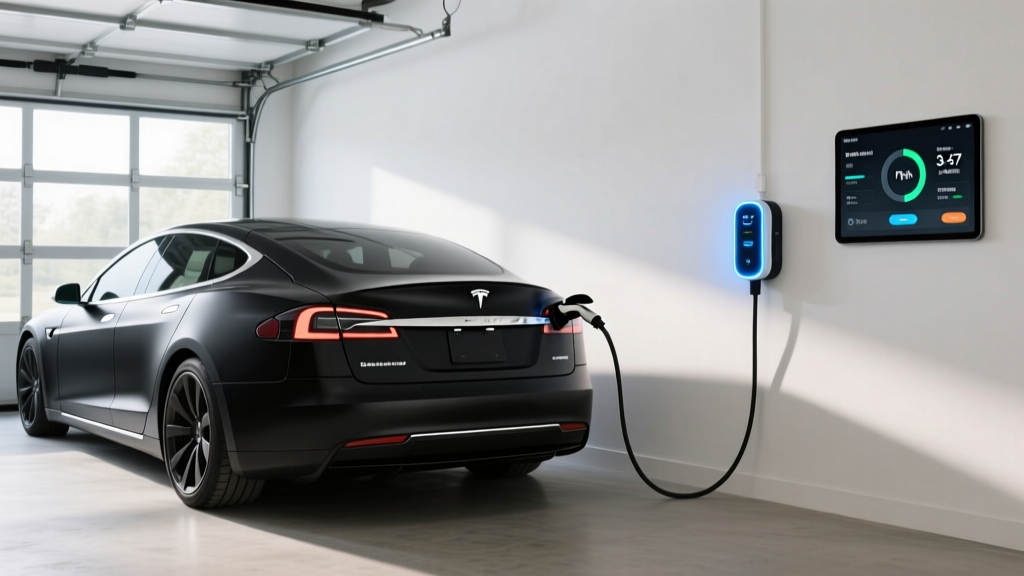
A Level 2 home charger is the single best upgrade for any Model S owner. Here's what it actually takes to install one in 2026.
Electrical Requirements
To hit the Model S's 11.5 kW maximum AC charge rate, you need a 240V / 60A dedicated circuit (which delivers 48A continuous, per NEC derating rules requiring circuits to operate at 80% of breaker rating). If your electrical panel can't support a 60A breaker, a 40A circuit (32A continuous, 7.7 kW) is the most common fallback and still adds ~200 miles overnight.
Panel Upgrade Reality
Many homes built before 2000 have 100A or 150A main panels. Adding a 60A EV circuit to a 100A panel that's already near capacity may require a panel upgrade to 200A — the most expensive line item in any EV charging install. Signs you may need an upgrade: your panel is already full (no open breaker slots), you run electric heat/oven/dryer simultaneously, or your electrician flags a load calculation that exceeds 80% of your panel's rating.
| Component | Low End | High End | Notes |
|---|---|---|---|
| Level 2 Charger (Hardware) | $350 | $700 | 48A smart charger, NACS connector, 18-24 ft cable |
| Electrician Labor (standard install) | $500 | $1,500 | Run from panel to garage/carport, ~10-40 ft |
| Permit & Inspection | $50 | $250 | Varies by municipality; some jurisdictions waive |
| Conduit, Wire, Breaker | $100 | $400 | 6 AWG copper for 60A; longer runs cost more |
| Panel Upgrade (if needed) | $1,500 | $4,000 | 100A → 200A service upgrade; not always required |
| Total (no panel upgrade) | $1,000 | $2,850 | Typical for most 200A-panel homes |
| Total (with panel upgrade) | $2,500 | $6,850 | Older homes with 100A service |
Safety and Code Considerations
- Dedicated circuit: NEC requires EV chargers to have their own dedicated breaker — no sharing with other outlets or appliances.
- GFCI protection: NEC 2020 and later require GFCI protection for all EV charging outlets. Hardwired chargers with built-in GFCI are increasingly common and avoid nuisance tripping.
- Outdoor rating: If your charger is mounted outside (carport, driveway), it must be rated NEMA 4 or higher for weather resistance. All chargers recommended below carry outdoor ratings.
- Permit required: Most jurisdictions require an electrical permit for new 240V circuits. Skipping this risks insurance denial if a fire originates from unpermitted work.
Connector Compatibility: NACS, CCS, and the Adapter Landscape
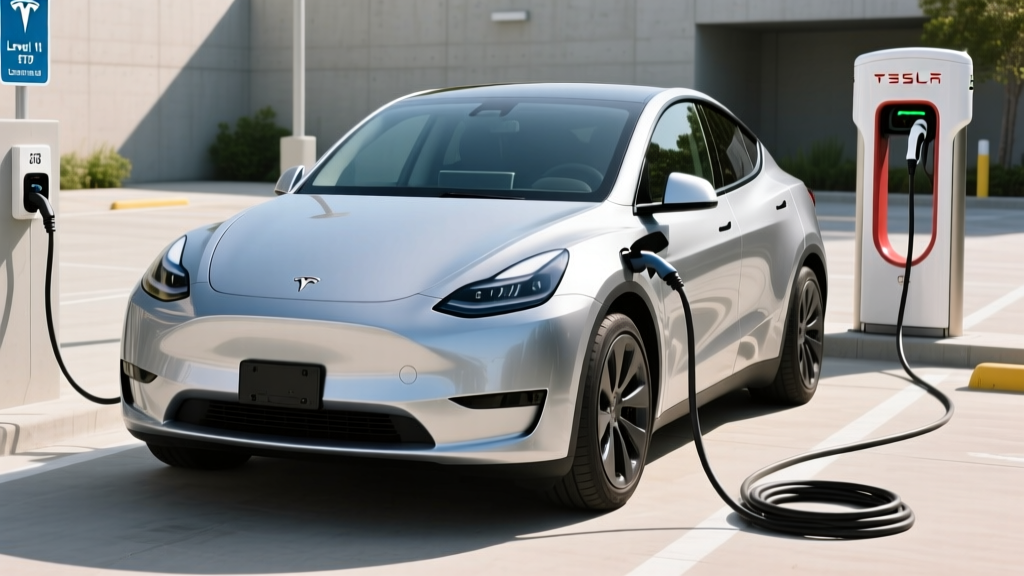
The 2020 Model S Long Range Plus was built with Tesla's proprietary connector — now formally standardized as NACS (North American Charging Standard, SAE J3400). In 2026, NACS is the dominant connector in North America, adopted by Ford, GM, Rivian, Hyundai, and most major automakers. This is excellent news for Model S owners: your car plugs natively into every Tesla Supercharger and every new NACS-equipped public station without an adapter.
| Connector | Used By | Model S Compatibility | Adapter Needed? |
|---|---|---|---|
| NACS (Tesla) | Tesla, Ford, GM, Rivian, Hyundai, Volvo, most 2025+ EVs | Native — direct plug | No |
| CCS1 | Legacy Electrify America, older non-Tesla stations | Via Tesla CCS Adapter | Yes — Tesla CCS1-to-NACS adapter (~$175-250) |
| CHAdeMO | Nissan Leaf, Mitsubishi (largely discontinued) | Via third-party adapter | Yes — Setec CHAdeMO-to-Tesla (~$350+); rare use case |
| J1772 (Level 2 AC) | All non-Tesla public Level 2 stations | Via included J1772 adapter | Yes — Tesla includes one; replacements ~$50-95 |
Practical recommendation: Buy the Tesla CCS1 adapter and keep it in your frunk. Electrify America and some regional networks still operate CCS1-only stalls, and the adapter unlocks those stations at up to ~150 kW for your Model S.
Cost to Charge: Per-Mile Economics vs. Gasoline
One of the strongest ownership arguments for the Model S Long Range Plus is fuel cost. At 28 kWh/100 miles (its EPA-rated efficiency), here's what you'll actually spend depending on where and when you charge.
| Scenario | Rate ($/kWh) | Cost Per 100 Miles | Cost Per Mile | Annual Cost (12,000 mi) |
|---|---|---|---|---|
| Home — Off-Peak Utility Rate | $0.08-0.12 | $2.24-3.36 | $0.02-0.03 | $269-403 |
| Home — Standard Residential Avg | $0.16 | $4.48 | $0.045 | $538 |
| Public Level 2 (ChargePoint, etc.) | $0.25-0.39 | $7.00-10.92 | $0.07-0.11 | $840-1,310 |
| Tesla Supercharger (V3) | $0.28-0.42 | $7.84-11.76 | $0.08-0.12 | $941-1,411 |
| Electrify America DC Fast | $0.36-0.52 | $10.08-14.56 | $0.10-0.15 | $1,210-1,747 |
Gas comparison: A comparable luxury sedan averaging 25 MPG combined at $3.40/gallon costs $0.136/mile or $1,632/year for 12,000 miles. Even exclusive Supercharger use undercuts gasoline. Home charging at off-peak rates cuts fuel cost by roughly 80%.
For the most current electricity rates in your area, check the U.S. Energy Information Administration's state-by-state averages.
Recommended Home Chargers for the 2020 Model S Long Range Plus
Since your car's onboard charger peaks at 11.5 kW (48A), the chargers below are selected to match that capability. All feature NACS connectors (native plug for your Model S), Wi-Fi connectivity, and outdoor ratings.
Tesla Wall Connector (Gen 3)
- Power Output: Up to 11.5 kW (48A) — matches your Model S perfectly
- Connector: NACS (native Tesla, no adapter)
- Cable Length: 24 ft
- Smart Features: Wi-Fi updates, load sharing (pair two units on one circuit), Tesla app integration, power-sharing between vehicles
- Outdoor Rating: NEMA 4 (fully weatherproof)
- Price: ~$475 (direct from Tesla)
- Verdict: Best overall value for any Tesla. Seamless integration, cleanest install, and the 24-ft cable reaches most garage configurations.
ChargePoint Home Flex (NACS version)
- Power Output: Up to 12 kW (50A) — adjustable down to match any circuit
- Connector: NACS (2025+ models) or J1772 with adapter
- Cable Length: 23 ft
- Smart Features: Alexa integration, detailed ChargePoint app with energy tracking, scheduled charging, works with utility demand-response programs
- Outdoor Rating: NEMA 4
- Price: ~$599-699
- Verdict: Best if you also own or plan to own a non-Tesla EV. The adjustable amperage (16A-50A) is ideal for homes with limited panel capacity.
Emporia Vue Smart EV Charger
- Power Output: Up to 11.5 kW (48A)
- Connector: NACS or J1772 options available
- Cable Length: 24 ft
- Smart Features: Pairs with Emporia Vue home energy monitor for whole-home load tracking, solar integration, time-of-use scheduling
- Outdoor Rating: NEMA 4
- Price: ~$399-449
- Verdict: Best budget smart charger. The energy-monitoring integration is valuable for solar owners who want to charge only when panels are producing.
Public Charging and Road Trip Strategy
The 2020 Model S Long Range Plus accesses Tesla's Supercharger network natively — over 6,500 stations and 60,000+ stalls across North America as of early 2026. With a 402-mile EPA range, most road-trip legs require only a single 15-20 minute stop to add 150-200 miles, thanks to the car's 200 kW peak DC charge rate on V3 Superchargers.
Charging curve reality: Your Model S will peak near 200 kW only between roughly 10-30% state of charge. Above 50%, the rate tapers to ~100 kW, and above 80% it drops further to ~40-50 kW. This is normal lithium-ion behavior — the battery management system protects cell health by reducing current as voltage rises. For road trips, plan stops at 10-80% rather than trying to fill to 100%; the last 20% can take as long as the first 70%.
Non-Tesla DC fast charging: With the Tesla CCS1 adapter, your Model S can use Electrify America, EVgo, and other CCS networks. Charge rates will vary by station but typically peak at 150-200 kW where the station supports it. Use PlugShare or A Better Routeplanner to identify CCS stations along your route before departing.
Frequently Asked Questions
How much does it cost to install a home EV charger for a 2020 Tesla Model S?
Expect $1,000-$2,850 for a standard 60A/240V installation in a home that already has a 200A electrical panel. If your home has an older 100A panel that needs upgrading, add $1,500-$4,000 for the panel work, bringing total cost to $2,500-$6,850. The Tesla Wall Connector itself costs ~$475.
How fast will each charging level add range to my Model S Long Range Plus?
Level 1 (120V outlet): roughly 3-4 miles per hour. Level 2 at 48A/240V (the car's maximum): about 32-34 miles per hour, or a full overnight charge. DC fast charging on a V3 Supercharger: up to 200 kW peak, adding roughly 200 miles in 15-20 minutes at low state of charge.
Which connector and charger is compatible with my 2020 Model S?
Your car uses the NACS connector natively. This plugs directly into all Tesla Superchargers and all new NACS-equipped public stations. For older CCS1 public DC fast chargers, you'll need the Tesla CCS1 adapter (~$175-250). For non-Tesla Level 2 public chargers, use the J1772-to-Tesla adapter that came with your car (replacements available from Tesla for ~$50-95).
How much does charging cost per mile compared to gasoline?
At the U.S. residential average of ~$0.16/kWh, charging your Model S Long Range Plus costs about $0.045/mile — roughly one-third the cost of a 25 MPG gas car at $3.40/gallon ($0.136/mile). Off-peak home charging can drop to $0.02-0.03/mile. Even exclusive Supercharger use at $0.35/kWh averages $0.10/mile, still cheaper than gas.
What electrical upgrades might I need before installing a home charger?
The most common upgrade is a panel service increase from 100A to 200A, required when your existing panel can't handle the additional 60A load alongside your other appliances. Your electrician will perform a NEC Article 220 load calculation to determine this. Other potential upgrades: adding a sub-panel if your main panel is full, replacing outdated wiring (aluminum or knob-and-tube in very old homes), or upgrading your utility meter socket. Always get a licensed electrician's assessment before purchasing equipment.
Does the 2020 Model S Long Range Plus support the $7,500 federal EV tax credit?
No — the federal §30D new-vehicle tax credit applies only to new EV purchases, and the Model S has not been eligible for several years due to Tesla's manufacturer cap being exceeded long before the Inflation Reduction Act restructured the rules. However, if you purchased this car used from a dealer, you may have qualified for the up to $4,000 used EV credit (30% of sale price, capped at $4,000) if the sale price was $25,000 or less and you met income requirements. Check current IRS used-EV credit rules for eligibility details.
Is the 2020 Model S Long Range Plus's Autopilot self-driving?
No. Tesla's Autopilot and Full Self-Driving (Supervised) are SAE Level 2 driver-assistance systems. You must keep your hands on the wheel and eyes on the road at all times. The car can steer, accelerate, and brake within its lane and can navigate highway on-ramps and exits, but it cannot handle all driving scenarios without human oversight. Only Level 4 systems like Waymo's robotaxi service operate without a human driver, and those are limited to specific geofenced areas.
Bottom Line: Charging a 2020 Model S Long Range Plus in 2026
The 2020 Tesla Model S Long Range Plus remains a compelling used EV — 402 EPA miles, a 3.7-second 0-60, and native access to the largest fast-charging network in North America. Pairing it with a $475 Tesla Wall Connector on a 60A home circuit gives you a full charge every morning for roughly $0.03-0.05 per mile. Budget $1,000-$2,850 for installation if your panel can handle it; plan for up to $6,850 if you need a panel upgrade. Buy the CCS1 adapter for non-Tesla DC fast charging, and you'll have access to virtually every public charger in the country. For a car that still out-ranges and out-accelerates most new EVs, the charging infrastructure in 2026 has never been better suited to support it.