The 2019 Nissan Leaf S occupies a specific niche in the used EV market: an affordable, practical commuter car with a 40 kWh battery pack that carries an EPA-estimated 150 miles of range. If you own one or are considering picking one up on the used market, understanding how to charge it efficiently — and what that actually costs — is the difference between a seamless daily driver and a frustrating ownership experience.
This guide breaks down the real-world range you can expect from the 2019 Leaf S, maps out every charging level with exact speeds, walks through home Level 2 installation costs (including the panel-upgrade scenarios that catch buyers off guard), and compares your per-mile electricity cost against gasoline. All figures reflect current 2026 electricity rates and equipment pricing.
Real-World Range: Beyond the 150-Mile EPA Sticker
The 2019 Nissan Leaf S uses a 40 kWh lithium-ion battery pack (NMC chemistry), of which approximately 38 kWh is usable capacity. The EPA rates it at 150 miles combined, with an efficiency rating of 111 MPGe (30 kWh/100 miles).
EPA Combined: 150 miles
Highway (70 mph, moderate temps): ~120–135 miles
City/stop-and-go with regen: ~155–165 miles
Cold weather (below 32°F, heater on): ~95–115 miles
Hot weather (above 95°F, A/C on): ~130–140 miles
The Leaf S lacks a liquid thermal management system for its battery — it relies on passive air cooling. This means two things: faster degradation in hot climates over time, and slower DC fast charging speeds when the battery is cold or has been heavily used. In winter, expect a 25–35% range reduction because the resistive heater draws directly from the traction battery (unlike a heat pump, which the Leaf does not have).
Charging Levels Explained: Speeds, Times, and What Each Adds
Understanding the difference between kW (power — how fast energy flows) and kWh (energy — how much the battery holds) is essential. Your 2019 Leaf S has a 40 kWh battery. Charging at 6.6 kW (Level 2) means you're adding 6.6 kWh per hour — so a full charge takes roughly 6 hours from empty.
| Level | Voltage / Power | Miles Added per Hour | 0–100% Time (40 kWh) | Best Use Case |
|---|---|---|---|---|
| Level 1 | 120V / 1.4 kW | ~4–5 miles/hr | ~28–30 hours | Overnight top-up, emergencies |
| Level 2 | 240V / 6.6 kW (Leaf's onboard charger max) | ~22–25 miles/hr | ~6 hours | Daily home charging |
| DC Fast (CHAdeMO) | Up to 50 kW peak | ~90–120 miles/hr (to 80%) | 10–80% in ~40–50 min | Road trips, quick top-ups |
The 2019 Leaf S accepts a maximum of 6.6 kW on Level 2 AC charging (via its J1772 inlet) and up to 50 kW on DC fast charging via its CHAdeMO port. Even if you plug into a 150 kW or 350 kW DC fast charger, the Leaf will only draw what its hardware allows — roughly 40–50 kW at peak, tapering significantly above 80% state of charge.
Connector Compatibility: CHAdeMO in a NACS/CCS World
The 2019 Nissan Leaf uses two connectors:
- J1772 for Level 1 and Level 2 AC charging (the universal standard for all non-Tesla EVs in North America)
- CHAdeMO for DC fast charging
This matters in 2026 because the North American charging landscape has shifted heavily toward NACS (Tesla's connector, now adopted by Ford, GM, Hyundai, and most major automakers) and CCS1. CHAdeMO infrastructure is shrinking — Electrify America stations are CCS-only, and Tesla Superchargers are NACS-only.
| Connector | Leaf S Port | Network Availability | Adapter Needed? |
|---|---|---|---|
| J1772 (AC) | ✅ Native | Universal — all public Level 2 stations | No |
| CHAdeMO (DC) | ✅ Native | Declining — some EVgo, older ChargePoint stations | No |
| CCS1 (DC) | ❌ Not compatible | Widespread — Electrify America, most networks | CHAdeMO-to-CCS adapters exist but are rare and expensive (~$400+) |
| NACS (Tesla) | ❌ Not compatible | Tesla Supercharger network (open to NACS-equipped EVs) | No CHAdeMO-to-NACS adapter currently available |
Bottom line: Your Leaf S will charge fine at home and at any public Level 2 station. For DC fast charging, you're limited to the shrinking CHAdeMO network. Plan road trips around EVgo stations and older ChargePoint locations that still carry CHAdeMO connectors.
Home Level 2 Installation: Electrical Requirements and Costs
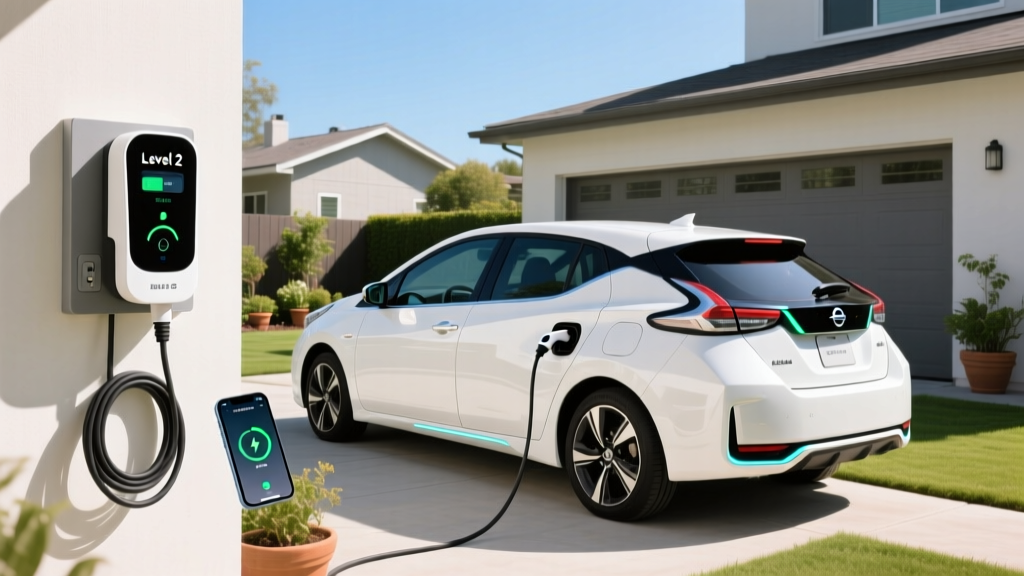
Installing a Level 2 home charger is the single biggest upgrade a Leaf S owner can make. You'll go from adding 4 miles per hour (Level 1) to 22+ miles per hour — enough to fully replenish the 40 kWh battery overnight.
Electrical Requirements
The 2019 Leaf S's onboard charger maxes out at 6.6 kW, which means a 240V circuit rated for at least 30 amps is sufficient (6.6 kW ÷ 240V = 27.5A). However, most electricians recommend installing a 40A or 50A circuit with a NEMA 14-50 outlet or hardwired connection. This future-proofs your setup for a next EV with a larger onboard charger.
What your electrician will evaluate:
- Panel capacity: Does your electrical panel have room for a new double-pole breaker? A 200-amp panel typically handles a 40A EV circuit without issue. A 100-amp panel in an older home may require an upgrade.
- Wire run distance: Longer runs from panel to garage/driveway require thicker (more expensive) copper wire — typically 6 AWG for 40A or 8 AWG for 30A.
- Permit requirements: Most jurisdictions require an electrical permit for a new 240V circuit. Your electrician typically pulls this.
| Component | Simple Install (near panel) | Complex Install (long run / conduit) | Panel Upgrade Required |
|---|---|---|---|
| Level 2 charger unit | $350–$700 | $350–$700 | $350–$700 |
| Electrician labor + wire | $400–$800 | $1,000–$2,500 | $1,000–$2,500 |
| Permit | $50–$150 | $50–$200 | $100–$300 |
| Panel upgrade (100A → 200A) | N/A | N/A | $1,500–$3,500 |
| Total | $800–$1,650 | $1,400–$3,400 | $2,950–$7,000 |
If you're buying a used Leaf S as a budget EV, that panel upgrade cost can be a nasty surprise. Get an electrician's quote before purchasing the vehicle if your home has an older 100-amp panel. Some utilities offer rebates of $250–$500 for Level 2 installation — check with your local provider.
Charging Cost per Mile: Leaf S vs. a Gasoline Car
The 2019 Leaf S consumes roughly 30 kWh per 100 miles (its EPA-rated efficiency). Your actual cost per mile depends entirely on your electricity rate.
| Scenario | Rate / Price | Cost per Mile (Leaf S) | Cost per Mile (Gas, 30 MPG) |
|---|---|---|---|
| Home charging (off-peak utility rate) | $0.09/kWh | $0.027 | $0.117 (at $3.50/gal) |
| Home charging (national avg) | $0.16/kWh | $0.048 | $0.117 |
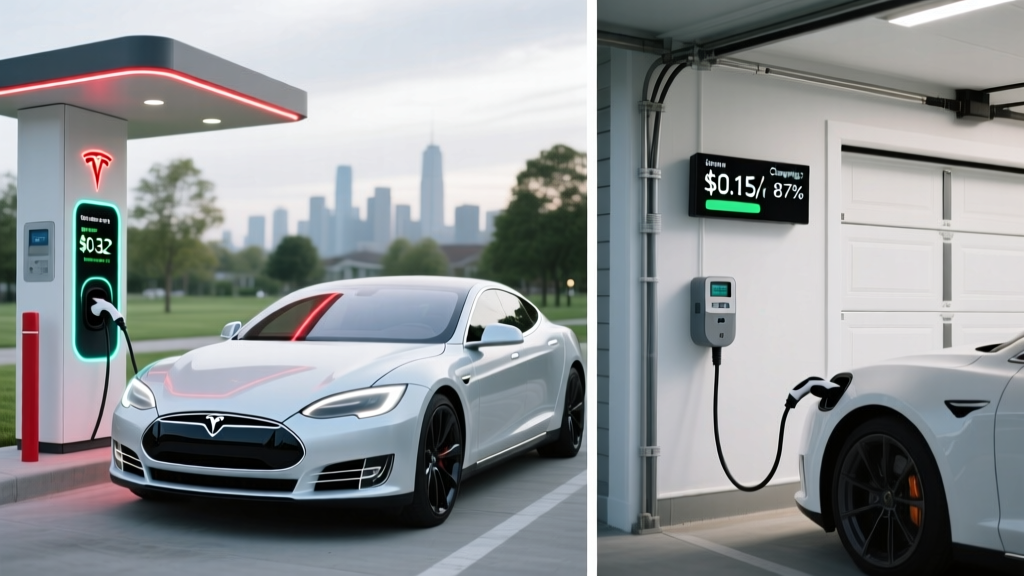
| Public Level 2 (ChargePoint, etc.) | $0.25/kWh | $0.075 | $0.117 |
| DC Fast Charging (EVgo, etc.) | $0.40/kWh | $0.120 | $0.117 |
At home on an off-peak rate, the Leaf S costs roughly 77% less per mile than a 30 MPG gas car. Even on the national average residential rate, you're saving about 60%. However, exclusive reliance on DC fast charging essentially eliminates the cost advantage — a scenario to avoid if economics are your primary motivation for going electric.
For a driver covering 12,000 miles per year, home charging at $0.16/kWh costs approximately $576 annually. The equivalent gas car at 30 MPG and $3.50/gallon costs $1,400. That's an $824 annual fuel savings.
Recommended Level 2 Chargers for the 2019 Leaf S
Since the Leaf's onboard charger caps at 6.6 kW, you don't need a 48-amp charger — but buying one gives you headroom for a future EV. Here are three solid options across price points:
Power: 48A / 11.5 kW (240V)
Connector: J1772 (NACS adapter available)
Cable: 24 ft
Smart features: Wi-Fi, app scheduling, energy monitoring, load management
Price: ~$399
Why for Leaf S: Affordable, smart scheduling lets you charge during off-peak utility windows automatically. Overkill on amperage, but future-proof.
Power: Up to 50A / 12 kW (240V, adjustable)
Connector: J1772 (NACS version also available)
Cable: 23 ft
Smart features: Wi-Fi, Alexa integration, detailed app with charging history, utility demand-response programs
Price: ~$599
Why for Leaf S: The adjustable amperage lets you dial it down to 30A if your panel is tight, then increase later.
Power: Up to 48A / 11.5 kW (240V)
Connector: NACS native — requires a $50–$100 NACS-to-J1772 adapter for the Leaf
Cable: 24 ft
Smart features: Wi-Fi, power sharing between two units, OTA updates
Price: ~$420 (charger) + ~$80 (adapter)
Why for Leaf S: Excellent build quality and sleek design. The adapter adds a step but works reliably.
Safety, Code, and Installation Best Practices
A Level 2 charger installation is a permanent electrical modification to your home. Here's what matters from a safety and code perspective:
- Dedicated circuit: Your EV charger must be on its own dedicated double-pole breaker — never shared with other appliances. The NEC (National Electrical Code) requires the continuous load to be no more than 80% of the breaker rating (a 40A breaker supports a 32A continuous draw).
- GFCI protection: NEC 2020 and later require GFCI protection for all EV charging outlets in garages and outdoor locations. Hardwired chargers may be exempt in some jurisdictions — ask your electrician.
- Outdoor rating: If your charger is mounted outside, it must carry a NEMA 4 (weatherproof) rating. All recommended chargers above meet this standard.
- Permit and inspection: Skipping the permit saves $50–$200 upfront but can void your homeowner's insurance coverage for electrical fires. Always permit the work.
- Cable management: A 24-foot cable is heavy. Plan for a wall-mounted cable organizer to prevent tripping hazards and connector damage.
Frequently Asked Questions
How much does it cost to install a home EV charger for my 2019 Leaf S?
For a straightforward installation with a nearby 200-amp panel, expect $800–$1,650 total (charger + electrician + permit). If your panel needs upgrading from 100A to 200A, the total can reach $3,000–$7,000. Always get a quote from a licensed electrician before committing.
How fast will each charging level add range to the Leaf S?
Level 1 (120V) adds about 4–5 miles per hour. Level 2 (240V, 6.6 kW) adds about 22–25 miles per hour — enough for a full overnight charge. DC fast charging (CHAdeMO, 50 kW peak) can take you from 10% to 80% in roughly 40–50 minutes, adding around 90–120 miles in that window.
Which connector and charger is compatible with the 2019 Nissan Leaf S?
For AC charging (Level 1 and Level 2), the Leaf S uses the J1772 connector — universal across all non-Tesla public Level 2 stations and all home Level 2 chargers. For DC fast charging, it uses CHAdeMO, which is available at some EVgo stations and older public chargers but is increasingly rare on new installations.
How much does charging cost per mile vs. gas?
Charging at home on the national average rate ($0.16/kWh), the Leaf S costs about $0.048 per mile — roughly 60% cheaper than a 30 MPG gas car at $3.50/gallon ($0.117/mile). Off-peak home rates can drop that to under $0.03/mile. Public DC fast charging at $0.40/kWh roughly equals gas costs.
What electrical upgrades might I need for a Level 2 charger?
If your home has a 200-amp electrical panel with available breaker slots, you likely need nothing beyond the dedicated circuit. If you have a 100-amp panel (common in homes built before the 1990s), you may need a panel upgrade to 200A — a $1,500–$3,500 job. Some homes also need a new wire run from the panel to the garage or driveway, which adds labor and materials cost.
Can I use a Tesla Supercharger with my 2019 Leaf S?
No. Tesla Superchargers use the NACS connector, and there is currently no commercially available CHAdeMO-to-NACS adapter for DC fast charging. You can use a NACS-to-J1772 adapter for Level 2 AC charging at Tesla Destination Chargers, but not for Supercharging.
Does the 2019 Leaf S battery degrade over time?
Yes — all lithium-ion batteries degrade. Nissan warranties the Leaf's battery for 8 years/100,000 miles against dropping below 66% of original capacity (as indicated by the dashboard capacity bars). Real-world data from Leaf owners shows typical degradation of 10–15% over the first 5 years in moderate climates. Hot climates and frequent DC fast charging accelerate this. The passive air-cooling system is a known limitation compared to liquid-cooled packs.