The 2019 Tesla Model 3 Mid Range (sometimes called Mid Range Battery) occupies a sweet spot on the used EV market in 2026. With a 75 kWh battery pack (approximately 72 kWh usable), an EPA-estimated 264 miles of range when new, and Tesla's native NACS connector, it remains one of the most practical used electric vehicles available. But owning one means understanding exactly how to charge it — at home, on the road, and what it all costs.
This guide breaks down every charging scenario for the 2019 Model 3 Mid Range with exact numbers: charge speeds in kW, time-to-80% figures, home installation costs, and the real cost per mile versus a gasoline car. Whether you just bought one or are evaluating a listing, here's what you need to know.
2019 Tesla Model 3 Mid Range: Battery and Charging Specs at a Glance
Before plugging in anywhere, you need the baseline specs. The Mid Range variant sits between the Standard Range Plus (~50 kWh) and the Long Range (~75 kWh with different cell configuration). Tesla discontinued the Mid Range trim after 2019, so these figures apply specifically to that model year.
| Specification | Value |
|---|---|
| Battery Capacity (Total / Usable) | 75 kWh / ~72 kWh |
| Battery Chemistry | NMC (Nickel Manganese Cobalt) — 2170 cells |
| EPA Range (When New) | 264 miles |
| Expected Range in 2026 (~7-yr degradation) | ~235–250 miles (depending on SoH) |
| Max DC Fast Charge Rate | ~170 kW peak (V2 Supercharger compatible) |
| Max AC Level 2 Charge Rate | 11.5 kW (48A onboard charger) |
| Connector (North America) | NACS (native Tesla) |
| 10–80% DC Fast Charge Time | ~30–35 minutes (at V2 Supercharger) |
| 0–100% Level 2 Time (11.5 kW) | ~6.5–7 hours |
Charging Levels Explained: How Fast Will Each Add Range?
EV charging happens at three levels, each defined by voltage and power output (measured in kilowatts, or kW). The energy stored in your battery is measured in kilowatt-hours (kWh) — a fundamentally different unit. Think of kW as the speed of water flowing into a tank, and kWh as the size of the tank itself.
| Charging Level | Voltage | Power (kW) | Miles of Range Added Per Hour | Best For |
|---|---|---|---|---|
| Level 1 (Standard Outlet) | 120V | 1.0–1.4 kW | 3–5 miles/hr | Overnight top-ups, emergencies |
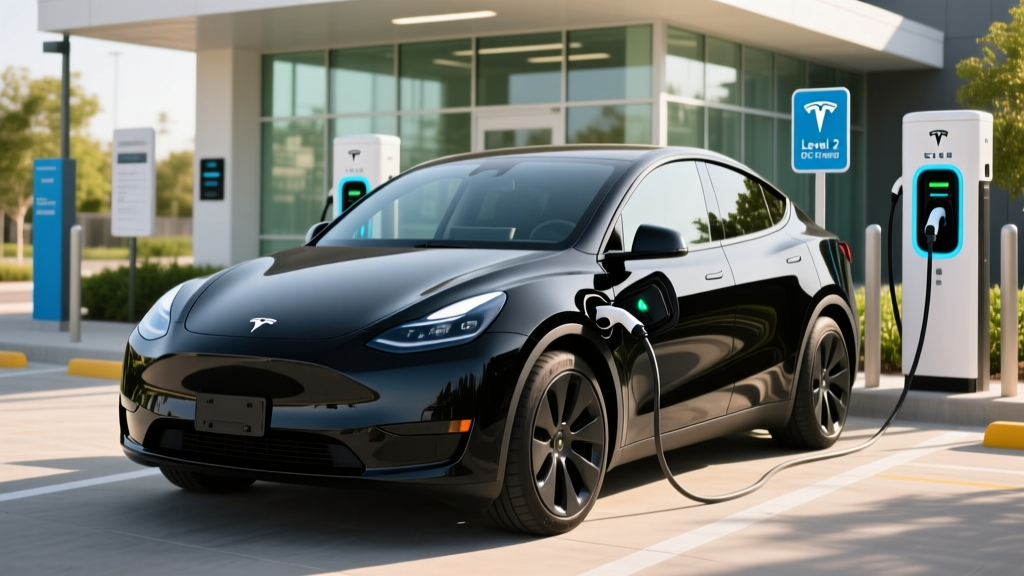
| Level 2 (Home/Public AC) | 240V | 7.2–11.5 kW | 25–44 miles/hr | Daily home charging, workplace |
| DC Fast Charging | 400V+ | 50–170 kW | 150–400+ miles/hr (peak) | Road trips, rapid top-ups |
Level 1: The Trickle
Plugging your Model 3 Mid Range into a standard 120V household outlet using Tesla's Mobile Connector delivers roughly 1.2 kW. That's about 4 miles of range per hour — or roughly 48 miles over a 12-hour night. It works for low-mileage drivers (under 30 miles/day) but is impractical as a primary strategy for a 75 kWh battery. A full 0–100% charge would take over 60 hours.
Level 2: The Daily Workhorse
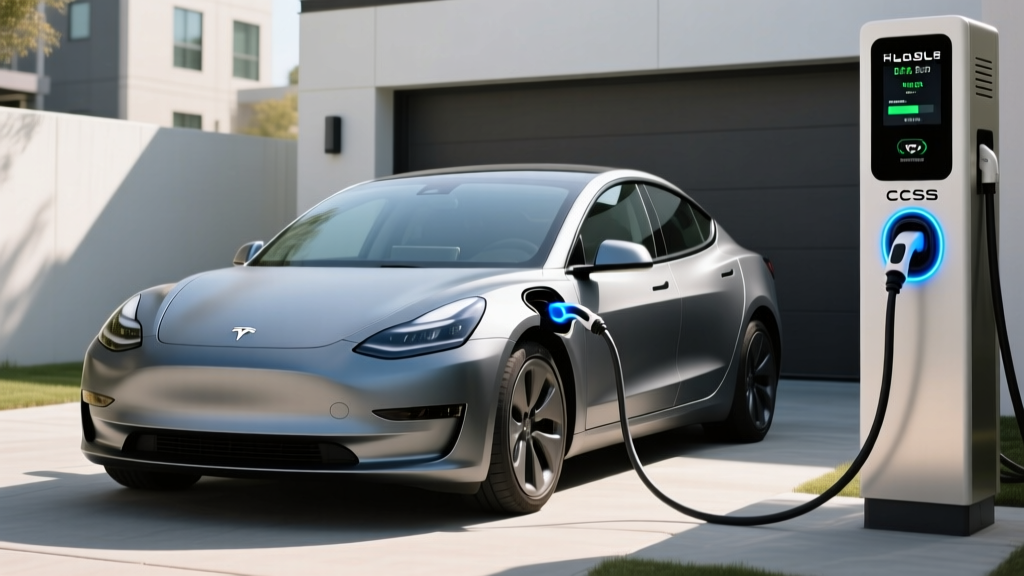
This is where most Model 3 owners live. A 240V Level 2 charger at 48 amps delivers up to 11.5 kW to the Mid Range's onboard charger. That adds roughly 44 miles of range per hour, meaning a 20–80% charge (about 43 usable kWh) takes roughly 3.5–4 hours. Install a Wall Connector at home and you'll wake up to a full battery every morning.
DC Fast Charging: Road-Trip Speed
The 2019 Model 3 Mid Range can accept up to ~170 kW at a Tesla V2 Supercharger (which maxes at 150 kW per stall) or at a V3 Supercharger (where it's limited by the car's onboard systems, not the charger). At a V2 stall, expect a 10–80% charge in roughly 30–35 minutes. The charge curve tapers significantly above 60% SoC — you'll pull peak power only between roughly 10–40% before it ramps down. This is why charging to 80% takes about the same time as charging from 80–100%.
Home Charger Installation: Electrical Requirements and Costs
Installing a Level 2 home charger for your Model 3 Mid Range requires a dedicated 240V circuit. Here's what that involves and what you should budget.
Electrical Requirements
The Tesla Wall Connector (or any Level 2 EVSE) at 48 amps requires a 60-amp dedicated circuit (the National Electrical Code requires circuits to be rated at 125% of continuous load, so 48A × 1.25 = 60A). You'll need:
- A 60-amp double-pole breaker in your electrical panel
- 6 AWG copper wire (or 4 AWG aluminum) from the panel to the charger location
- 240V service — standard in virtually all US homes (the same service your dryer or oven uses)
If you opt for a lower-amperage charger (e.g., 32A / 7.7 kW), a 40-amp circuit with 8 AWG wire suffices, which can reduce costs.
Do You Need a Panel Upgrade?
This is the cost variable that catches many homeowners off guard. If your home has a 100-amp main panel (common in homes built before the 1990s), adding a 60-amp EV circuit may exceed your panel's capacity. An electrician will perform a load calculation per NEC Article 220. If your panel can't handle it, you'll need a service upgrade to 200 amps — typically costing $1,500–$3,500 before the charger install even begins.
Homes with 200-amp panels (standard in most post-2000 construction) usually accommodate a 60-amp EV circuit without issue, provided existing loads (HVAC, electric range, dryer) don't already consume most of the capacity.
Installation Cost Breakdown
| Cost Component | Typical Range | Notes |
|---|---|---|
| EV Charger Equipment (Wall Connector or equivalent) | $400–$650 | Tesla Wall Connector: ~$475 (2026 price) |
| Electrician Labor (standard install, <50 ft run) | $600–$1,500 | Varies by region and run complexity |
| Electrical Permit | $50–$200 | Required in most jurisdictions |
| Panel Upgrade (if needed) | $1,500–$3,500 | 100A → 200A service upgrade |
| Total (no panel upgrade) | $1,050–$2,350 | Most common scenario for modern homes |
| Total (with panel upgrade) | $2,550–$5,850 | Older homes with 100A service |
Some utilities offer rebates of $200–$500 for Level 2 installation, and certain states provide additional incentives. Check with your local utility before scheduling work.
Connector Compatibility: NACS, CCS, and Adapters
The 2019 Tesla Model 3 Mid Range comes with a native NACS (North American Charging Standard) port — the Tesla connector. In 2019, this was proprietary; in 2026, NACS has become the dominant standard in North America, adopted by Ford, GM, Rivian, Volvo, and most major automakers.
| Charging Network / Connector | Compatible with 2019 Model 3 Mid Range? | Adapter Needed? |
|---|---|---|
| Tesla Supercharger (NACS) | Yes — native | None |
| Tesla Destination Charger (NACS/J1772) | Yes — native | None |
| Electrify America / EVgo (CCS1) | Yes, with adapter | Tesla CCS Adapter (~$175–$250) |
| Public Level 2 (J1772) | Yes, with adapter | Tesla J1772 Adapter (included with car, or ~$95 replacement) |
| CHAdeMO (Nissan Leaf standard) | No | No reliable adapter exists; avoid |
The Tesla CCS Adapter unlocks Electrify America, EVgo, and other CCS-equipped networks — essential for road trips outside Supercharger coverage. Tesla began shipping these adapters to owners in 2023, and they're readily available through Tesla's shop or third-party retailers as of 2026. Maximum charge speed through the CCS adapter is still limited by the car's ~170 kW peak acceptance rate.
Cost to Charge: Per-Mile Economics vs. Gasoline
One of the strongest ownership arguments for the Model 3 Mid Range is fuel cost savings. Here's how the numbers break down across common charging scenarios.
| Charging Scenario | Avg. Cost per kWh | Cost for Full 72 kWh Usable Charge | Cost per Mile (est. 240 mi) |
|---|---|---|---|
| Home (off-peak utility rate) | $0.08–$0.14 | $5.76–$10.08 | $0.024–$0.042 |
| Home (avg. US residential rate, 2026) | $0.16 | $11.52 | $0.048 |
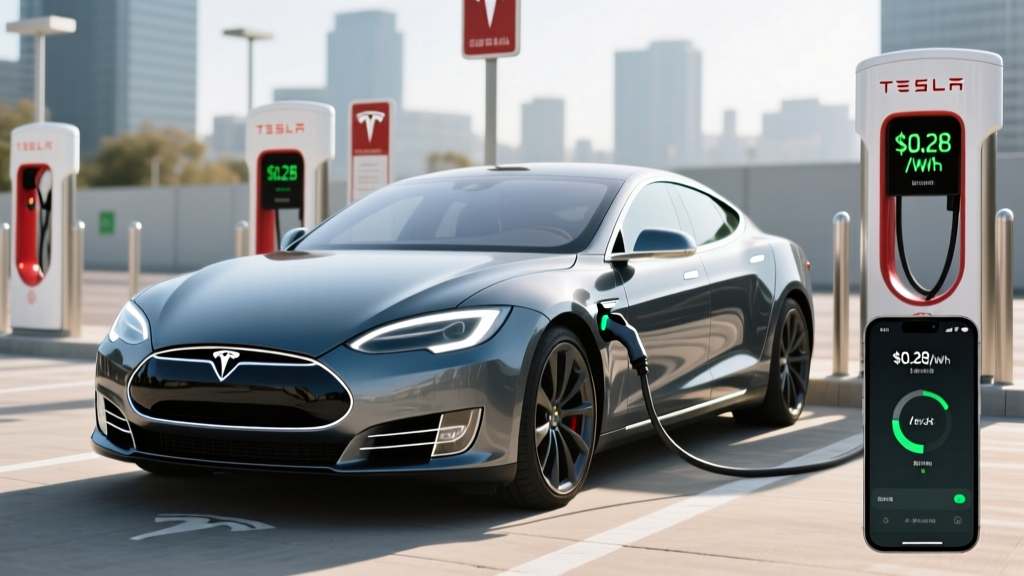
| Tesla Supercharger (avg. 2026) | $0.28–$0.36 | $20.16–$25.92 | $0.084–$0.108 |
| Electrify America / public DCFC | $0.32–$0.48 | $23.04–$34.56 | $0.096–$0.144 |
| Gasoline comparison (30 MPG avg, $3.40/gal) | — | $27.20 (for 240 mi) | $0.113 |
At home on an average residential rate, the 2019 Model 3 Mid Range costs roughly $0.05 per mile to "fuel" — less than half the cost of a 30 MPG gasoline car at $3.40/gallon. Even on Tesla Superchargers, you're paying roughly $0.09–$0.11 per mile, which is competitive with gas. The savings compound: a driver covering 12,000 miles/year saves roughly $700–$900 annually by charging primarily at home versus fueling a comparable gas sedan.
The Model 3 Mid Range achieves approximately 126 MPGe combined (source: fueleconomy.gov), translating to roughly 28 kWh per 100 miles — an efficiency figure that holds up well against newer EVs.
Recommended Home Chargers for the 2019 Model 3 Mid Range
Since the Model 3 uses NACS natively, you can choose between Tesla's own charger and third-party NACS-equipped units (increasingly available in 2026 as the standard has proliferated).
Tesla Wall Connector (Gen 3)
- Power Output: Up to 11.5 kW (48A)
- Connector: NACS (native)
- Cable Length: 24 ft
- Smart Features: Wi-Fi for OTA updates, load sharing with multiple units, power-level adjustment via app
- Price: ~$475
- Verdict: The obvious default. Clean integration, reliable, and matches the car's 11.5 kW onboard max. No adapter needed.
ChargePoint Home Flex (NACS version)
- Power Output: Up to 12 kW (50A, adjustable down)
- Connector: NACS (2025+ models) or J1772 with adapter
- Cable Length: 23 ft
- Smart Features: App scheduling, Alexa integration, energy tracking, flexible amperage settings
- Price: ~$550–$650
- Verdict: Excellent if you want detailed energy monitoring or plan to own non-Tesla EVs. Slightly higher cost.
Emporia Vue EV Charger
- Power Output: Up to 11.5 kW (48A)
- Connector: NACS (2025+ models) or J1772
- Cable Length: 24 ft
- Smart Features: Whole-home energy monitoring integration, solar-aware charging, scheduling
- Price: ~$400–$500
- Verdict: Budget-friendly with strong smart features. Ideal if you have or plan to add solar panels.
All three chargers max out at or near the Model 3 Mid Range's 11.5 kW onboard charger limit. There's no benefit to installing a higher-power AC charger for this specific vehicle — save the money or invest in a longer cable run.
Safety, Electrical Code, and Installation Best Practices
A Level 2 charger is a continuous high-power load — essentially running a second electric oven for hours at a time. Safety isn't optional.
- Dedicated Circuit: Your EV charger must be on its own dedicated breaker — never shared with other appliances. A 60A breaker for 48A charging is code-required.
- GFCI Protection: The 2020 NEC (and subsequent editions adopted by most states by 2026) requires GFCI protection for outdoor EV outlets. Hardwired Wall Connectors typically have built-in ground-fault protection; plug-in units require a GFCI breaker if installed outdoors.
- Outdoor Rating: If your charger is mounted outside (driveway, exterior wall), ensure the EVSE is rated NEMA 4 or NEMA 4X for weather resistance. The Tesla Wall Connector is rated for indoor and outdoor use.
- Wire Gauge: Undersized wire causes voltage drop, heat buildup, and fire risk. Your electrician should pull 6 AWG copper for a 60A circuit — do not allow shortcuts with smaller gauge wire regardless of run length.
- Permit and Inspection: Most jurisdictions require a permit for new 240V circuits. The inspection ensures the work meets code and protects your home insurance coverage. A licensed electrician will handle this — DIY 240V work without a permit can void insurance claims in the event of an electrical fire.
Public Charging: Superchargers and Beyond
The 2019 Model 3 Mid Range benefits from the most mature fast-charging network in North America. Here's what to expect on the road.
Tesla Supercharger Network
With native NACS, every Supercharger stall in North America is plug-and-play. The Mid Range's ~170 kW peak acceptance rate means:
- V2 Supercharger (150 kW max): You'll use the stall's full capacity. 10–80% in ~30–35 minutes.
- V3 Supercharger (250 kW max): The car caps at ~170 kW. Still fast — 10–80% in ~28–32 minutes — but you won't see the 250 kW that newer vehicles pull.
- V4 Supercharger (newer installations): Compatible via NACS. Speeds similar to V3 for this vehicle.
Preconditioning matters: when you navigate to a Supercharger in the Tesla app or in-car navigation, the car automatically warms the battery to optimal charging temperature. If you arrive at a Supercharger without preconditioning (e.g., navigating manually or in cold weather without nav routing), expect 5–10 extra minutes as the battery heats up before reaching peak charge rate.
Non-Tesla DC Fast Chargers
With the Tesla CCS Adapter, you can use Electrify America, EVgo, ChargePoint DCFC, and other CCS1 networks. Charge speeds will be similar (limited by the car's ~170 kW ceiling), but expect variability in stall reliability and payment friction compared to Superchargers. As of 2026, most networks support plug-and-charge for Teslas, but app-based payment remains more reliable.
Frequently Asked Questions
How much does it cost to install a home EV charger for the 2019 Model 3 Mid Range?
Expect $1,050–$2,350 for a standard installation (equipment, electrician labor, permit) in a home with a 200-amp panel. If your home requires a panel upgrade from 100A to 200A, add $1,500–$3,500. The Tesla Wall Connector costs ~$475, with electrician labor typically $600–$1,500 for a straightforward run under 50 feet.
How fast will each charging level add range to the Mid Range?
Level 1 (120V): 3–5 miles per hour. Level 2 (240V, 48A): ~44 miles per hour. DC Fast Charging (150–170 kW): up to ~400 miles per hour at peak, but sustained average during a 10–80% session is closer to 200–250 miles per hour due to charge-curve tapering above 60% SoC.
Which chargers and connectors are compatible with my 2019 Model 3 Mid Range?
Your car has a native NACS (Tesla) connector. It works with all Tesla Superchargers and Destination Chargers without adapters. For CCS1 networks (Electrify America, EVgo), you need the Tesla CCS Adapter (~$175–$250). For public Level 2 J1772 stations, use the J1772 adapter that came with the car (or buy a replacement for ~$95). CHAdeMO is not compatible.
How much does charging cost per mile versus gasoline?
Charging at home on an average US residential rate (~$0.16/kWh in 2026), the Model 3 Mid Range costs about $0.05 per mile. A comparable 30 MPG gas car at $3.40/gallon costs ~$0.11 per mile — more than double. Even on public DC fast chargers ($0.28–$0.48/kWh), you're paying $0.08–$0.14 per mile, still competitive with gasoline.
What electrical upgrades might my home need for a Level 2 charger?
The most common upgrade is a panel service increase from 100A to 200A ($1,500–$3,500) if your existing panel can't handle a new 60A dedicated circuit. Most homes built after 2000 with 200A panels won't need this. Your electrician will perform an NEC Article 220 load calculation to determine your specific situation. If a panel upgrade is cost-prohibitive, a 32A/40A charger is a viable alternative that still provides ~28 miles of range per hour.
Will my 2019 Model 3 Mid Range battery degrade from frequent DC fast charging?
NMC batteries tolerate DC fast charging reasonably well, but exclusive reliance on high-power charging accelerates degradation slightly. Tesla's battery management system actively manages thermals and charge rates to minimize harm. Data from high-mileage Model 3s suggests 5–10% total capacity loss over 7 years with mixed charging habits. Best practice: charge at home on Level 2 for daily use, reserve DC fast charging for road trips, and set your daily charge limit to 80–90% rather than 100% (Tesla battery care guidelines).
The 2019 Model 3 Mid Range remains a compelling used EV in 2026 — its NACS-native charging, strong efficiency, and access to the Supercharger network make ownership straightforward. Budget $1,000–$2,500 for home charging infrastructure, pick up a CCS adapter for road-trip flexibility, and you'll spend roughly half per mile on fuel compared to a gas equivalent.