Understanding the 2019 Tesla Model 3 Long Range Battery and Charging Architecture
The 2019 Tesla Model 3 Long Range (Dual Motor or Rear-Wheel Drive) ships with a 75 kWh usable battery pack (NMC chemistry) and an EPA-rated range of 310 miles (Dual Motor AWD) or 322 miles (RWD). In real-world highway driving at 70 mph, expect approximately 260–280 miles in mild weather, dropping to 220–240 miles in sub-freezing conditions due to cabin heating demand and increased battery resistance. The onboard AC charger accepts up to 11.5 kW (48A) on Level 2, and the DC fast-charge architecture peaks at roughly 170 kW on V2 Superchargers and up to 250 kW on V3 Superchargers (though sustained rates taper significantly above 60% state of charge).
Whether you're a new owner of a used 2019 Model 3 Long Range or considering one on the secondary market, understanding how to charge it efficiently at home and on the road is essential for maximizing battery longevity and minimizing cost. This guide covers every charging level, home installation requirements, connector specifics, real costs, and equipment picks tailored to this exact vehicle.
Charging Levels Explained: Speeds, Times, and Range Added
Every 2019 Model 3 Long Range owner will interact with three charging tiers. Here's how each performs with this specific vehicle:
| Level | Voltage / Amperage | Power (kW) | Miles of Range Added Per Hour | 10–80% Time (est.) |
|---|---|---|---|---|
| Level 1 (120V household) | 120V / 12A | ~1.4 kW | ~3–4 mi/hr | ~50+ hours |
| Level 2 (240V home/public) | 240V / 48A | 11.5 kW (max onboard) | ~37–44 mi/hr | ~5.5–6 hours |
| DC Fast Charge (Supercharger V3) | 400V DC | Peak 250 kW | Up to ~1,000 mi/hr (peak) | ~28–32 minutes |
Real-world charging curve note: The 250 kW peak on a V3 Supercharger is only sustained between roughly 10–35% state of charge. From 35–60%, expect approximately 100–120 kW. Above 80%, the rate drops to under 40 kW to protect battery health. Tesla's navigation system automatically preconditions the battery when you route to a Supercharger, which is critical for achieving these peak rates — arriving at a charger with a cold battery can cut peak speeds by 40–60%.
Home Charger Installation: Electrical Requirements, Costs, and Permits
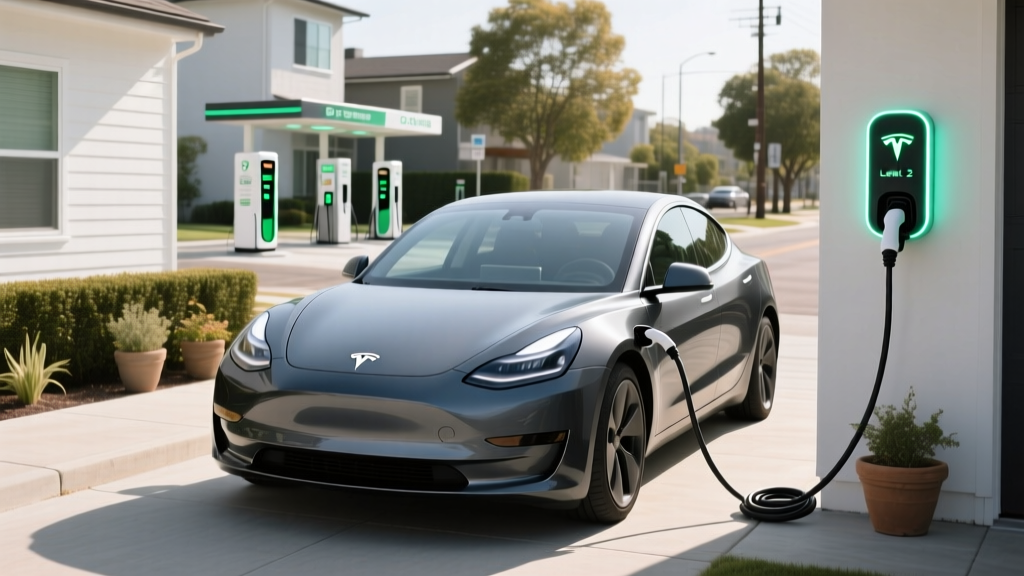
For daily charging, a Level 2 home setup is the standard recommendation. The 2019 Model 3 Long Range's 11.5 kW onboard charger means you can take full advantage of a 48A/240V circuit — but installation requirements vary significantly based on your home's electrical panel.
Electrical Requirements
- Circuit: Dedicated 60A breaker (NEC requires circuits to be rated 125% of continuous load, so a 48A charger needs a 60A breaker)
- Wire: 6 AWG copper (THHN in conduit or NM-B Romex where permitted)
- Panel capacity: Minimum 100A service; 200A preferred. Homes with 100A panels running electric dryers, ranges, and HVAC may need a panel upgrade or a load-management device
- GFCI: NEC 2020 and later requires GFCI protection for EV outlets in garages; hardwired chargers may not require a separate GFCI breaker depending on local code interpretation
- Permit: Required in virtually all US jurisdictions for new 240V circuits
Installation Cost Breakdown
| Component | Simple Install (panel nearby) | Complex Install (long run / panel upgrade) |
|---|---|---|
| Charger hardware (Level 2, 48A) | $400–$700 | $400–$700 |
| Electrical labor (licensed electrician) | $600–$1,200 | $1,500–$3,500 |
| Permit fees | $50–$150 | $50–$200 |
| Panel upgrade (if needed, 100A→200A) | $0 | $2,000–$4,000 |
| Conduit, wire, misc. materials | $100–$300 | $300–$800 |
| Total estimated cost | $1,150–$2,350 | $4,250–$9,200 |
Always hire a licensed electrician familiar with EV charger installations. The National Electrical Code (NEC) governs these installations, and improper wiring can void insurance coverage or create fire risk.
Connector Compatibility: NACS, Adapters, and Public Charging Access
The 2019 Tesla Model 3 Long Range uses Tesla's proprietary connector, which was officially renamed the North American Charging Standard (NACS) in late 2022. As of 2026, NACS has become the dominant connector standard in North America, adopted by Ford, GM, Rivian, Hyundai, and most major automakers.
| Connector Type | Native Support? | Adapter Needed? | Availability |
|---|---|---|---|
| NACS (Tesla) | Yes — native | None | Tesla Superchargers, Destination Chargers, growing third-party networks |
| CCS1 | No | Tesla CCS Adapter (~$175–$250) | Electrify America, EVgo, ChargePoint, many non-Tesla DC stations |
| CHAdeMO | No | Third-party adapter (rare, ~$300+) | Limited; mostly legacy Nissan Leaf infrastructure, being phased out |
| J1772 (Level 2 public) | No | Tesla J1772 Adapter (included with car) | Hotels, workplaces, public Level 2 stations |
Practical advice: Your 2019 Model 3 came with a Tesla Mobile Connector and a J1772 adapter. For DC fast charging outside the Supercharger network (useful on road trips through areas with sparse Supercharger coverage), purchase the official Tesla CCS Adapter. This enables access to Electrify America and other CCS networks at up to approximately 150 kW (slightly below the Supercharger peak, but still practical for highway travel).
As of 2025–2026, Tesla has opened its Supercharger network to non-Tesla NACS-equipped vehicles, meaning stations are busier in some corridors. Plan road trips using the in-car navigation, which accounts for charger availability, battery preconditioning, and real-time stall status.
Cost to Charge: Home vs. Public vs. Gas Comparison
One of the strongest ownership arguments for the 2019 Model 3 Long Range is the per-mile energy cost. Here's how it breaks down across common charging scenarios, using the vehicle's real-world efficiency of approximately 26 kWh/100 miles (combined highway/city, moderate climate):
| Scenario | Rate | Cost per kWh | Cost per Mile |
|---|---|---|---|
| Home (off-peak utility rate) | Time-of-use, overnight | $0.08–$0.13 | $0.021–$0.034 |
| Home (standard residential avg.) | Flat rate | $0.16 | $0.042 |
| Tesla Supercharger (V3, avg.) | Per kWh billing | $0.28–$0.36 | $0.073–$0.094 |
| Electrify America / CCS DC fast | Per kWh billing | $0.31–$0.48 | $0.081–$0.125 |
| Gasoline car (30 MPG combined, $3.40/gal) | — | — | $0.113 |
Annual savings estimate: At 12,000 miles/year and primarily home charging at $0.13/kWh, your annual fuel cost is approximately $500. A comparable 30 MPG gas car at $3.40/gallon costs $1,360/year. That's roughly $860/year in fuel savings — or $4,300 over five years — before accounting for the EV's reduced maintenance (no oil changes, fewer brake replacements due to regenerative braking).
For the most accurate local utility rates and time-of-use plans, check the U.S. Energy Information Administration (EIA) state-by-state electricity price data.
Recommended Home Charging Equipment for the 2019 Model 3 Long Range
To maximize the Model 3's 11.5 kW (48A) onboard charger, you need a Level 2 station rated for at least 48A on a 60A circuit. Here are three proven options for 2026:
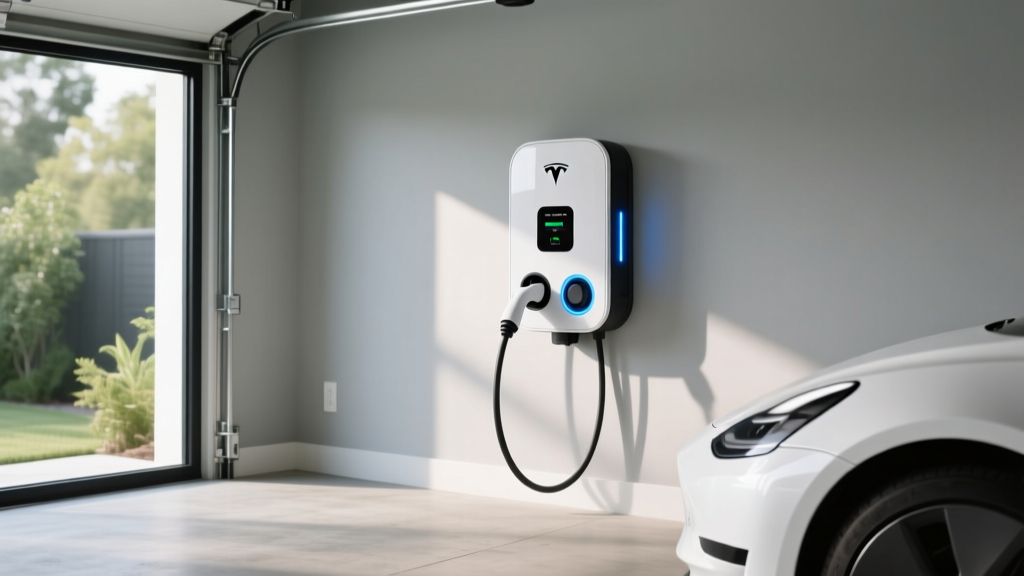
Tesla Wall Connector (Gen 3)
- Power output: Up to 11.5 kW (48A) at 240V — matches the Model 3's onboard charger perfectly
- Connector: Native NACS (no adapter needed)
- Cable length: 24 feet
- Smart features: Wi-Fi connectivity, over-the-air firmware updates, power-sharing with second Wall Connector, load management, access control via Tesla app
- Price: ~$475 (direct from Tesla)
- Best for: Tesla-only households wanting seamless integration and the lowest total cost (no adapter wear)
ChargePoint Home Flex
- Power output: Configurable up to 12 kW (50A) at 240V
- Connector: NACS plug (as of 2025 production); J1772 also available
- Cable length: 23 feet
- Smart features: Wi-Fi, ChargePoint app with scheduling, energy tracking, Alexa integration, works with utility demand-response programs
- Price: ~$599–$699
- Best for: Multi-EV households (Tesla + non-Tesla NACS vehicles), utility program participants
Emporia Vue / Emporia Level 2 EV Charger
- Power output: Up to 11.5 kW (48A) at 240V
- Connector: NACS (2025+ models)
- Cable length: 24 feet
- Smart features: Integration with Emporia Vue whole-home energy monitor, real-time circuit-level tracking, solar-aware charging, scheduling via app
- Price: ~$399–$499
- Best for: Budget-conscious buyers who want energy monitoring and solar integration
Key selection criteria: All three chargers support the full 48A your Model 3 can accept. The Tesla Wall Connector offers the best native experience at the lowest price. The ChargePoint Home Flex provides flexibility for future non-Tesla EVs. The Emporia is the value pick with strong energy-monitoring features. Avoid 32A or 40A chargers — they will bottleneck your Model 3's 48A capability and add 1–2 hours to a full charge.
Safety, Code, and Longevity Best Practices
Proper installation and daily habits protect both your home and your Model 3's 75 kWh NMC battery pack:
Installation Safety
- Dedicated circuit: Your Level 2 charger must be on a dedicated breaker — never share a circuit with other high-draw appliances (dryer, HVAC compressor)
- Outdoor rating: If installing outside, ensure the charger is NEMA 4 rated (weatherproof). The Tesla Wall Connector and ChargePoint Home Flex both carry NEMA 4 ratings
- GFCI protection: Required by NEC 2020+ for receptacle-based installations in garages. Hardwired installations (recommended for 48A+) may not require a separate GFCI breaker, as the charger itself provides ground-fault protection — confirm with your local inspector
- Permit and inspection: Skipping a permit risks insurance denial in the event of an electrical fire. Most jurisdictions charge $50–$150 and inspect within 1–2 weeks
Battery Longevity Tips for NMC Chemistry
- Daily charge limit: Set to 80% for everyday use. NMC batteries degrade faster when held at 100% for extended periods. Use 100% only before road trips
- Avoid frequent DC fast charging: Occasional Supercharging is fine, but daily DC fast charging accelerates degradation. Home Level 2 at 11.5 kW is the battery-friendly sweet spot
- Cold weather: Plug in whenever possible in freezing temperatures. The Model 3's thermal management system will keep the battery in its optimal temperature range while plugged in, reducing cold-start range loss
- Warranty reference: Tesla's battery warranty for the 2019 Model 3 Long Range covers 8 years or 120,000 miles (whichever comes first), with a minimum 70% capacity retention threshold. As of 2026, most 2019 examples are still within warranty coverage
Frequently Asked Questions
How much does it cost to install a home EV charger for my 2019 Model 3?
Expect $1,150–$2,350 for a straightforward installation (short wire run from a 200A panel) including a Tesla Wall Connector ($475), electrician labor ($600–$1,200), and permit ($50–$150). If your home needs a panel upgrade from 100A to 200A, total costs can reach $4,250–$9,200. Always get 2–3 quotes from licensed electricians who have EV charger experience.
How fast will each charging level add range to my Model 3 Long Range?
Level 1 (120V) adds roughly 3–4 miles per hour — suitable only for overnight top-ups of 30–40 miles. Level 2 (240V/48A) adds 37–44 miles per hour, fully replenishing a depleted battery in about 6 hours. DC fast charging on a V3 Supercharger can add up to 175 miles in 15 minutes at peak rates (10–40% SoC), but the charge curve tapers substantially above 60%.
Which charger connector is compatible with my 2019 Tesla Model 3?
Your Model 3 uses the NACS (Tesla) connector natively. It works directly with Tesla Superchargers, Tesla Wall Connectors, and the growing number of NACS-equipped public chargers. For CCS1 stations (Electrify America, EVgo), you need the Tesla CCS Adapter ($175–$250). The included J1772 adapter handles public Level 2 stations at hotels and workplaces.
How much does charging cost per mile compared to gas?
Home charging at the national average residential rate ($0.16/kWh) costs approximately $0.042/mile in the Model 3 Long Range. A comparable gasoline sedan at 30 MPG and $3.40/gallon costs $0.113/mile — nearly three times more. Even at Supercharger rates ($0.28–$0.36/kWh), the Model 3 costs $0.073–$0.094/mile, still below gasoline.
What electrical upgrades might I need for a home charger?
The most common upgrade is a panel replacement from 100A to 200A service ($2,000–$4,000) if your existing panel lacks capacity for a new 60A breaker. Homes built after 2005 typically have 200A panels with sufficient headroom. In rare cases, your utility may need to upgrade the service drop from the street. An electrician's load calculation will determine this before any work begins. Some utilities and states offer rebates covering $500–$1,500 of panel upgrade costs specifically for EV adoption.