Why Your 2019 Model 3 Long Range Deserves a Proper Charging Setup
The 2019 Tesla Model 3 Long Range (Dual Motor) remains one of the most efficient used EVs on the road, with an EPA-estimated 310 miles of range and a 75 kWh battery pack (approximately 72.5 kWh usable). Its peak DC fast-charging rate of 170 kW and onboard AC charger rated at 11.5 kW (48A) make it versatile — but only if you pair it with the right equipment. Whether you just bought one as a used-EV-credit-qualifying daily driver or you've owned it since new and want to optimize your routine, this guide covers every charging scenario with exact numbers, real costs, and the gear that actually works.
Charging Levels Explained: Speeds, kW, and Miles Per Hour
Before choosing equipment, you need to understand the three charging tiers. Note the critical distinction: kW (kilowatts) measures power — the rate of energy delivery. kWh (kilowatt-hours) measures energy — the total capacity of your battery. Your 2019 Model 3 Long Range stores roughly 72.5 kWh of usable energy. A charger delivering 11.5 kW will theoretically fill that from empty in about 6.3 hours, minus taper losses.
| Level | Voltage / Amperage | Max Power (kW) | Miles of Range Added Per Hour | Typical Use Case |
|---|---|---|---|---|
| Level 1 | 120V / 12A | 1.4 kW | ~4–5 mi/hr | Emergency top-up, overnight trickle |
| Level 2 | 240V / 48A | 11.5 kW | ~37–44 mi/hr | Home daily charging, workplace |
| DC Fast Charge | 400V DC | 170 kW (peak) | ~170 mi in 15 min (10–58%) | Road trips, highway corridors |
On a DC fast charger, the 2019 Model 3 Long Range peaks at 170 kW only between roughly 10% and 30% state of charge. By 50% SoC, power tapers to approximately 110 kW, and by 80% it drops below 50 kW. A realistic 10–80% session takes about 30–35 minutes at a V2 Supercharger or equivalent 150 kW+ CCS station. Plan road-trip stops accordingly — don't expect the peak rate to hold.
Home Level 2 Installation: Electrical Requirements, Costs, and Panel Upgrades
The 2019 Model 3's onboard charger accepts up to 11.5 kW (48 amps continuous). To deliver that, you need a 240V circuit rated for 60 amps — electrical code requires circuits to be rated at 125% of continuous load, so 48A continuous demands a 60A breaker. If your panel can't support a 60A circuit, a 40A circuit (delivering 32A continuous / 7.7 kW) is a common fallback that still adds ~25 miles of range per hour — more than enough for most daily driving.
What Your Electrician Will Evaluate
- Panel capacity: Most modern 200A panels can accommodate a 60A EV circuit. Older 100A panels often cannot, requiring a panel upgrade ($1,500–$3,000+).
- Wire run distance: Longer runs from panel to garage/driveway require thicker (and more expensive) copper wire — typically 6 AWG for a 60A circuit, 4 AWG for runs over 100 feet.
- Permit requirements: Nearly all jurisdictions require a permit for a new 240V circuit. Your electrician typically pulls this; cost ranges from $50–$250 depending on municipality.
- GFCI protection: NEC 2020 and later require GFCI protection for EV receptacles. Some hardwired chargers have built-in GFCI, which can simplify inspection.
| Component | Low Estimate | High Estimate | Notes |
|---|---|---|---|
| Level 2 Charger (Equipment) | $350 | $700 | 40A–48A smart chargers; Tesla Wall Connector is ~$475 |
| Electrician Labor | $500 | $2,000 | Depends on wire run length and accessibility |
| Electrical Permit | $50 | $250 | Varies by municipality |
| Panel Upgrade (if needed) | $1,500 | $3,500 | 100A → 200A service; not always required |
| Total (No Panel Upgrade) | $900 | $2,950 | Most homes fall in $1,200–$1,800 range |
| Total (With Panel Upgrade) | $2,400 | $6,450 | Older homes with 100A service |
The IRS §30C tax credit covers up to 30% of home charging equipment and installation costs, capped at $1,000, for eligible taxpayers in qualifying census tracts. Check current-year eligibility on IRS.gov before committing to a project.
Connector Compatibility: NACS, CCS1, and Adapter Needs
Your 2019 Model 3 Long Range shipped with a proprietary Tesla connector (now formally called NACS — North American Charging Standard). This means native access to the Tesla Supercharger network, which remains the most reliable DC fast-charging infrastructure in North America. However, as non-Tesla public chargers proliferate, you'll encounter CCS1 connectors at Electrify America, EVgo, and other networks.
| Connector Type | Native Support? | Adapter Required? | Where You'll Find It |
|---|---|---|---|
| NACS (Tesla) | Yes — native | None | Tesla Superchargers, Tesla Destination Chargers, newer non-Tesla chargers |
| CCS1 | No | Tesla CCS Adapter (~$175–$250) | Electrify America, EVgo, ChargePoint DC stations |
| CHAdeMO | No | Third-party adapter (~$300–$400, rare) | Legacy Nissan Leaf stations; largely discontinued |
| J1772 (Level 2 public) | No | Tesla J1772 Adapter (included with car) | Public Level 2 stations, hotels, workplaces |
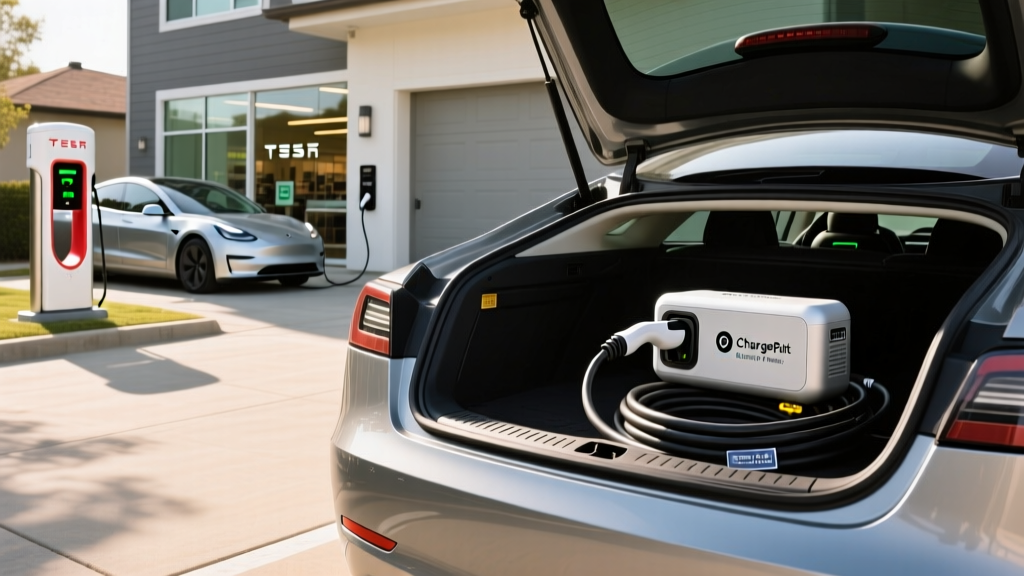
The Tesla CCS Adapter is essential for road trips outside the Supercharger network. It supports DC fast charging up to approximately 150 kW through CCS stations — slightly below the car's 170 kW native peak but practical for most highway corridors. Purchase directly from Tesla or verified retailers; counterfeit adapters have caused charging faults.
Cost to Charge: Per-Mile Economics vs. Gas
Charging cost depends entirely on where and when you plug in. Here's how the 2019 Model 3 Long Range stacks up against a comparable gas sedan (28 MPG combined, $3.40/gallon national average as of early 2026).
The Model 3 Long Range AWD consumes approximately 26 kWh per 100 miles (EPA combined). That gives us a clear cost-per-mile calculation across scenarios:
| Charging Scenario | Rate ($/kWh) | Cost Per Mile | Gas Equivalent (28 MPG, $3.40/gal) |
|---|---|---|---|
| Home — Off-Peak TOU (utility rate) | $0.08–$0.12 | $0.021–$0.031 | $0.121 |
| Home — Standard Residential Rate | $0.14–$0.18 | $0.036–$0.047 | $0.121 |
| Public Level 2 (ChargePoint, etc.) | $0.20–$0.35 | $0.052–$0.091 | $0.121 |
| Tesla Supercharger (V2/V3) | $0.28–$0.40 | $0.073–$0.104 | $0.121 |
| Electrify America / CCS DC Fast | $0.35–$0.55 | $0.091–$0.143 | $0.121 |
Home charging on an off-peak rate delivers the most dramatic savings: roughly 75–80% cheaper per mile than gasoline. Even Supercharging costs less than gas in most regions. The break-even point where DC fast charging matches gas cost per mile is roughly $0.47/kWh — a rate you'll only encounter at premium urban chargers or during peak-demand pricing.
For a driver covering 12,000 miles annually, home off-peak charging costs approximately $300–$400/year in electricity. The equivalent gas sedan burns $1,450+ in fuel. That's over $1,000 in annual savings before accounting for reduced maintenance (no oil changes, fewer brake replacements due to regenerative braking).
Recommended Charging Equipment for the 2019 Model 3 Long Range
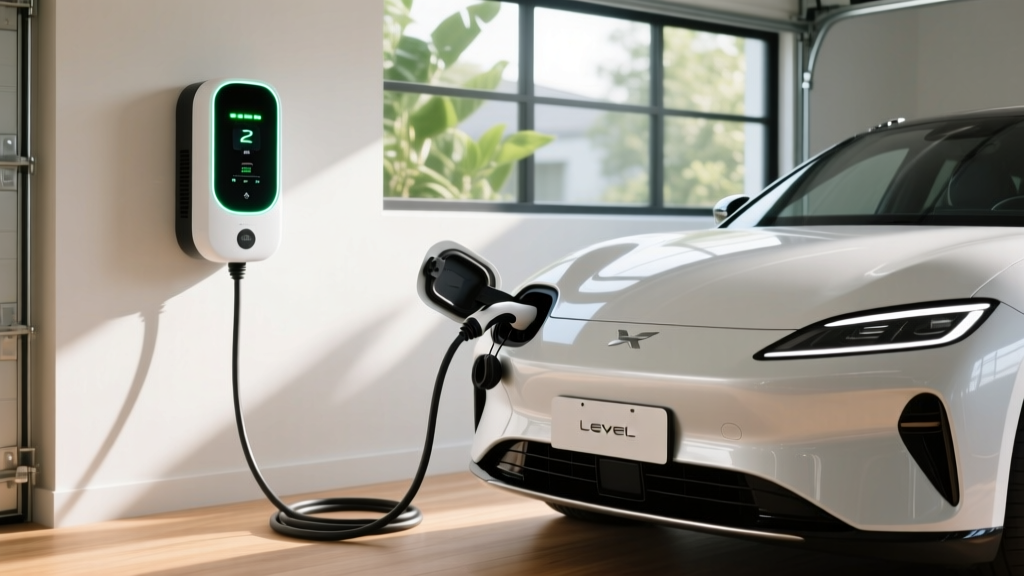
Since the car accepts up to 48A continuous (11.5 kW), you'll want a charger rated for at least 48A on a 60A circuit to extract maximum Level 2 speed. Here are three proven options across price tiers:
Tesla Wall Connector (Gen 3)
- Power Output: Up to 11.5 kW (48A)
- Connector: NACS (native Tesla)
- Cable Length: 24 feet
- Smart Features: Wi-Fi, OTA updates, load sharing (pair two units on one circuit), access control
- Price: ~$475
- Best For: Tesla-only households wanting seamless integration and power-sharing
ChargePoint Home Flex
- Power Output: Configurable 16A–50A (up to 12 kW at 50A)
- Connector: J1772 (use Tesla's included J1772 adapter) or NACS plug option
- Cable Length: 23 feet
- Smart Features: Wi-Fi, scheduling, Alexa integration, detailed energy tracking via app
- Price: ~$550–$650
- Best For: Multi-EV households or renters who may switch to a non-Tesla EV
Emporia Vue Level 2 Charger
- Power Output: Up to 11.5 kW (48A)
- Connector: J1772 (NACS version available)
- Cable Length: 24 feet
- Smart Features: Wi-Fi, solar integration, energy monitoring, scheduling
- Price: ~$350–$400
- Best For: Budget-conscious buyers with solar panels or energy monitoring needs
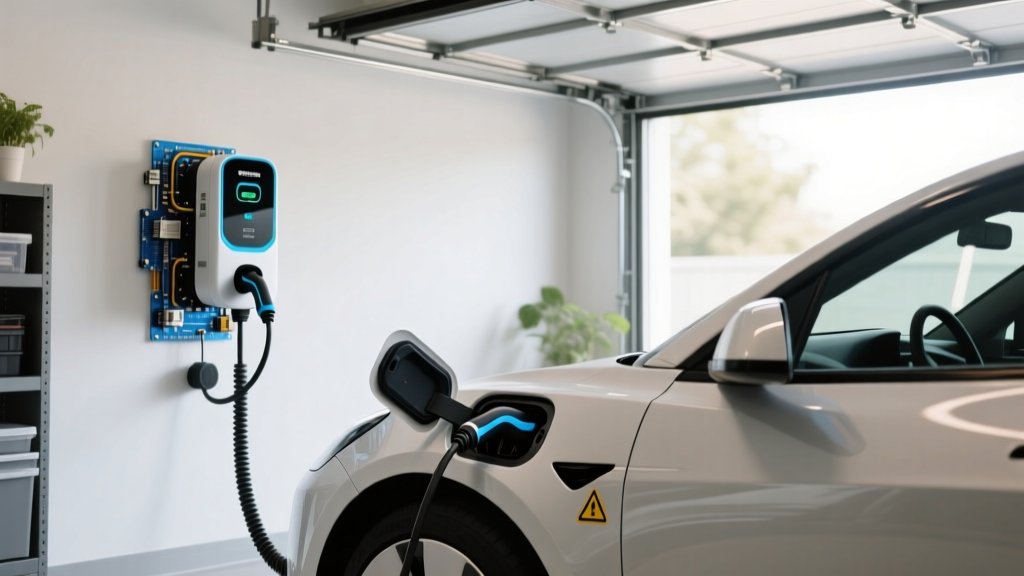
All three chargers carry NEMA 4 outdoor ratings, meaning they're safe for driveway installation in rain and snow. If you garage your Model 3, a hardwired installation (rather than a NEMA 14-50 receptacle) eliminates one potential point of failure and satisfies GFCI code requirements in most jurisdictions without an external GFCI breaker.
Safety, Code Compliance, and Practical Tips
Electrical safety isn't optional — improper EV charger installations have caused house fires. Here's what to insist on:
- Dedicated circuit: Your Level 2 charger must have its own dedicated breaker — never share a circuit with a dryer, oven, or HVAC unit unless using a certified load-management device.
- Correct wire gauge: 6 AWG copper for 60A circuits under 100 feet; 4 AWG for longer runs. Aluminum wire requires upsizing.
- Torque specifications: Every connection must be torqued to the manufacturer's spec. Loose connections generate heat and are the leading cause of receptacle failures.
- NEMA 14-50 receptacle quality: If using a plug-in setup, buy an industrial-grade receptacle (Hubbell or Bryant brand, ~$80–$120). Consumer-grade 14-50 outlets from big-box stores have melted under sustained EV-charging loads.
- Outdoor rating: Any charger mounted outside must be NEMA 4 rated. Verify the rating on the unit's label, not just the marketing copy.
Always hire a licensed electrician who has installed EV chargers before. Ask for references and photos of prior work. A qualified installer will perform a load calculation on your panel before recommending a circuit size — if they skip this step, find someone else.
DC Fast Charging on the Road: Supercharger vs. CCS Networks
The 2019 Model 3 Long Range charges at up to 170 kW on Tesla V2 Superchargers (which are CCS-compatible via adapter at some stations) and V3 Superchargers (NACS native, up to 250 kW, though the 2019 Model 3 caps at ~170 kW due to its battery management system).
On a CCS network like Electrify America with the Tesla CCS adapter, expect peak rates around 150 kW. The charge curve is the same: strong pull from 10–40% SoC, then progressive taper. Plan to charge from 10% to 80% in approximately 30–35 minutes regardless of network, and move on — the 80–100% top-off can take another 25+ minutes and isn't worth the wait on a road trip.
Preconditioning matters. If you navigate to a Supercharger using the car's built-in navigation, the battery will automatically warm to optimal charging temperature before you arrive. This can shave 5–10 minutes off your session, especially in cold weather. On third-party CCS chargers, preconditioning doesn't activate automatically — drive the car hard for 10–15 minutes before arriving, or accept a slower initial charge rate.
Frequently Asked Questions
How much does it cost to install a home EV charger for a 2019 Model 3 Long Range?
Most homeowners spend between $1,200 and $1,800 for a professional Level 2 installation (equipment, labor, and permit combined) when no panel upgrade is needed. Homes with older 100A electrical panels may face an additional $1,500–$3,500 for a service upgrade. The IRS §30C credit can offset up to $1,000 of these costs for eligible taxpayers.
How fast will each charging level add range to my 2019 Model 3 Long Range?
Level 1 (120V standard outlet) adds roughly 4–5 miles per hour — adequate only for emergency top-ups or very low-mileage drivers. Level 2 (240V, 48A) adds approximately 37–44 miles per hour, fully replenishing the battery overnight. DC fast charging at a Supercharger or CCS station can add up to 170 miles in 15 minutes during the peak charge window (10–30% SoC).
Which connector and charger is compatible with my 2019 Model 3?
Your car uses the NACS (Tesla) connector natively. For Level 2 home charging, the Tesla Wall Connector is the simplest plug-and-play option. For public Level 2 stations with J1772 connectors, use the J1772 adapter that came with your car. For non-Tesla DC fast chargers (CCS1), you need the Tesla CCS Adapter, sold separately for approximately $175–$250.
How much does charging cost per mile compared to gas?
At a typical off-peak home electricity rate of $0.10/kWh, charging costs about $0.026 per mile — roughly 78% cheaper than a 28 MPG gas car at $3.40/gallon ($0.121/mile). Even at Supercharger rates of $0.32/kWh, you're paying about $0.083/mile, still 30% less than gasoline. Only premium-priced public DC chargers (above $0.47/kWh) exceed the per-mile cost of gas.
What electrical upgrades might my home need?
The most common upgrade is a panel capacity increase from 100A to 200A service, which costs $1,500–$3,500 and is typically required in older homes that already have multiple high-draw appliances (electric oven, dryer, HVAC). If your home has a 200A panel with available breaker slots and passes a load calculation, you likely need only a new 60A breaker and wire run — no panel work required.
Sources: EPA Fuel Economy — EV Technology, Tesla Home Charging Installation Guide, IRS §30C Alternative Fuel Vehicle Refueling Property Credit.