The 2018 Tesla Model S 75D remains one of the most popular used electric vehicles on the market. Buyers are drawn to its dual-motor all-wheel-drive layout, premium cabin, and access to the Tesla Supercharger network. But before signing on a used 75D, you need hard data on what the 2018 Tesla Model S 75D range looks like in real driving, how fast it charges across every level, and what it will cost to set up a proper Level 2 home charging station.
This guide covers all of that — with exact numbers for the 75 kWh battery pack, real-world range adjustments, connector compatibility (including the NACS transition), and a full breakdown of home charger installation costs in 2026.
2018 Tesla Model S 75D: Battery, Range & Efficiency Specs
The 75D pairs a 75 kWh battery pack (approximately 72.6 kWh usable) with dual electric motors producing a combined 328 horsepower. Here is the core spec sheet:
| Spec | Value |
|---|---|
| Battery Capacity (Usable) | ~72.6 kWh (NMC chemistry) |
| EPA Range (Original Sticker) | 259 miles |
| Real-World Range (2026, Aged Battery) | ~200–230 miles |
| MPGe (Combined) | 103 MPGe |
| Efficiency | ~33 kWh/100 mi |
| 0–60 mph | 4.2 seconds |
| Drivetrain | Dual-motor AWD |
| Max DC Fast Charge Rate | ~120 kW (peak, V2 Supercharger) |
| Onboard Charger (Level 2) | 11.5 kW (48A) |
| Connector | Tesla proprietary (NACS) |
Charging Levels Explained: Speeds in kW and Miles Per Hour
Understanding EV charging starts with one critical distinction: kW (kilowatts) measures power — how fast energy flows into the battery. kWh (kilowatt-hours) measures energy — the total capacity of the battery. Think of kW as the width of a hose and kWh as the size of the bucket.
Here is how each charging level translates to real range added per hour for the Model S 75D:
| Level | Power (kW) | Voltage / Amperage | Miles of Range Added Per Hour | Typical Use Case |
|---|---|---|---|---|
| Level 1 (Standard Outlet) | 1.2–1.4 kW | 120V / 12A | 3–4 mi/hr | Emergency / overnight trickle |
| Level 2 (Home / Workplace) | 7.2–11.5 kW | 240V / 30–48A | 22–35 mi/hr | Daily home charging |
| DC Fast Charging (V2 Supercharger) | Up to 120 kW (peak) | 400V DC | ~170 mi in 30 min | Road trips |
| DC Fast Charging (V3 Supercharger) | Capped at ~120 kW* | 400V DC | ~170 mi in 30 min | Road trips (no speed benefit over V2) |
*The 2018 Model S 75D's battery management system limits DC fast charging to approximately 120 kW even on V3 Superchargers rated at 250 kW. You will not see faster charging on newer Supercharger stalls.
Home Charger Installation: Electrical Requirements & Costs
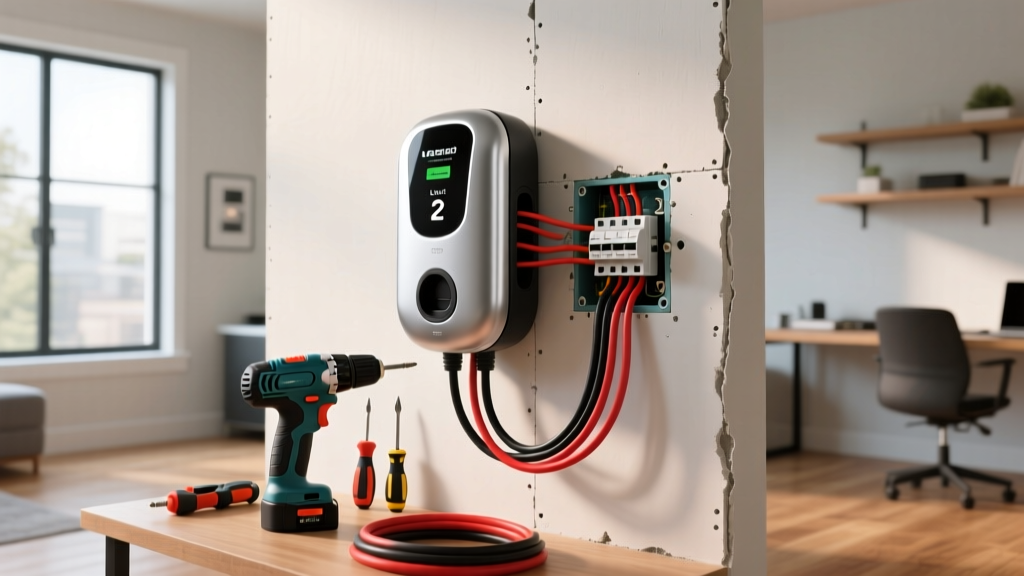
Most 2018 Model S 75D owners will want a Level 2 home charger to fully replenish the 75 kWh battery overnight. The 75D's onboard charger accepts up to 11.5 kW (48 amps), which means you need a 240V circuit rated for at least 60 amps to support continuous 48A draw (the National Electrical Code requires circuits to be rated at 125% of continuous load).
Electrical Requirements
- Circuit: Dedicated 60A breaker, 240V, hardwired or NEMA 14-50 receptacle
- Wire gauge: 6 AWG copper (for 60A circuit) or 4 AWG aluminum
- Panel capacity: Your main electrical panel must have spare capacity — typically 200A service is recommended for EV charging alongside other household loads
- Permit: Most jurisdictions require an electrical permit and inspection for a new 240V circuit
- GFCI: NEC 2020 and later require GFCI protection for receptacles in garages — hardwired chargers may bypass this requirement depending on local code
Installation Cost Breakdown
| Component | Low End | High End | Notes |
|---|---|---|---|
| Level 2 Charger (Equipment) | $350 | $700 | Quality Wi-Fi-enabled 48A unit |
| Electrician Labor (standard install) | $500 | $1,500 | Depends on panel proximity, wall material, conduit run length |
| Electrical Permit | $50 | $250 | Varies by municipality |
| Panel Upgrade (if needed) | $1,500 | $4,000+ | Required if panel is 100A or has no spare breaker slots |
| Total (no panel upgrade) | $900 | $2,450 | Most common scenario |
| Total (with panel upgrade) | $2,400 | $6,450+ | Older homes with 100A service |
Connector Compatibility: NACS, CCS1 & Adapter Requirements
The 2018 Model S 75D uses Tesla's proprietary connector, which has since been formalized as the North American Charging Standard (NACS). As of 2026, the NACS connector is the dominant standard in North America, adopted by Ford, GM, Rivian, Volvo, and most major automakers.
| Connector Type | Native Support? | Adapter Needed? | Notes |
|---|---|---|---|
| NACS (Tesla) | Yes — native | No | Works at all Tesla Superchargers and Destination Chargers |
| CCS1 | No | Tesla CCS Adapter (~$175) | Required for Electrify America, EVgo CCS stalls, and other non-Tesla DCFC networks |
| CHAdeMO | No | Third-party adapter (rare, ~$400+) | CHAdeMO infrastructure is declining; not recommended to invest in |
| J1772 (Level 2 public) | No | Tesla J1772 Adapter (included with car) | Works at public Level 2 stations; adapter usually ships with the vehicle |
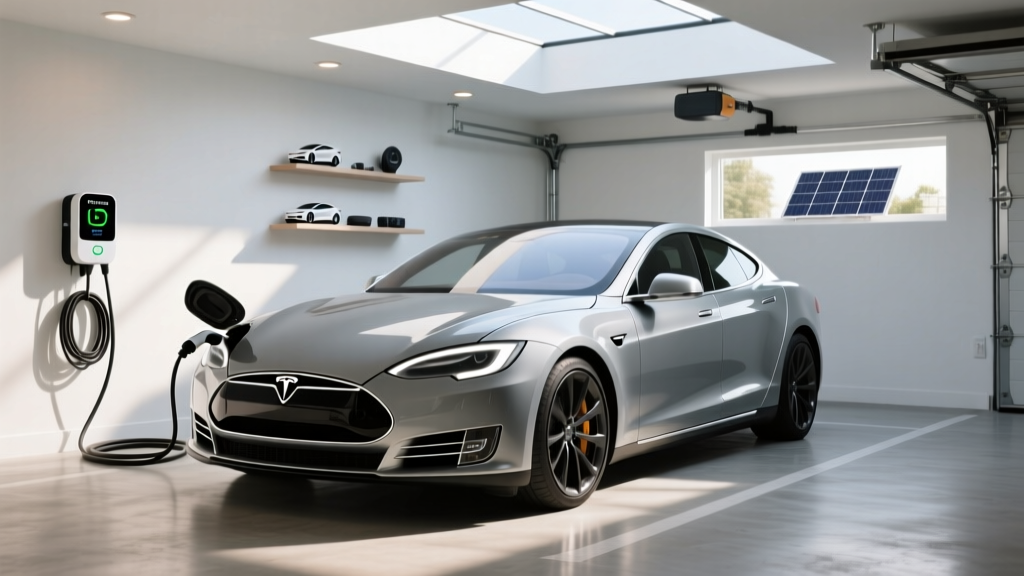
For home charging, the Tesla Wall Connector uses the native NACS plug — no adapter needed. For public DC fast charging on non-Tesla networks, the CCS adapter is essential. Tesla sells the official adapter through its shop, and it enables charging at up to the car's maximum DC rate on compatible CCS stations.
Cost to Charge: Home vs. Public vs. Gas Comparison
One of the strongest ownership arguments for a used Model S 75D is the fuel cost savings. Here is a realistic cost-per-mile breakdown:
| Scenario | Rate | Cost Per Mile | Annual Cost (12,000 mi) |
|---|---|---|---|
| Home charging (off-peak utility rate) | $0.10/kWh | $0.033 | $396 |
| Home charging (national avg residential) | $0.16/kWh | $0.053 | $636 |
| Tesla Supercharger (avg 2026) | $0.35/kWh | $0.116 | $1,392 |
| Non-Tesla DCFC (Electrify America, etc.) | $0.43/kWh | $0.142 | $1,704 |
| Gas sedan (28 MPG combined, $3.40/gal) | $3.40/gal | $0.121 | $1,452 |
At the Model S 75D's efficiency of roughly 33 kWh per 100 miles (or 3.03 miles per kWh), home charging on an off-peak rate saves approximately $1,000 per year compared to a comparable gas sedan. Even exclusive Supercharger use breaks even with gas — and most owners charge at home 80–90% of the time.
For context on current utility rates in your area, the U.S. Energy Information Administration publishes state-by-state average residential electricity prices.
Recommended Level 2 Home Chargers for the Model S 75D
To take full advantage of the 75D's 11.5 kW onboard charger, you need a Level 2 unit that delivers at least 48 amps. Here are proven options in 2026:
Tesla Wall Connector
- Power Output: Up to 11.5 kW (48A)
- Connector: NACS (native Tesla)
- Cable Length: 24 ft
- Smart Features: Wi-Fi, OTA updates, power sharing between units, load management
- Price: ~$475
- Best For: Tesla-only households; cleanest integration
ChargePoint Home Flex
- Power Output: Up to 12 kW (50A), configurable down to 16A
- Connector: NACS (J1772 version also available)
- Cable Length: 24 ft
- Smart Features: Wi-Fi, Alexa, scheduling, energy tracking, flexible amperage
- Price: ~$599
- Best For: Multi-EV households; adjustable circuit sizing
Emporia Vue Level 2 Charger
- Power Output: Up to 11.5 kW (48A)
- Connector: NACS or J1772
- Cable Length: 24 ft
- Smart Features: Wi-Fi, energy monitoring, solar integration, scheduling
- Price: ~$399
- Best For: Budget-conscious buyers who want smart features
All three units are hardwired or plug into a NEMA 14-50 receptacle, are UL-listed, and carry NEMA 4 outdoor ratings for garage or exterior installation. The Tesla Wall Connector is the natural fit for a Model S 75D, but the ChargePoint Home Flex offers more flexibility if you plan to add a non-Tesla EV to your household.
DC Fast Charging Times: 10–80% on the Road
On a Tesla V2 Supercharger (150 kW stall), the Model S 75D peaks at approximately 110–120 kW and tapers as the battery fills. Here are realistic charge times:
- 10% to 80% SoC: ~40–45 minutes at a V2 Supercharger
- 10% to 50% SoC: ~20 minutes (peak charge rate sustained)
- 80% to 100% SoC: ~35+ additional minutes (severe taper above 80%)
The charge curve is not linear. The 75D sustains its highest charge rate (100–120 kW) between roughly 10% and 40% state of charge, then progressively tapers. Above 80%, charging slows dramatically to protect the NMC battery cells. For road trips, plan to charge from 10% to 80% and then drive on — topping off to 100% at a Supercharger wastes time and accelerates long-term battery degradation.
Preconditioning the battery (navigating to a Supercharger in the Tesla nav system) warms the pack to optimal charging temperature and can shave 5–10 minutes off your session, especially in cold weather.
Safety, Code & Installation Best Practices
A Level 2 charger draws significant continuous current — often for 6–10 hours at a stretch. Proper installation is non-negotiable:
- Dedicated circuit: Your EV charger must have its own dedicated breaker — never share a circuit with other appliances
- GFCI protection: Required for receptacle-based installations (NEMA 14-50) in garages per NEC 2020+; hardwired installations may be exempt depending on local code interpretation
- Outdoor rating: If installing outside, ensure the charger carries a NEMA 4 or NEMA 4X rating for weather resistance
- Cable management: Use a wall-mounted cable organizer to prevent tripping hazards and connector damage
- Permit and inspection: Skipping the permit risks insurance claim denials if an electrical fire occurs — always pull a permit and schedule the inspection
- Licensed electrician: DIY 240V installations can be lethal; hire a licensed electrician who has EV charger experience and understands NEC Article 625 (Electric Vehicle Charging System Equipment)
Frequently Asked Questions
How much does it cost to install a home EV charger for the 2018 Model S 75D?
Expect $900–$2,450 for a standard installation (charger + electrician + permit) if your electrical panel has sufficient capacity. If your home needs a panel upgrade from 100A to 200A service, add $1,500–$4,000+ to the total. Get a load calculation from a licensed electrician before purchasing equipment.
How fast will each charging level add range to the 75D?
Level 1 (120V outlet) adds 3–4 miles per hour — essentially useless for daily driving. Level 2 at 11.5 kW adds approximately 35 miles per hour, fully recharging the 75 kWh battery in about 7 hours. DC fast charging at a V2 Supercharger adds roughly 170 miles in 30 minutes, tapering significantly above 80% state of charge.
Which connector and charger is compatible with my 2018 Tesla Model S 75D?
The 75D uses the native NACS (Tesla) connector for all Supercharger and Destination Charger access. For non-Tesla public DC fast chargers (Electrify America, EVgo CCS stalls), you need the Tesla CCS Adapter (~$175). For public Level 2 J1772 stations, use the J1772 adapter that typically ships with the vehicle. At home, the Tesla Wall Connector is the simplest plug-and-charge solution.
How much does charging cost per mile vs. gas?
At the national average residential electricity rate of ~$0.16/kWh, the Model S 75D costs about $0.053 per mile to charge at home — roughly 56% less than a 28 MPG gas sedan at $3.40/gallon ($0.121/mile). Exclusive Supercharger use at $0.35/kWh costs $0.116/mile, nearly identical to gas. Most owners charge at home 80–90% of the time, realizing significant annual savings.
What electrical upgrades might I need for a Level 2 charger?
The most common upgrade is a panel replacement if your home has a 100-amp service or a panel with no spare breaker slots. A 60-amp dedicated circuit for a 48A charger requires a 200-amp panel with adequate spare capacity. Older homes (pre-2000) are most likely to need this upgrade. Your electrician will perform a load calculation per NEC Article 220 to determine if your existing panel can support the additional circuit.
What is the real-world range of a used 2018 Model S 75D in 2026?
While the original EPA rating was 259 miles, an 8-year-old NMC battery will have degraded 10–15%, yielding approximately 200–230 miles on a full charge. Cold weather (below 30°F) can reduce this by another 15–25%, and sustained highway driving at 75+ mph reduces efficiency to roughly 28 kWh/100 mi. For trip planning, use a conservative 180-mile working range in winter and 210 miles in moderate conditions.
Sources: EPA Fuel Economy — 2018 Tesla Model S 75D, U.S. EIA State Electricity Profiles, ENERGY STAR Certified EV Chargers.