If you own or are considering a used 2018 Tesla Model S 100D, understanding how to charge it efficiently is just as important as knowing its EPA range. The 100D variant pairs a 100 kWh battery pack (approximately 98 kWh usable, NMC chemistry) with dual motors and all-wheel drive, delivering an EPA-estimated 335 miles of range. But real-world range and charging convenience depend heavily on your equipment, electrical infrastructure, and habits.
This guide walks through every charging scenario for the 2018 Model S 100D — from a standard wall outlet to a Tesla Supercharger — with exact speeds, installation costs, connector details, and the math behind what you'll actually pay per mile.
2018 Tesla Model S 100D: Real-World Range Expectations
EPA sticker: 335 miles
Real-world highway (70-75 mph, mild weather): ~270-295 miles
Cold weather (below 32°F, highway): ~220-260 miles
City/mixed driving with regen: ~290-320 miles
Range varies with speed, temperature, elevation, and HVAC use. Battery degradation on a 2018 model with 60,000-100,000 miles may reduce usable capacity by 8-14%, effectively lowering these figures proportionally.
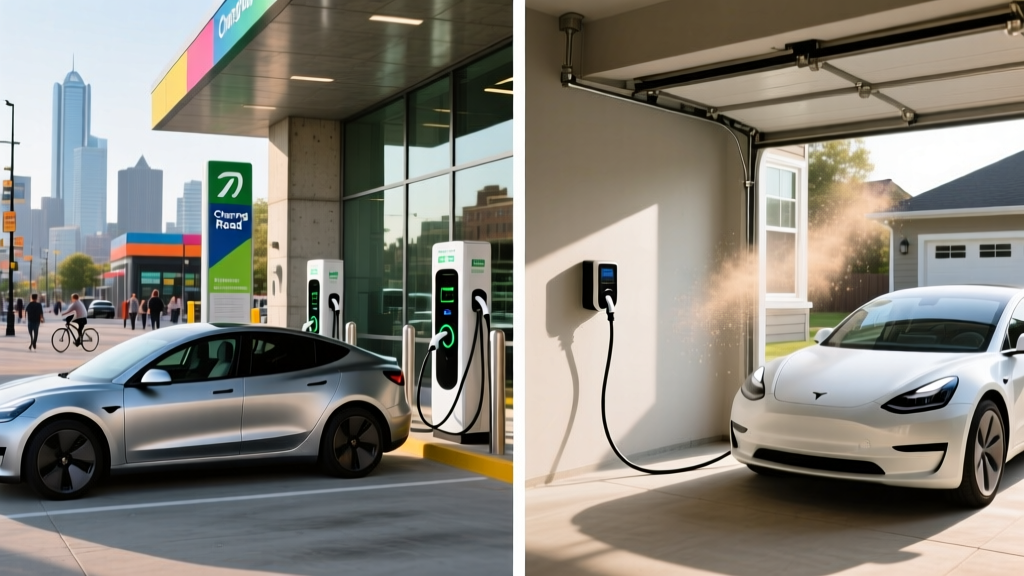
Charging Levels Explained: How Fast Will Each Add Range?
EV charging falls into three categories, defined by power output measured in kilowatts (kW). The energy stored in your battery is measured in kilowatt-hours (kWh) — think of kW as the speed of water flowing through a hose and kWh as the size of the bucket. For the Model S 100D's ~98 kWh usable battery, here's what each level delivers:
| Level | Power Source | Max kW | Miles of Range Per Hour | 10-80% Time (100D) |
|---|---|---|---|---|
| Level 1 | 120V household outlet | ~1.4 kW | ~3-4 mi/hr | ~58+ hours |
| Level 2 (Home/Public) | 240V, 20-80A circuit | 4.8 - 19.2 kW | 14-56 mi/hr | ~5-14 hours |
| DC Fast Charging | 480V+ public station | Up to 120 kW (Supercharger V2) | ~200-310 mi/hr | ~45-55 minutes |
Key nuance for the Model S 100D: This model's onboard charger supports up to 72 amps of AC charging (approximately 17.3 kW), meaning a properly configured 100-amp circuit Wall Connector can deliver up to ~50 miles of range per hour — one of the fastest AC charge rates of any EV. However, most home installations use a 60-amp circuit (48 amps continuous), delivering about 11.5 kW and ~33 miles per hour.
On DC fast charging, the 2018 Model S 100D peaks at roughly 120 kW on a V2 Supercharger. Expect the charge curve to taper significantly above 50% state of charge — the 10-80% session takes roughly 45-55 minutes, but 80-100% can add another 30+ minutes. The car cannot use V3/V4 Superchargers (250/350 kW) at full speed due to its older battery architecture.
Home Charger Installation: Electrical Requirements and Costs
Installing a Level 2 home charger is the single biggest upgrade you can make for daily EV convenience. Here's what the electrical work involves for a 2018 Model S 100D setup:
Electrical Requirements
- Recommended circuit: 240V, 60-amp breaker (delivers 48 amps continuous / 11.5 kW)
- Maximum circuit for 72A onboard charger: 240V, 100-amp breaker (delivers 80 amps continuous / 19.2 kW) — requires substantial panel capacity
- Wire gauge: 6 AWG copper for 60A; 3 AWG or 1/0 aluminum for 100A
- Dedicated circuit required: The breaker must serve only the EV charger
Panel Upgrade Reality
Many homes built before 2000 have 100-amp or 150-amp main service panels. Adding a 60-amp EV circuit may push total load beyond the panel's capacity, requiring a service upgrade to 200 amps. This is one of the most variable and costly parts of EV charger installation. A panel upgrade alone can range from $1,500 to $4,000+ depending on utility requirements, conduit runs, and local code.
Homes with existing 200-amp panels and spare breaker slots can often accommodate a 60-amp EV circuit without upgrading. Your electrician will perform a load calculation per NEC Article 220 to determine if your panel can handle the addition.
| Component | Typical Cost Range | Notes |
|---|---|---|
| Level 2 charger (hardware) | $350 - $700 | Tesla Wall Connector, ChargePoint, Emporia, etc. |
| Electrician labor (standard install, <50 ft run) | $500 - $1,500 | Varies by region, conduit type, wall penetration |
| Electrical permit | $50 - $300 | Required in most jurisdictions; inspection included |
| Panel upgrade (if needed) | $1,500 - $4,000 | 100A → 200A service upgrade; utility coordination may add cost |
| Total (no panel upgrade) | $900 - $2,500 | Most common scenario for newer homes |
| Total (with panel upgrade) | $2,400 - $6,500 | Older homes, higher-amperage circuits |
Federal incentive: The Alternative Fuel Vehicle Refueling Property Credit (§30C) was extended through 2032, offering up to $1,000 (30% of hardware + installation costs, capped at $1,000) for home charger installation. Eligibility depends on census tract requirements per the IRS guidelines. Always confirm with a tax professional.
Connector Compatibility: What Plugs Into a 2018 Model S?
The 2018 Tesla Model S uses Tesla's proprietary connector for both AC Level 2 and DC fast charging. This is the same physical connector that was later standardized as the North American Charging Standard (NACS) in 2024-2025. Here's how compatibility breaks down:
| Connector Type | Compatibility with 2018 Model S | Adapter Needed? |
|---|---|---|
| Tesla / NACS (native) | Full compatibility — AC and DC | No — this is the car's built-in port |
| J1772 (public Level 2) | Compatible with Tesla J1772 adapter | Yes — included with the car; aftermarket ~$95 |
| CCS1 (non-Tesla DC fast) | Not natively compatible | Tesla CCS adapter (~$175) enables use at Electrify America, EVgo, etc. |
| CHAdeMO | Not compatible | No adapter available; CHAdeMO stations are increasingly rare |
Practical note: Tesla Superchargers remain the most reliable and widespread DC fast-charging network for this vehicle. With the CCS adapter, you gain access to Electrify America and other networks — useful on road trips through areas with sparse Supercharger coverage. Always carry the J1772 adapter for destination charging at hotels, workplaces, and public garages.
Cost to Charge: Per-Mile Economics vs. Gasoline
One of the strongest arguments for the Model S 100D is low operating cost. Let's break down what you'll actually pay to drive it, compared to a similar gas-powered luxury sedan.
| Charging Scenario | $/kWh | Cost for Full 98 kWh Charge | Cost Per Mile (335 mi EPA) |
|---|---|---|---|
| Home — off-peak utility rate | $0.08 - $0.14 | $7.84 - $13.72 | $0.023 - $0.041 |
| Home — average blended rate | $0.15 - $0.20 | $14.70 - $19.60 | $0.044 - $0.059 |
| Public Level 2 (ChargePoint, etc.) | $0.20 - $0.35 | $19.60 - $34.30 | $0.059 - $0.102 |
| Tesla Supercharger (V2) | $0.28 - $0.38 | $27.44 - $37.24 | $0.082 - $0.111 |
| Non-Tesla DC fast (EA, EVgo) | $0.35 - $0.55 | $34.30 - $53.90 | $0.102 - $0.161 |
Gas comparison: A comparable 2018 BMW 5 Series or Mercedes E-Class averaging 25 MPG combined at $3.50/gallon costs $0.14 per mile in fuel alone. Home charging the Model S at average rates costs roughly $0.04-$0.06 per mile — a 55-70% reduction. Even exclusive Supercharger use at $0.35/kWh comes in at $0.10/mile, still undercutting gasoline.
Over 15,000 miles per year, home charging saves approximately $1,200-$1,500 annually versus a 25-MPG gas sedan. These savings compound over ownership and partially offset the higher insurance premiums typical of the Model S.
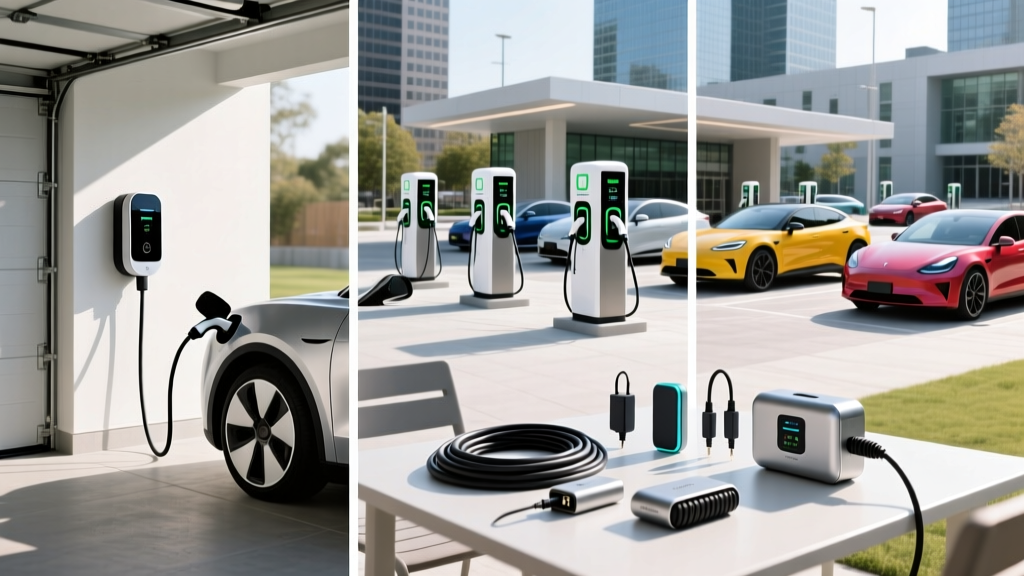
Recommended Home Charging Equipment for the Model S 100D
Given the 2018 Model S 100D's 72-amp onboard AC charger capability, you have more flexibility than most EV owners. Here are equipment options ranked by capability:
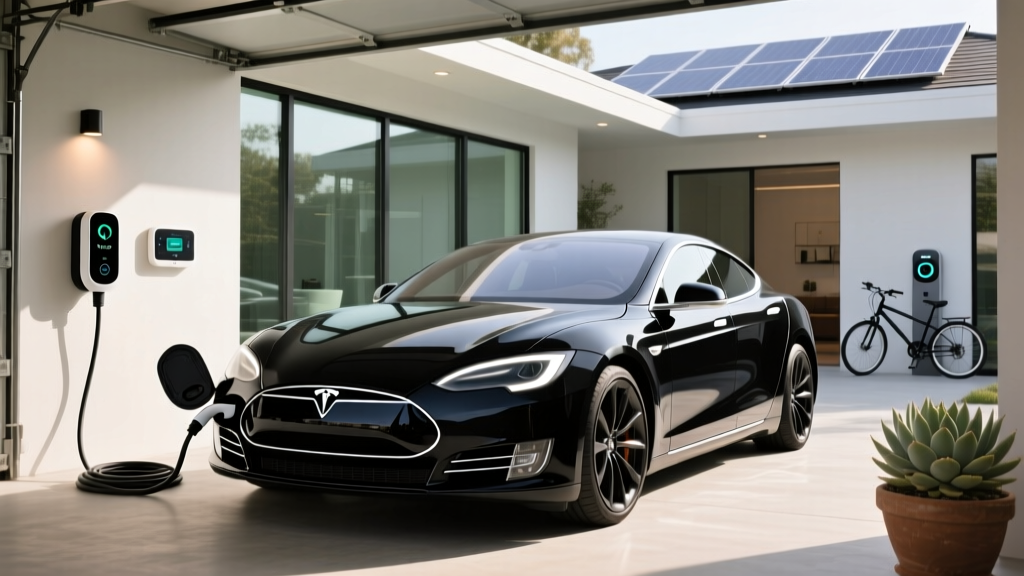
Tesla Wall Connector (Gen 3)
- Power output: Up to 48A (11.5 kW) on a 60A circuit; up to 80A (19.2 kW) on a 100A circuit — matches the 100D's 72A onboard charger
- Connector: NACS/Tesla native — no adapter needed
- Cable length: 24 ft
- Smart features: Wi-Fi updates, load sharing between multiple units, Tesla app integration, power metering
- Price: ~$475 (hardware only)
- Best for: Tesla owners wanting maximum AC charge speed and seamless integration
Emporia Vue Smart EV Charger
- Power output: Up to 48A (11.5 kW) on a 60A circuit
- Connector: J1772 (use Tesla's J1772 adapter) or NACS version available
- Cable length: 24 ft
- Smart features: Energy monitoring, solar integration, scheduled charging, app control
- Price: ~$400 (hardware only)
- Best for: Homes with solar panels or multi-EV households wanting energy tracking
ChargePoint Home Flex
- Power output: Up to 50A (12 kW) on a 60A circuit; configurable down to 16A for smaller panels
- Connector: J1772 (use Tesla adapter)
- Cable length: 23 ft
- Smart features: Alexa integration, scheduling, charging history, flexible amperage settings
- Price: ~$550 (hardware only)
- Best for: Multi-brand EV households needing adjustable amperage for panel limitations
Our pick for the 2018 Model S 100D: The Tesla Wall Connector on a 100-amp circuit is the only setup that fully utilizes the car's 72-amp onboard charger, delivering up to 50+ miles of range per hour. If your panel can't support 100 amps, a 60-amp circuit with any quality charger still delivers a practical overnight full charge in roughly 8-9 hours.
Safety, Code, and Installation Best Practices
EV charger installation must comply with the National Electrical Code (NEC) and local amendments. Key requirements to verify with your licensed electrician:
- Dedicated circuit: The EV charger must have its own breaker — no sharing with other appliances or outlets
- GFCI protection: NEC 2020 and later require GFCI protection for all 150V-to-ground-or-less receptacles rated 50A or less in garages. Hardwired installations (like the Tesla Wall Connector) may not require a GFCI breaker in all jurisdictions, but confirm locally
- Outdoor rating: If mounting outdoors, the charger must carry a NEMA 3R or NEMA 4 rating. The Tesla Wall Connector and ChargePoint Home Flex are both rated for outdoor use
- Conduit and wire: All wiring must be in conduit where exposed (garage walls, exterior runs). THHN copper wire in EMT conduit is standard
- Permit and inspection: Most municipalities require a permit for new 240V circuits. The inspection ensures correct wire gauge, breaker sizing, grounding, and torque specifications
Load management tip: If your panel is near capacity but you want to avoid a costly upgrade, consider a smart charger with load-sensing capability (such as the Emporia Vue with a whole-home energy monitor). These devices dynamically reduce charger amperage when other household loads spike, keeping total draw within panel limits — often eliminating the need for a panel upgrade entirely.
Maximizing Your 2018 Model S 100D Range Through Charging Habits
Charging behavior directly affects long-term battery health and daily range. The 2018 Model S 100D uses an NMC (nickel-manganese-cobalt) battery chemistry, which has different care requirements than the LFP batteries in newer Tesla models:
- Daily charging limit: Set to 80-90% for daily driving. Regularly charging to 100% accelerates NMC degradation
- 100% before road trips: Charging to full is fine when you'll drive soon after — just don't let it sit at 100% for extended periods
- Preconditioning: Use the Tesla app to precondition the cabin and battery while plugged in. This draws power from the grid rather than the battery, preserving range — especially critical in cold weather where a cold battery can lose 15-30% of range
- Scheduled charging: Set your Wall Connector or car to charge during off-peak utility hours (typically 10 PM - 6 AM) for the lowest electricity rates
Following these practices, most 100D owners report 8-12% total battery degradation over 100,000 miles, retaining approximately 88-92% of original capacity. Tesla's battery warranty covers 8 years/unlimited miles for the 2018 model year, with a capacity retention threshold of 70% — though most 100D packs outperform this floor.
Frequently Asked Questions
How much does it cost to install a home EV charger for a 2018 Tesla Model S 100D?
Expect $900 to $2,500 for a standard 60-amp circuit installation (charger + electrician + permit) in a home with adequate panel capacity. If your electrical panel requires a 200-amp service upgrade, total costs can reach $2,400 to $6,500. Always get a load calculation from a licensed electrician before committing to a circuit size.
How fast will each charging level add range to the Model S 100D?
Level 1 (120V) adds roughly 3-4 miles per hour — essentially a trickle. Level 2 (240V, 48A) adds approximately 33 miles per hour, enough for a full overnight charge. DC fast charging at a Tesla Supercharger V2 adds roughly 200-310 miles per hour at peak, tapering as the battery fills past 50%.
Which connector and charger is compatible with my 2018 Model S?
The 2018 Model S uses Tesla's proprietary connector (now standardized as NACS). It natively charges at all Tesla Superchargers and with the Tesla Wall Connector. For J1772 public Level 2 stations, use the included Tesla J1772 adapter. For CCS1 DC fast stations (Electrify America, EVgo), purchase the Tesla CCS adapter (~$175). CHAdeMO is not compatible.
How much does charging cost per mile vs. gas?
Home charging at average residential rates ($0.15-$0.20/kWh) costs approximately $0.04-$0.06 per mile in the Model S 100D. A comparable 25-MPG gas sedan at $3.50/gallon costs $0.14 per mile. Even exclusive Supercharger use (~$0.35/kWh) costs roughly $0.10 per mile — still a meaningful savings.
What electrical upgrades might I need for a home charger?
The most common upgrade is a 200-amp main service panel replacement, needed if your existing panel (commonly 100A or 150A in older homes) cannot accommodate a new 60-amp dedicated circuit after a load calculation. Other potential upgrades include running new conduit from the panel to the garage, upgrading the meter base, or installing a load-management device to avoid a panel upgrade entirely. See the NEC guidelines or consult a licensed electrician for a site-specific assessment.
Can I use Tesla Superchargers and non-Tesla fast chargers with the 2018 Model S 100D?
Yes to both. The 2018 Model S charges natively at all Tesla Superchargers (V2 at up to ~120 kW; V3/V4 at reduced speeds due to its older battery architecture). With the optional Tesla CCS adapter, you can also use Electrify America, EVgo, and other CCS1 networks. Check fueleconomy.gov for efficiency data specific to your model year.