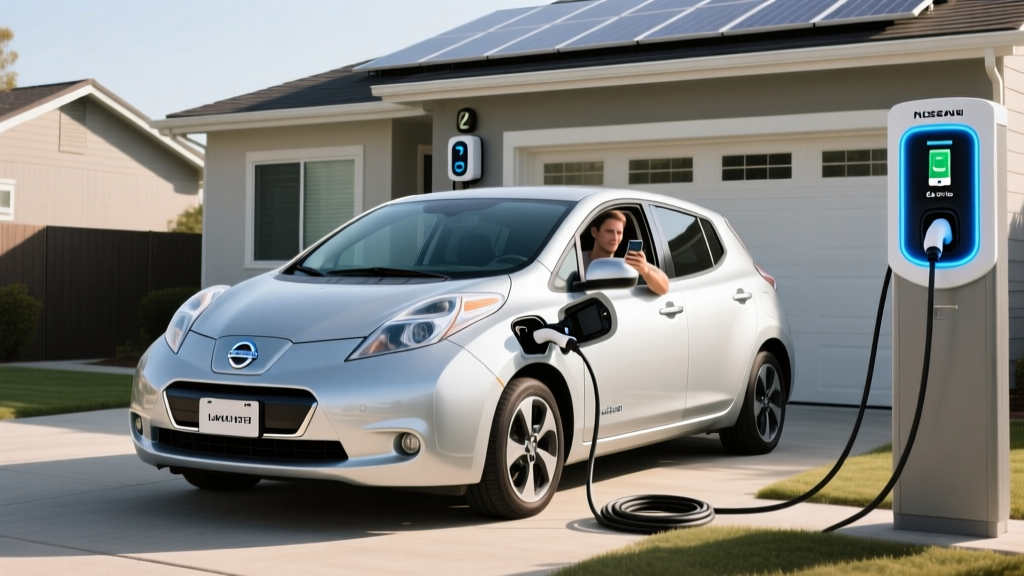
The 2017 Nissan Leaf was the best-selling EV of its era, and thousands remain on the road today as capable used commuter cars. But if you're buying one, inheriting one, or just trying to keep one running efficiently, you need to understand two things: the range of the 2017 Nissan Leaf in real-world conditions, and exactly how to charge its 30 kWh battery at home and on the road.
This guide covers the Leaf's real-world range expectations, every charging method available to it (including the increasingly tricky CHAdeMO situation in 2026), home installation costs, and the specific equipment you'll need to keep a first-generation Leaf running reliably.
Real-World Range of the 2017 Nissan Leaf: What to Actually Expect
The 2017 Nissan Leaf came with a 30 kWh battery pack (usable capacity approximately 28 kWh) using NMC (nickel-manganese-cobalt) lithium-ion chemistry. The EPA rated it at 107 miles of combined range, with an efficiency rating of 112 MPGe combined (fueleconomy.gov).
EPA Sticker: 107 miles combined
Real-world highway (70 mph, moderate temps): ~80–90 miles
Real-world city/mixed (moderate temps): ~90–100 miles
Cold weather (below 32°F, heater on): ~60–75 miles
With battery degradation (8 bars/65% SoH): ~55–70 miles
Several factors compress the Leaf's range below the EPA figure:
- No active thermal management: The Leaf uses passive air cooling for its battery. In hot weather, the battery heats up during fast driving or DC charging, which reduces efficiency and accelerates degradation. In cold weather, there's no heat pump (a resistive PTC heater draws significant power).
- Battery degradation: By 2026, most 2017 Leafs are 8–9 years old. NMC packs without active thermal management degrade noticeably. Check the battery health bars on the dash — a Leaf showing 9–10 bars out of 12 retains roughly 75–85% of original capacity. One showing 8 bars or fewer may deliver only 55–70 real-world miles.
- Highway speed penalty: The Leaf's aerodynamic profile and single-speed reduction gear mean efficiency drops sharply above 65 mph. Expect 2.8–3.2 miles/kWh on the highway vs. 3.5–3.8 miles/kWh in city driving.
Charging Levels Explained: Speeds, kW, and Miles Per Hour
Before plugging in, it's critical to understand the difference between kW (kilowatts), which measures charging power or speed, and kWh (kilowatt-hours), which measures battery capacity or energy stored. The 2017 Leaf has a 30 kWh battery. How quickly you fill it depends on the kW rate of your charger.
| Level | Voltage | Max Power (kW) | Miles of Range Added Per Hour | Full Charge Time (0–100%) |
|---|---|---|---|---|
| Level 1 (120V household outlet) | 120V / 12A | ~1.4 kW | ~4–5 miles/hr | ~20–24 hours |
| Level 2 (240V home/public) | 240V / 30A | 6.6 kW (Leaf's onboard max) | ~22–25 miles/hr | ~4.5–5 hours |
| DC Fast (CHAdeMO) | 400V DC | ~46 kW peak (50 kW station) | ~150–180 miles/hr (first 20 min) | ~30–40 min (0–80%) |
Important limitation: The 2017 Leaf's onboard charger maxes out at 6.6 kW on Level 2. Even if you install a 48A (11.5 kW) home charger, the Leaf can only accept 6.6 kW. The extra capacity isn't wasted — it future-proofs your setup for a next EV — but don't overpay for power the Leaf can't use.
On DC fast charging, the Leaf uses the CHAdeMO connector and can accept up to approximately 46 kW peak, though sustained rates taper significantly above 60% state of charge. A typical 10–80% session takes 30–40 minutes on a 50 kW CHAdeMO station.
Home Charger Installation: Electrical Requirements, Costs, and Gotchas
Installing a Level 2 home charger is the single most impactful upgrade for any Leaf owner. Here's what's involved.
Electrical Requirements
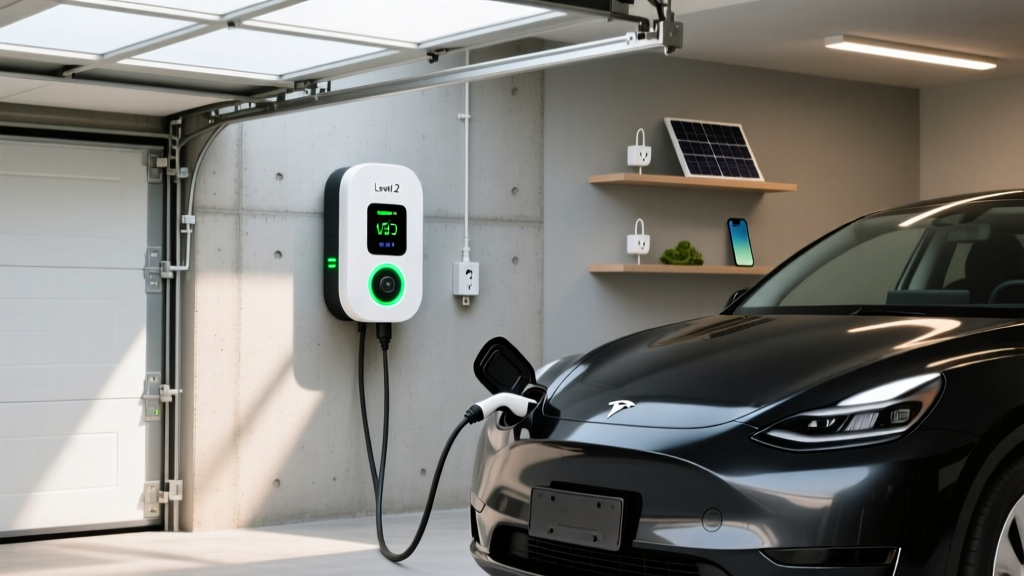
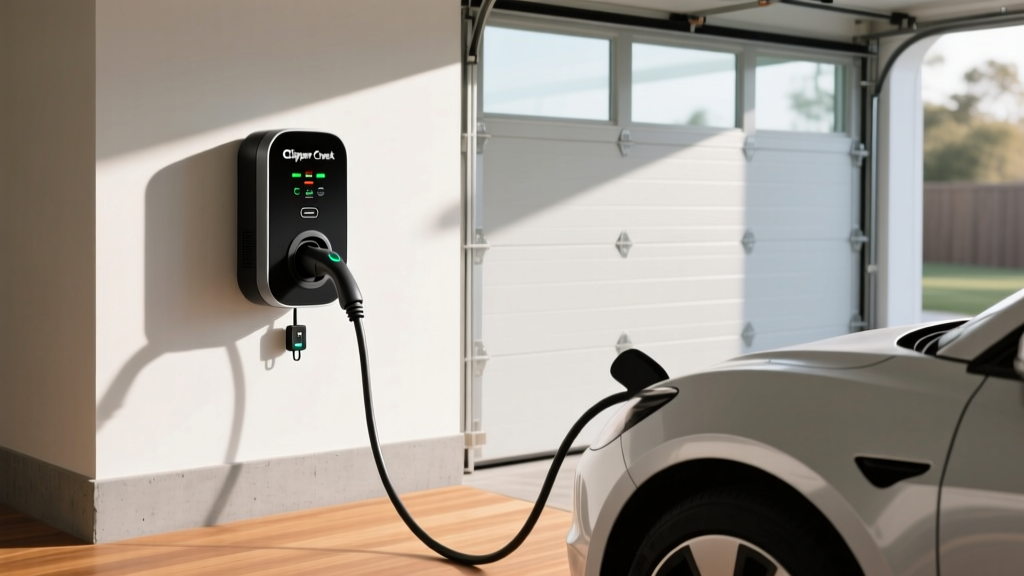
For optimal Leaf charging, you need a 240V / 30A dedicated circuit (NEMA 14-50 or 6-50 outlet, or a hardwired connection). This delivers the full 6.6 kW the Leaf can accept. A licensed electrician will run a new circuit from your electrical panel using 10 AWG or 8 AWG copper wire, install a double-pole breaker, and mount the charger or outlet.
Installation Cost Breakdown
| Component | Cost Range | Notes |
|---|---|---|
| Level 2 EV charger (equipment) | $300–$700 | 32A–40A smart charger, J1772 connector |
| Electrician labor (standard install) | $500–$1,500 | Varies by panel distance, wall type, conduit run |
| Electrical permit | $50–$200 | Required in most jurisdictions |
| Panel upgrade (if needed) | $1,500–$3,500 | 100A → 200A service; common in pre-1990 homes |
| Total (no panel upgrade) | $850–$2,400 | Most homes with 200A service |
| Total (with panel upgrade) | $2,350–$5,900 | Older homes with 100A or less |
Panel upgrade warning: Many homes built before 1990 have 100-amp or even 60-amp electrical panels. Adding a 30A EV circuit to an already-loaded 100A panel can trip the main breaker or create a fire hazard. Your electrician will perform a load calculation (per NEC Article 220) to determine if your panel can handle the new circuit. If not, a panel upgrade to 200A is mandatory — and it's the single biggest variable in your installation cost.
Safety and Code Considerations
- Dedicated circuit: NEC code requires EV chargers to be on a dedicated breaker — not shared with other appliances.
- GFCI protection: The 2020 NEC (and most 2026 local adoptions) requires GFCI protection for outdoor outlets. Hardwired chargers typically have built-in ground-fault protection.
- Outdoor rating: If your charger mounts outside, it must carry a NEMA 4 or NEMA 4X rating for weather resistance.
- Cable management: Keep the charge cable off the ground to prevent wear and tripping hazards. A wall-mounted holster or retractable reel is recommended.
Connector Compatibility: CHAdeMO, J1772, and the Adapter Problem in 2026
The 2017 Nissan Leaf uses two connectors:
- J1772 for Level 1 and Level 2 AC charging (the universal standard for all non-Tesla EVs in North America)
- CHAdeMO for DC fast charging
| Connector | Used For | 2026 Availability | Adapter Needed? |
|---|---|---|---|
| J1772 (Type 1) | Level 1 & Level 2 AC | Universal — all public Level 2 stations | No (native) |
| NACS (Tesla) | Level 2 AC & DC Fast | Tesla Superchargers + growing networks | Yes — J1772 adapter for L2; no CHAdeMO-to-NACS DC adapter exists |
| CCS1 | DC Fast | Electrify America, most non-Tesla DC networks | Yes — but no reliable CHAdeMO-to-CCS adapter exists for the Leaf |
| CHAdeMO | DC Fast | Declining — ChargePoint legacy, some Nissan dealers | No (native) |
The CHAdeMO DC fast-charging standard is being phased out across North America. Electrify America never adopted it, Tesla Superchargers use NACS, and most new installations use CCS1. As of 2026, CHAdeMO chargers remain primarily at older ChargePoint locations, select Nissan dealerships, and some regional networks. Plan road trips carefully using apps like PlugShare and filter for CHAdeMO availability. There is currently no commercially reliable adapter to convert the Leaf's CHAdeMO inlet to CCS1 or NACS for DC fast charging.
For Level 2 AC charging, the situation is straightforward: the Leaf's J1772 inlet works with every public Level 2 station in the country, and you can use a simple J1772-to-NACS adapter (~$150–$250) to charge at Tesla Destination Chargers and some Tesla Wall Connectors opened to non-Tesla vehicles.
Cost to Charge: Home vs. Public vs. Gas Comparison
One of the Leaf's strongest ownership arguments is fuel cost. Here's what charging actually costs in 2026.
| Charging Scenario | Rate ($/kWh) | Cost for Full Charge | Cost Per Mile (107 mi EPA) |
|---|---|---|---|
| Home (off-peak utility rate) | $0.08–$0.14 | $2.40–$4.20 | $0.022–$0.039 |
| Home (standard residential rate) | $0.15–$0.22 | $4.50–$6.60 | $0.042–$0.062 |
| Public Level 2 (network pricing) | $0.25–$0.49 | $7.50–$14.70 | $0.070–$0.137 |
| DC Fast (CHAdeMO, where available) | $0.35–$0.55 | $10.50–$16.50 | $0.098–$0.154 |
Gas comparison: A comparable 2017 gas compact car averaging 30 MPG with gas at $3.40/gallon costs $0.113 per mile. Charging at home off-peak saves 65–80% per mile. Even public DC fast charging is roughly cost-competitive with gas — and home charging crushes it.
For a Leaf driven 10,000 miles per year:
- Home charging (off-peak): ~$220–$390/year
- Gas equivalent (30 MPG): ~$1,133/year
- Annual fuel savings: ~$740–$910
Recommended Level 2 Chargers for the 2017 Nissan Leaf
Since the Leaf caps at 6.6 kW (30A at 240V), a 32A charger is the sweet spot — enough to max out the Leaf's onboard charger without overspending. Here are three proven options in 2026:
Emporia Vue / Emporia Level 2 Charger
Power Output: 48A max (Leaf will use 30A / 6.6 kW)
Connector: J1772 (NACS adapter available)
Cable Length: 24 ft
Smart Features: Wi-Fi, app scheduling, energy monitoring, solar integration
Price: ~$399
Best for: Budget-conscious buyers who want smart scheduling for off-peak rates
ChargePoint Home Flex
Power Output: Up to 50A (adjustable via DIP switch)
Connector: J1772 (NACS version also available)
Cable Length: 23 ft
Smart Features: Wi-Fi, Alexa integration, app-based scheduling, amperage flexibility
Price: ~$599
Best for: Future-proofing — adjustable amperage works for any future EV
Grizzl-E Smart
Power Output: 40A max
Connector: J1772
Cable Length: 24 ft
Smart Features: Wi-Fi, OCPP support, extreme cold rating (-40°F)
Price: ~$499
Best for: Cold-climate owners and outdoor installations — built like a tank
Pro tip: If you're only charging a Leaf and don't plan to upgrade your EV soon, the Emporia at ~$399 delivers everything you need. If you're buying the Leaf as a second car and plan to get a higher-power EV later, the ChargePoint Home Flex's adjustable amperage (set it to 32A now, bump to 48A later) is worth the premium.
DC Fast Charging the Leaf: Charge Curve and CHAdeMO Reality
The 2017 Leaf's DC fast-charging experience is defined by two constraints: the CHAdeMO connector's declining infrastructure and the battery's passive thermal management.
Here's what a typical DC fast-charge session looks like:
- 10–60% SoC: ~40–46 kW sustained — adds roughly 60 miles in 15 minutes
- 60–80% SoC: Tapers to ~25–30 kW — adds roughly 20 miles in 15 minutes
- 80–100% SoC: Tapers further to ~10–15 kW — not recommended on DC; finish on Level 2
Total 10–80% time: approximately 30–40 minutes on a 50 kW CHAdeMO station.
The 2017 Leaf is susceptible to "Rapidgate" — a condition where consecutive DC fast charges in warm weather cause the battery to overheat, and the car's battery management system (BMS) severely throttles charging speed to protect the cells. On a hot day, your second or third DC fast charge of the day may peak at only 20–25 kW instead of 46 kW. Plan road trips with this limitation in mind, and avoid DC fast charging more than once per day in summer.
Maximizing Your Leaf's Range and Battery Health
Given the Leaf's modest range and degradation-prone battery, smart charging habits matter more than with liquid-cooled EVs:
- Set charge limit to 80%: The Leaf's infotainment allows you to set a charge timer and limit. For daily driving, stopping at 80% significantly slows NMC degradation. Charge to 100% only before long trips.
- Use Level 2 as your primary method: Frequent DC fast charging accelerates degradation in passively-cooled packs. Reserve CHAdeMO for road trips.
- Precondition while plugged in: The Leaf's timer/remote features let you warm or cool the cabin while still on shore power, preserving battery for driving.
- Avoid parking in extreme heat at high SoC: A Leaf sitting at 100% charge in a 95°F driveway is degrading faster than one at 60% in a garage.
- Monitor battery health bars: The 12-bar display on the dash is your degradation gauge. Document bar count at purchase and track it annually.
Frequently Asked Questions
How much does it cost to install a home EV charger for a Nissan Leaf?
For a standard installation on an existing 200A electrical panel, expect $850–$2,400 total (charger + electrician + permit). If your home needs a panel upgrade from 100A to 200A, add $1,500–$3,500. Always get a load calculation from a licensed electrician before committing.
How fast will each charging level add range to my 2017 Leaf?
Level 1 (120V) adds about 4–5 miles per hour — enough for overnight recovery if you drive under 40 miles daily. Level 2 (240V, 30A) adds 22–25 miles per hour and fully charges the 30 kWh battery in roughly 5 hours. DC fast charging (CHAdeMO, 50 kW) adds approximately 150–180 miles per hour in the first 20 minutes, tapering significantly above 60% SoC.
Which connector and charger is compatible with my 2017 Leaf?
For Level 1 and Level 2 AC charging, your Leaf uses the J1772 connector, which is universal across all non-Tesla public Level 2 stations. For DC fast charging, it uses CHAdeMO, which is becoming less common in 2026. Any J1772 Level 2 home charger will work. You can also use a J1772-to-NACS adapter (~$150–$250) to charge at some Tesla Destination Chargers for Level 2 only — there is no adapter for DC fast charging to CCS or NACS.
How much does charging a Leaf cost per mile compared to gas?
Charging at home on off-peak electricity ($0.08–$0.14/kWh) costs roughly $0.02–$0.04 per mile — about 65–80% cheaper than a 30 MPG gas car at $3.40/gallon ($0.113/mile). Even public DC fast charging at $0.35–$0.55/kWh ($0.10–$0.15/mile) is cost-competitive with gasoline.
What electrical upgrades might I need for a home charger?
The most common upgrade is a panel capacity increase from 100A to 200A service, required when your existing panel can't accommodate a new 30A double-pole breaker without exceeding 80% of rated capacity (per NEC continuous-load rules). Other potential upgrades include replacing a Federal Pacific or Zinsco panel (known fire hazards, often required replacement by code), running new conduit from the panel to the charger location, and upgrading the meter socket if your utility requires it for a new high-load circuit.
Is the 2017 Leaf still a good buy in 2026?
As a low-cost commuter car for short daily drives (under 50 miles round-trip), a well-maintained 2017 Leaf with 10+ battery health bars remains a practical choice — especially with home Level 2 charging. Used prices typically range from $6,000–$11,000 depending on mileage and battery condition. Just understand the range limitations, the CHAdeMO infrastructure decline, and the lack of thermal management before buying. (NHTSA vehicle info)