The 2017 Chevrolet Bolt EV: Range Reality and Charging Fundamentals
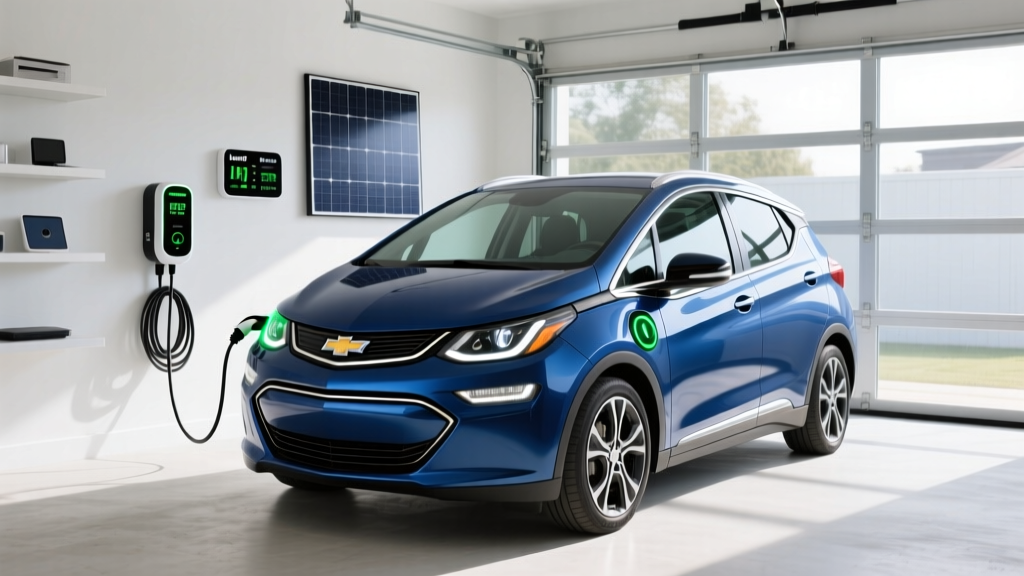
The 2017 Chevrolet Bolt EV was a watershed moment for affordable long-range electric vehicles. With an EPA-estimated 238 miles of range from its 60 kWh lithium-ion battery pack, it undercut the Tesla Model 3 to market and proved that a sub-$40,000 EV could handle real daily driving without constant range anxiety. Nearly a decade later, thousands of these cars remain on the road, and many owners are upgrading their charging setups or buying into the used-EV market.
But the 2017 Bolt EV's charging architecture reflects its era. Its onboard charger and DC fast-charging capabilities differ meaningfully from 2026 EVs. Understanding exactly how fast this car charges, what connector it uses, and what home electrical upgrades you may need is the difference between effortless daily driving and frustrating compromises.
EPA estimate: 238 miles | Real-world highway (70 mph): ~200–215 miles | Cold-weather (below 32°F): ~165–190 miles. The Bolt's battery lacks an active liquid thermal management system optimized for extreme cold preconditioning, so expect meaningful range loss in winter. (fueleconomy.gov)
Understanding kW vs. kWh: The Critical Distinction
Before sizing a charger, nail down the difference between kW (kilowatts) and kWh (kilowatt-hours). This is the single most common confusion in EV ownership.
- kWh measures energy capacity — the size of your "fuel tank." The 2017 Bolt EV has a 60 kWh battery pack.
- kW measures power — the rate at which energy flows. A 7.2 kW Level 2 charger delivers energy at 7.2 kilowatts per hour.
Think of it like plumbing: kWh is the total gallons in the tank; kW is the diameter of the hose filling it. A bigger hose (higher kW) fills the tank faster, but the tank size (kWh) determines how far you can drive.
Charging Levels Explained: Speeds, Times, and What the Bolt EV Supports
The 2017 Bolt EV can accept charge at all three standard levels, but with important hardware-specific limits. Here's the breakdown:
| Level | Voltage / Amperage | Max Power (kW) | Miles of Range Added per Hour | 0–100% Time (60 kWh) |
|---|---|---|---|---|
| Level 1 (120V outlet) | 120V / 12A | ~1.4 kW | ~4 mi/hr | ~43 hours |
| Level 2 (240V home/public) | 240V / 32A | 7.2 kW (car's max) | ~25 mi/hr | ~9 hours |
| DC Fast Charging | 400V+ DC | ~55 kW peak (CCS1) | ~160 mi/hr (at peak) | 10–80% in ~45 min |
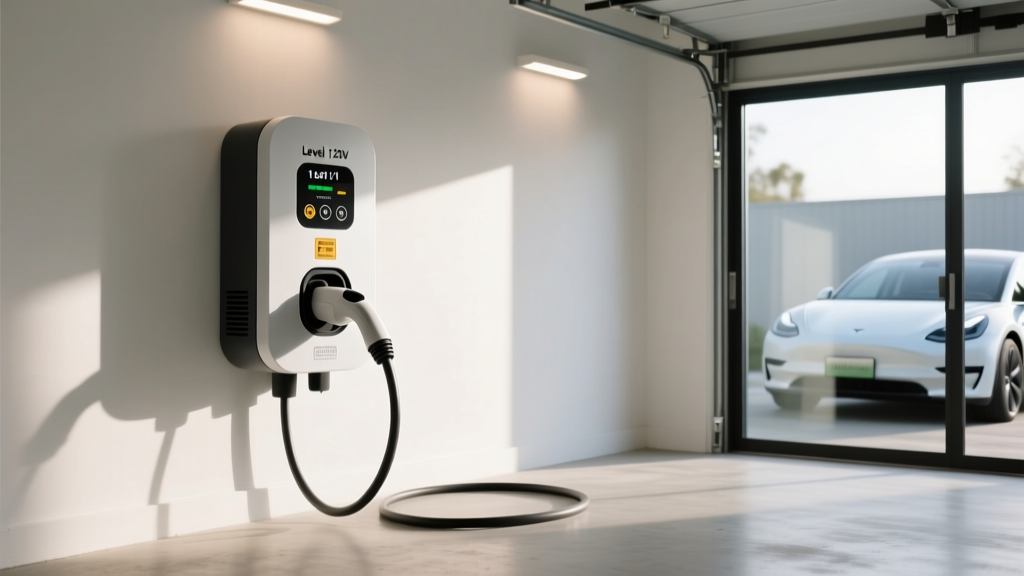
Critical detail: The 2017 Bolt EV's onboard AC charger maxes out at 7.2 kW. Even if you install a 48-amp (11.5 kW) home charger, the car will only draw 7.2 kW. Paying for a higher-output charger won't speed up this specific vehicle. However, installing a 48A circuit may still be wise if you plan to upgrade to a newer EV in the future.
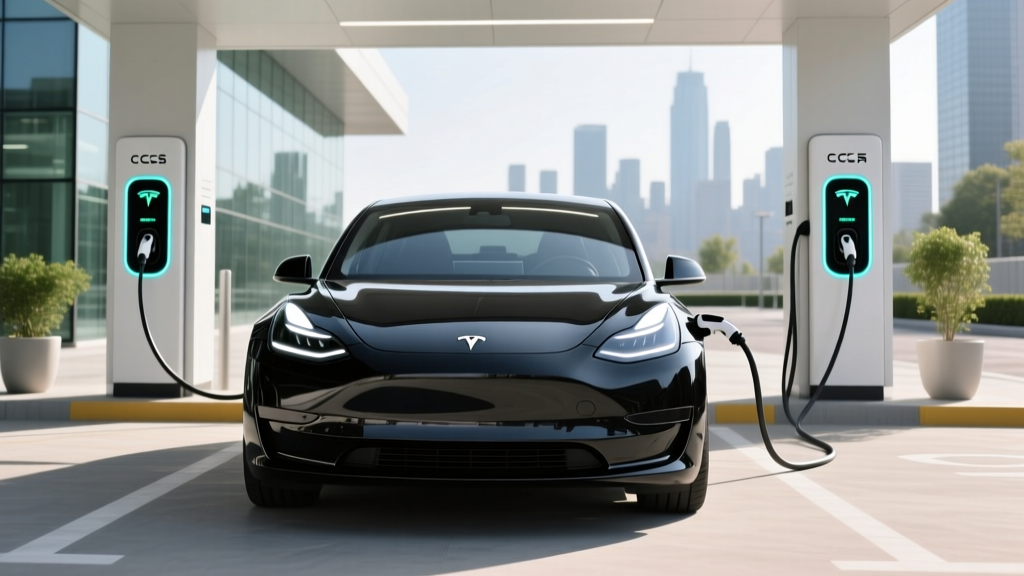
For DC fast charging, the 2017 Bolt tops out around 55 kW peak, tapering significantly above 80% state of charge. The charge curve is notably conservative compared to 2026 vehicles that sustain 200+ kW. Expect a 10–80% session to take roughly 45 minutes at a compatible CCS1 station.
How Much Does It Cost to Install a Home EV Charger?
Home Level 2 charging is where most Bolt EV owners will do 85–95% of their charging. Installation cost depends heavily on your electrical panel's capacity, the distance from the panel to the charger location, and local permit fees. Here's a realistic breakdown for 2026:
| Component | Simple Install (panel nearby, no upgrade) | Moderate Install (50+ ft run, minor work) | Complex Install (panel upgrade required) |
|---|---|---|---|
| Level 2 EVSE equipment | $350–$700 | $350–$700 | $350–$700 |
| Electrician labor (240V/40A circuit) | $400–$800 | $800–$1,500 | $800–$1,500 |
| Permit & inspection | $50–$200 | $50–$200 | $50–$200 |
| Electrical panel upgrade (100A→200A) | N/A | N/A | $1,500–$3,500 |
| Conduit, wiring, misc. materials | $50–$150 | $150–$400 | $150–$400 |
| TOTAL | $850–$1,850 | $1,350–$2,800 | $2,850–$6,300 |
The panel-upgrade gotcha: Many homes built before 2000 have 100-amp electrical panels. Adding a 40-amp dedicated circuit for EV charging may push the panel past its safe load capacity, especially if you also run electric dryers, ovens, or HVAC. A licensed electrician will perform a load calculation before installation. If an upgrade to 200 amps is needed, budget an additional $1,500–$3,500. Some utilities offer rebates for panel upgrades tied to EV adoption — check with your local provider.
Connector Compatibility: CCS1, NACS, and the Bolt EV
The 2017 Chevrolet Bolt EV uses the CCS1 (Combined Charging System) connector for both Level 2 AC charging and DC fast charging. This was the standard for all GM vehicles at the time. However, the connector landscape has shifted dramatically:
| Connector | Brands Using It (2026) | Bolt EV Compatible? | Adapter Needed? |
|---|---|---|---|
| CCS1 | 2017–2024 GM, VW, Hyundai, Kia, BMW, Ford (pre-2025) | ✅ Native | None |
| NACS (Tesla/J3400) | Tesla, 2025+ Ford, GM, Rivian, Volvo, Polestar, others | ⚠️ With adapter | CCS1-to-NACS adapter (~$200–$250) |
| CHAdeMO | Nissan Leaf, Mitsubishi (legacy) | ❌ No | No adapter available |
| J1772 (AC only) | All non-Tesla EVs (Level 1 & 2) | ✅ Native | None (CCS1 includes J1772) |
What this means for Bolt EV owners in 2026: GM began transitioning to NACS (the Tesla/J3400 standard) for 2025 model-year vehicles. As a CCS1-equipped 2017 Bolt, you can still access most public DC fast-charging networks (Electrify America, EVgo, ChargePoint) natively. However, to access the Tesla Supercharger network — now the largest and most reliable in North America — you'll need a CCS1-to-NACS adapter. GM and third-party suppliers offer these adapters. Ensure any adapter you purchase is UL-listed or certified for safety.
Cost to Charge: Home vs. Public vs. Gas
One of the strongest ownership arguments for the Bolt EV is fuel cost savings. Here's how charging costs compare across scenarios, based on the Bolt's efficiency of approximately 28 kWh per 100 miles (or 120 MPGe combined per EPA data):
| Scenario | Rate | Cost per 100 Miles | Cost per Mile |
|---|---|---|---|
| Home (off-peak utility rate) | $0.09/kWh | $2.52 | $0.025 |
| Home (national avg. rate) | $0.16/kWh | $4.48 | $0.045 |
| Public Level 2 (network pricing) | $0.25/kWh | $7.00 | $0.070 |
| DC Fast Charging (public) | $0.40/kWh | $11.20 | $0.112 |
| Gas car (30 MPG, $3.40/gal) | $3.40/gallon | $11.33 | $0.113 |
The takeaway: Home charging on an off-peak rate saves roughly $0.09 per mile compared to gas — that's $1,350 annually at 15,000 miles/year. Even at national average electricity rates, home charging costs less than half of gasoline per mile. However, exclusive reliance on DC fast charging at $0.40/kWh essentially matches gas costs — a strong argument for investing in home Level 2 infrastructure.
Best Home Chargers for the 2017 Bolt EV
Since the Bolt's onboard charger caps at 7.2 kW (32 amps at 240V), a 40-amp circuit with a 32-amp charger is the sweet spot. However, installing a 48-amp-capable charger on a 60-amp circuit gives you future-proofing for your next EV. Here are three proven options:
Power: 48A max (11.5 kW) — Bolt will use 32A
Connector: J1772 (CCS1 compatible for AC)
Cable: 24 ft
Smart features: Wi-Fi, energy monitoring, scheduling via app, load management
Price: ~$399
Why: Excellent energy tracking lets you see exact charging costs. Load-sharing feature protects older panels.
Power: Up to 50A (12 kW) — adjustable via dip switches
Connector: J1772 (CCS1 compatible for AC)
Cable: 23 ft
Smart features: Wi-Fi, Alexa, scheduling, amperage configurable to match circuit
Price: ~$599
Why: UL-listed, NEMA 14-50 plug or hardwired, adjustable amperage means one unit works for any home circuit.
Power: 40A (9.6 kW) — Bolt will use 32A
Connector: J1772 (pair with CCS1-to-NACS adapter for DC)
Cable: 24 ft
Smart features: OCPP protocol, app control, extreme cold rated (-40°F)
Price: ~$449 + adapter ~$225
Why: Rugged build, cold-weather rated, and the NACS adapter unlocks Tesla Superchargers for road trips.
Safety, Electrical Code, and Installation Requirements
A Level 2 EV charger is a continuous high-draw appliance — it runs at full load for hours. This makes proper installation non-negotiable. Here's what your licensed electrician will address:
- Dedicated circuit: Your charger needs its own breaker — not shared with other appliances. For a 32A charger, NEC requires a 40-amp breaker (125% rule for continuous loads). For a 48A charger, you need a 60-amp breaker.
- GFCI protection: The 2020 NEC (and later) requires GFCI protection for EV charging outlets in garages. Hardwired installations may have different requirements depending on local code amendments.
- NEMA 14-50 vs. hardwired: A NEMA 14-50 outlet offers portability (take the charger when you move), but some jurisdictions now require GFCI breakers for receptacles, adding $100–$150 to the installation. Hardwired connections are simpler and sometimes preferred by inspectors.
- Outdoor rating: If your charger is mounted outside, ensure the EVSE is NEMA 4-rated (weather-resistant) and that the installation uses outdoor-rated conduit and fittings.
- Permit and inspection: Most jurisdictions require an electrical permit for EV charger installation. The inspection ensures the work meets NEC and local code. Skipping the permit can void homeowner's insurance coverage for electrical fires.
Never plug a Level 2 EV charger into an extension cord or a standard 120V outlet using an adapter. The continuous high current will overheat undersized wiring and is a fire hazard.
Maximizing the 2017 Bolt EV's Range and Charging Efficiency
Getting the most from the Bolt's 238-mile EPA range requires practical habits:
- Precondition while plugged in: Use the Bolt's scheduled departure feature (via the myChevrolet app) to warm or cool the cabin and battery while still connected to your home charger. This preserves range for actual driving.
- Use "Regen on Demand": The Bolt's paddle-activated regenerative braking recaptures energy in stop-and-go driving. Combined with the "L" drive mode for stronger regen, you can recover meaningful energy in city traffic.
- Charge to 80% daily, 100% for trips: The Bolt's 60 kWh NMC battery benefits from not sitting at 100% state of charge for extended periods. Set your charge limit to ~80% for daily commuting and only charge to full before long road trips.
- Plan DC fast stops around the taper: The Bolt's charge curve peaks at ~55 kW up to roughly 55–60% SoC, then tapers to ~38 kW through 80%, and drops further above 80%. On road trips, charge to 80% and move on rather than waiting for the slow final 20%.
Frequently Asked Questions
How much does it cost to install a home EV charger for a 2017 Bolt EV?
Expect $850–$1,850 for a straightforward installation with an adequate electrical panel. If your panel needs upgrading from 100A to 200A, total costs can reach $2,850–$6,300. The EVSE unit itself costs $350–$700, with the rest going to electrician labor, wiring, conduit, and permits.
How fast will each charging level add range to the Bolt EV?
Level 1 (120V): approximately 4 miles of range per hour. Level 2 (240V at 32A): approximately 25 miles per hour, filling the battery in about 9 hours. DC fast charging: roughly 160 miles per hour at peak (55 kW), with a 10–80% session taking about 45 minutes.
Which connector does the 2017 Bolt EV use, and is it still compatible with public chargers?
The 2017 Bolt uses CCS1. This remains compatible with Electrify America, EVgo, and most non-Tesla public chargers. To use Tesla Superchargers, you'll need a CCS1-to-NACS adapter, widely available for $200–$250.
How much does charging the Bolt EV cost per mile compared to gas?
At home on an off-peak rate ($0.09/kWh), the Bolt costs about $0.025 per mile — roughly $0.09/mile less than a 30 MPG gas car at $3.40/gallon. Even at the national average electricity rate ($0.16/kWh), home charging costs about $0.045/mile, less than half the cost of gasoline.
What electrical upgrades might I need for a home charger?
The most common upgrade is a panel capacity increase from 100A to 200A, needed if your existing panel lacks headroom for a 40-amp dedicated circuit. Your electrician will perform a load calculation factoring in all existing appliances. Other potential upgrades include replacing an outdated fuse box with a breaker panel or running new service from the utility.
Does the 2017 Bolt EV qualify for any tax credits in 2026?
The original $7,500 federal EV tax credit for new Bolt EVs is no longer available for new purchases (GM's credit phased out years ago). However, if you're buying a used 2017 Bolt EV in 2026, you may qualify for the Used Clean Vehicle Credit under IRS §25E — up to $4,000 or 30% of the sale price (whichever is less), subject to income caps ($75,000 single / $150,000 joint) and a vehicle sale price cap of $25,000. Always verify current eligibility with a tax professional.