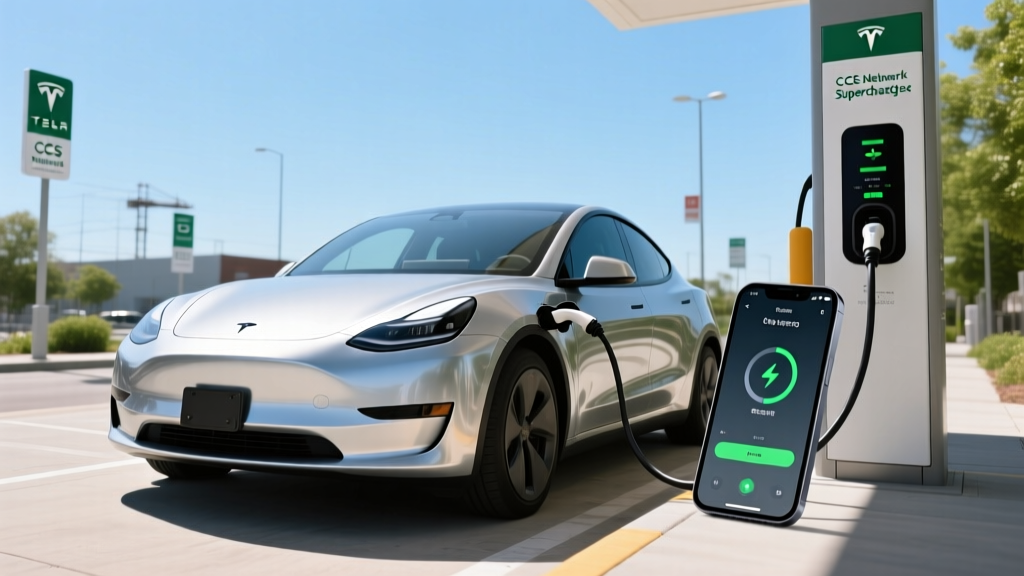
If you've been searching for 2012 XF Supercharged information, you're likely weighing one of two decisions: whether to keep a beloved supercharged V8 sedan running, or whether it's finally time to trade that Jaguar in for an electric vehicle. Either way, the comparison comes down to the same numbers — fueling cost, infrastructure requirements, and what you actually spend per mile.
This guide breaks down exactly what modern EV charging looks like in 2026 — Level 1, Level 2, and DC fast charging speeds, home installation costs, connector compatibility, and per-mile economics — all measured against the real-world ownership math of a 2012 Jaguar XF Supercharged with its 5.0L supercharged V8. Whether you're adding a charger to your garage for a new EV or trying to decide if the switch makes financial sense, the data below gives you exact figures to work with.
2012 Jaguar XF Supercharged: The Baseline Numbers
Before comparing charging infrastructure, let's establish what the 2012 XF Supercharged actually costs to fuel. Jaguar rated this sedan at 15 MPG city / 23 MPG highway / 18 MPG combined per EPA fueleconomy.gov. With its 5.0-liter supercharged V8 producing 470 horsepower, real-world highway driving at sustained speeds above 75 mph often drops that figure to 19–20 MPG. Around town with aggressive throttle use, expect 13–15 MPG.
At the current national average of roughly $3.40 per gallon for premium fuel (the XF Supercharged requires 91+ octane), the combined cost per mile sits at approximately $0.189/mile. Over 12,000 annual miles, that's roughly $2,265 in fuel alone — before oil changes, spark plugs, or the inevitable supercharger belt tensioner service these engines require past 80,000 miles.
This is the number every modern EV needs to beat. Let's see what charging infrastructure delivers.
Charging Levels Explained: Speeds, Power, and Range Per Hour
EV charging operates at three distinct levels, each defined by power output measured in kilowatts (kW). A critical distinction: kW measures power (how fast energy flows), while kWh measures energy (how much the battery stores). Think of kW as the width of a hose and kWh as the size of the bucket. A 2012 XF Supercharged doesn't have this confusion — it just burns gasoline — but EV owners need to keep these units straight.
| Level | Voltage | Power (kW) | Miles of Range Added/Hour | Best For |
|---|---|---|---|---|
| Level 1 (120V) | 120V AC | 1.0–1.4 kW | 3–5 miles/hr | Overnight trickle; PHEVs; emergency |
| Level 2 (240V) | 240V AC | 3.3–19.2 kW | 12–75 miles/hr | Daily home charging; overnight full charge |
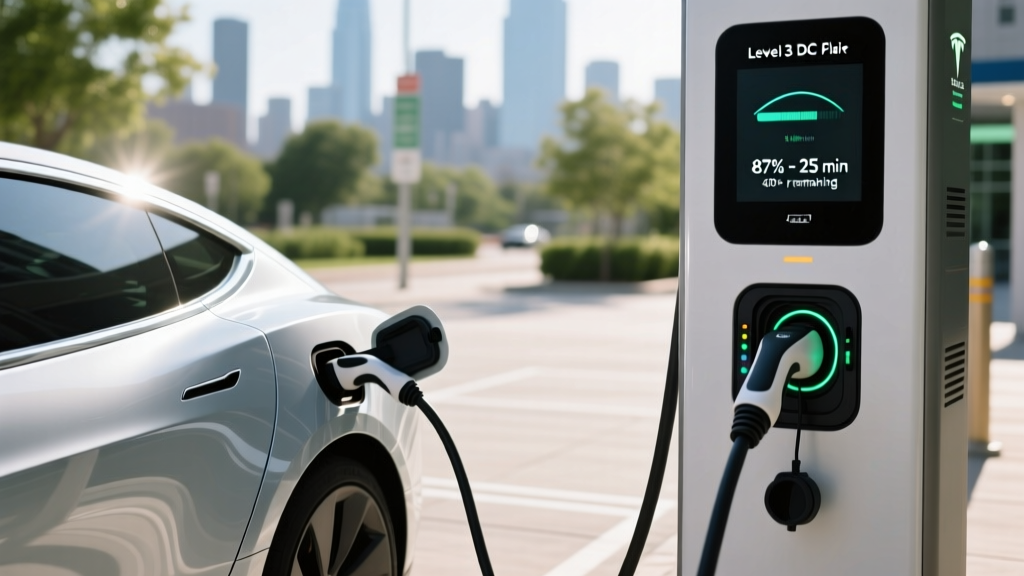
| DC Fast Charging | 200–900V DC | 50–350 kW | 150–1,200+ miles/hr (peak) | Road trips; 10–80% in 15–35 min |
For context, a modern EV like the 2026 Hyundai Ioniq 5 (84 kWh usable battery, NMC chemistry) charging on a 350 kW DC fast charger can add approximately 200 miles of range in 10 minutes at peak rate, though the charge curve tapers significantly above 80% State of Charge. That peak rate is not sustained — expect an average of ~150 kW across a 10–80% session, completing in roughly 18 minutes.
On a Level 2 home charger at 11.5 kW (48A on a 60A circuit), that same Ioniq 5 charges from 10% to 100% in approximately 7.5 hours — perfect for overnight replenishment.
Home Charger Installation: Electrical Requirements and Real Costs
This is where most prospective EV owners hit their first real decision point. A Level 2 home charger requires a dedicated 240-volt circuit, typically rated at 40A, 50A, or 60A depending on the charger's maximum amperage. The National Electrical Code (NEC) requires the circuit to be rated at 125% of the continuous load — so a 48A charger needs a 60A breaker.
What Electrical Upgrades Might You Need?
Homes built before 2000 often have 100A or 150A main service panels. Adding a 60A EV circuit to an already-loaded panel may require a panel upgrade to 200A service, which adds significant cost. Signs you may need an upgrade:
- Your panel is at or near capacity (fewer than 2–4 open breaker slots)
- You have a 100A main breaker
- Your home runs electric heat, electric water heater, electric dryer, and electric range simultaneously
- The panel shows signs of age: rust, scorch marks, or uses a discontinued brand (Federal Pacific, Zinsco)
Some homeowners opt for a load-management device (such as the Emporia Load Management Controller or Span smart panel integration) that dynamically shares amperage between the EV charger and other appliances, avoiding a full panel upgrade.
Installation Cost Breakdown
| Component | Low End | High End | Notes |
|---|---|---|---|
| Level 2 Charger (hardware) | $350 | $750 | 32A–48A smart chargers; hardwired or NEMA 14-50 plug |
| Electrician labor (standard run) | $400 | $1,200 | Short conduit run from panel to garage; no panel upgrade |
| Permit and inspection | $50 | $250 | Varies by municipality; some waive for EV circuits |
| Panel upgrade (if needed) | $1,500 | $4,000 | 200A service upgrade; includes new panel, breakers, utility coord. |
| Long conduit run (100+ ft) | $500 | $2,000 | Detached garage or distant parking spot |
| Total (no panel upgrade) | $800 | $2,200 | Most homes with 200A service and nearby garage |
| Total (with panel upgrade) | $2,300 | $6,200 | Older homes or high-load electrical systems |
The federal government offers the Alternative Fuel Vehicle Refueling Property Credit (IRS Form 8911), which covers up to 30% of home charger hardware and installation costs, capped at $1,000. Check current eligibility on irs.gov — income and census-tract restrictions apply.
Connector Compatibility: NACS, CCS, and CHAdeMO in 2026
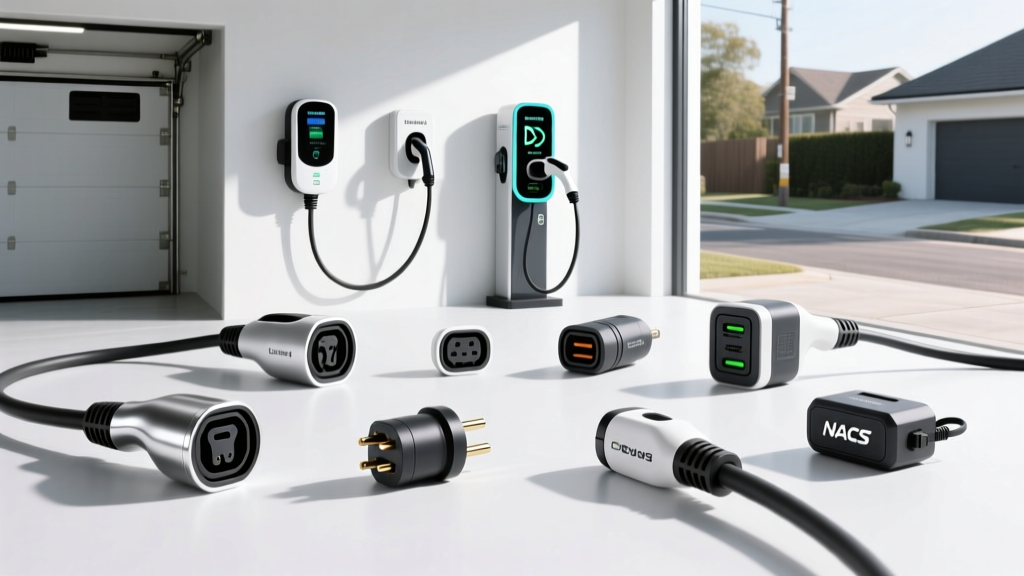
The connector landscape has consolidated significantly since the North American Charging Standard (NACS) emerged as the dominant plug. Here's what fits what in the current market:
| Connector | Brands Using It (Native) | Adapter Needed? | Public Network Access |
|---|---|---|---|
| NACS (Tesla) | Tesla (all years), Ford, GM, Rivian, Volvo, Polestar, Hyundai/Kia (2025+), BMW, Mercedes | No — native on new vehicles | Tesla Supercharger (20,000+ stalls open to NACS), Electrify America (NACS stalls deploying) |
| CCS1 | Older VW ID.4, older Hyundai/Kia models, Stellantis, some legacy models | CCS-to-NACS adapter ($150–$250) for Supercharger access | Electrify America, EVgo, ChargePoint, non-Tesla networks |
| CHAdeMO | Nissan Leaf (discontinued after 2025 MY), Mitsubishi Outlander PHEV (older) | CHAdeMO-to-NACS adapters limited; CCS adapters available | Declining availability; some EA and EVgo locations |
If you're buying a new EV in 2026, NACS is the default choice for maximum charging network access. CCS1 remains viable but requires an adapter for Tesla Supercharger access — the largest fast-charging network in North America.
Level 2 Home Charger Recommendations
Not all chargers are equal. Below are three proven units that cover most home installations, with exact specifications:
Emporia Vue Level 2 Charger
- Power Output: 48A / 11.5 kW (hardwired on 60A circuit)
- Connector: NACS (J3400) native; CCS adapter available
- Cable Length: 24 ft
- Smart Features: Wi-Fi scheduling, energy monitoring via Emporia app, solar integration, load management compatible
- Price: ~$399
- Best For: Budget-conscious buyers wanting full smart features and energy tracking
ChargePoint Home Flex (2nd Gen)
- Power Output: Up to 50A / 12 kW (configurable 16A–50A via DIP switches)
- Connector: NACS (J3400) native as of 2025 refresh
- Cable Length: 23 ft
- Smart Features: Alexa integration, ChargePoint app scheduling, utility demand-response programs, flexible amperage for older panels
- Price: ~$549
- Best For: Homes with limited panel capacity (can dial down to 32A/40A circuit)
Tesla Wall Connector (Gen 4)
- Power Output: 48A / 11.5 kW (hardwired on 60A circuit)
- Connector: NACS native; integrated Magic Dock for CCS vehicles
- Cable Length: 24 ft
- Smart Features: Wi-Fi updates, Tesla app integration, Power-Share between two Wall Connectors on one circuit, vehicle-charge-status notifications
- Price: ~$475
- Best For: Tesla owners or mixed-fleet garages (charges both NACS and CCS via Magic Dock)
Cost Per Mile: EV Charging vs. the XF Supercharged's Fuel Bill
This is the comparison that matters most. Below, we calculate cost per mile for the 2012 Jaguar XF Supercharged against a representative modern EV (2026 Hyundai Ioniq 5 Long Range, 3.5 mi/kWh efficiency) across three common charging scenarios:
| Scenario | Rate | XF Supercharged Cost/Mile | EV Cost/Mile | Annual Savings (12k mi) |
|---|---|---|---|---|
| Home charging (off-peak utility rate) | $0.11/kWh | $0.189 (premium gas) | $0.031 | $1,896 |
| Home charging (average residential) | $0.17/kWh | $0.189 | $0.049 | $1,680 |
| Public DC fast charging | $0.38/kWh (avg EA/EVgo) | $0.189 | $0.109 | $960 |
| Public DC fast (Tesla Supercharger avg) | $0.28/kWh | $0.189 | $0.080 | $1,308 |
The math is unambiguous: home charging on any rate plan dramatically undercuts premium gasoline. Even exclusive DC fast charging — the most expensive way to power an EV — costs less per mile than the XF Supercharged's 18 MPG combined on premium fuel. A driver covering 12,000 miles annually with home charging saves $1,680–$1,896 per year on energy alone.
Where the 2012 XF retains value is in driving dynamics, build quality, and the character of a supercharged V8 — factors that don't show up in cost-per-mile calculations. But purely as a transportation-appliance financial decision, the EV wins on fuel cost by a wide margin.
Charging Time Examples: What to Expect with Common Battery Sizes
Charging time depends on battery capacity (kWh), charger power (kW), and the vehicle's onboard charge acceptance rate. Here are realistic 10–80% charging times for several battery sizes common in 2026 EVs:
| Battery Size (usable kWh) | Level 2 @ 11.5 kW | DC Fast @ 150 kW (avg) | DC Fast @ 250 kW (avg) | Example Vehicles |
|---|---|---|---|---|
| 60 kWh | ~3.6 hrs | ~22 min | ~16 min | Chevy Equinox EV, Volvo EX30 |
| 77 kWh | ~4.6 hrs | ~28 min | ~20 min | Tesla Model Y LR, BMW i4 |
| 84 kWh | ~5.0 hrs | ~30 min | ~18 min | Hyundai Ioniq 5, Kia EV6 |
| 100 kWh | ~6.1 hrs | ~38 min | ~25 min | Tesla Model S, Rivian R1T (Max Pack) |
| 131 kWh | ~7.9 hrs | ~48 min | ~35 min | Ford F-150 Lightning (Ext. Range), GMC Sierra EV |
Real-world note on charge curves: The "average" DC fast charging rate is always lower than the peak rate. A vehicle that peaks at 350 kW may only sustain that rate between 10–30% SoC before tapering. The times above reflect sustained averages, not marketing peak numbers. Preconditioning the battery (warming it to optimal temperature before arriving at the charger) is essential to achieving these times, especially in cold weather.
Safety, Electrical Code, and Installation Best Practices
A Level 2 EV charger is a continuous high-amperage load — it runs at full draw for hours. This demands proper installation to prevent overheating, breaker trips, or fire risk:
- Dedicated circuit: The EV charger must have its own breaker — never shared with other appliances. A 48A charger requires a dedicated 60A breaker.
- GFCI protection: NEC 2023 (Article 625) requires GFCI protection for all EV charging outlets rated 150V to ground or less and 60A or less. Hardwired chargers may have GFCI built into the unit; plug-in (NEMA 14-50) installations require a GFCI breaker.
- Outdoor rating: If the charger is installed outdoors, it must carry a NEMA 4 or IP55+ rating. All three chargers recommended above are outdoor-rated.
- Wire gauge: 6 AWG copper for 48A circuits; 4 AWG for 60A circuits. Your electrician will size wire to the breaker rating and run length (longer runs may require upsizing to prevent voltage drop).
- Permit and inspection: Virtually all jurisdictions require a permit for new 240V circuits. The inspection verifies wire gauge, breaker sizing, grounding, and GFCI compliance. Never skip this — it protects your home and is required for insurance coverage of electrical fires.
Frequently Asked Questions
How much does it cost to install a home EV charger?
For most homes with an existing 200A panel and a garage near the panel, expect $800–$2,200 total (charger hardware + electrician labor + permit). Homes needing a panel upgrade to 200A service should budget $2,300–$6,200. The IRS Alternative Fuel Vehicle Refueling Property Credit can offset up to $1,000 (30% of costs) — check current rules on irs.gov.
How fast will each charging level add range?
Level 1 (120V) adds 3–5 miles per hour — adequate for plug-in hybrids but impractical for full EVs. Level 2 (240V) at 48A/11.5 kW adds approximately 35–42 miles per hour for a typical mid-size EV. DC fast charging at 150–250 kW adds 150–1,000+ miles per hour at peak, enabling a 10–80% charge in 18–35 minutes depending on battery size.
Which connector/charger is compatible with my EV?
In 2026, most new EVs from Ford, GM, Hyundai, Kia, Rivian, BMW, Mercedes, Volvo, and Polestar use NACS (J3400) natively. Older CCS1 vehicles can access Tesla Superchargers with a $150–$250 adapter. CHAdeMO (Nissan Leaf) is effectively legacy with declining public infrastructure. When buying a home charger, choose NACS for maximum compatibility.
How much does charging cost per mile vs gas?
At average residential electricity rates ($0.17/kWh), a 3.5 mi/kWh EV costs approximately $0.049/mile. The 2012 XF Supercharged at 18 MPG combined on $3.40/gallon premium costs $0.189/mile. That's a $1,680 annual savings for the EV at 12,000 miles/year. Even public DC fast charging at $0.38/kWh ($0.109/mile) undercuts the XF's fuel cost.
What electrical upgrades might I need?
The most common upgrade is a 200A panel replacement ($1,500–$4,000) for homes with older 100A or 150A service. If your panel has open slots and adequate amperage headroom, you may only need the dedicated 60A circuit run. Load-management devices can sometimes avoid a panel upgrade by sharing capacity between the charger and other heavy loads. Have a licensed electrician perform a load calculation before committing to a charger amperage.
The Verdict: Keep the XF or Go Electric?
The 2012 Jaguar XF Supercharged remains a compelling driver's sedan — 470 HP, a supercharged V8 soundtrack, and a chassis that still feels planted. No EV replicates that emotional experience. But the financial argument for electrification is overwhelming if your priority is cost-per-mile efficiency. A modern EV charged at home costs roughly one-quarter what the XF costs to fuel, with dramatically lower maintenance overhead (no oil, no spark plugs, no supercharger coolant system, and brake pads lasting 100,000+ miles thanks to regenerative braking).
The pragmatic path for many enthusiasts: keep the XF as a weekend car and add a daily-driver EV with home Level 2 charging. The $800–$2,200 installation investment pays for itself in fuel savings within the first year or two of daily commuting — and you never have to give up the supercharged V8 entirely.